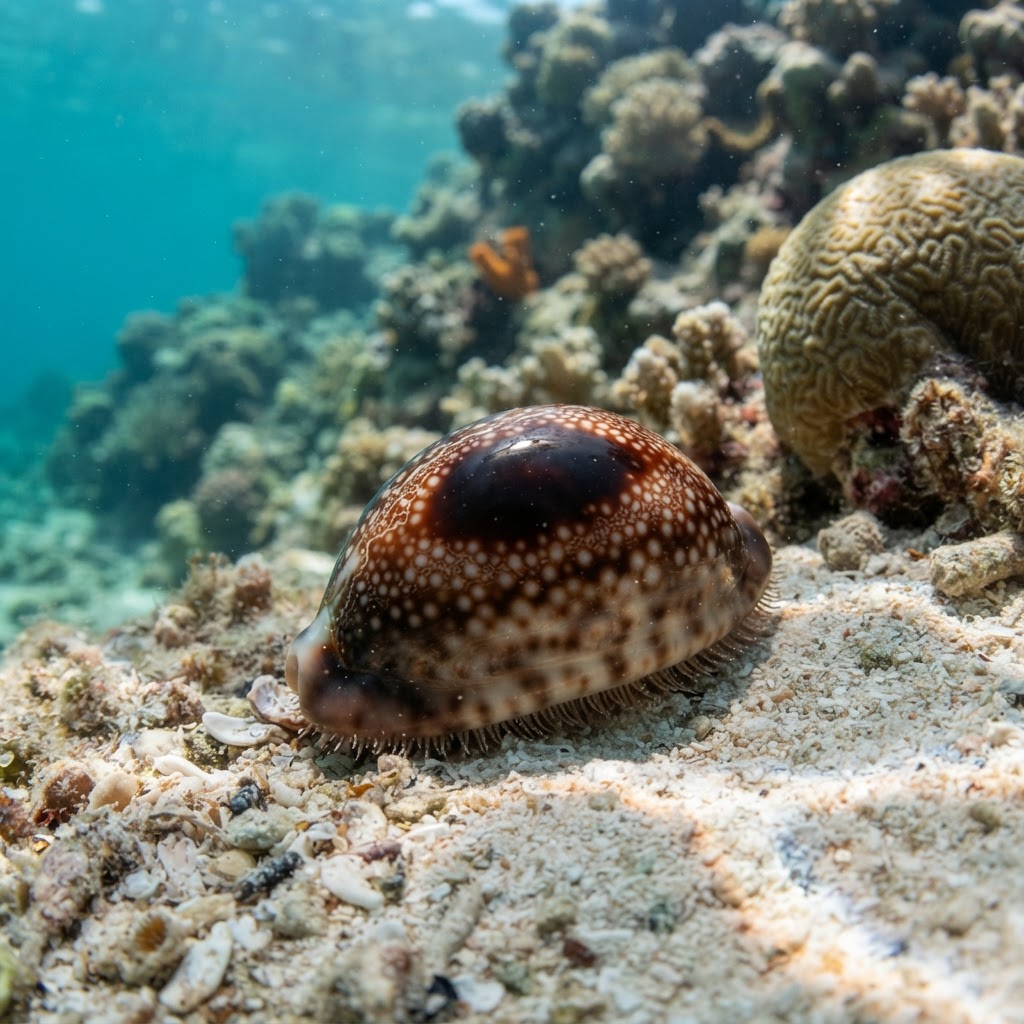
Monetaria caputophidii
A Hawaii speciality shell: uncommon on reef rubble around 22.6-28.6C, spotted year-round at sites across the islands.
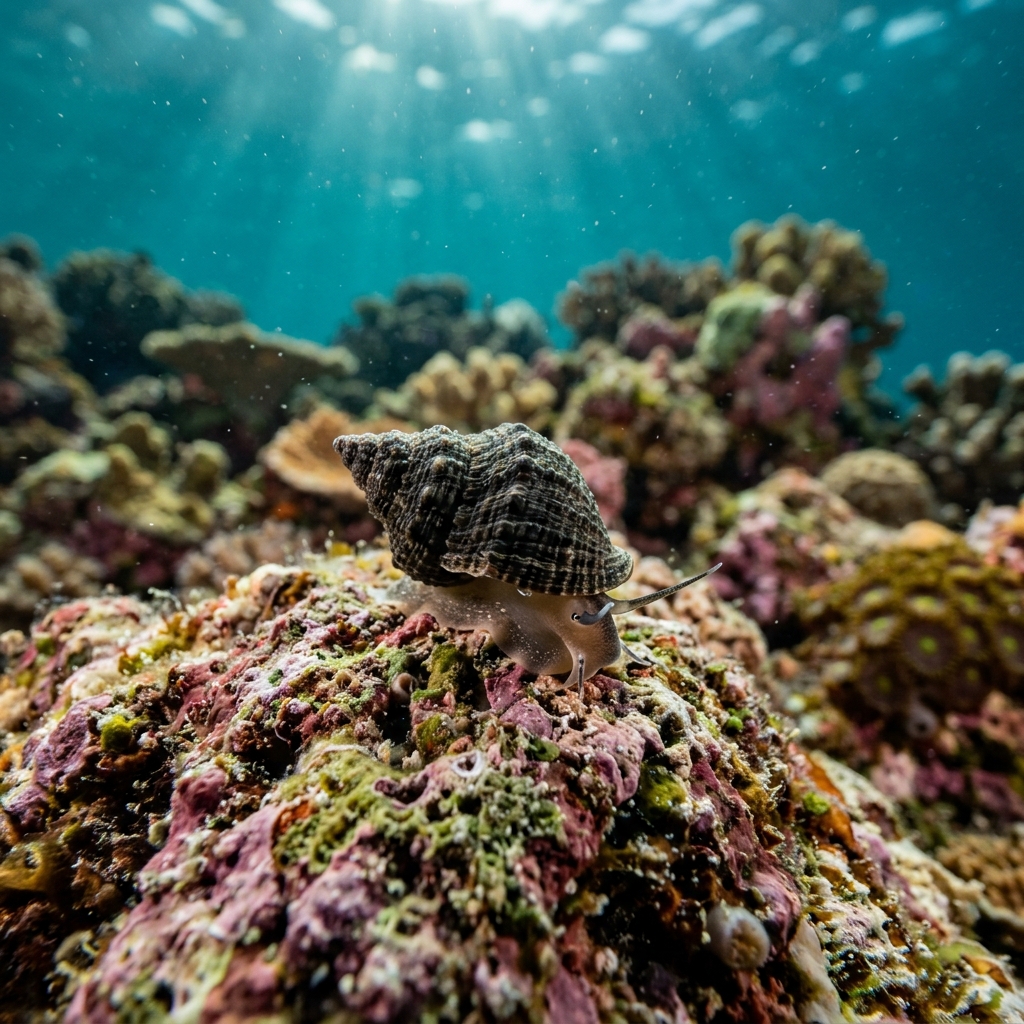
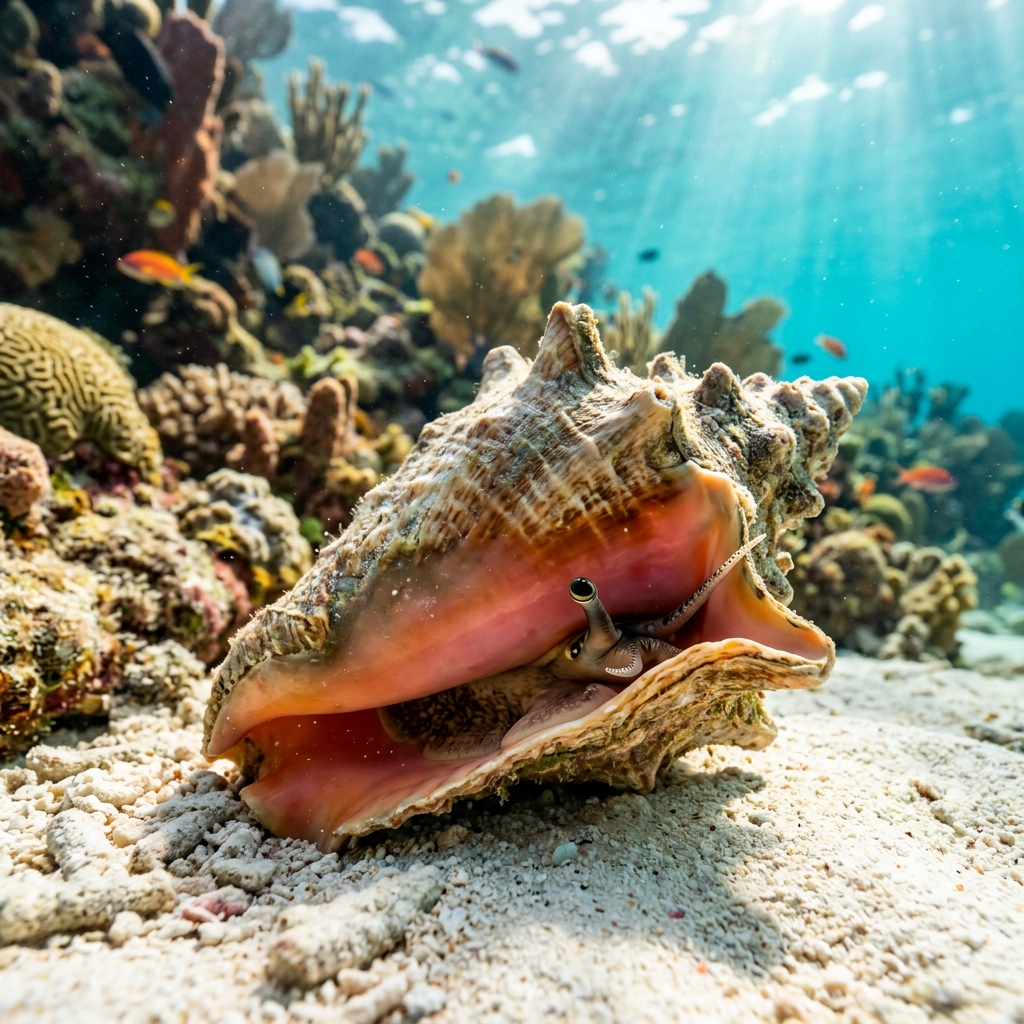
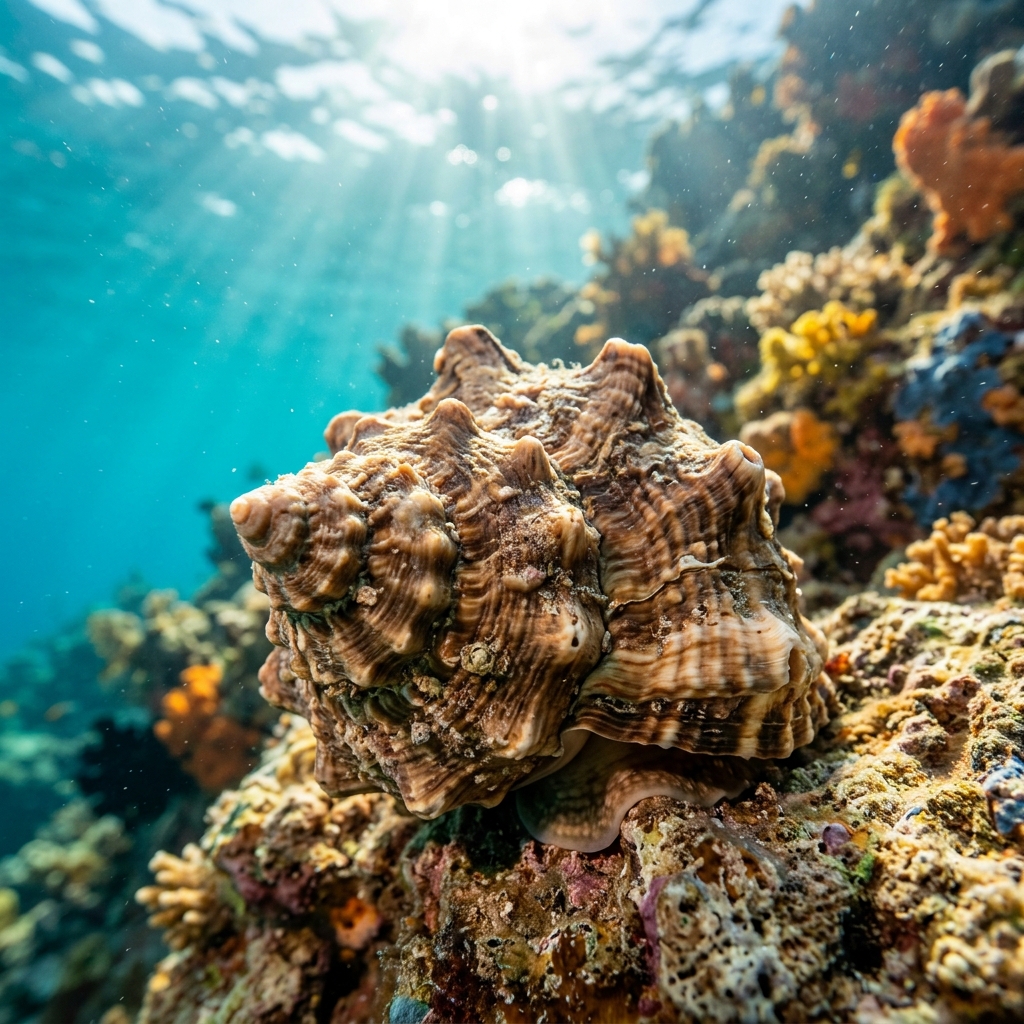
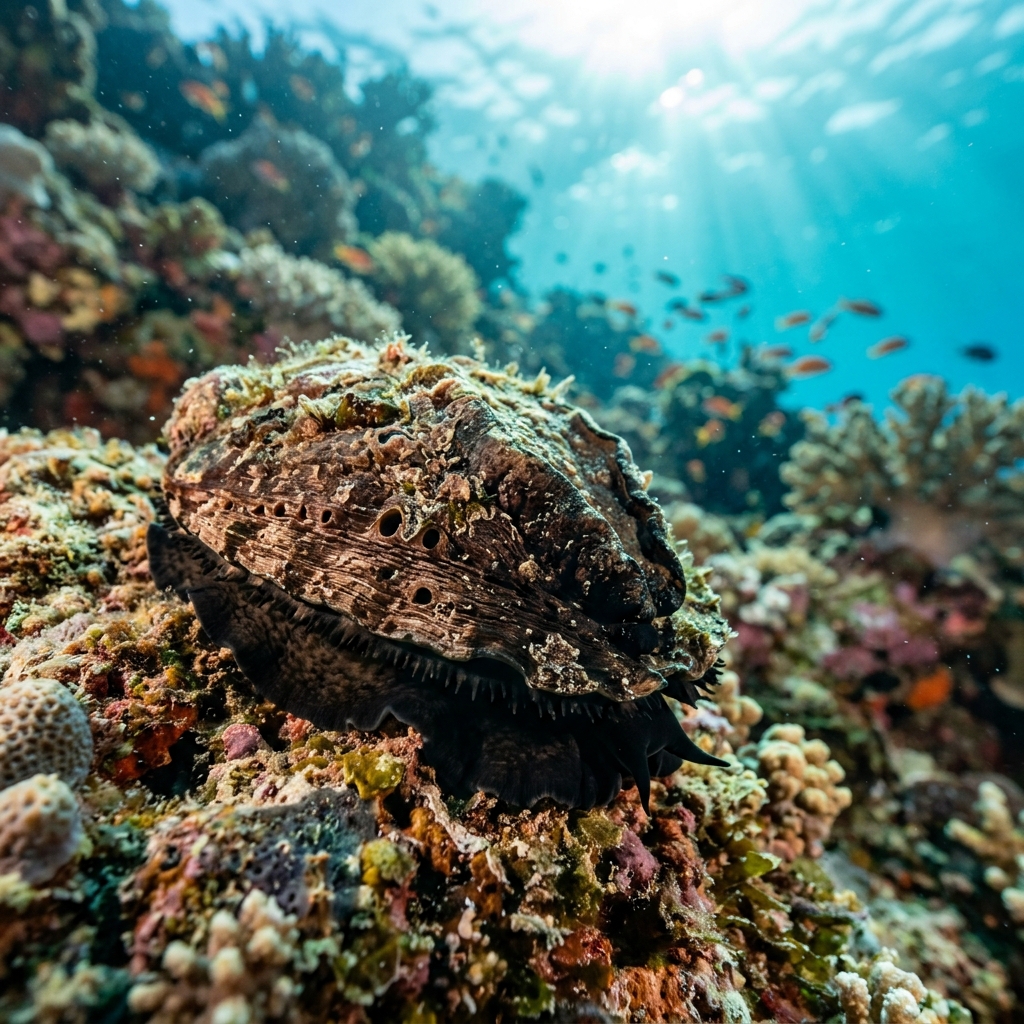
A small, glossy oval shell with a smooth, domed back marked by mottled brown and cream blotching that breaks up its outline against rubble. Like other cowries, the shell has a slit-like underside opening lined with tiny teeth, usually only visible if you turn it over without disturbing the animal. The living animal often draws its fleshy mantle up over the shell while active, so much of the pattern is hidden until it retracts.
Expect to find it tucked into rubble, crevices or under coral debris rather than out in the open, since cowries are mostly nocturnal grazers that hide by day. Divers most often log it as an incidental find while scanning the substrate closely rather than something that swims into view. It doesn't react to divers beyond withdrawing its mantle if touched or disturbed.
Like other cowries, it feeds by rasping algae and film off rock and rubble at night, retracting its fleshy mantle back over the shell by day to keep the surface glossy and protected from erosion.
No clear seasonal pattern shows in the sightings, and its comfort range of roughly 22.6 to 28.6C covers Hawaiian reef water year-round, so any month is fair game.
Logged almost exclusively across Hawaii, United States, making the islands the place to look for this cowry rather than anywhere in the wider Indo-Pacific. It turns up on rubble and reef flats at a wide spread of Hawaiian sites, though always as one shell among many rather than something you'll spot on every dive.
Mapping where Snake's Head Cowrie is logged…
It's essentially a Hawaii speciality, logged at a wide range of sites across the islands and rarely reported elsewhere. Look on rubble patches and reef flats rather than open coral.
There's no strong season in the sightings, and Hawaiian reef water sits within its comfort range of about 22.6 to 28.6C all year, so it can be found in any month.
Look for a small, glossy, oval shell with mottled brown and cream markings tucked into rubble or crevices. The living animal often covers its shell with a fleshy mantle when active, only revealing the pattern when it withdraws.
Exact size data isn't confirmed for this species, but like most cowries in its genus it stays small, generally within the range of a fingertip to a couple of centimetres.
No, it poses no risk to divers. It's a slow-moving grazer with no venom or bite that would concern anyone underwater.
It grazes algae and biofilm off rock and rubble mostly at night, then draws its mantle over its shell by day, a behaviour shared across cowries that keeps the shell surface polished and protected.
Site and sighting data is aggregated from diver logs, iNaturalist and GBIF. For taxonomy and conservation status:
Triton Shell
2,297 sites