Calappa calappa
Smooth Box Crab is an uncommon find on Visayas reef dives in the Philippines, tucked into sand at 25-31C year-round.
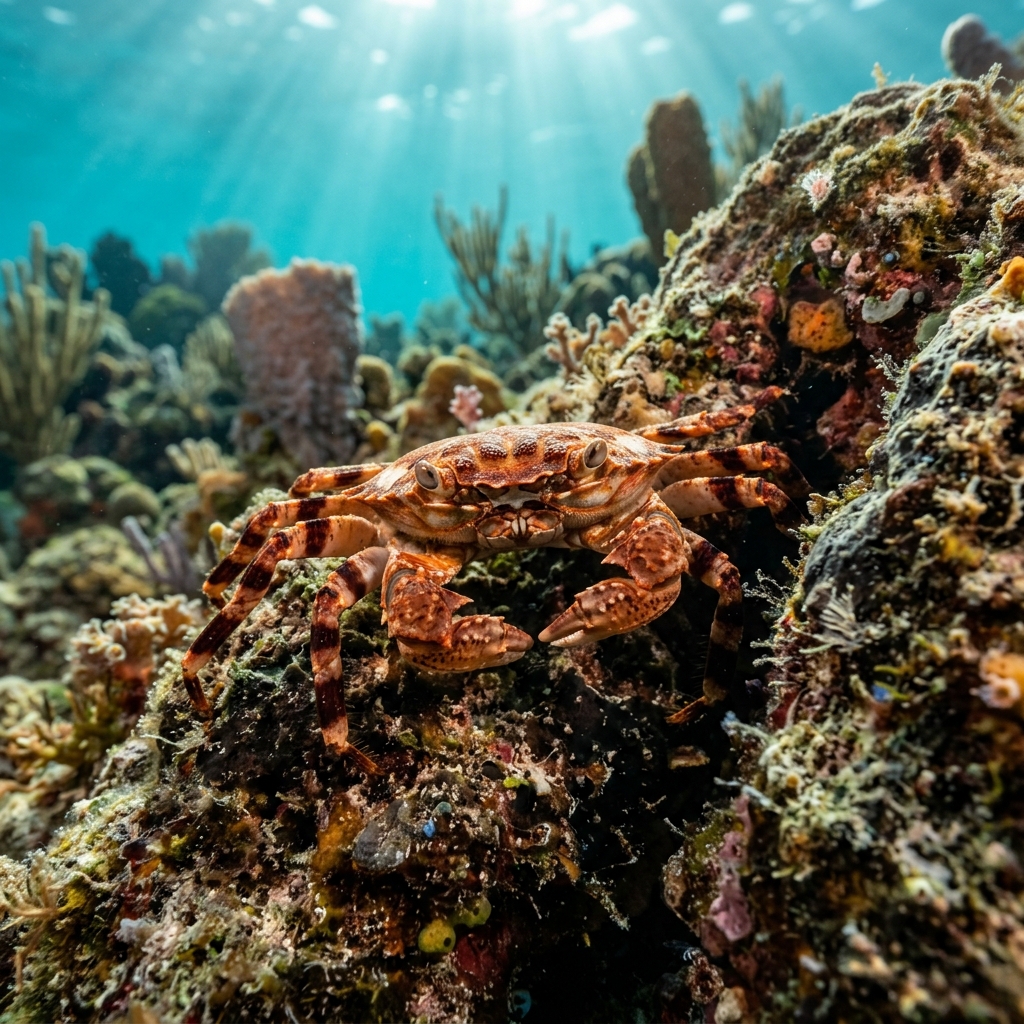
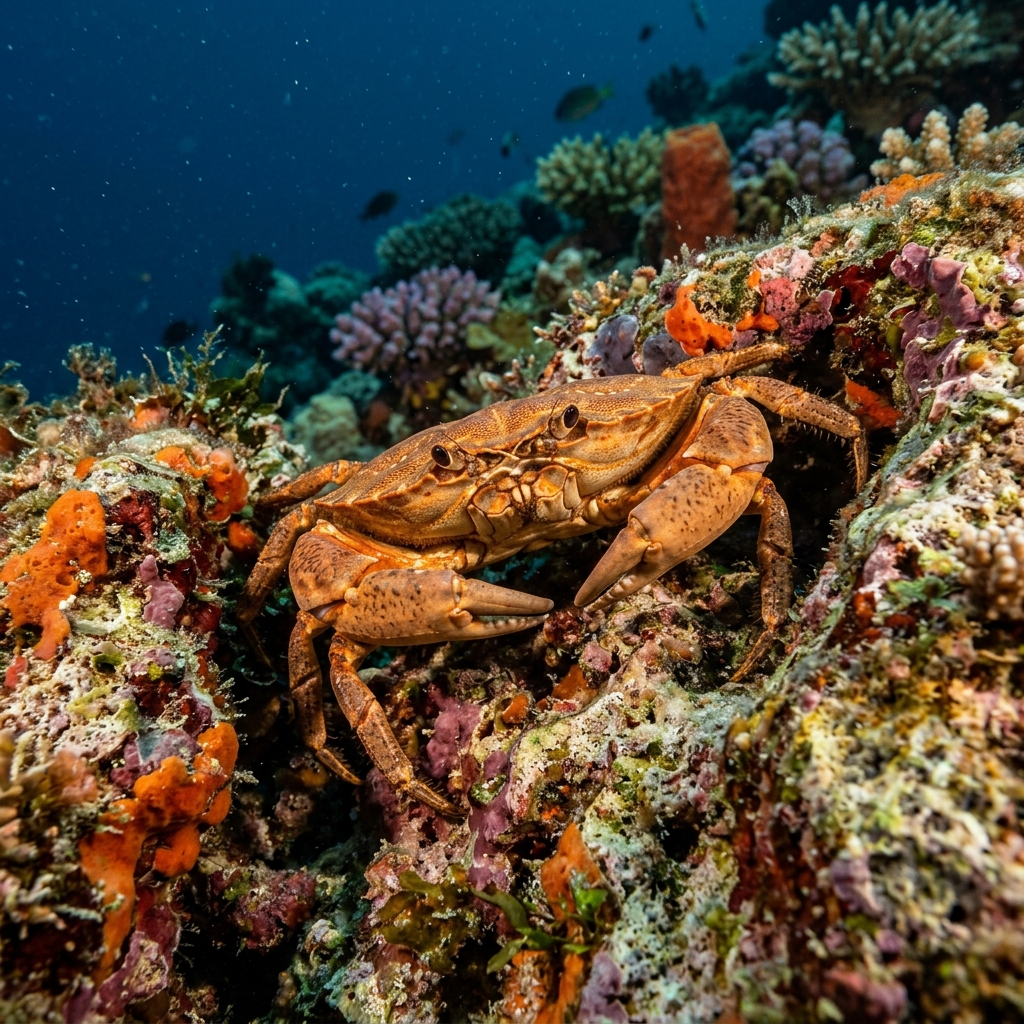
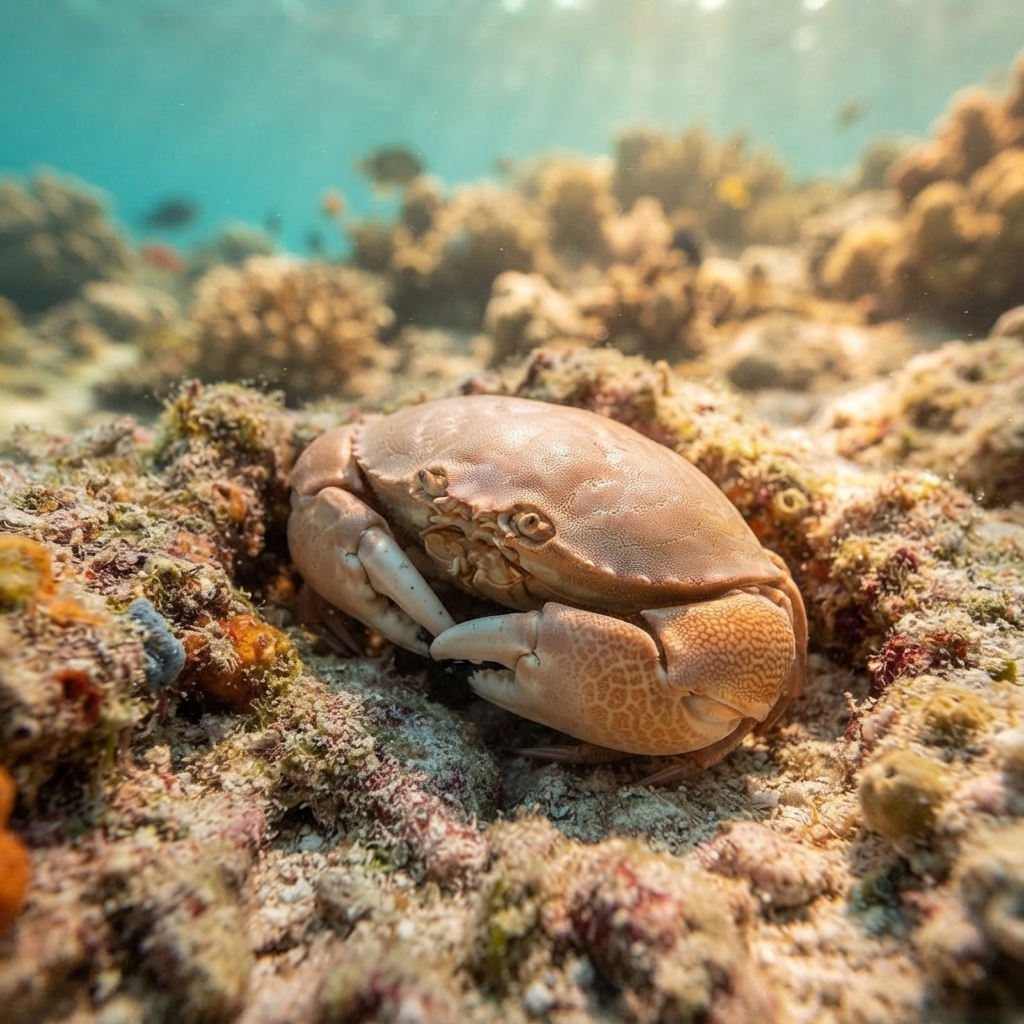
A rounded, domed shell that looks almost polished, usually a mottled tan to reddish-brown with darker speckling across the carapace. Reaches around 9 cm across, wider than it is tall, with the front claws folding flush against the shell like a shield when tucked in. The shell shape alone sets it apart from spider-legged or hermit-type crabs on the same reef.
Spends most of daylight hours settled into sand or rubble close to the reef base, often partly buried with just the shell outline visible. Divers describe it as uncommon at most sites, so a slow scan of sandy gaps between coral heads is the way to spot one rather than expecting it in the open. It does not flee quickly when approached, relying on its hard shell and low profile instead of speed.
Box crabs in this genus use their heavy claws to crack open snail shells, a feeding trick that sets them apart from the pinch-and-scavenge style of most reef crabs.
No clear seasonal pattern shows up in the data, and with a comfortable range of 25.4 to 31.4C on Visayan reefs, it is a year-round find rather than a seasonal one.
Every logged sighting so far comes from the Philippines, with the Visayas region the clear stronghold for this species. If you are reef diving around the Visayas, keep an eye on sandy patches and rubble near coral rather than the open reef itself.
Mapping where Smooth Box Crab is logged…
Sightings so far are concentrated in the Philippines, particularly across the Visayas region, where it turns up on sandy patches near reef structure.
There is no strong seasonal pattern in the sightings, and warm water year-round in the Visayas means it can turn up on any dive, not just in a particular month.
Look for a smooth, domed, shield-shaped shell around 9 cm across in mottled tan or reddish-brown, usually half-tucked into sand with the claws folded flat against the body.
They typically reach about 9 cm across the shell, making them a modest-sized find that is easy to miss unless you are scanning sand and rubble closely.
No, they pose no danger to divers. They are slow-moving and rely on their hard shell for defence rather than any threat to people.
Like other box crabs, it uses strong, blunt claws to crack open snail and mollusc shells rather than relying on speed or scavenging for food.
Site and sighting data is aggregated from diver logs, iNaturalist and GBIF. For taxonomy and conservation status:
European Green Crab
2,469 sites