Lissocrangon stylirostris
A cold-water sand shrimp turning up rare to uncommon across Pacific Northwest dive sites in 9 to 15 C water.
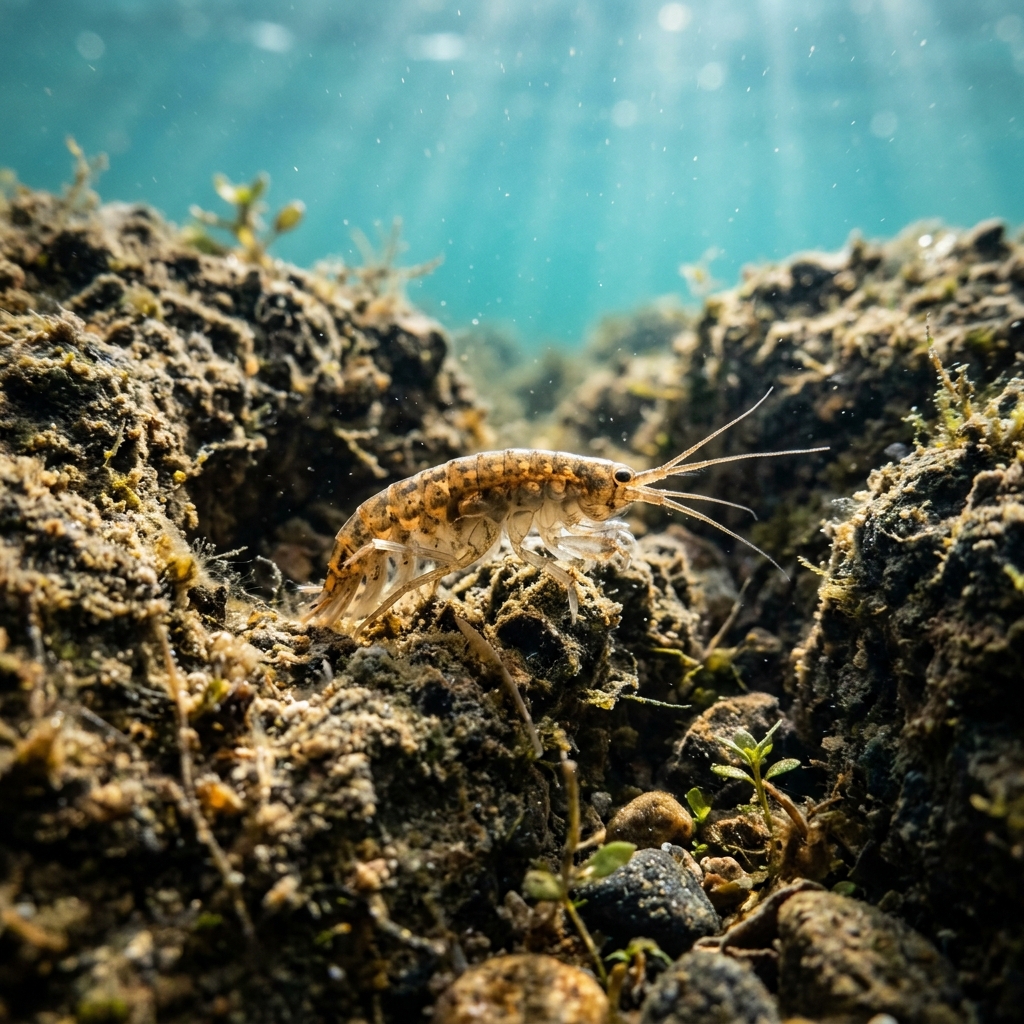
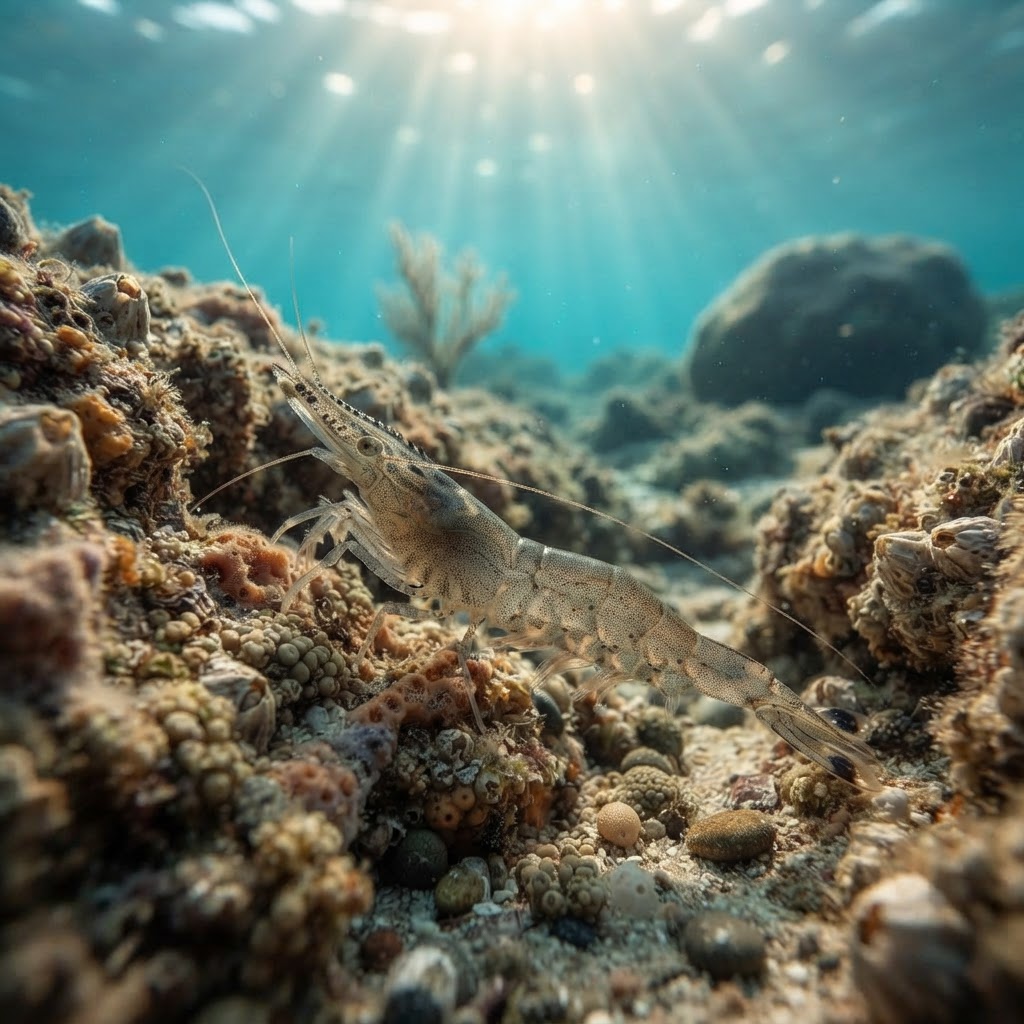
Look for a small, pale, sand-toned shrimp with a slender, almost translucent body that blends into the seabed it sits on. The rostrum (the pointed spike between the eyes) is notably long and thin compared to bulkier shrimp species, which is the main feature divers can key on. It tends to sit still on or partly buried in sand or fine sediment rather than swimming in the open, so it reads as a shape rather than a colour against the bottom.
Divers most often spot this shrimp sitting motionless on sand or fine sediment, relying on its pale colouring to disappear against the bottom rather than fleeing. It is logged as rare at most sites and only uncommon at a handful, so finding one usually means slowing down and scanning the substrate closely rather than expecting it to swim into view. It shows no particular reaction to divers beyond staying still, consistent with a small, sediment-dwelling shrimp that depends on camouflage over speed.
Its long, thin rostrum and sand-matching body are adaptations shared by several crangonid sand shrimps, which rely on burying or freezing in place rather than swimming away when something large approaches.
Sightings sit in an 8.8 to 14.8 C range with no clear seasonal pattern in the data, so it appears to be a year-round find in Pacific Northwest waters rather than a seasonal visitor. Cold-water divers there dive through most of the year anyway, which likely explains the flat spread.
Every logged sighting comes from the United States, with the Pacific Northwest standing out as the region where divers actually find this shrimp. It is not logged elsewhere in the current data, so treat cold Pacific Northwest sites as the reliable place to look rather than a species you would expect on a warm-water reef.
Mapping where Smooth Bay Shrimp is logged…
Sightings are concentrated in the Pacific Northwest region of the United States, which is currently the only area with logged records of this shrimp. Look for it on sand or sediment patches at cold-water dive sites there.
There is no clear season in the sighting data, and records span 8.8 to 14.8 C, so it appears to be present year-round at Pacific Northwest sites rather than tied to a particular month.
Look for a small, pale, sand-coloured shrimp with a slender body and an unusually long, thin rostrum, sitting still on sand or fine sediment. It relies on blending into the seabed rather than swimming, so scan the bottom closely rather than the water column.
No, this species poses no danger to divers. It is a small, sediment-dwelling shrimp that stays still or hides rather than interacting with people.
It is logged as rare at most sites where it has been recorded, with only a smaller number of sites reporting it as uncommon. Spotting one takes a deliberate, close look at sandy or sediment-covered bottoms.
Site and sighting data is aggregated from diver logs, iNaturalist and GBIF. For taxonomy and conservation status:
Rockpool Prawn
2,179 sites