Pseudorhombus jenynsii
Camouflaged on sandy bottoms in Western Australia and New South Wales, this flatfish rewards divers who slow down and look closely.
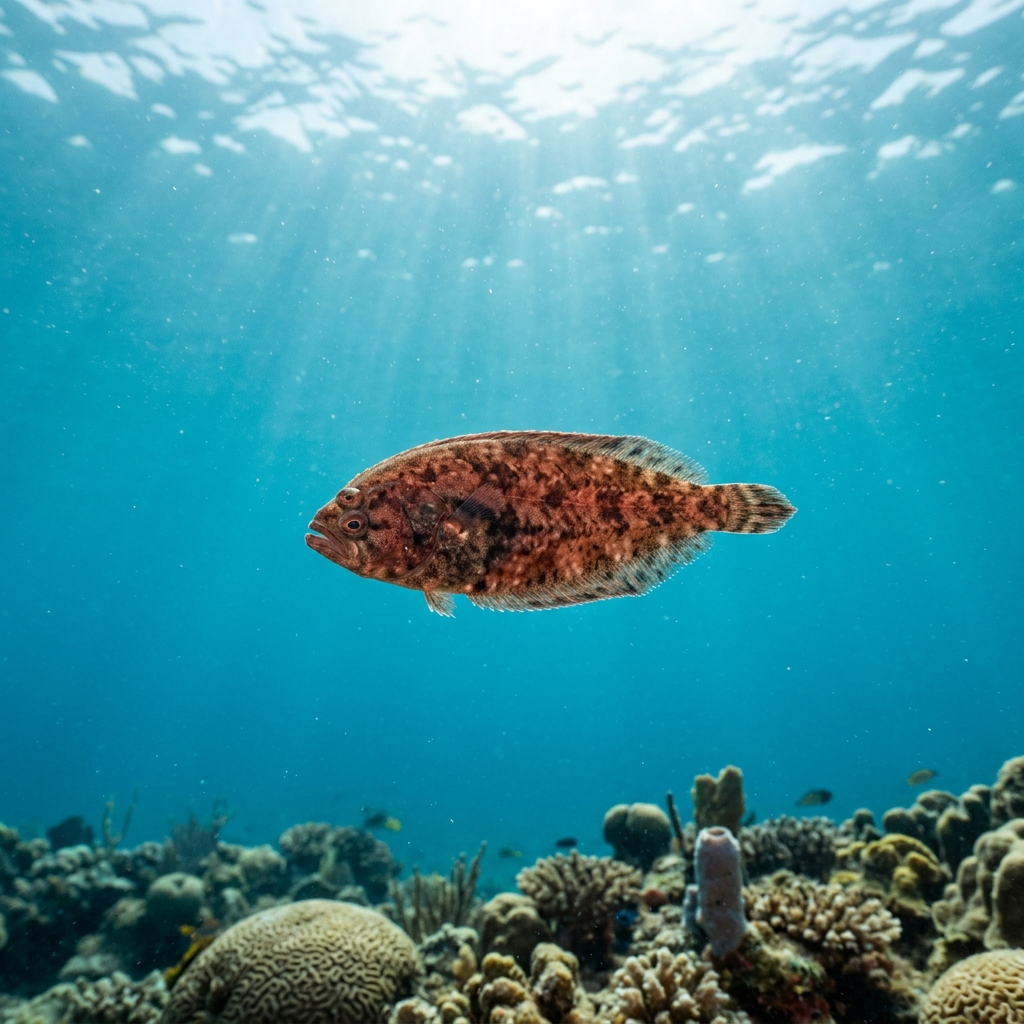
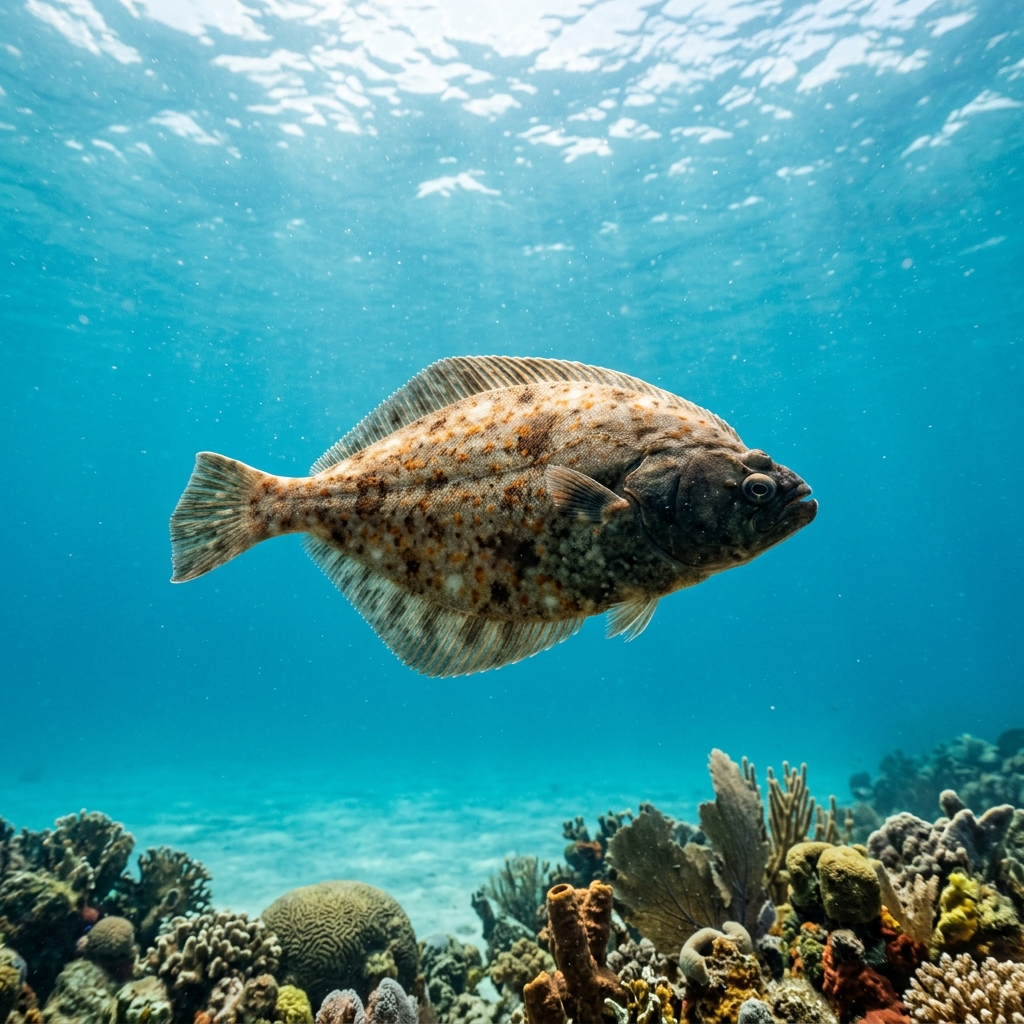
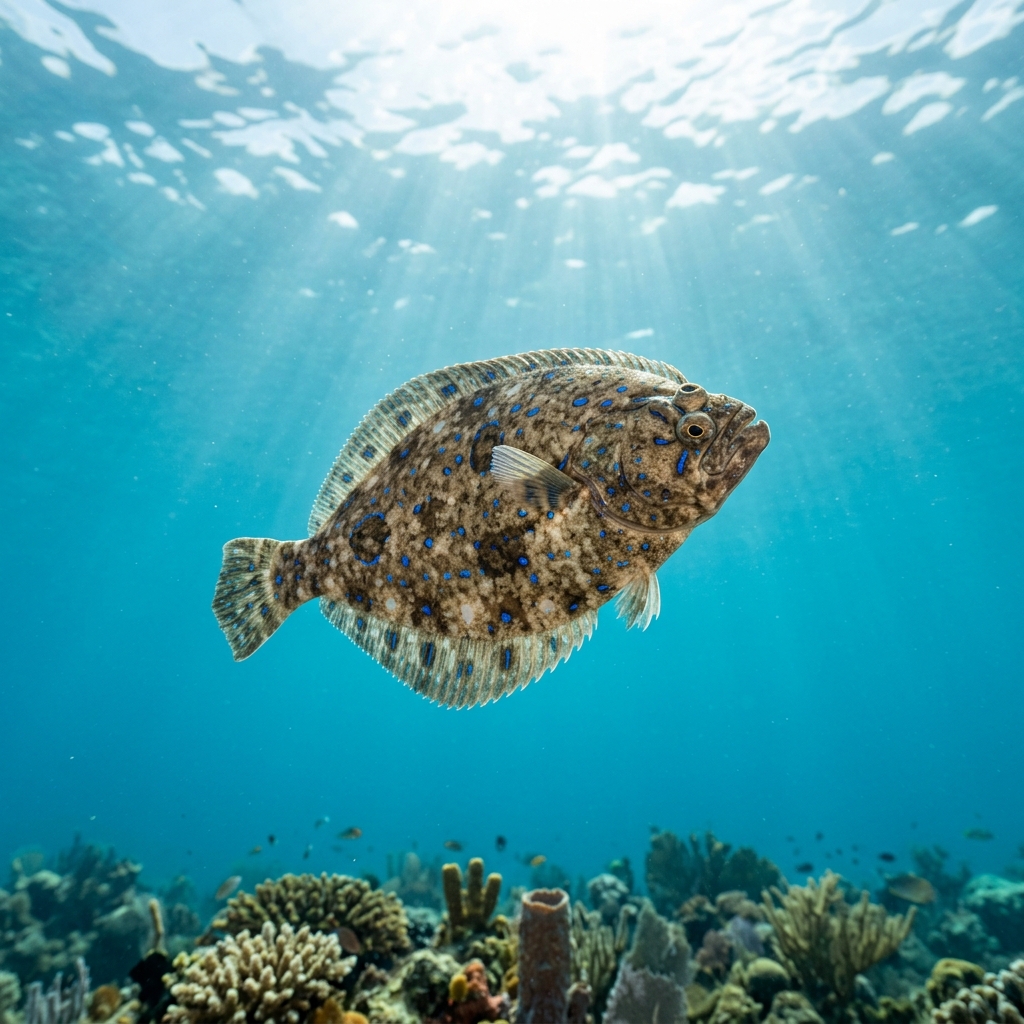
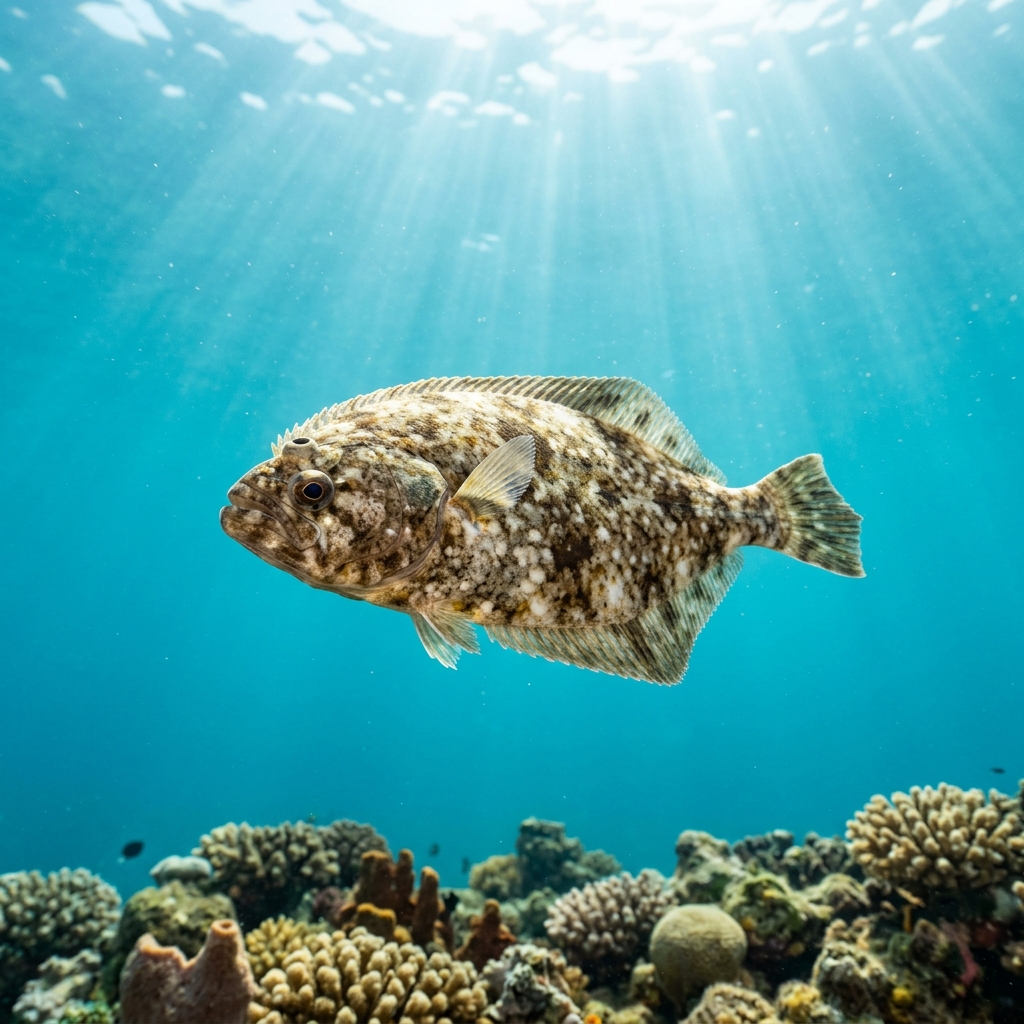
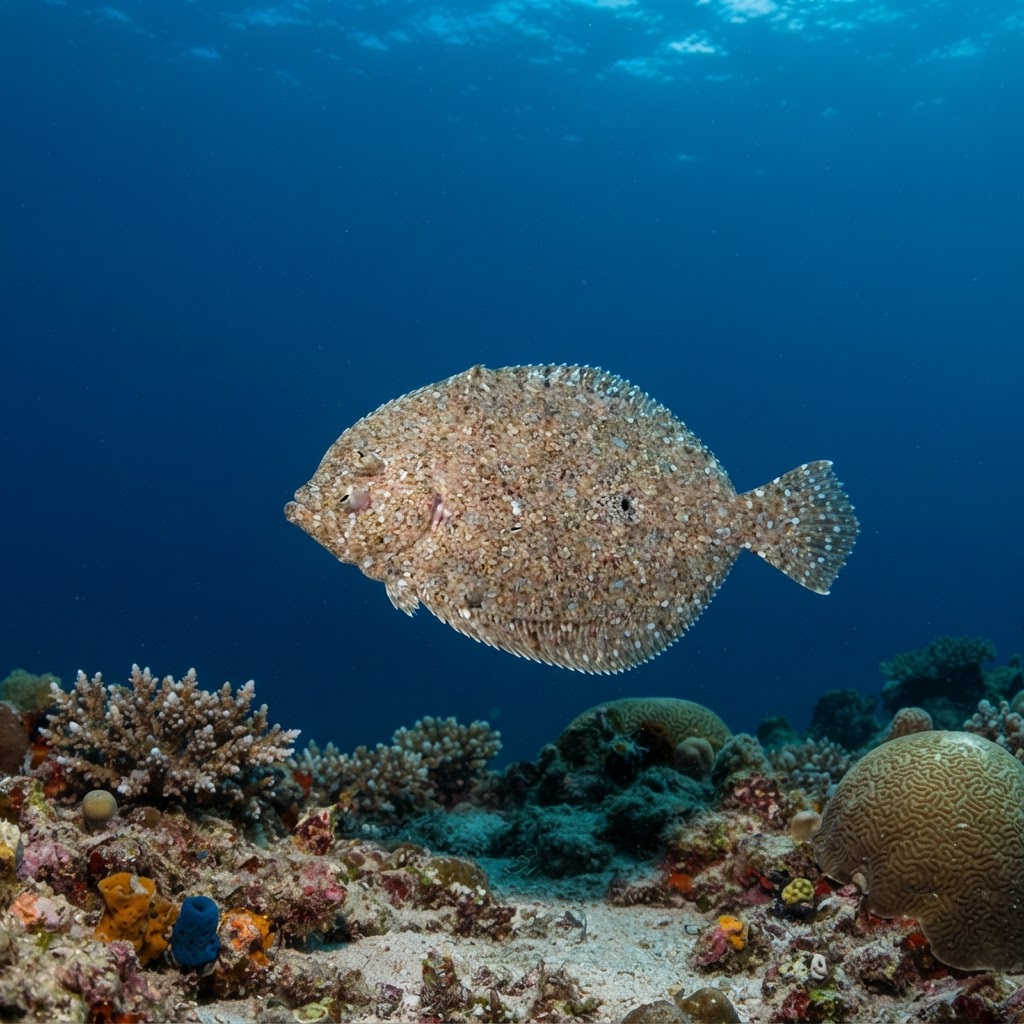
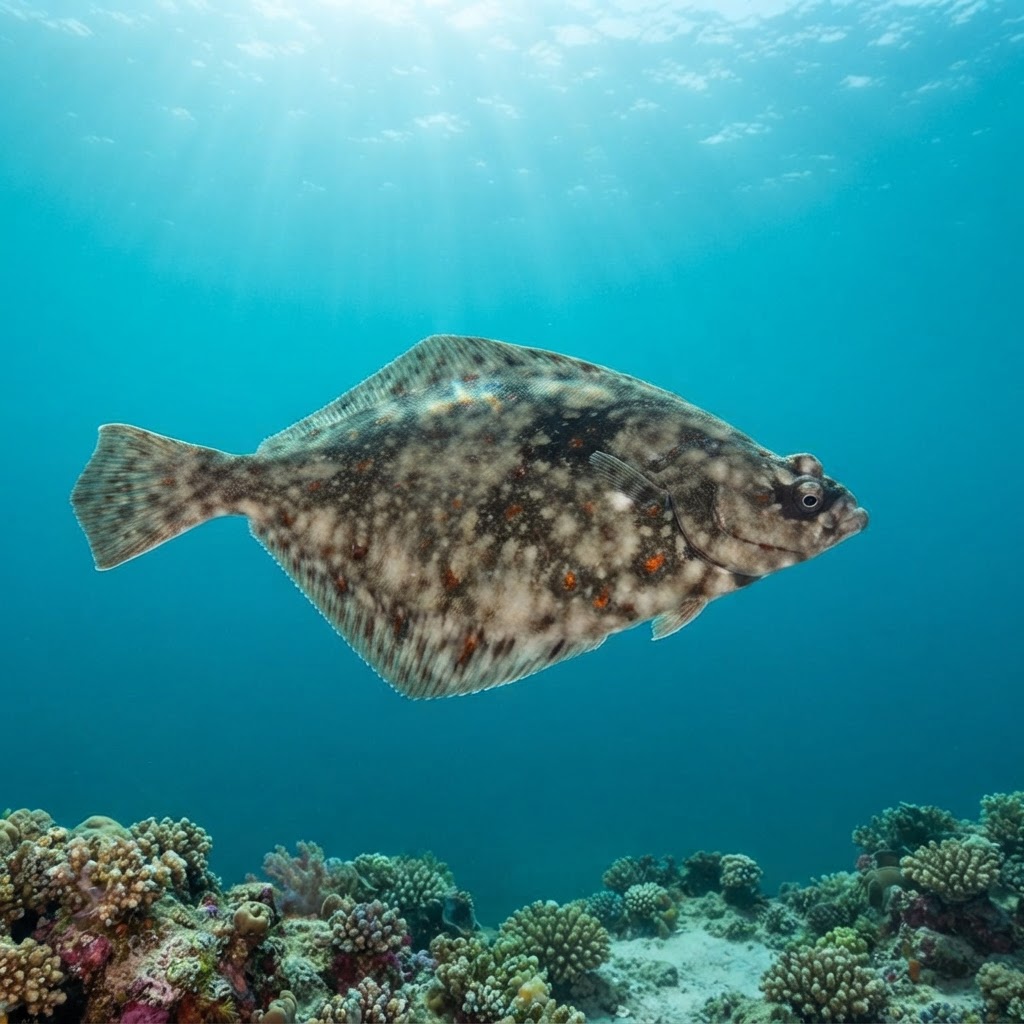
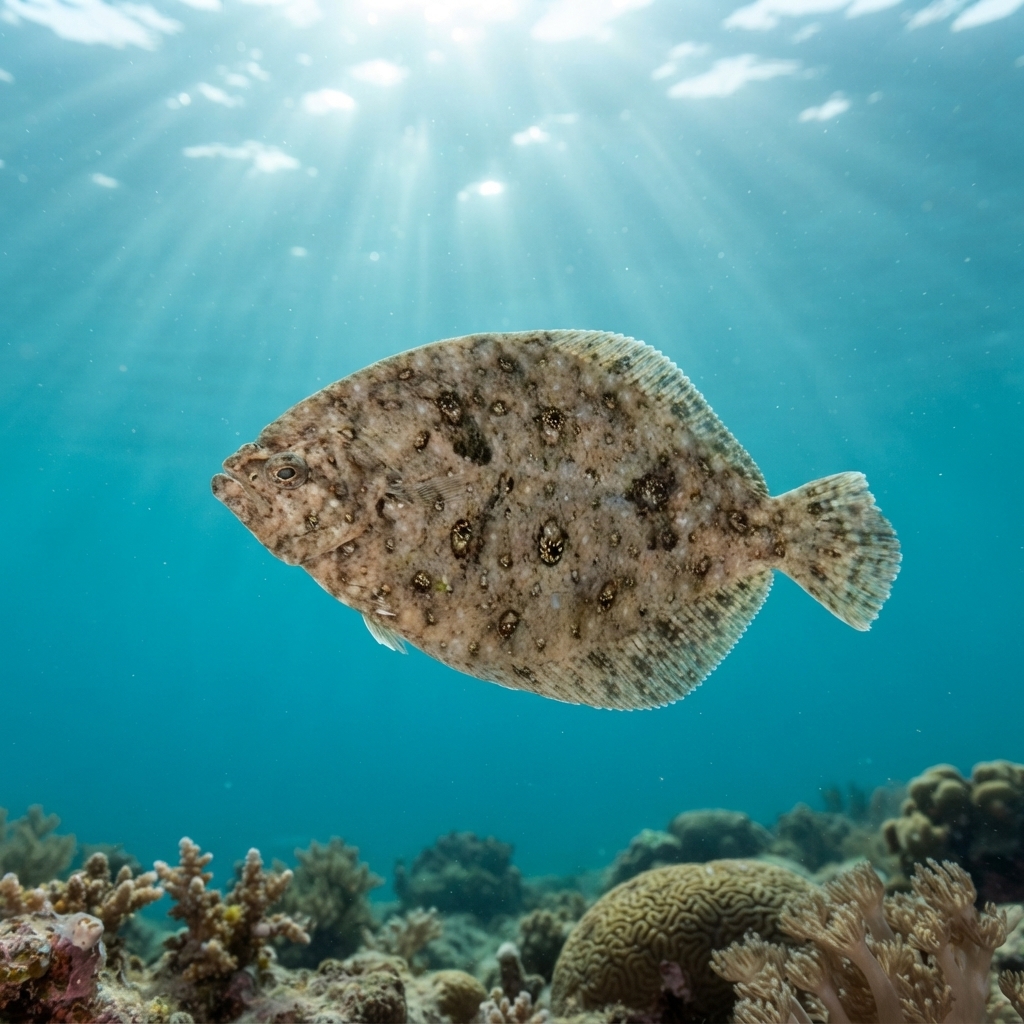
Flattened, oval body lying flush on the sand, with both eyes on the left side of the head, a diver giveaway that separates true flounders from many other bottom fish. Mottled brown, grey and sandy tones break up its outline against the seabed, and it rarely grows past about 24 cm. Look for the faint spotting pattern along the body and the way it glides in a low, undulating swim just off the bottom when disturbed.
Spends most of its time motionless on sand or fine sediment, relying on camouflage rather than flight to avoid attention. When approached too closely it will flick off the bottom in a short, low burst and resettle a short distance away, eyes tracking the disturbance. Most divers find it during slow, methodical looks along sandy patches rather than on open reef swims.
Like other flatfish, it starts life swimming upright with an eye on each side, then one eye migrates across the skull as it settles into its bottom-dwelling, sideways-lying adult form.
Sightings show no clear seasonal pattern, and its comfort range of roughly 15 to 29 C spans both cooler temperate months and warmer summer conditions in these regions, so it can turn up year-round.
Nearly all logged sightings come from Australia, with Western Australia the strongest area and New South Wales a secondary hotspot. Divers doing sandy-bottom or estuarine-adjacent dives in these regions have the best odds, though it stays a rare-to-uncommon find even there.
Mapping where Smalltooth Flounder is logged…
Nearly every logged sighting is in Australia, especially around Western Australia and, to a lesser extent, New South Wales. It favours sandy or sediment patches rather than hard coral reef.
There is no strong seasonal pattern in sightings, and its tolerance for water from about 15 to 29 C means it can be encountered across most of the year in Australian waters.
Look for a flat, oval fish lying on sand with both eyes on the left side of its head. Mottled brown and grey camouflage and a low, gliding escape flick are the main clues.
They typically reach around 24 cm in length, making them a small, easy-to-overlook bottom dweller rather than a showy reef fish.
They hatch swimming upright with a normal eye on each side, but as they mature one eye migrates across the skull so both end up on the upward-facing side once the fish settles flat on the seabed.
No, they pose no danger to divers. They rely entirely on camouflage and a quick sideways dart to avoid disturbance rather than any defensive behaviour.
Site and sighting data is aggregated from diver logs, iNaturalist and GBIF. For taxonomy and conservation status:
Wide Eyed Flounder
1,624 sites