Apletodon dentatus
A 3cm reef hider spotted mostly in Brittany, France and along England's coast in cool 10-19C water year-round.
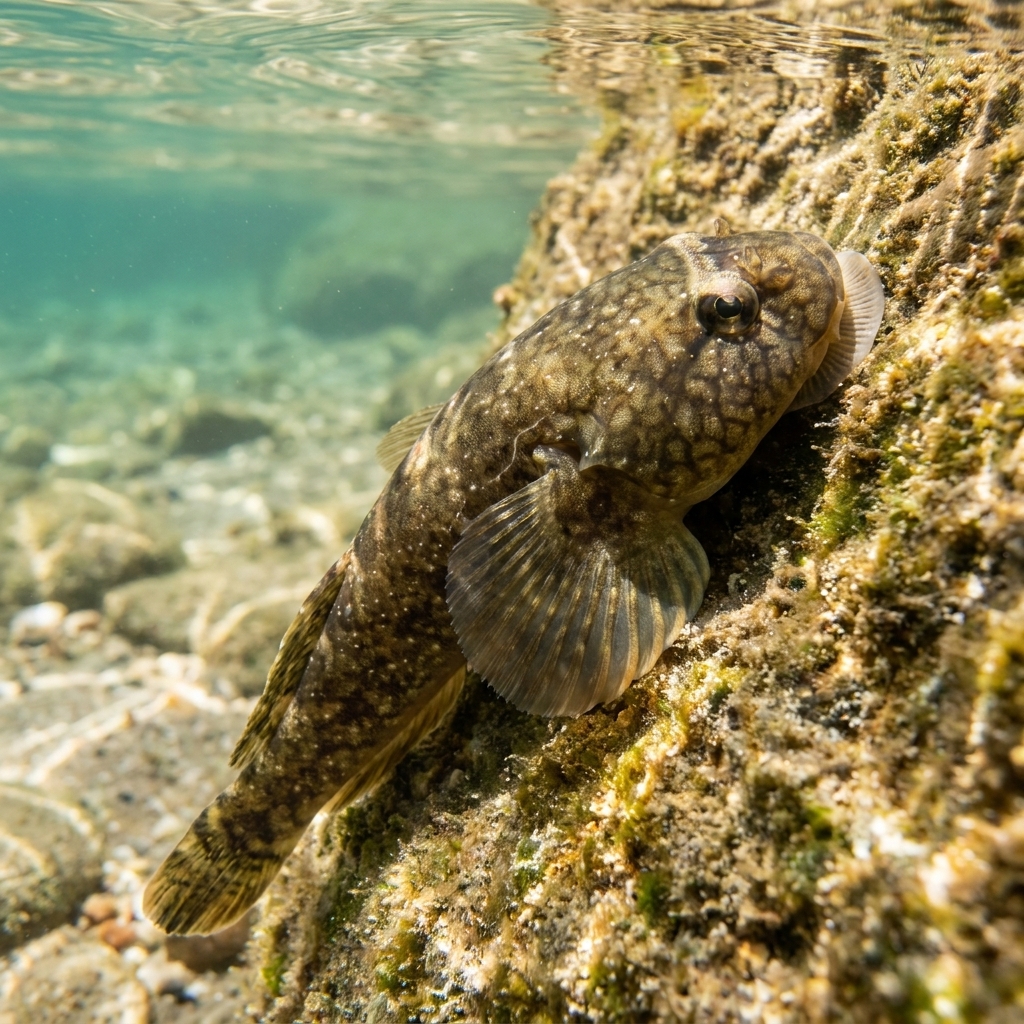
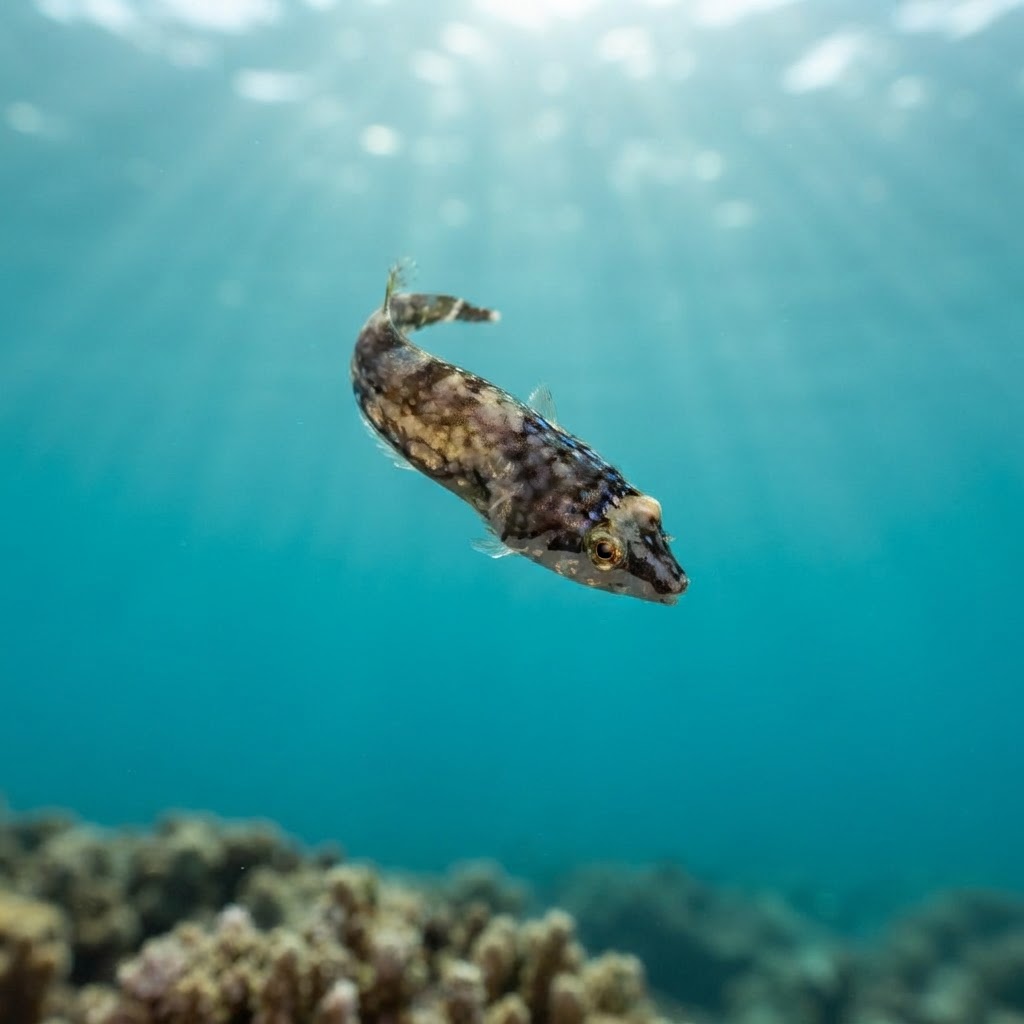
At just 3 centimetres, this is a fish you find by looking rather than swimming past and noticing. Body is squat and tadpole-shaped, tapering from a blunt, small head to a narrow tail, usually mottled brown or olive to match the rock or weed it sits on. It has no visible scales and lies flat against hard surfaces using a suction disc formed from fused pelvic fins, rather than swimming freely in open water. Look for it pressed into crevices, under kelp holdfasts, or clinging to the underside of rocks rather than out in the open.
Spends most of its time stuck fast to a rock face or nestled among weed and pebbles, using its sucker-like underside to hold position even in surge and current. Divers report it staying put rather than darting off when approached, which makes it a patience find rather than a fast one; the challenge is spotting a 3cm mottled fish that looks like part of the rock, not getting close once you have. Best found by scanning the undersides of boulders and the bases of kelp on slow, close-focus passes rather than mid-water searching.
That suction disc under its body is made from modified pelvic fins fused together, the same trick used across the whole clingfish family to hold fast against wave-swept rock instead of swimming against it.
No clear seasonal pattern shows up in the sighting data, and its comfort range of roughly 10 to 19C spans the typical annual swing for Brittany and southern England, so it is reasonable to look for it across the diving season rather than waiting for a specific month.
Most reliably logged in Brittany, France, which accounts for the bulk of recorded sightings, with further records along the Bay of Biscay coast further south. Outside France, it turns up along the England coast in the UK, with a single record from Galway & Connemara in Ireland. At nearly every site it is logged as rare or uncommon, so treat any sighting as a reward for slow, careful looking rather than an expected tick.
Mapping where Small-headed Clingfish is logged…
Brittany in France is the strongest area for sightings, with further records along the Bay of Biscay and around the England coast in the UK. It has also been logged once in Galway & Connemara, Ireland.
There is no strong seasonal signal in the sightings, and its temperature niche of roughly 10 to 19C covers most of the diving year in these regions, so it can turn up whenever you dive.
Look for a tiny, 3cm mottled brown fish clinging flat to rock or weed rather than swimming in open water. Its blunt small head and tadpole-shaped body, plus the way it stays fixed in place, are the main giveaways.
They stay small, reaching only around 3 centimetres, which makes them one of the more overlooked finds on a rocky reef dive.
It holds onto rock using a sucker formed from its fused pelvic fins instead of relying on swimming, letting it sit still in surge and current where other small fish would get swept off.
No, they pose no danger to divers. They are tiny, sedentary, and have no means of harming a diver even at close range.
Site and sighting data is aggregated from diver logs, iNaturalist and GBIF. For taxonomy and conservation status:
Soldierfish
3,612 sites