Halichoeres bivittatus
Spot the slippery dick across Florida, the Yucatán and Roatán year-round in warm shallow reefs. Learn the bold stripe and tail spot that give it away.
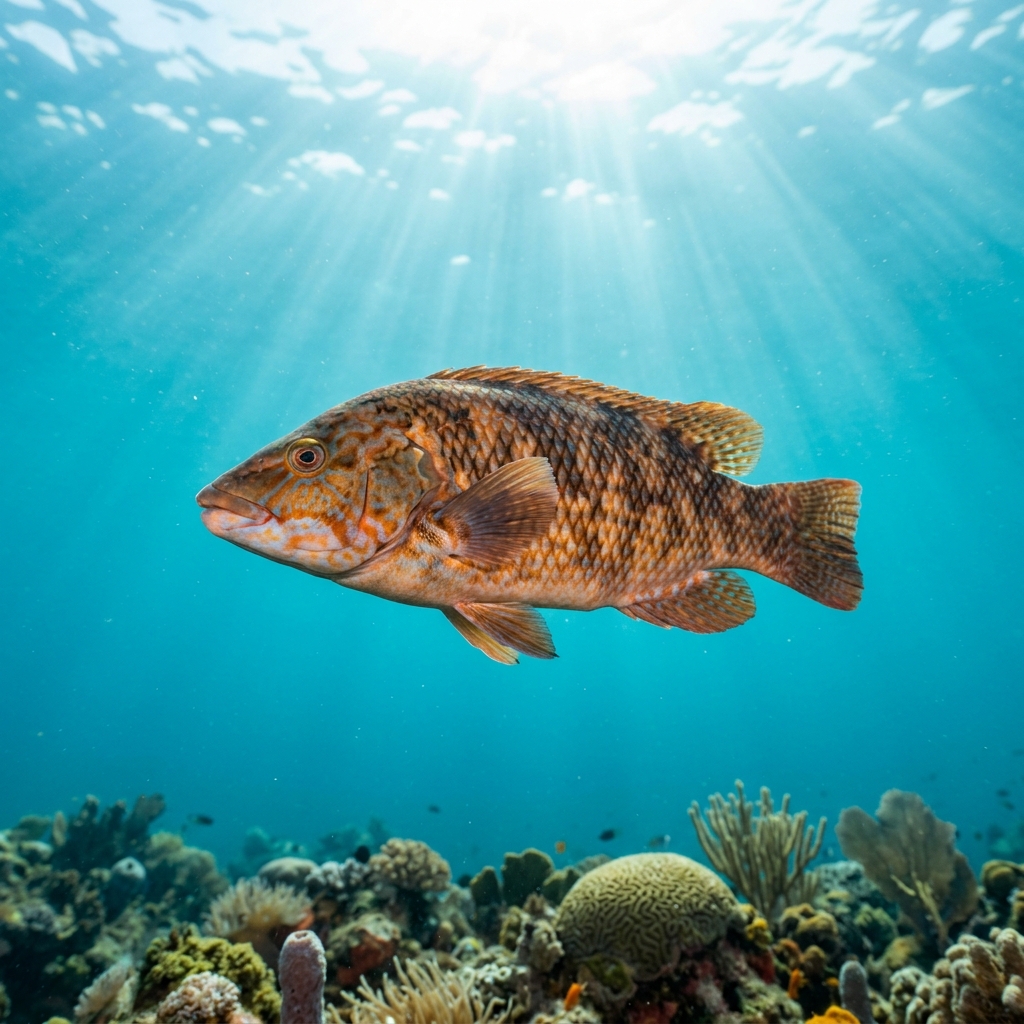
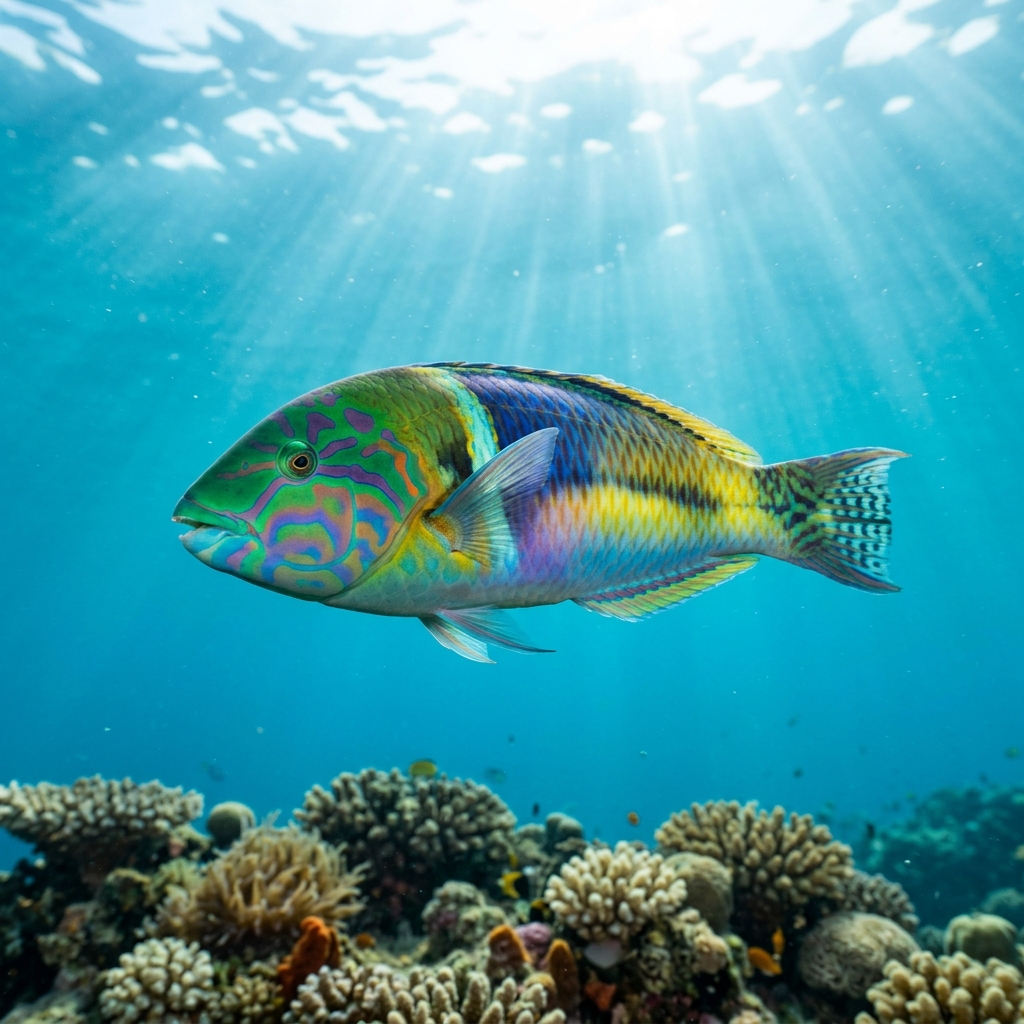
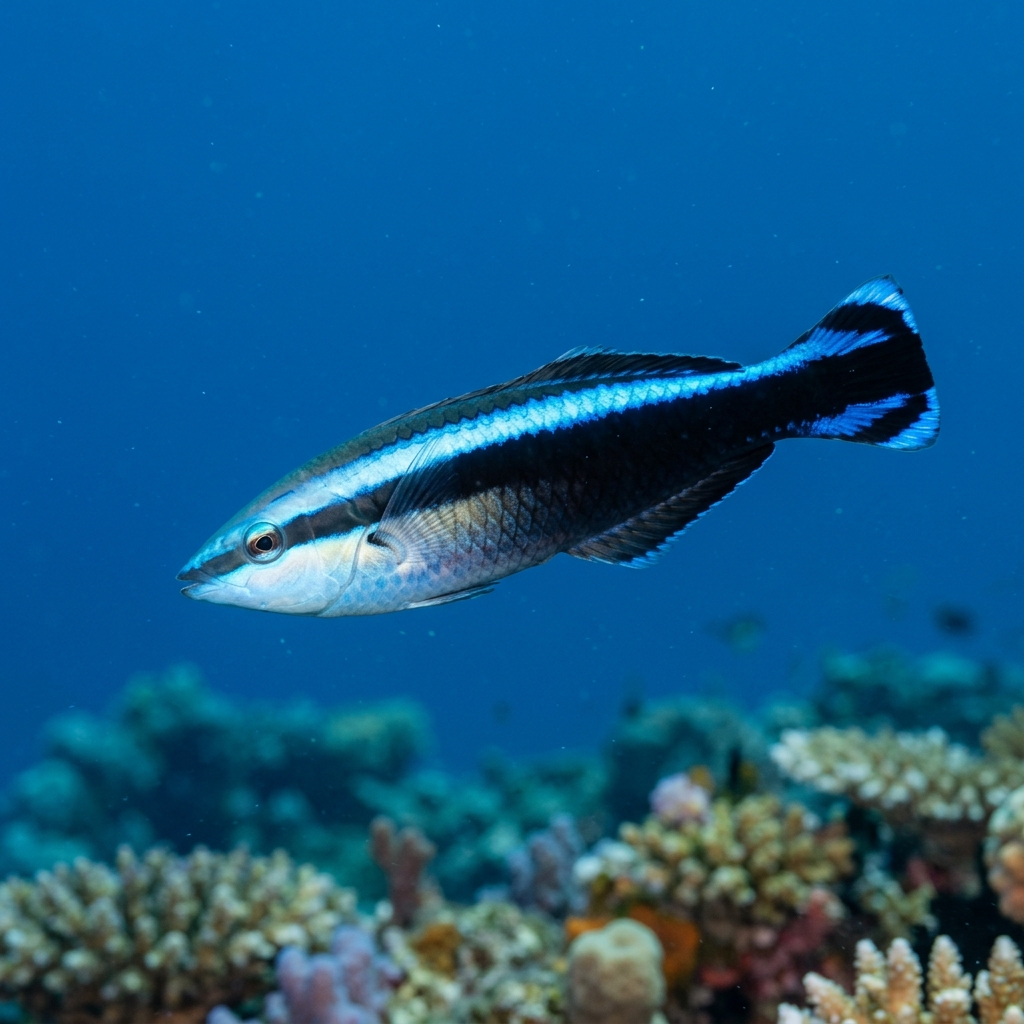
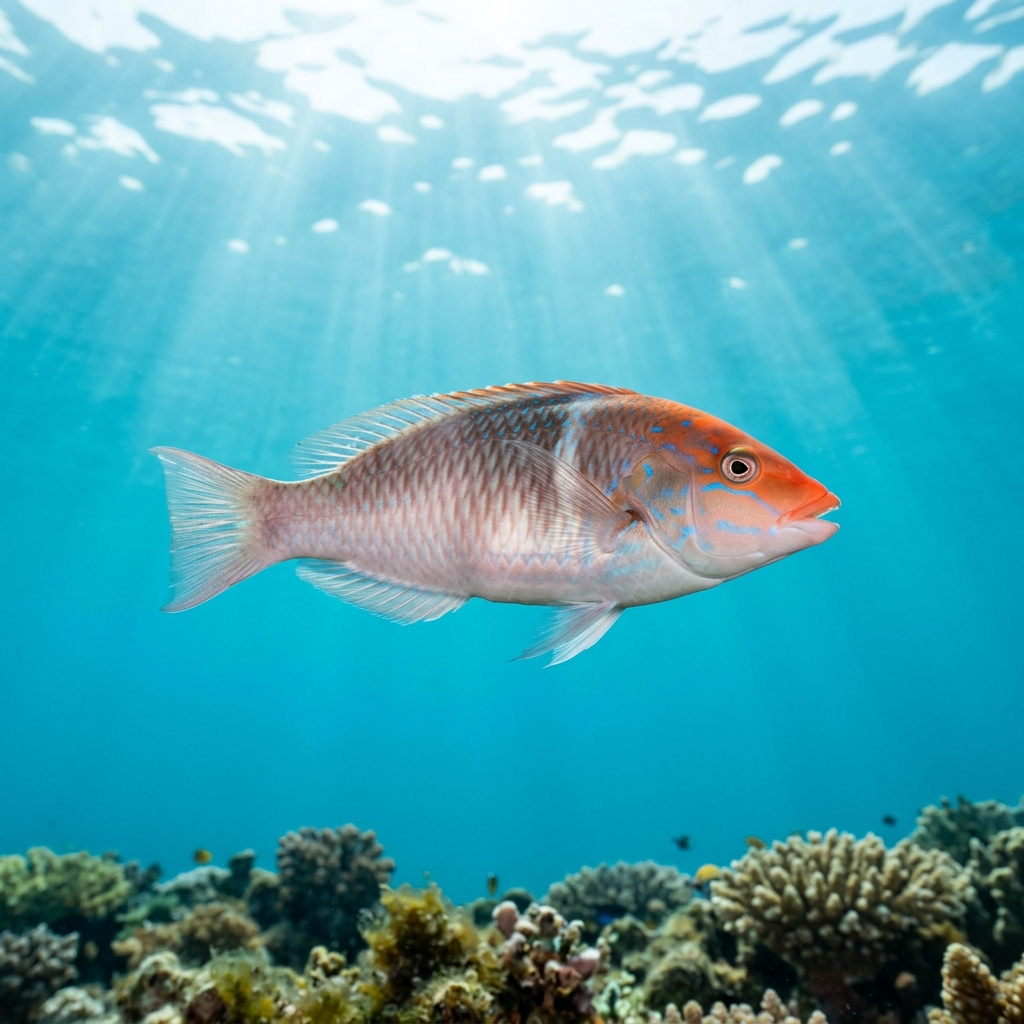
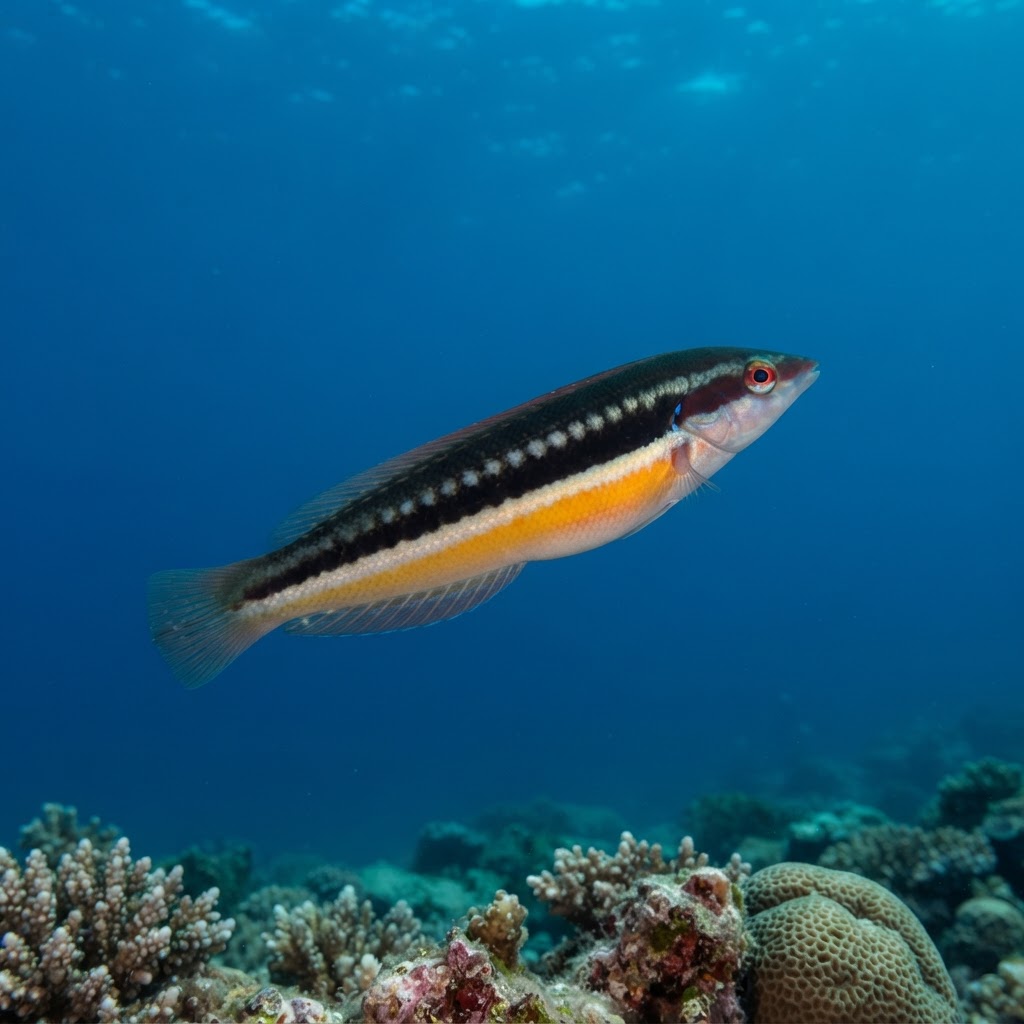
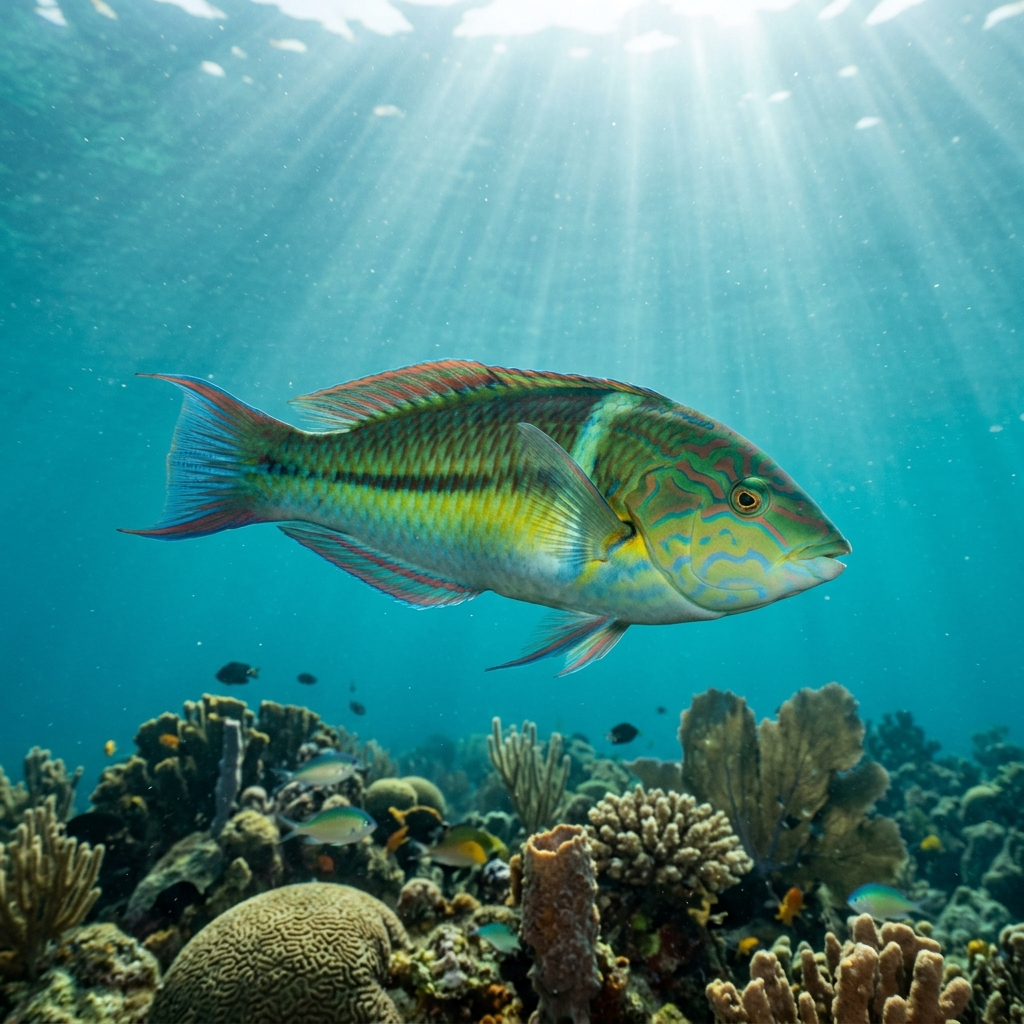
A slim, torpedo-shaped wrasse around 24 cm long, the slippery dick is most easily keyed on by the prominent dark horizontal stripe running from snout to tail. Terminal-phase males show a vivid greenish body and a distinctive dark spot at the tail base, while initial-phase fish (females and younger males) are paler and more softly marked. Look for it darting low and fast over shallow reef and rubble in water no deeper than about 15 m.
During the day slippery dicks are constantly on the move, working over sand patches and rubble for small invertebrates and rarely staying still for long. They are not shy and will often approach a diver who is disturbing the substrate, hoping to pick off anything stirred up. As dusk falls, watch for them burying themselves in the sand to sleep, a brief and easy-to-miss moment that many divers never realise wrasses do.
Like many wrasses, slippery dicks can change sex: initial-phase fish are predominantly female, and some will transition into fully functional terminal-phase males, a process accompanied by that dramatic colour shift to green with the bold tail spot.
Present year-round on tropical reefs, as it sits comfortably in water temperatures from roughly 24 to 28 °C, typical of Caribbean and south Florida conditions across all seasons.
The slippery dick is most reliably logged across the wider Caribbean and tropical western Atlantic, with the strongest presence in Florida and the US Southeast, the Yucatán Peninsula of Mexico, and Roatán in Honduras. The Bahamas, Bonaire, Cuba, Guadeloupe, and the Dominican Republic all offer consistent sightings, and there are solid records along the northeast coast of Brazil too.
Mapping where Slippery Dick is logged…
The slippery dick is found across the Caribbean and tropical western Atlantic. Florida and the US Southeast, the Yucatán Peninsula in Mexico, and Roatán in Honduras are among the most commonly logged areas. The Bahamas, Bonaire, Cuba, Guadeloupe, and northeast Brazil also have strong records.
They are present year-round. Because the species is comfortable in the warm, stable water temperatures typical of Caribbean reefs, there is no single peak season, any dive on a shallow tropical reef can turn one up.
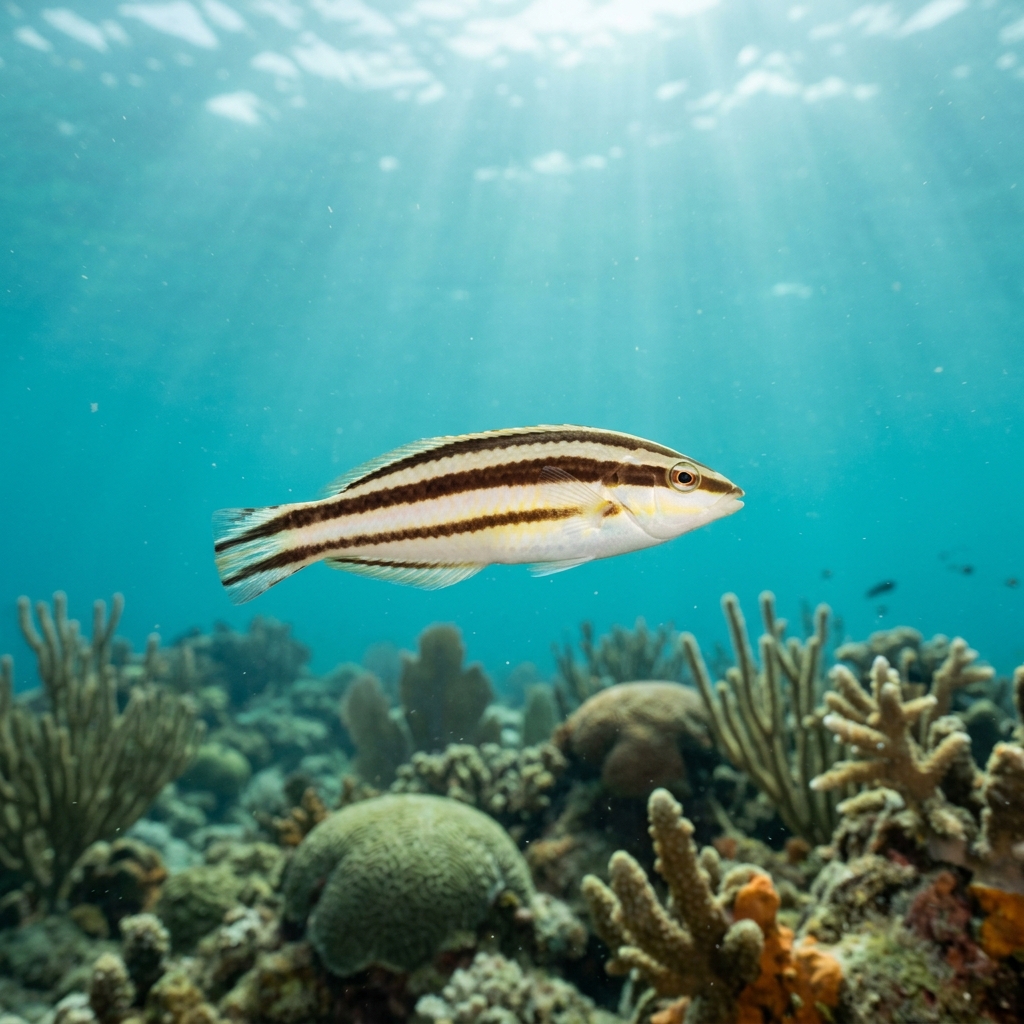
Look for a slim 20-something-cm wrasse cruising fast and low over the reef with a bold dark stripe from snout to tail. Terminal-phase males add a greenish body tone and a dark spot at the tail base. Juveniles are cream with two sharp dark stripes and look quite different from adults.
Most individuals encountered by divers are around 24 cm, roughly the length of a large hand. They stay fairly slender and are quick movers, which can make sizing them up tricky when they dart across the reef.
Yes. Like many wrasses, slippery dicks are protogynous hermaphrodites, meaning initial-phase fish are predominantly female and some individuals later transition into terminal-phase males. That transition comes with a striking colour change to green tones and a bold tail spot.
Site and sighting data is aggregated from diver logs, iNaturalist and GBIF. For taxonomy and conservation status:
Bird Wrasses
3,632 sites