Epibulus insidiator
Spot the sling-jaw wrasse across Sharm el Sheikh, Perhentian & Redang, and French Polynesia. Warm reefs 23-29 °C. Here's where, when, and how to ID it.
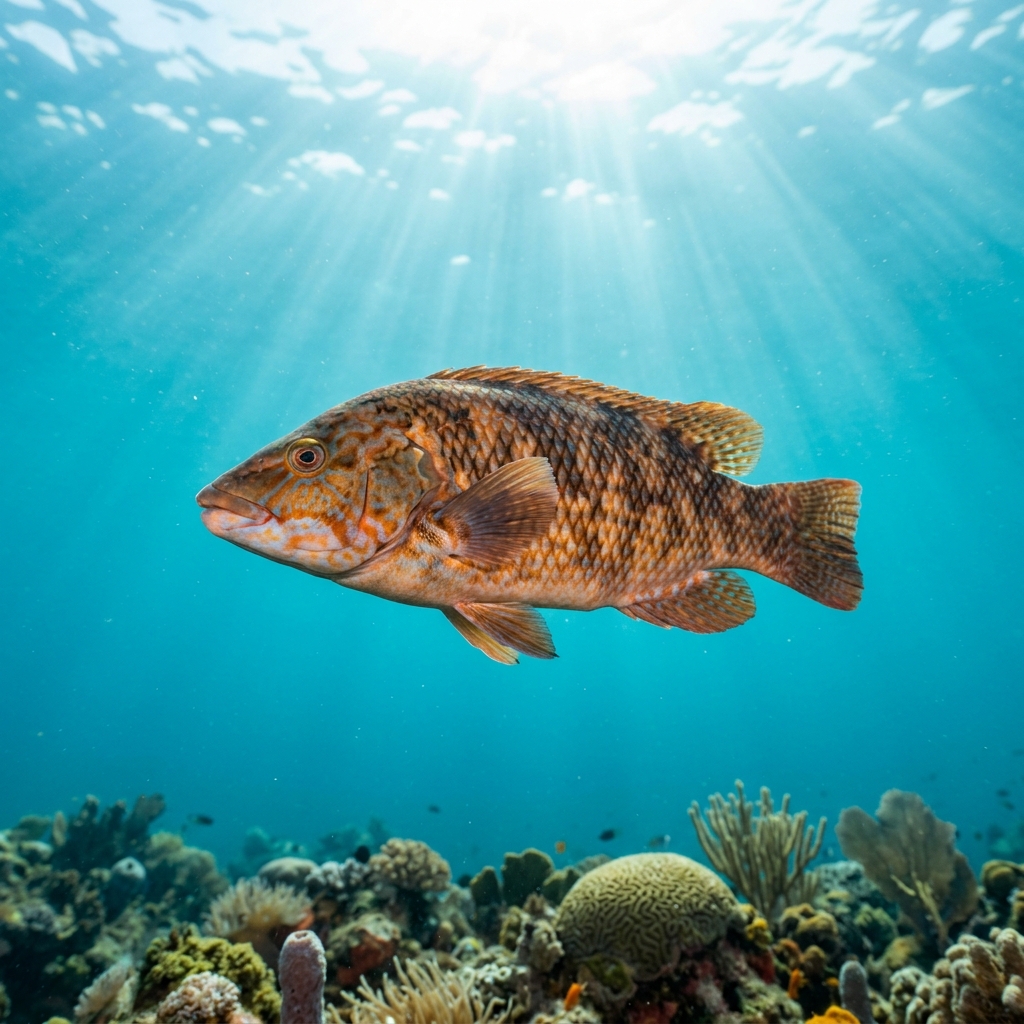
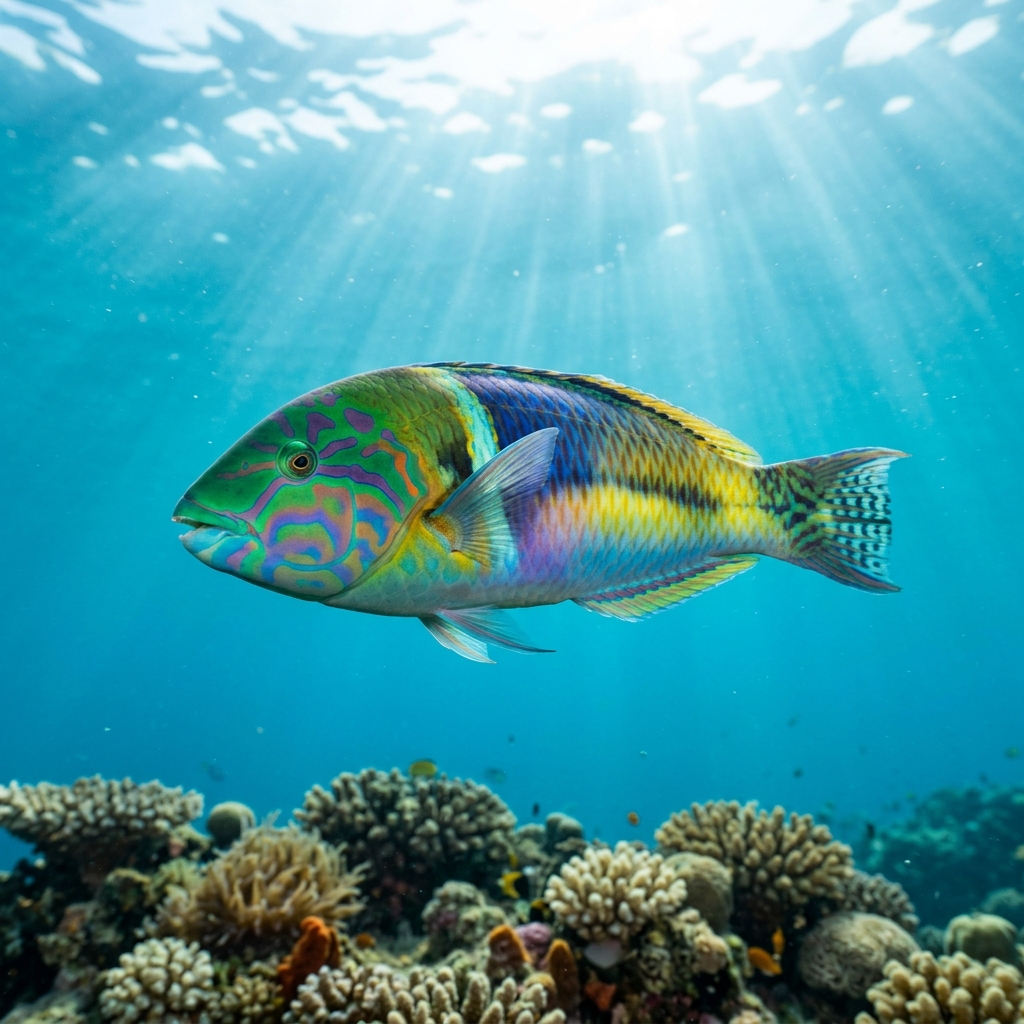
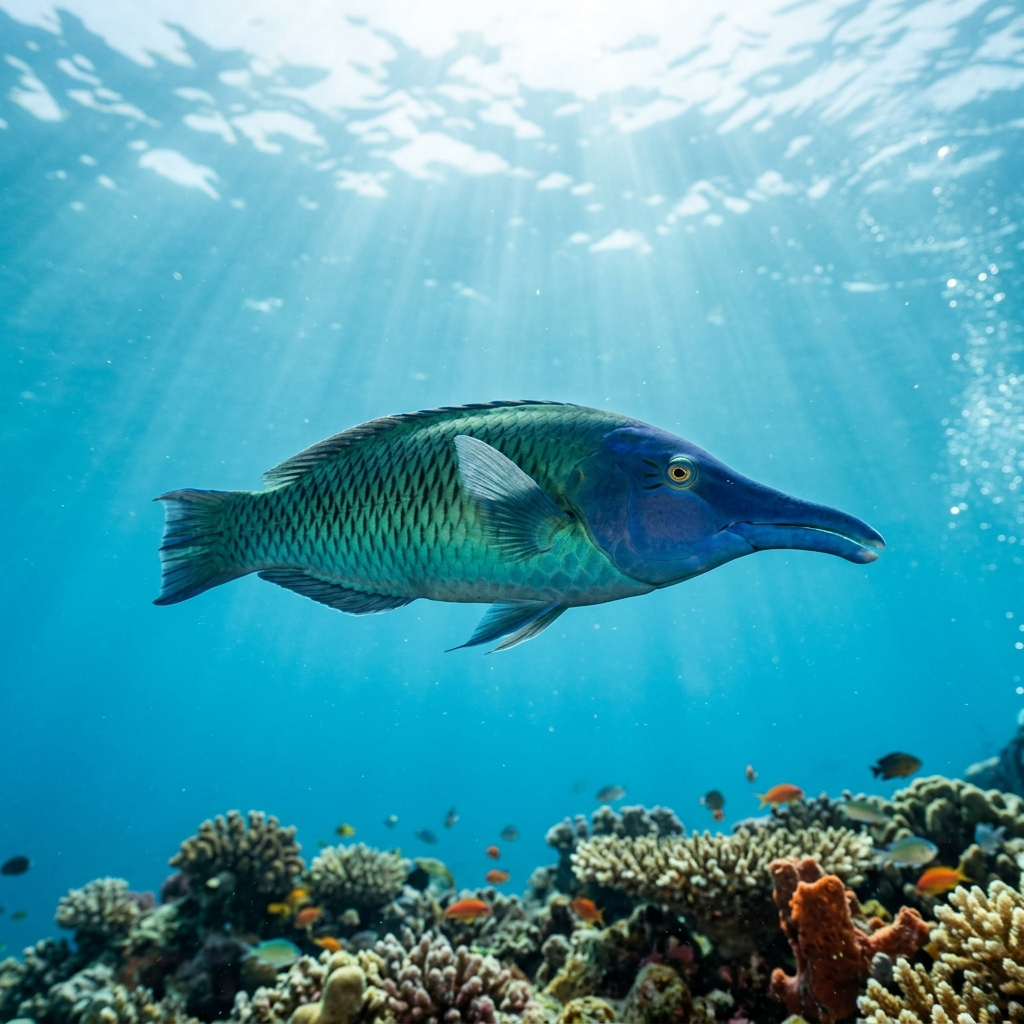
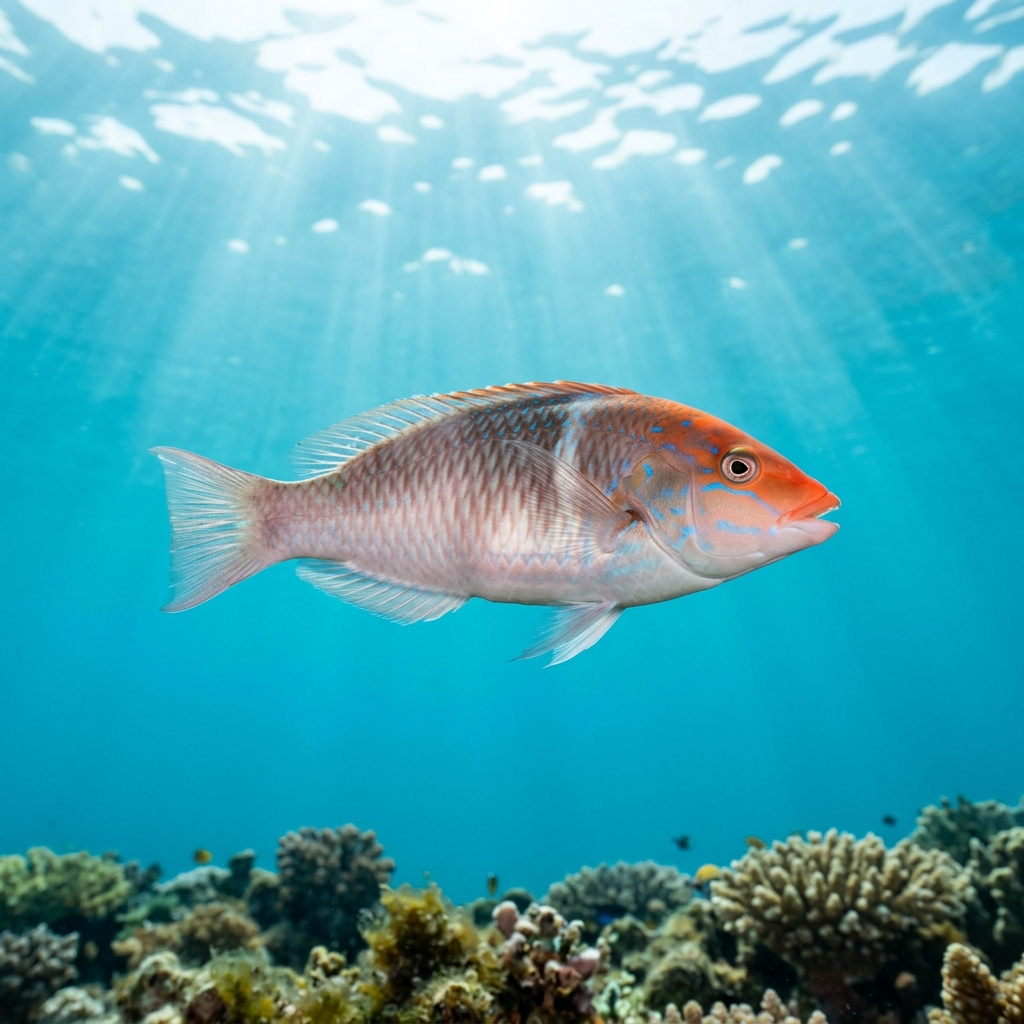
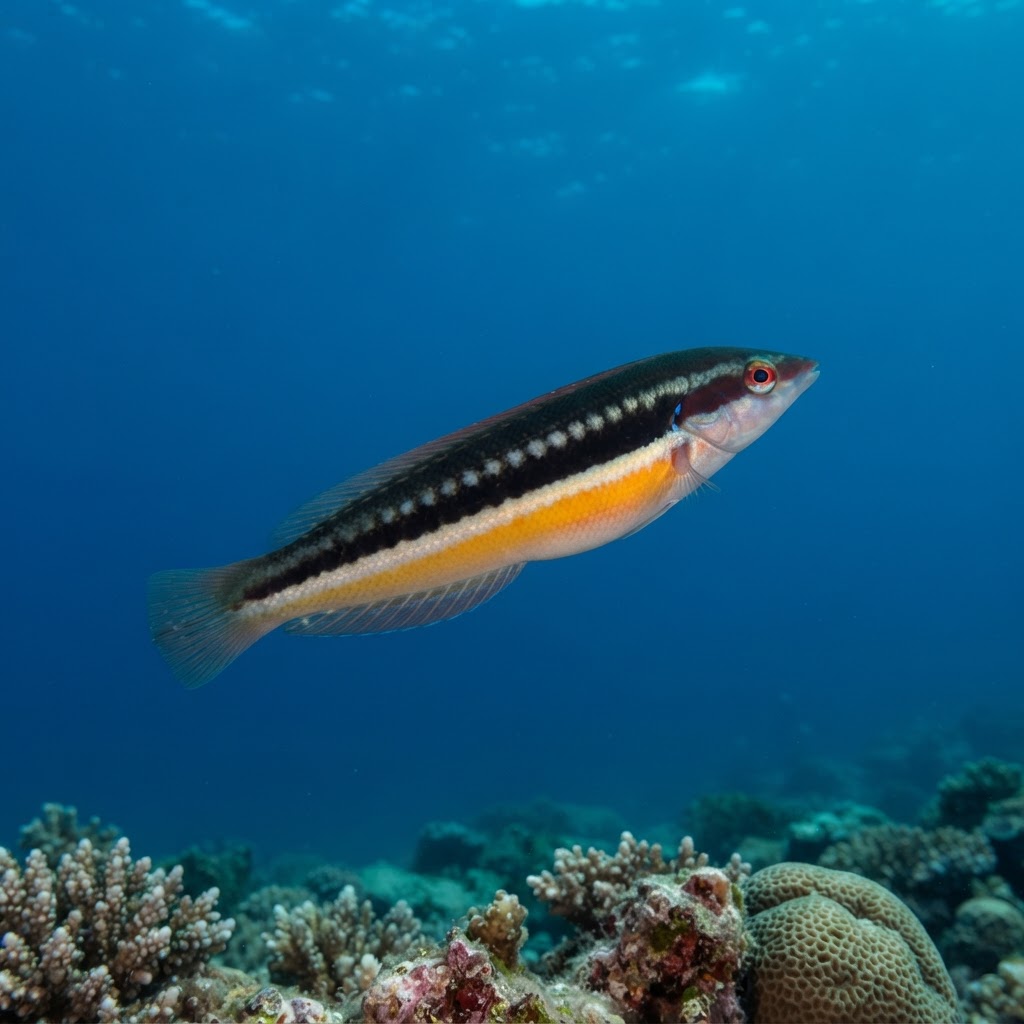
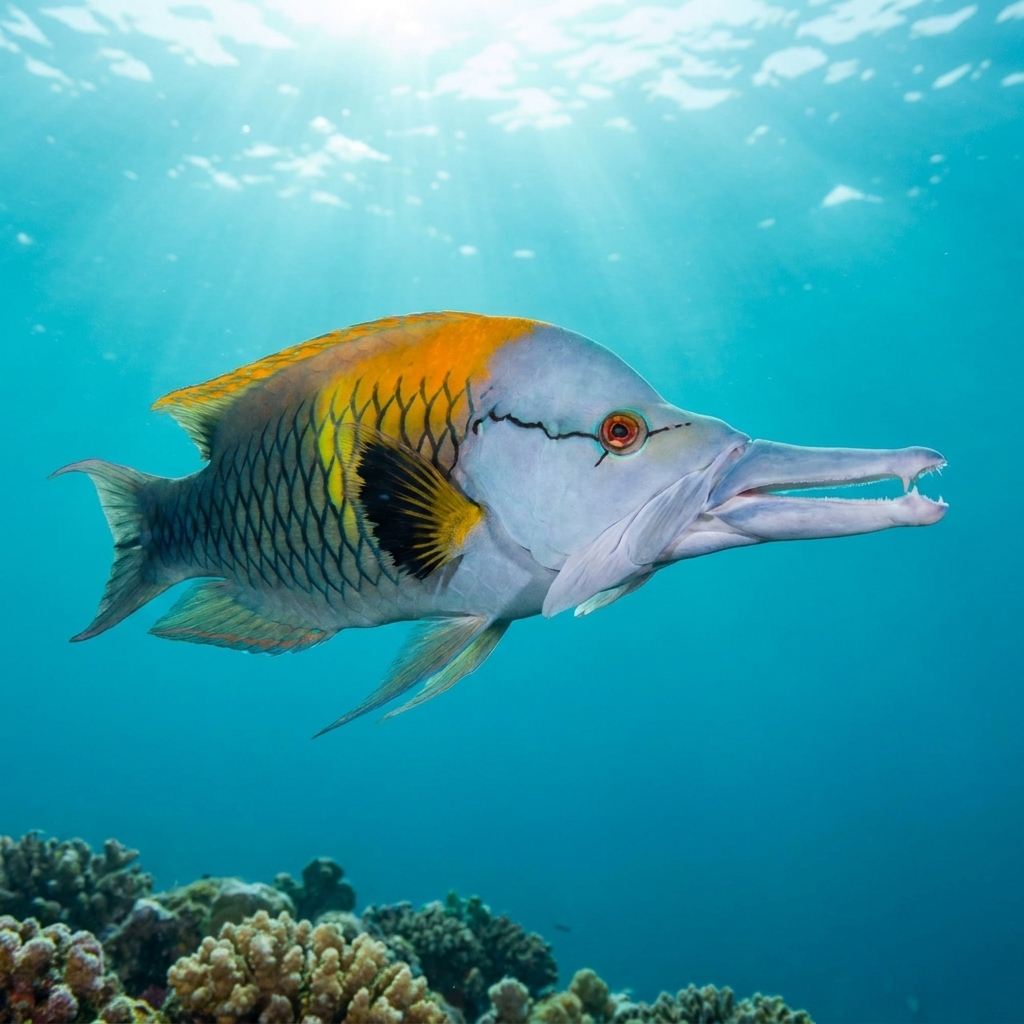
The sling-jaw wrasse's most distinctive feature is a highly protrusible jaw that can extend forward into a long tube, sometimes nearly half the snout length, and you may catch it mid-strike as it snaps prey from crevices. Adults are typically a muted olive-green to yellowish-brown, with males often showing a more vividly patterned face with blue and yellow streaks. Body shape is elongated and laterally compressed, typical of wrasses, but that extraordinary telescoping mouth sets it apart from everything else on the reef. Females and juveniles tend toward a more uniform pale tan or brownish colouration, sometimes with faint streaking along the flanks.
Sling-jaw wrasses are typically solitary hunters, moving slowly and deliberately along the reef face, peering into crevices and under coral heads. When prey is close, the jaw rockets forward in a fraction of a second, one of the fastest jaw protrusions of any reef fish, so if one appears to be hovering very still, watch closely for a strike. They tend to keep a cautious distance from divers and will drift away unhurriedly if approached directly, so slow, neutral movement gives you the best chance of a prolonged observation.
That extraordinary jaw is not just visual theatre, it can extend to roughly half the fish's head length, dramatically increasing strike reach and allowing the wrasse to pluck prey from recesses that other predators simply cannot access.
In northern hemisphere destinations, including the Red Sea, Malaysia, and Thailand, sightings concentrate from May through January. In southern hemisphere sites such as Queensland, the pattern runs from May through March, which effectively means the species is accessible somewhere warm year-round, reflecting its preference for water temperatures between 23 and 29 °C.
The sling-jaw wrasse is most commonly logged across Egypt's Red Sea, particularly around Sharm el Sheikh and Marsa Alam, making Egypt the strongest destination in the data by a considerable margin. Malaysia's Perhentian and Redang islands and Pulau Tioman are the next most reliable spots, with solid sighting records also coming from southern Thailand, French Polynesia around Tahiti, and Queensland, Australia. Okinawa and the Seychelles round out the global spread for divers planning trips in those directions.
Mapping where Sling-jaw Wrasse is logged…
The most reliable diving is in Egypt's Red Sea, especially Sharm el Sheikh and Marsa Alam, followed by the Perhentian and Redang islands in Malaysia and Pulau Tioman. French Polynesia around Tahiti, southern Thailand, Queensland in Australia, and Okinawa in Japan all have meaningful sighting records too.
In the Red Sea, Malaysia, and Thailand, sightings are strongest from May through January. In Australian waters, May through March is the peak window. The species' preference for 23-29 °C water means a warm tropical reef somewhere will have them active at almost any time of year.
Look for that telescoping jaw, it can shoot forward into a distinct tube shape, which no other common reef wrasse does. Males show blue-green and yellow facial markings on a pale body; females and juveniles are plainer yellowish-tan. The combination of wrasse body shape with that extraordinary mouth leaves little doubt once you've seen it in action.
Adults typically reach around 35-40 cm in length, though the elongated, laterally compressed body can make them look slightly slimmer than their actual size when you meet them on the reef.
The jaw can protrude forward to roughly half the length of the fish's head, one of the most extreme jaw protrusions among reef fish. This lets it reach into narrow crevices to extract small fish and crustaceans that would be inaccessible to other predators, and the strike itself is nearly too fast for the naked eye to follow.
Site and sighting data is aggregated from diver logs, iNaturalist and GBIF. For taxonomy and conservation status:
Bird Wrasses
3,632 sites