Apterichtus anguiformis
A rare find on Liguria's reefs: this slender, finless eel hides in sand at 16-21C and takes a sharp eye to spot at all.
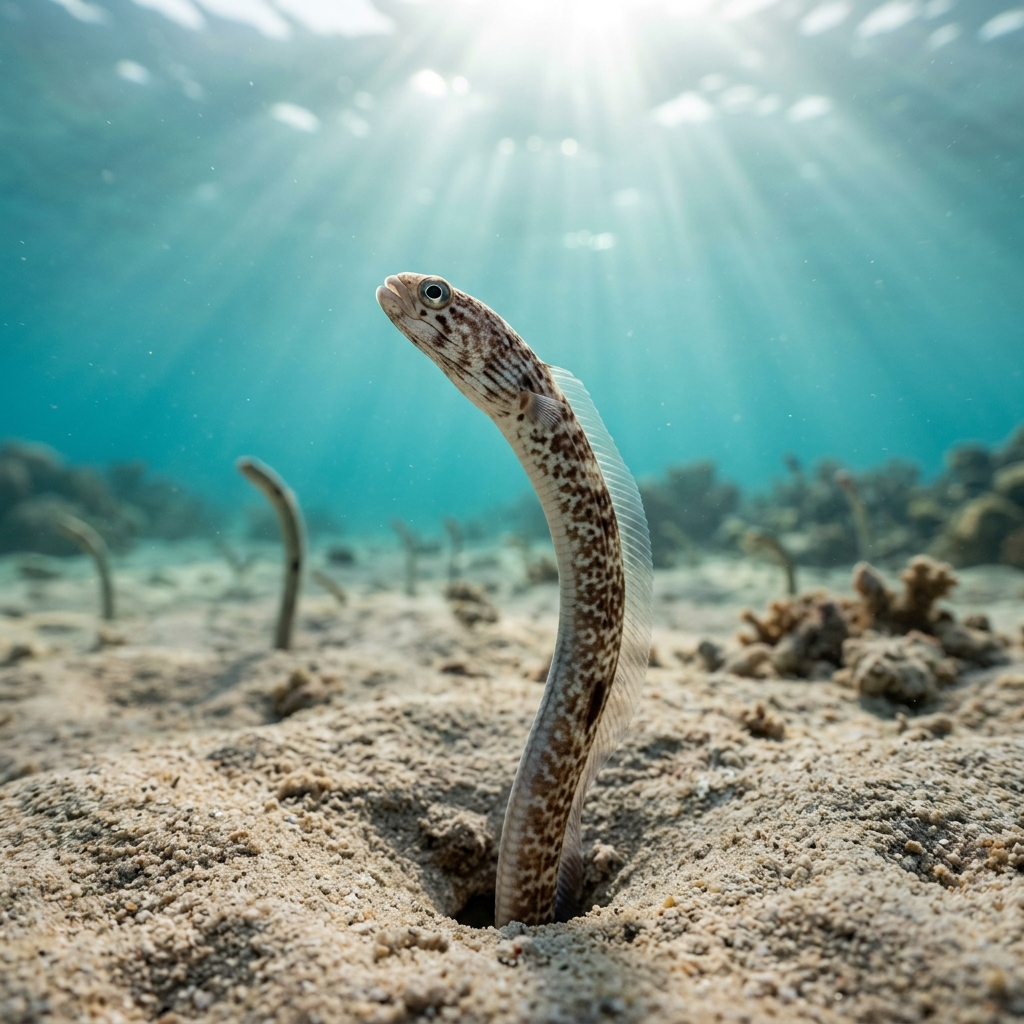
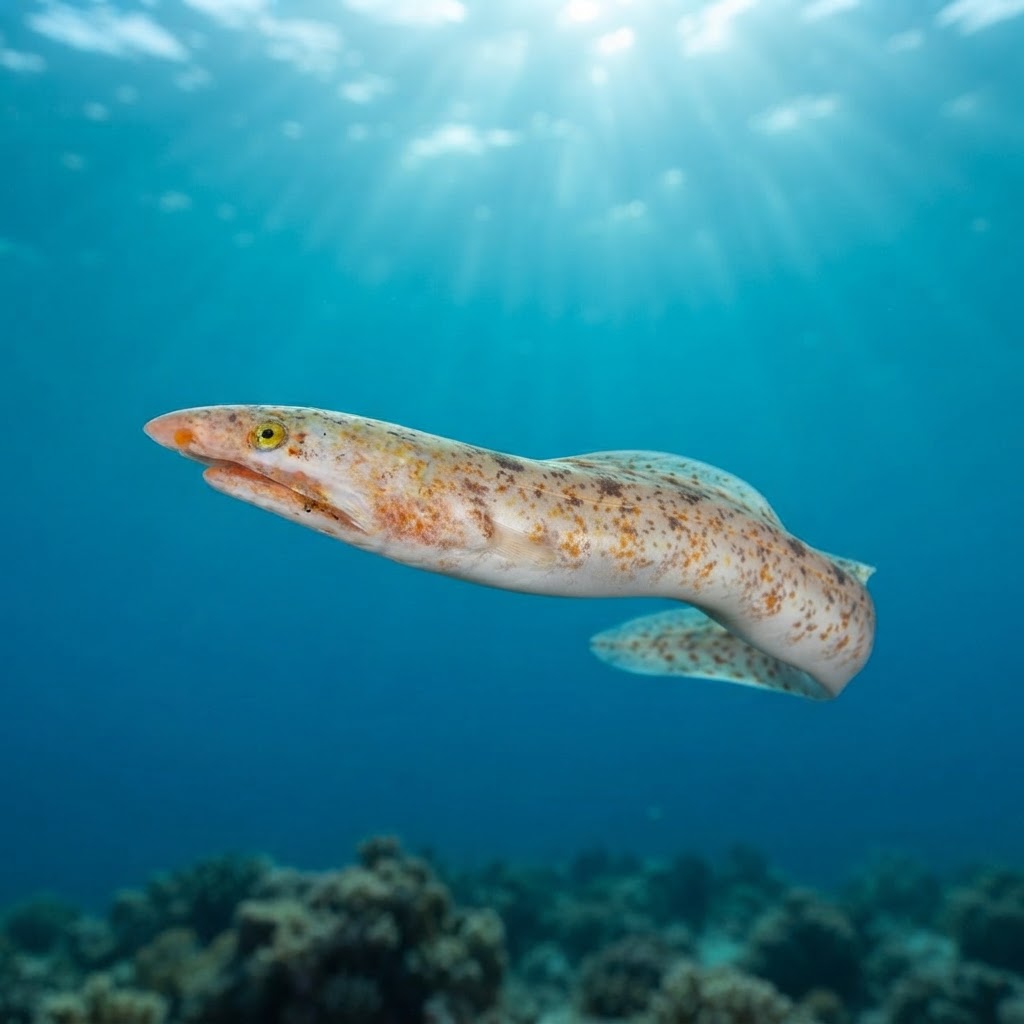
Look for a thin, worm-like body about 34 cm long with no visible dorsal, anal or pectoral fins, giving it a distinctly smooth, almost snake-like silhouette. Colour is a plain, uniform tan to pale brown with no bold markings, which makes it blend into sand and rubble bottoms. Most of the body is usually hidden, with only a short stretch or the head visible where it emerges from a burrow.
Divers log it as an uncommon find, usually spotted with most of its body tucked into sand or fine rubble, showing only its head or a short section of body above the substrate. It doesn't put on a show for divers and isn't known to react defensively or approach; the real challenge is noticing it at all against a matching sandy background. Look during slow, careful passes over sand patches rather than expecting it to swim out in open water.
Its complete lack of fins is unusual even among eels, a trait linked to a burrowing lifestyle where fins would only get in the way of moving through sand.
There isn't enough seasonal data to point to a best month, so treat it as a year-round possibility. Observed sightings sit in a 16.1 to 21.0 C range, which lines up with typical Ligurian water temperatures through spring, summer and autumn.
Every logged sighting comes from Italy, with Liguria standing out as the region where divers have actually found this eel. Treat any Ligurian sighting as a bit of a find rather than a given, since it stays hidden in sand and rubble most of the time.
Mapping where Slender Finless Eel is logged…
All confirmed sightings come from Italy, specifically the Liguria region. It's logged as uncommon even there, so most divers will need several dives on sandy bottoms before spotting one.
There's no clear seasonal pattern in the data, so it's best treated as a year-round possibility in Liguria. Sightings have occurred in water between 16.1 and 21.0 C.
Check for a thin, plain tan-brown body with absolutely no visible fins, which is the single biggest giveaway. It's usually only partly visible, poking out of sand or rubble rather than swimming freely.
They reach roughly 34 cm in length, making them a small, easily overlooked eel rather than a dramatic sighting like a moray.
As the name suggests, it lacks fins entirely, an adaptation suited to a life spent mostly buried in sand rather than swimming in open water.
No, they pose no known danger to divers. They're shy, small and spend most of their time hidden in sand, with no recorded aggressive behaviour.
Site and sighting data is aggregated from diver logs, iNaturalist and GBIF. For taxonomy and conservation status:
Garden Eel
2,448 sites