Pseudocheilinus hexataenia
Bright orange with electric blue stripes, this pocket-sized wrasse hides in reef rubble across the Philippines and Egyptian Red Sea year-round.
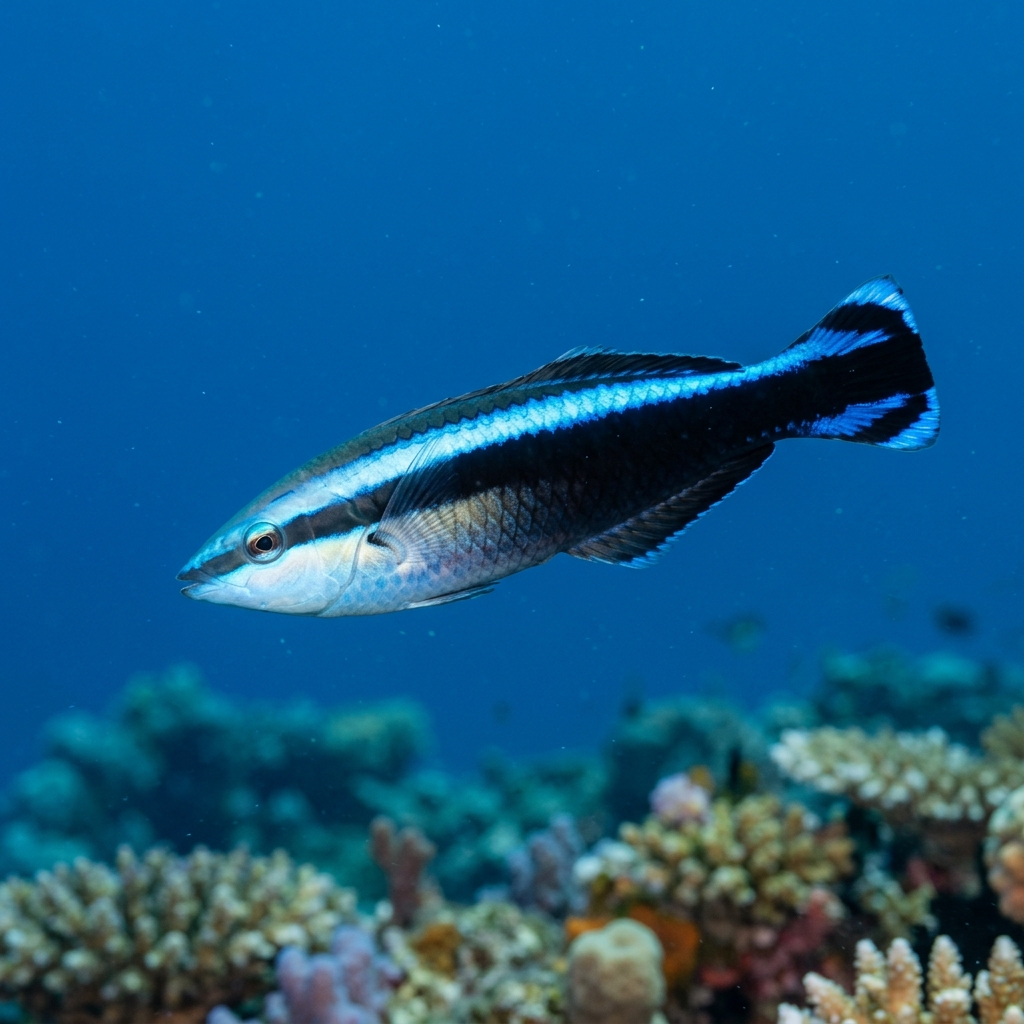
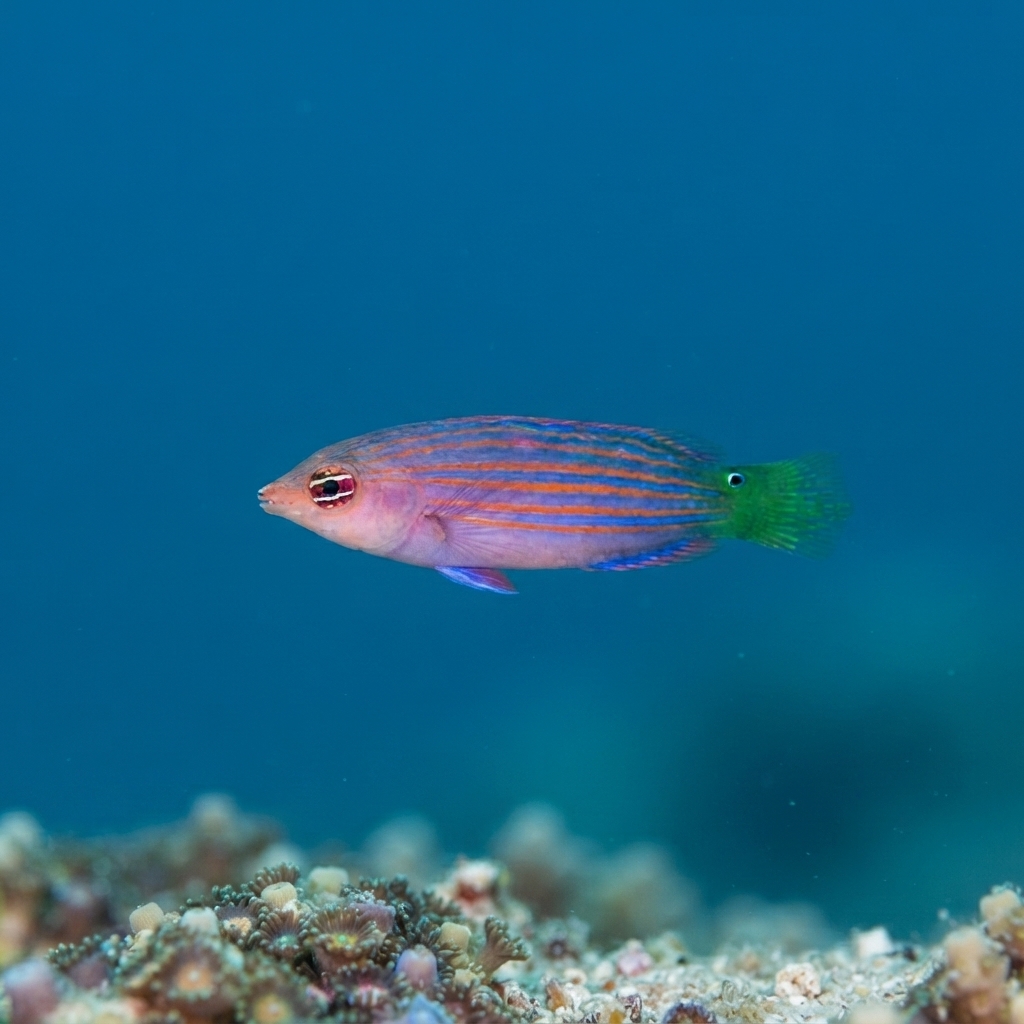
A finger-length fish, rarely more than 7 cm, with an orange to reddish body cut through by six narrow electric-blue stripes running head to tail. A dark spot ringed in blue sits on the rear dorsal fin, useful for a quick ID when the fish is only half visible in a crevice. It moves in short darting bursts rather than gliding, which along with the stripe count separates it from other small reef wrasses at a glance.
Look for it darting between coral branches and rubble patches low on the reef, rarely straying far from cover before ducking back in. It is skittish around divers, most often glimpsed as a quick flash of blue and orange rather than a fish that sits still for a photo. Sightings are logged as uncommon at the great majority of sites where it appears, so patience and a slow scan of the substrate pays off more than searching open water.
It spends most of its time picking small invertebrates out of coral rubble and crevices, acting as one of the reef's constant low-level predators on tiny crustaceans and worms that larger fish never bother hunting.
No clear seasonal pattern shows up in the sightings, and its comfort range of roughly 24.5 to 29°C spans most tropical reef conditions, so it turns up year-round wherever the reef is intact rubble and coral rather than at a particular time of year.
Most reliably logged across the Philippines, especially the Visayas, with strong numbers also reported on the Great Barrier Reef in Queensland and Egypt's Marsa Alam and the Deep South. Divers also find it in French Polynesia's Society Islands, Indonesia (Nusa Tenggara and Bali), Papua New Guinea's Milne Bay, and along South Africa's KwaZulu-Natal coast.
Mapping where Sixline Wrasse is logged…
They are most commonly logged across the Philippines, particularly the Visayas, and also show up reliably on Australia's Great Barrier Reef and in Egypt's Marsa Alam region. Indonesia, French Polynesia, Papua New Guinea, and South Africa's KwaZulu-Natal coast are other solid spots.
There is no strong seasonal pattern in the sightings, and its preferred water temperature of about 24.5 to 29°C covers most of the year on tropical reefs, so it is a year-round find rather than a seasonal one.
Look for a tiny orange fish, under 7 cm, striped with six thin electric-blue lines and a dark spot ringed in blue near the rear dorsal fin. It moves in quick darts near rubble and coral cover instead of swimming steadily in open water.
They stay small, typically around 7 cm long as adults, making them one of the more compact wrasses divers encounter on the reef.
No. They are harmless to divers, spending their time hunting tiny invertebrates in the reef rather than showing any interest in people nearby.
They are carnivores that pick small crustaceans, worms, and other tiny invertebrates out of coral rubble and crevices, constantly foraging low on the reef.
Site and sighting data is aggregated from diver logs, iNaturalist and GBIF. For taxonomy and conservation status:
Bird Wrasses
3,632 sites