Thalassoma hardwicke
Common on shallow reefs from the Maldives to Okinawa, this striped wrasse thrives year-round in 25-29C water. Here's where to find it.
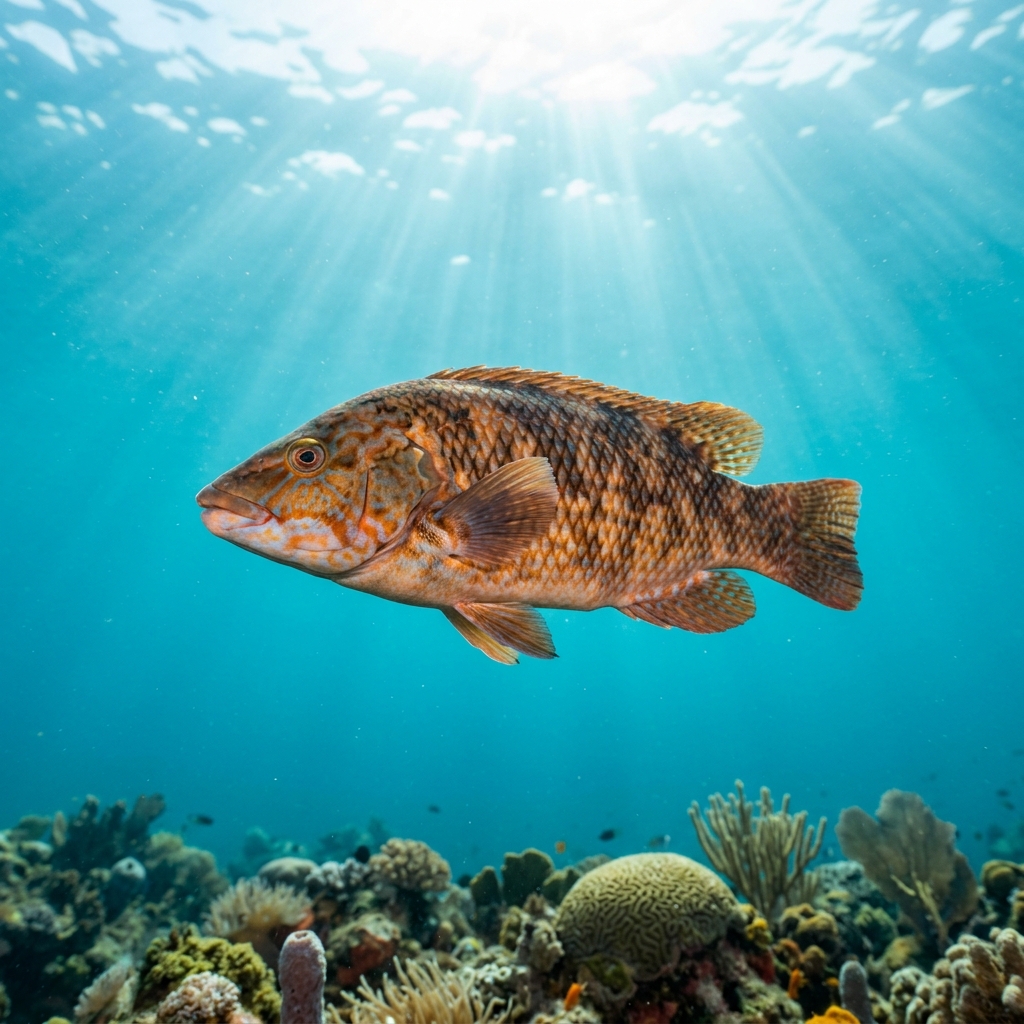
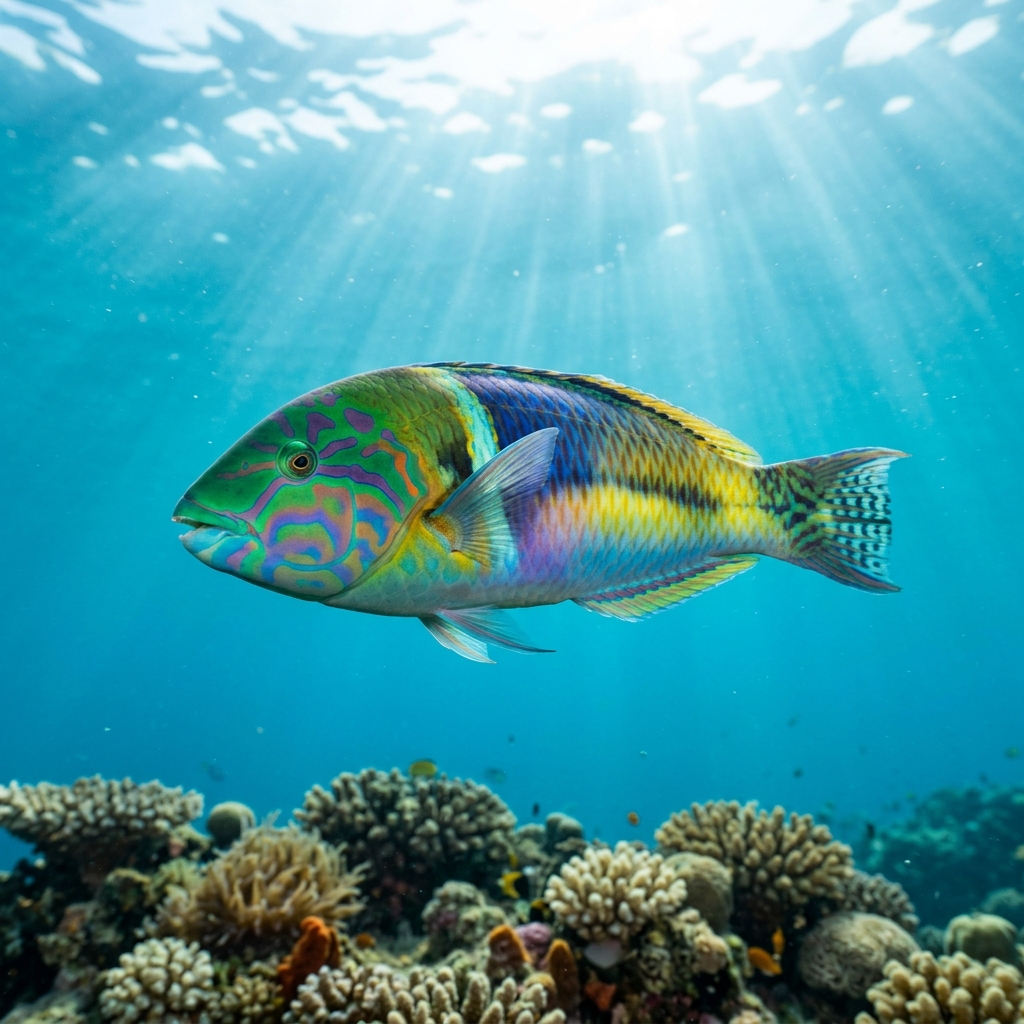
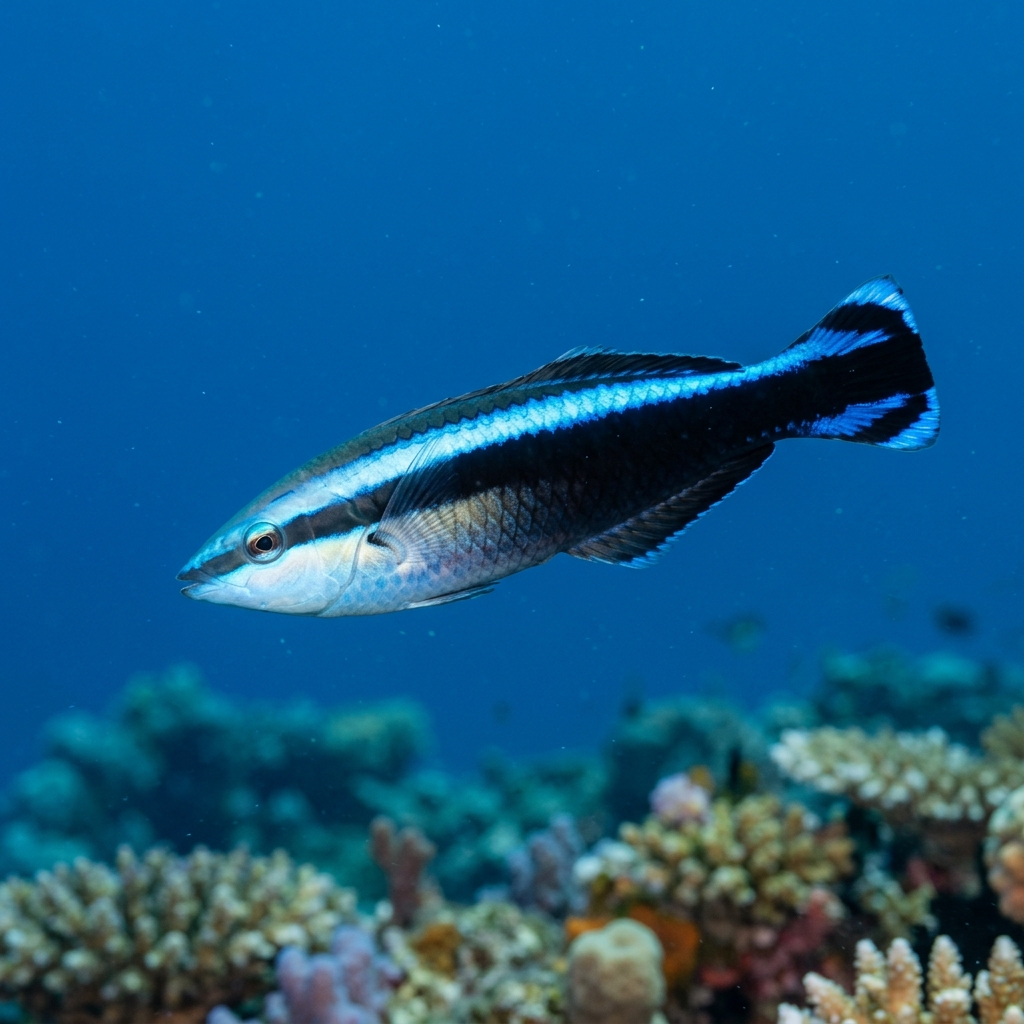
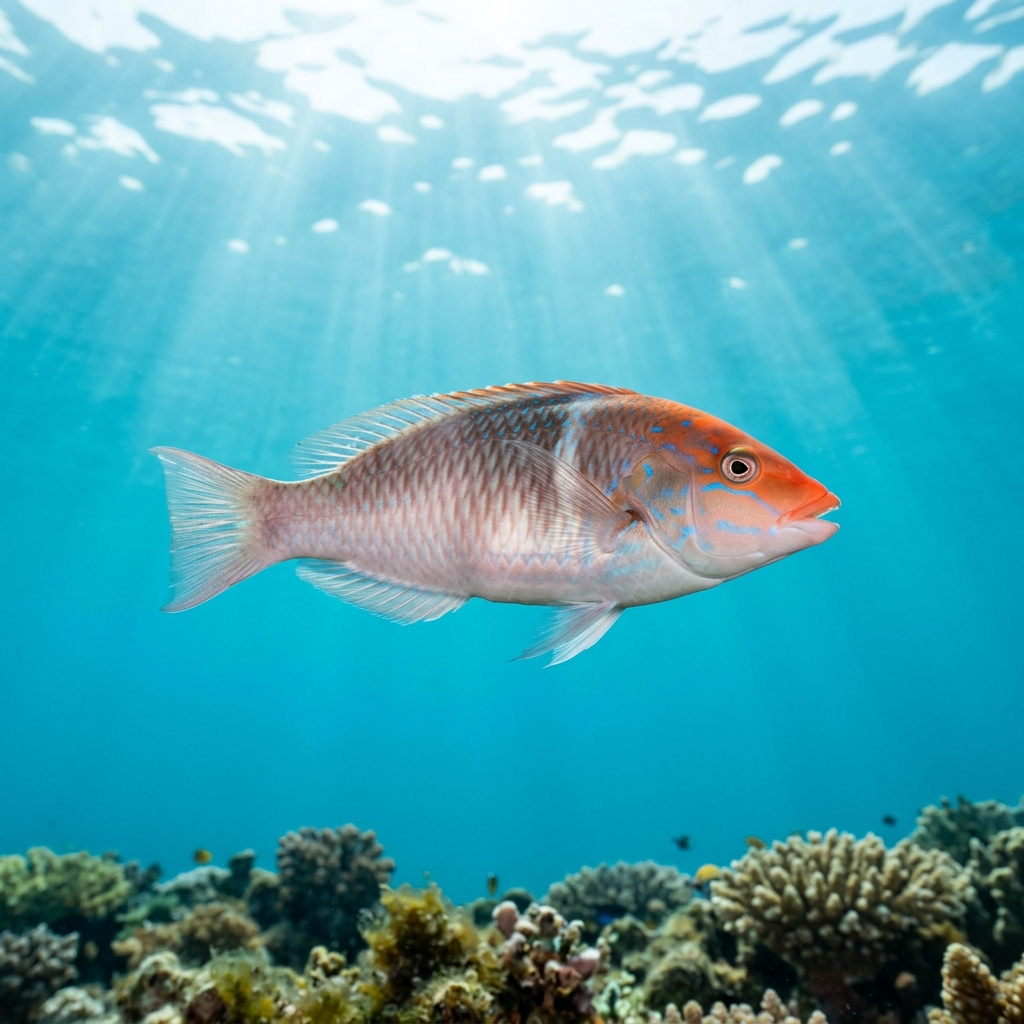
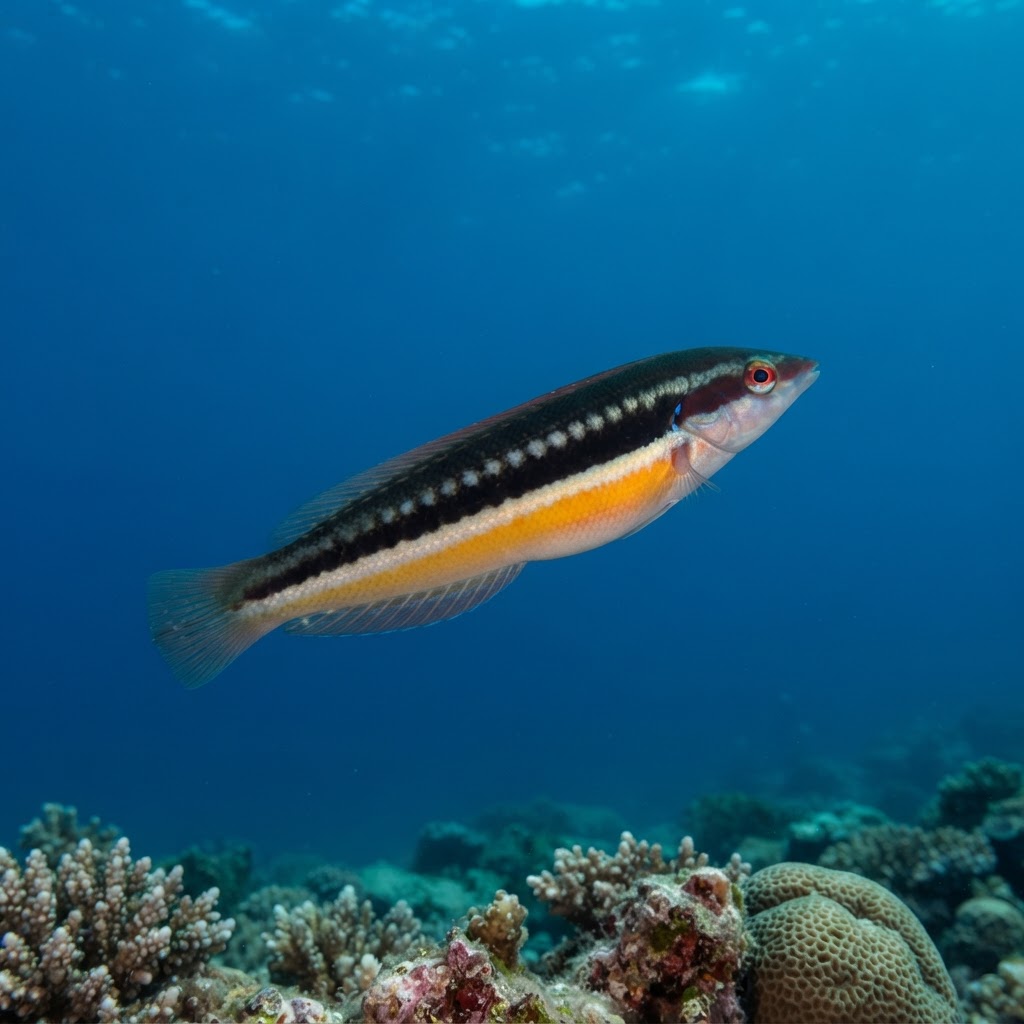
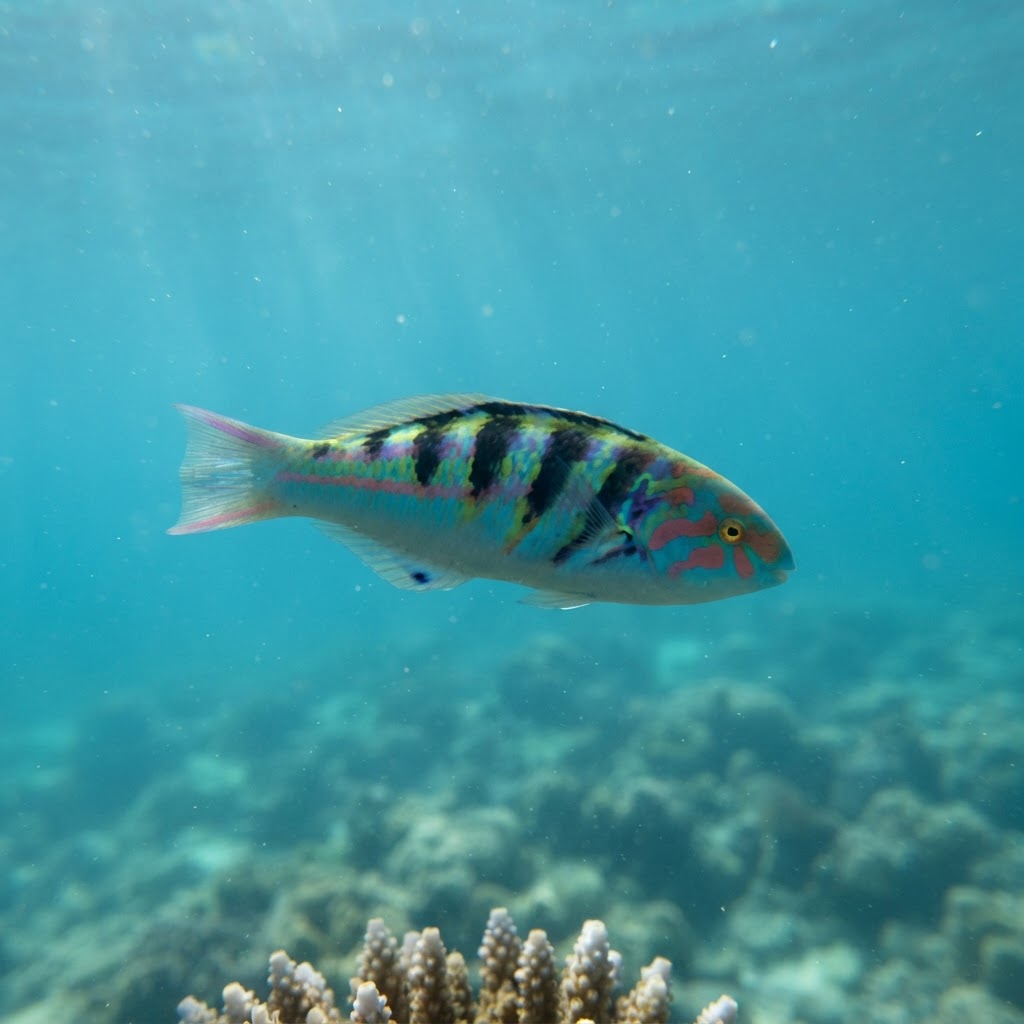
A slim, torpedo-shaped wrasse topping out around 17 cm, with a pale green to white body crossed by six dark vertical bars along the flanks. The head carries a mesh of pink and green lines, and the tail often shows a yellow-orange wash. It swims with the quick, jerky pectoral-fin strokes typical of wrasses, staying close to the reef rather than out in open water.
Look for it picking over rubble patches and coral heads in shallow water, often alone or in loose groups, snapping at small invertebrates exposed on the reef surface. It is generally unbothered by divers and will keep foraging within a few metres of you rather than bolting for cover. Most sightings come from depths under 15 m, so it is a fixture of the shallow reef flat and lagoon edge rather than the drop-off.
Like many wrasses it is a protogynous hermaphrodite, meaning individuals start out female and some later change into terminal-phase males, which is part of why colour can vary between fish on the same reef.
No clear seasonal pattern shows up in the sighting data, and with a comfortable range of roughly 25 to 29 C it holds station on shallow tropical reefs all year. Plan around good visibility and calm shallows rather than a particular month.
This is a reliable sighting across the Central Atolls of the Maldives, where it turns up on more dive sites than almost anywhere else in its range. It also shows strong populations in Indonesia (especially Bali and Sulawesi), the Society Islands of French Polynesia, the Visayas in the Philippines, Queensland in Australia, and Okinawa in Japan, plus good numbers in Sabah, Malaysia and Mauritius.
Mapping where Sixbar Wrasse is logged…
It is most commonly logged in the Maldives, particularly the Central Atolls, and is also a regular sighting in Indonesia, French Polynesia's Society Islands, the Philippine Visayas, Queensland, and Okinawa.
There is no strong seasonal pattern in the sightings, and it tolerates a wide tropical range of roughly 25 to 29 C, so it is present on shallow reefs year-round.
Look for a small, slender wrasse around 17 cm with six dark vertical bars on a pale green body and a pink-and-green patterned head, usually seen darting over shallow reef and rubble.
They typically reach about 17 cm in length, making them one of the smaller reef wrasses divers encounter.
Yes. Like most wrasses, they are protogynous hermaphrodites, starting life as females and some individuals later transitioning into brighter, terminal-phase males.
No. They pose no threat to divers and typically continue foraging on the reef undisturbed when approached slowly.
Site and sighting data is aggregated from diver logs, iNaturalist and GBIF. For taxonomy and conservation status:
Bird Wrasses
3,632 sites