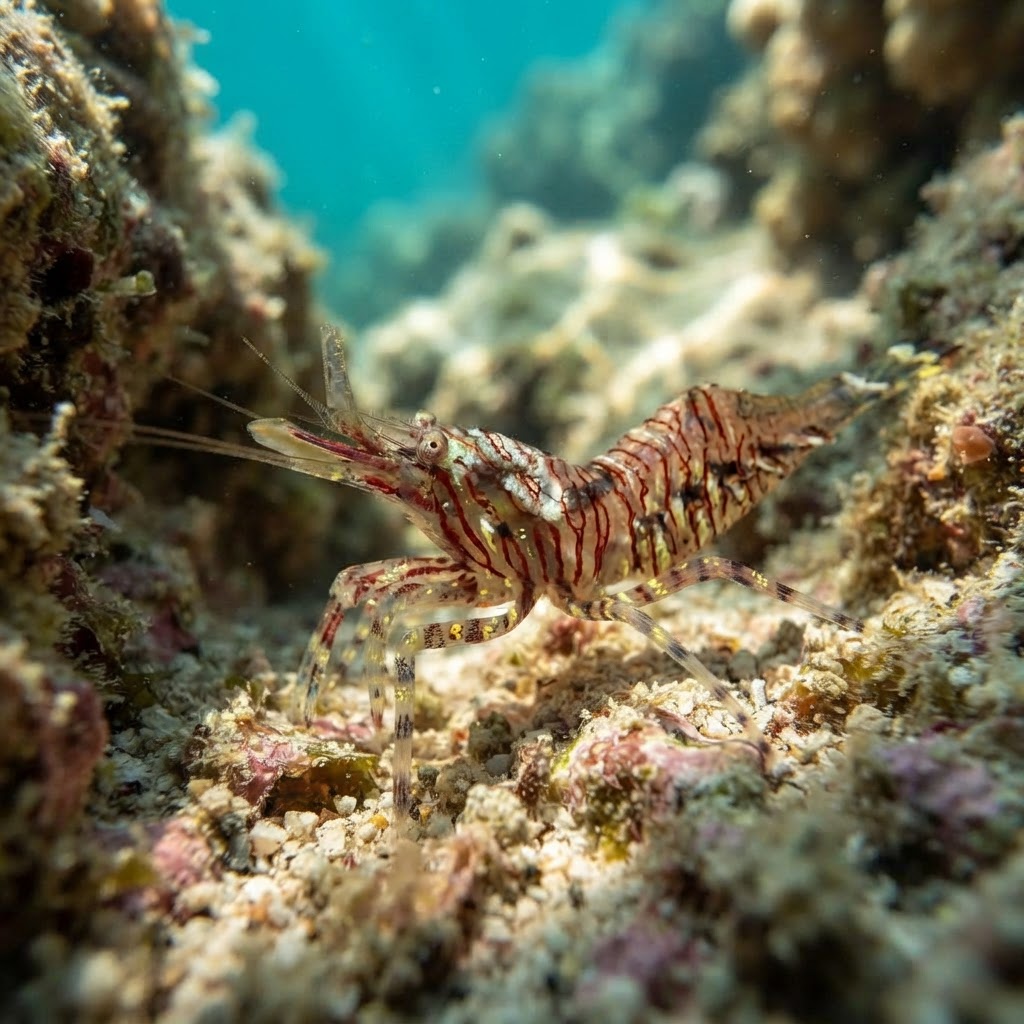
Heptacarpus sitchensis
A cold-water find best searched out in British Columbia and the Pacific Northwest, often overlooked on the reef floor.
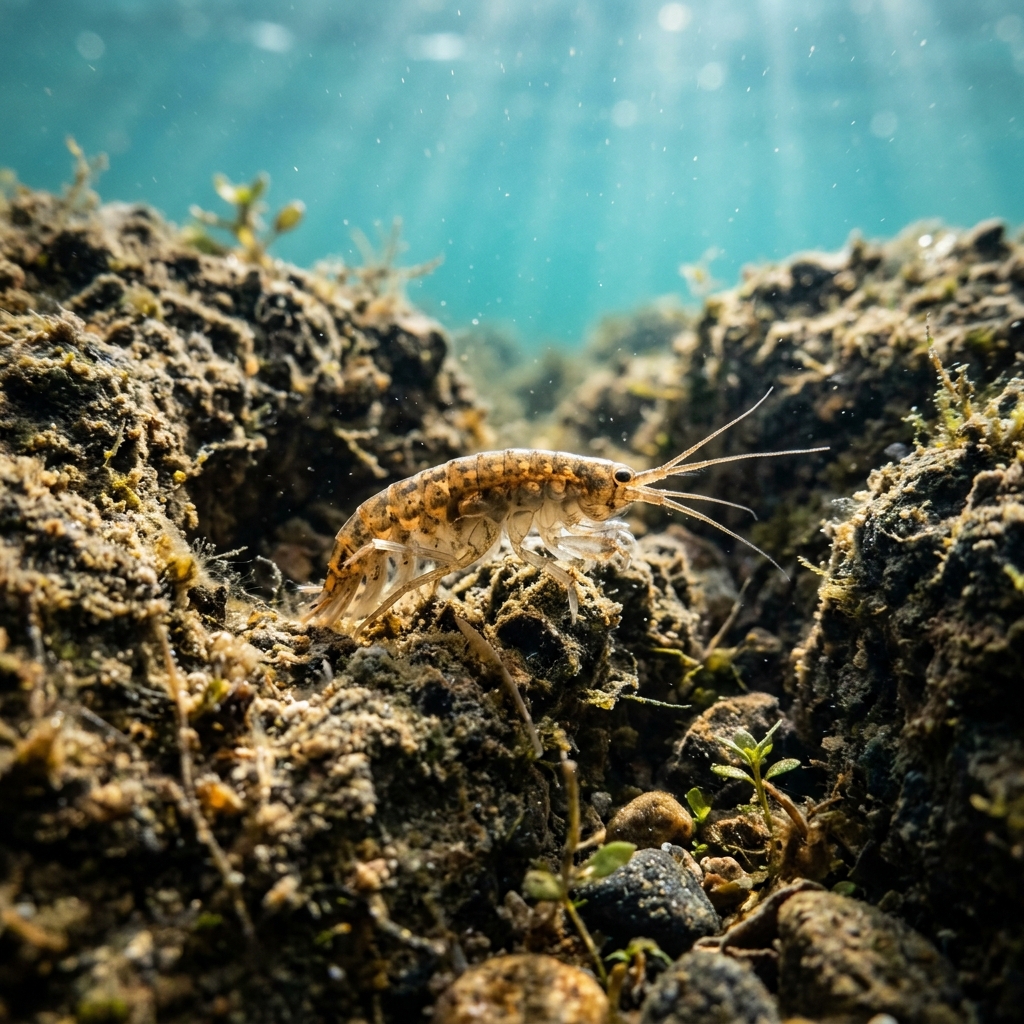
A small, translucent to mottled brown shrimp that blends closely with rock, gravel and algae on the seafloor, making it easy to swim straight past. Look for the narrow, slightly humped body typical of thorid shrimp and long, thin antennae sweeping the substrate ahead of it. It sits low and still on the bottom rather than hovering, and its colour pattern breaks up its outline against mixed rubble and weed.
Divers find it resting or slowly picking its way over rock, gravel and algae-covered bottom, using its antennae to feel out the substrate rather than swimming into the open. It's an unobtrusive, easily overlooked animal that tends to hold still or retreat into cover rather than react dramatically to a torch or a diver passing close. Best spotted with a slow, close-focus search of the bottom rather than a mid-water scan.
It's logged as rare at the great majority of sites where divers have recorded it, so most sightings come down to a patient, close look at the benthic substrate rather than a chance mid-water encounter.
Sightings don't show a clear seasonal pattern, and with a temperature niche spanning 8.7 to 18.7C it seems tolerant of both the colder and milder ends of the local dive season, so it's worth looking for year-round.
Most reliably logged in British Columbia, Canada, with further sightings across the Pacific Northwest and California in the United States. It's a benthic species tied to cool coastal waters, so divers searching cold-water sites along the North American west coast have the best shot at it.
Mapping where Sitka Coastal Shrimp is logged…
British Columbia, Canada is the strongest area for sightings, with further records across the Pacific Northwest and California in the United States. It's a cold-water benthic species, so look for it on rocky, algae-covered bottoms at these sites rather than open water.
There's no strong seasonal pattern in the sightings data, and it's recorded across a wide temperature range from 8.7 to 18.7C, so it appears to be findable year-round rather than tied to a particular month.
Look for a small, translucent to mottled shrimp resting low on rock, gravel or algae rather than swimming in open water. Its long antennae and body pattern help it blend with the substrate, so a slow, close search of the bottom is the best way to spot one.
No. It poses no risk to divers and simply goes about its business on the seafloor when approached.
Exact size figures aren't well documented for this species, but like other Heptacarpus shrimp it stays small, easily overlooked against rock and gravel unless you're looking closely.
Site and sighting data is aggregated from diver logs, iNaturalist and GBIF. For taxonomy and conservation status:
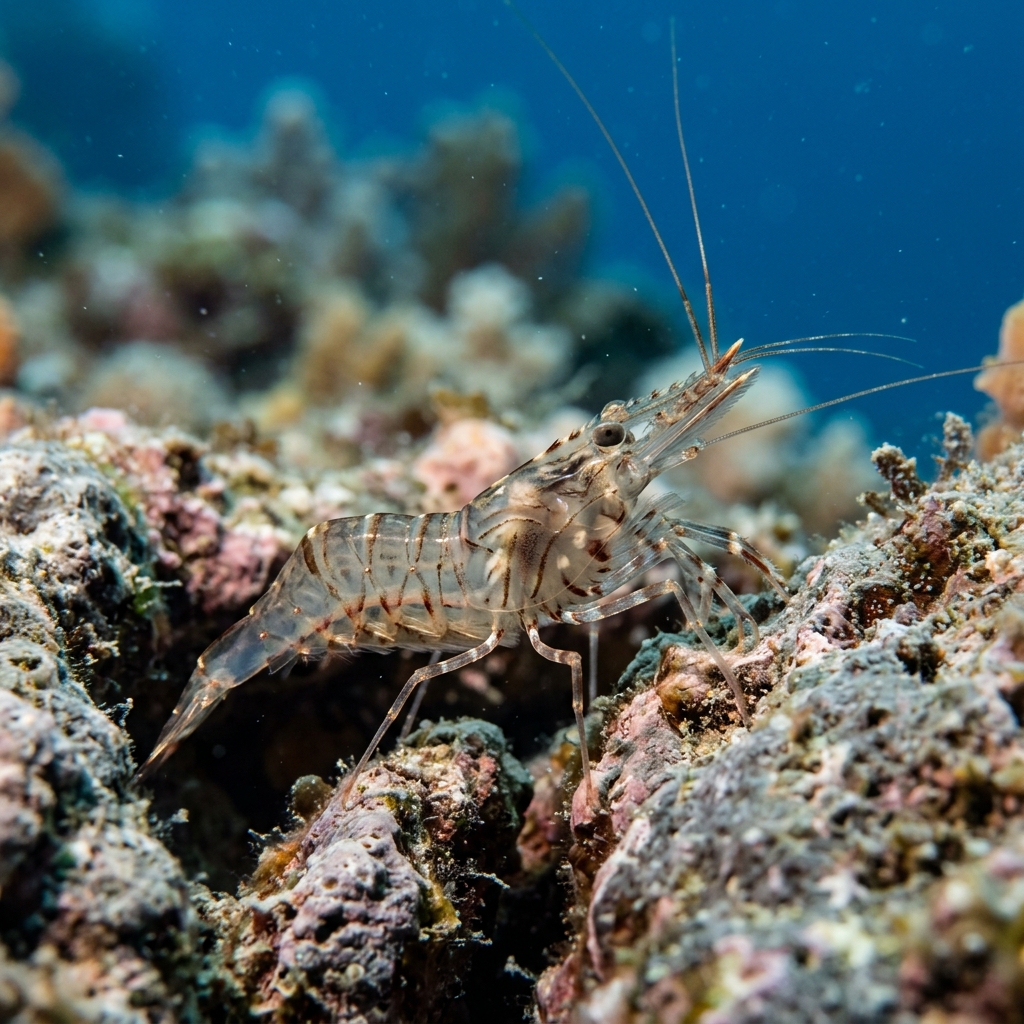
Rockpool Prawn
2,179 sites