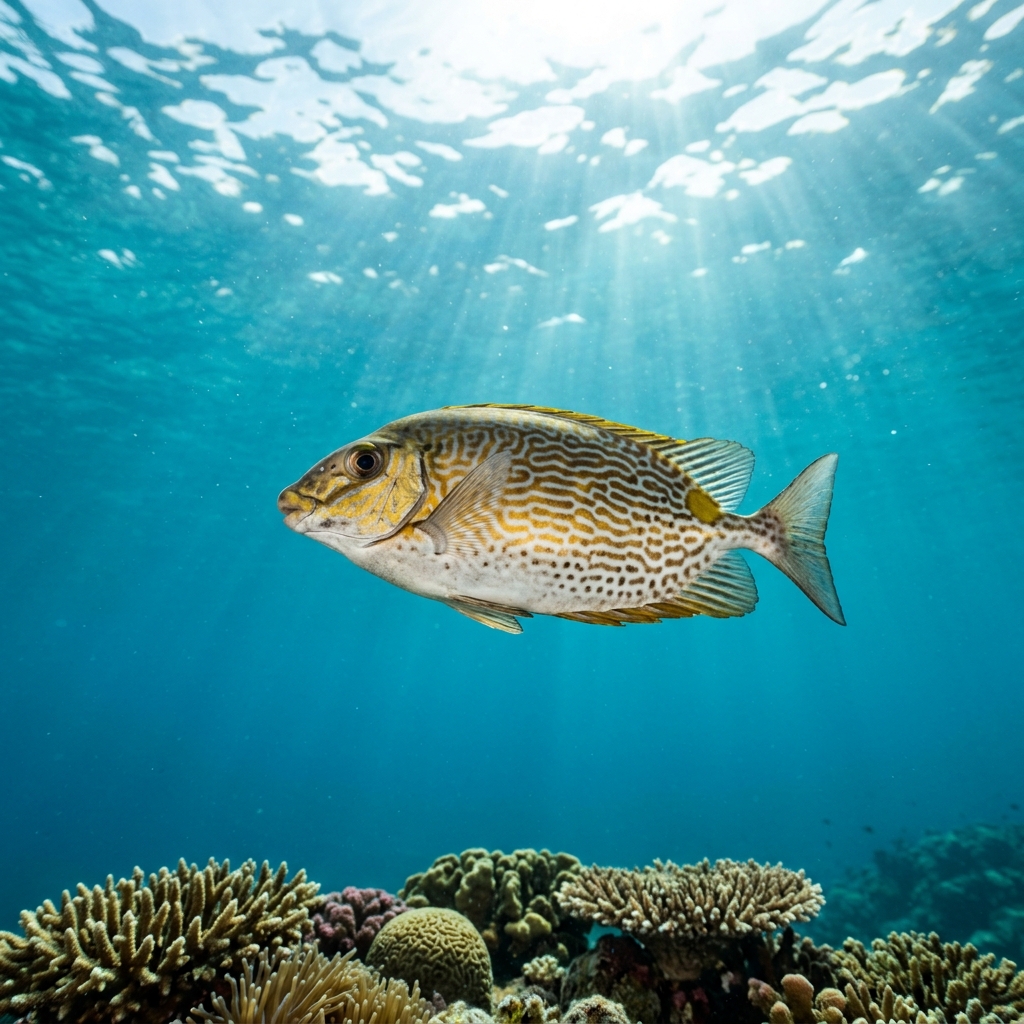
Sargocentron caudimaculatum
Red, big-eyed reef fish tucked under Red Sea and Maldives ledges year-round in 25-29C water. Here's where to spot it.
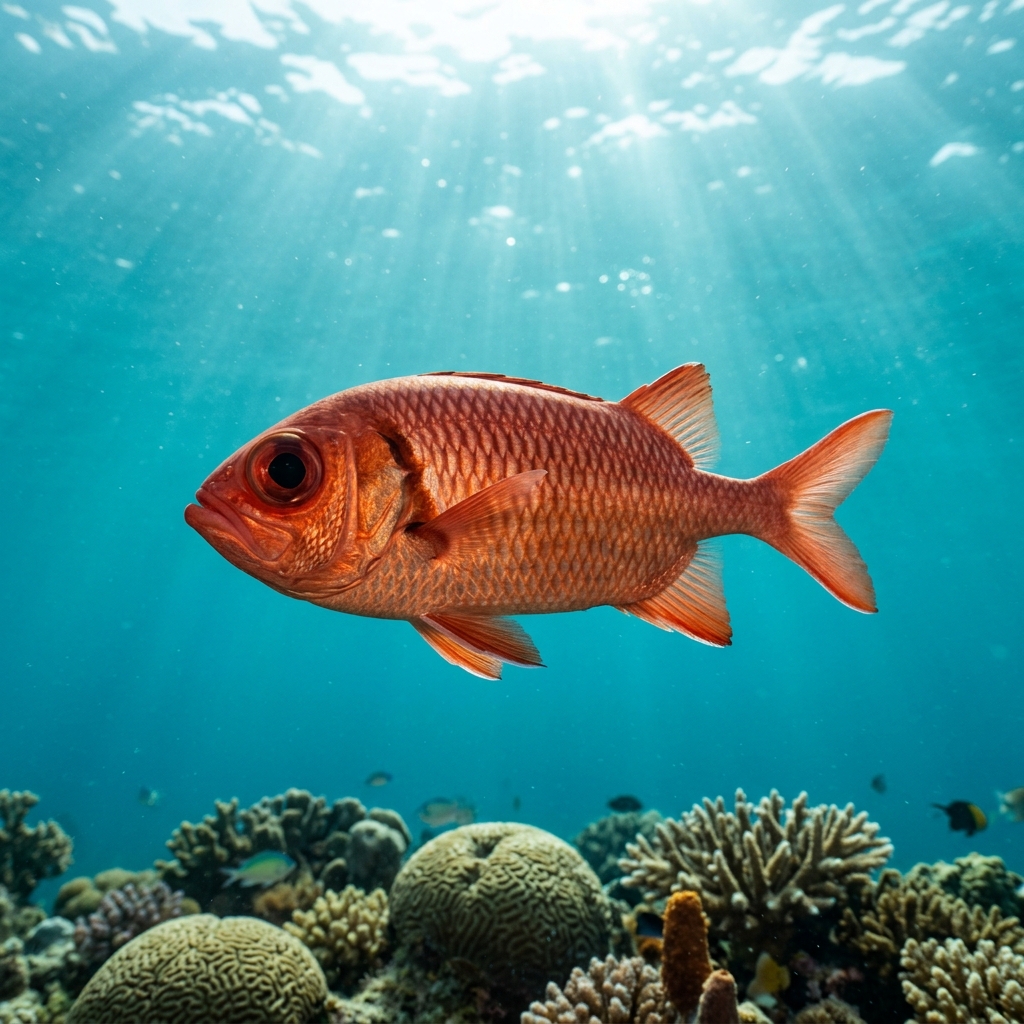
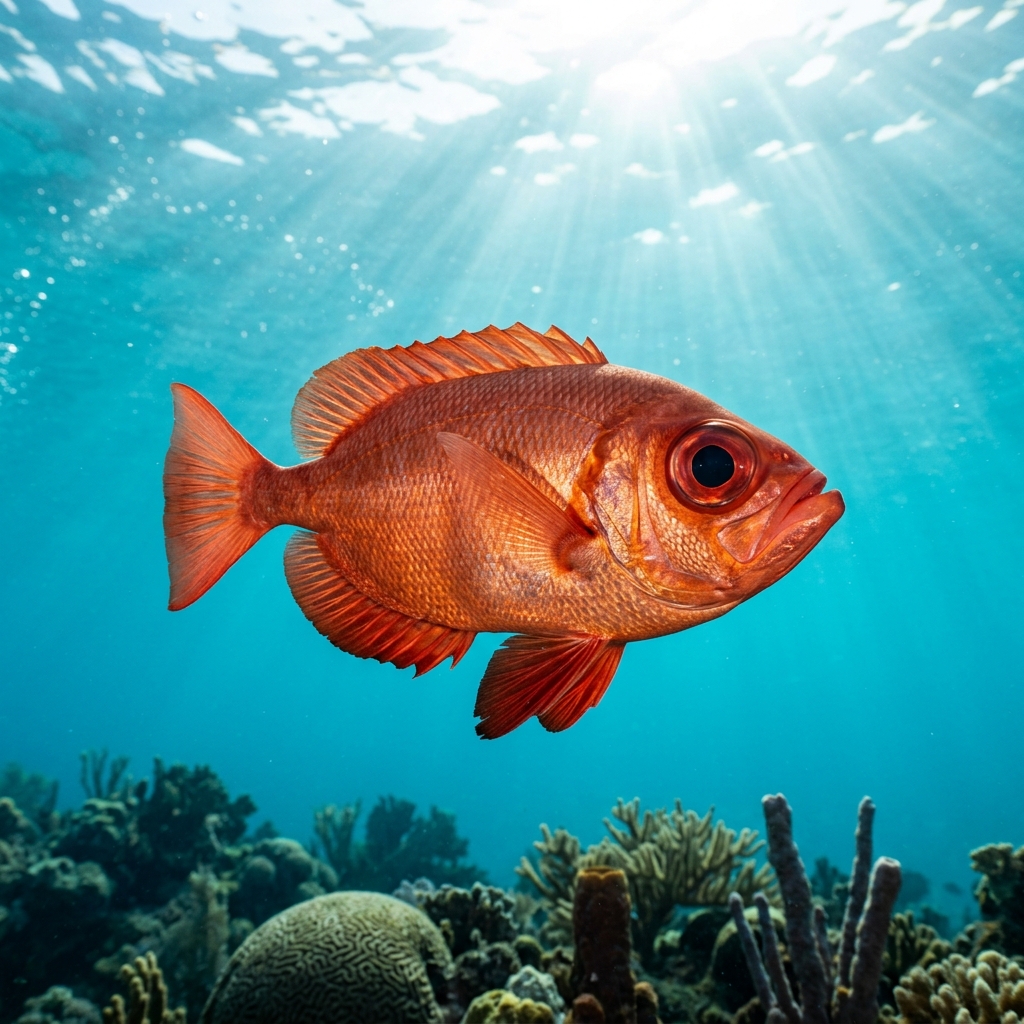
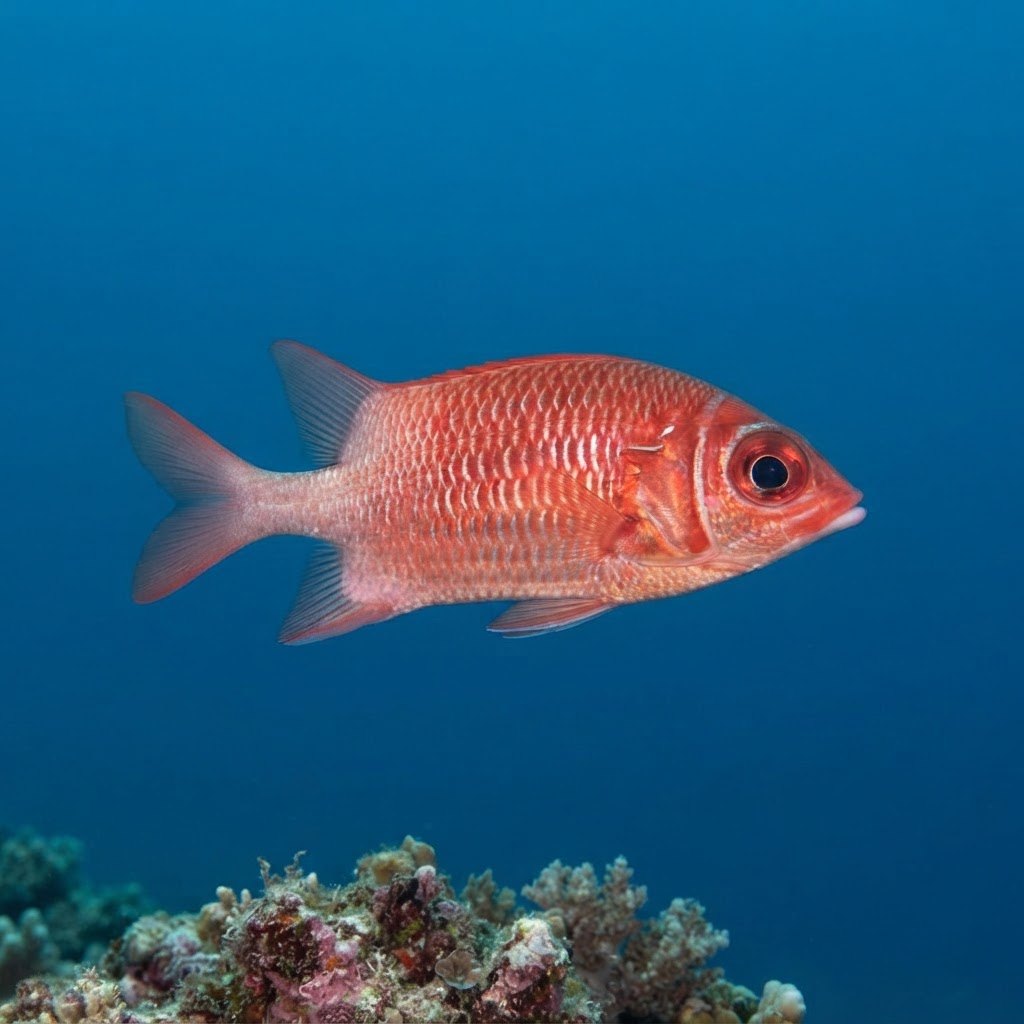
Reddish body with thin silvery stripes running lengthwise and a distinctive silvery-white spot at the upper rear of the gill cover that gives the species its name. Large, dark, reflective eyes suit its mostly nocturnal habits, and the body is deep and slightly compressed, growing to around 17 cm. Spiny fins along the back give it a slightly armoured look compared to smoother reef fish nearby.
Spend the day tucked into reef crevices, under ledges, or deep in coral overhangs, often in small loose groups with other squirrelfish, and become more active as light fades to feed after dark. Divers usually see them peering out from shaded holes rather than swimming openly, and they tend to hold their position rather than bolt when approached slowly. Most sightings come from reef slopes and walls where there is plenty of structure to hide in.
Those oversized eyes are a real nocturnal adaptation, gathering light for hunting small invertebrates and fish after dark, which is why daytime divers mostly find them motionless in shadow rather than out foraging.
No clear seasonal pattern shows up in the sightings, and with a comfortable range of 25 to 29 C it's present on these reefs year-round. Plan around good conditions at your chosen site rather than a particular month.
Most reliably logged in Egypt, especially around Marsa Alam and the Deep South, South Sinai, and the Red Sea Riviera, with strong numbers also in the Maldives' Central and Northern Atolls. It also turns up regularly in Indonesia's Sulawesi, the Seychelles' Inner Islands, and the Philippines' Visayas, making it a widespread find across Indo-Pacific and Red Sea reefs.
Mapping where Silverspot Squirrelfish is logged…
Egypt is the standout, particularly Marsa Alam, the Deep South, South Sinai, and the Red Sea Riviera. It's also a regular find in the Maldives' Central and Northern Atolls, Indonesia's Sulawesi, the Seychelles' Inner Islands, and the Philippines' Visayas.
There's no strong seasonal pattern in the data, and its 25 to 29 C comfort range means it's on these reefs all year. Any time you'd normally dive the Red Sea, Maldives, or Indo-Pacific reefs works.
Look for a reddish body with fine silvery stripes, large dark eyes, and a silvery-white spot near the top of the gill cover. It grows to about 17 cm and is usually seen wedged into reef crevices or under ledges rather than swimming in open water.
They typically reach around 17 cm, a modest size that suits their habit of squeezing into tight reef crevices and overhangs during the day.
No, they're not considered dangerous to divers. Give them space to sit in their crevice and they'll generally hold still rather than react.
Their oversized eyes are built for low-light hunting, letting them feed on small invertebrates and fish after dark while spending daylight hours motionless in reef shadows.
Site and sighting data is aggregated from diver logs, iNaturalist and GBIF. For taxonomy and conservation status:
Soldierfish
3,612 sites