Diplodus argenteus
Silvery, deep-bodied reef fish common off Rio de Janeiro and Santa Catarina, comfortable in 21 to 26C water year-round.
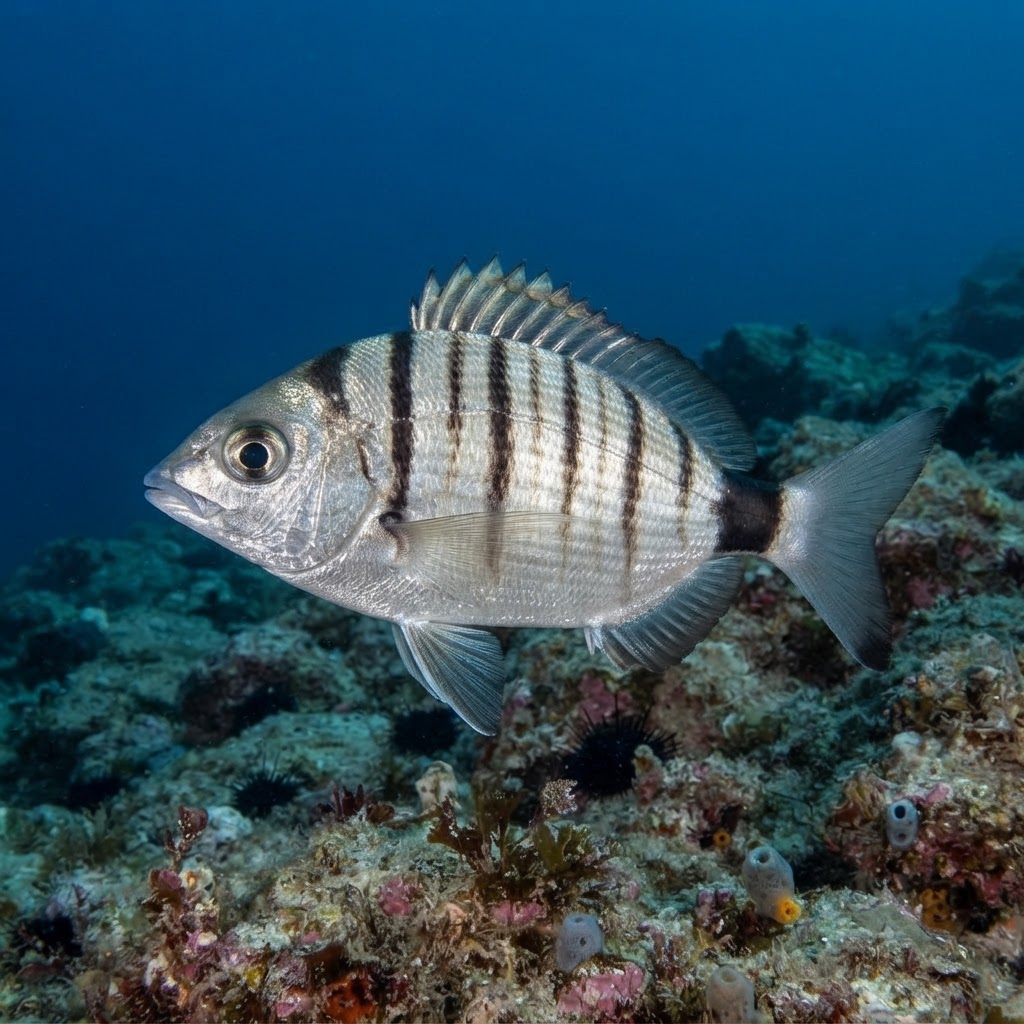
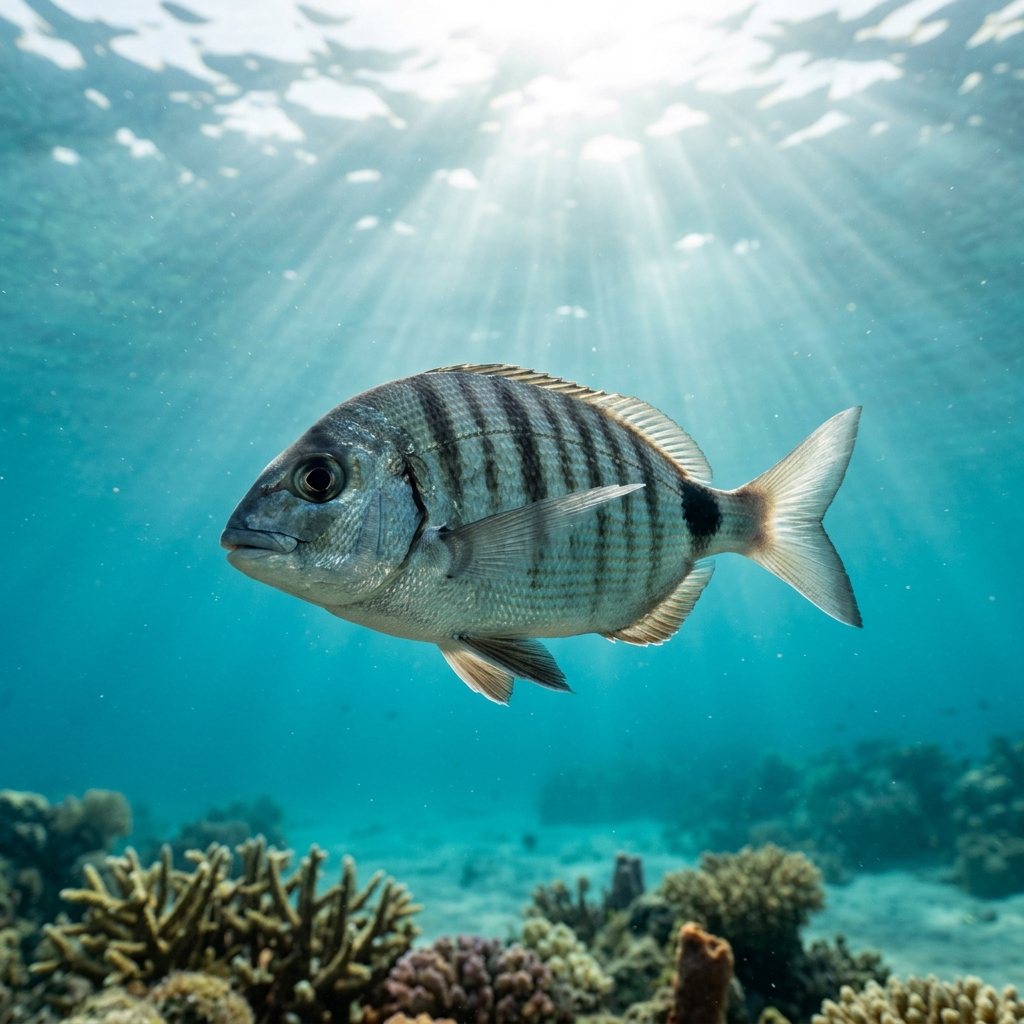
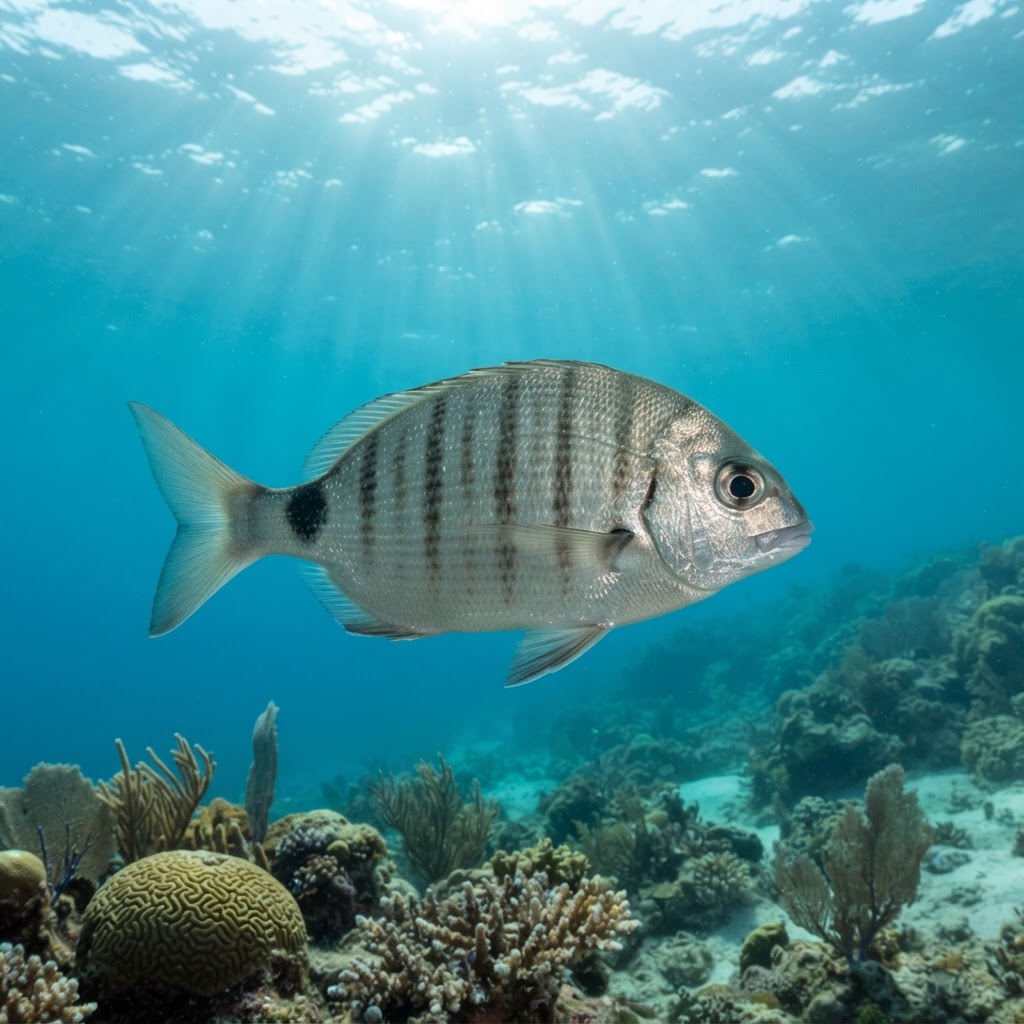
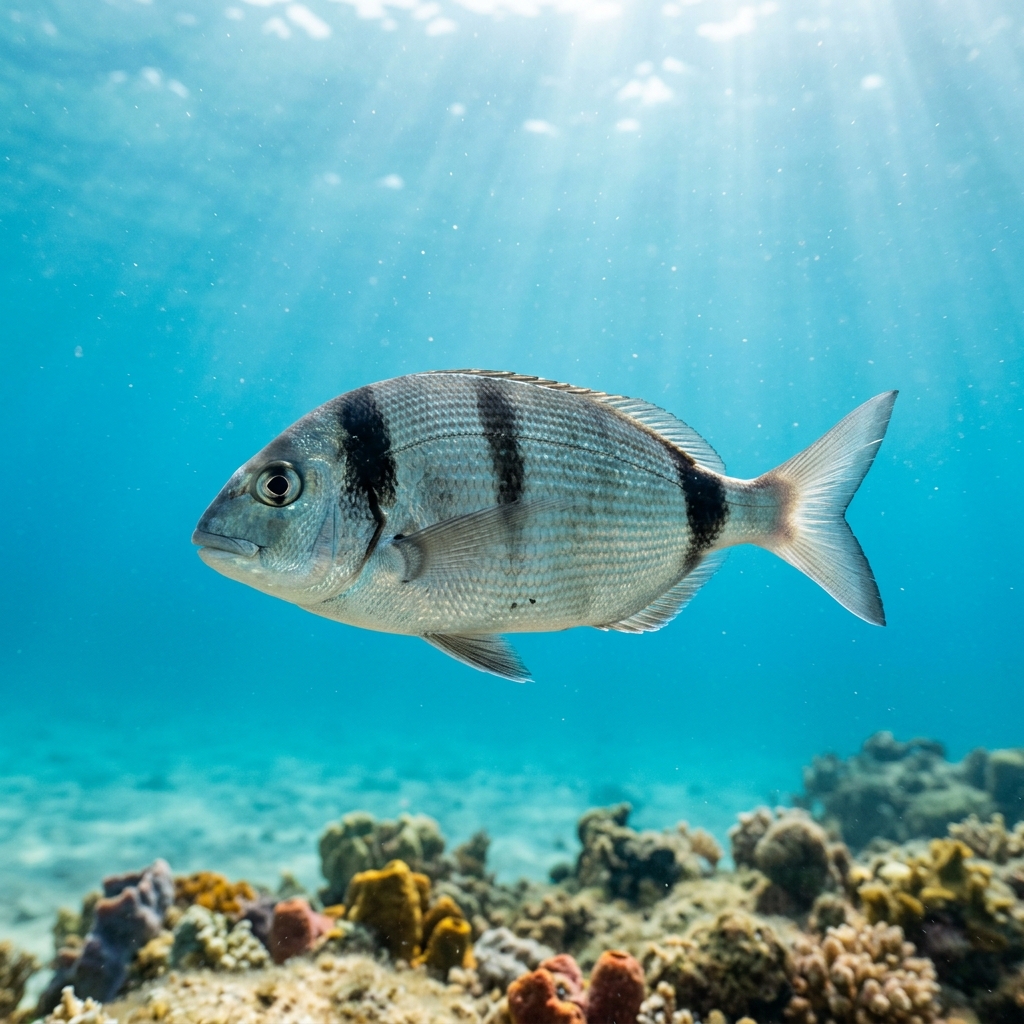
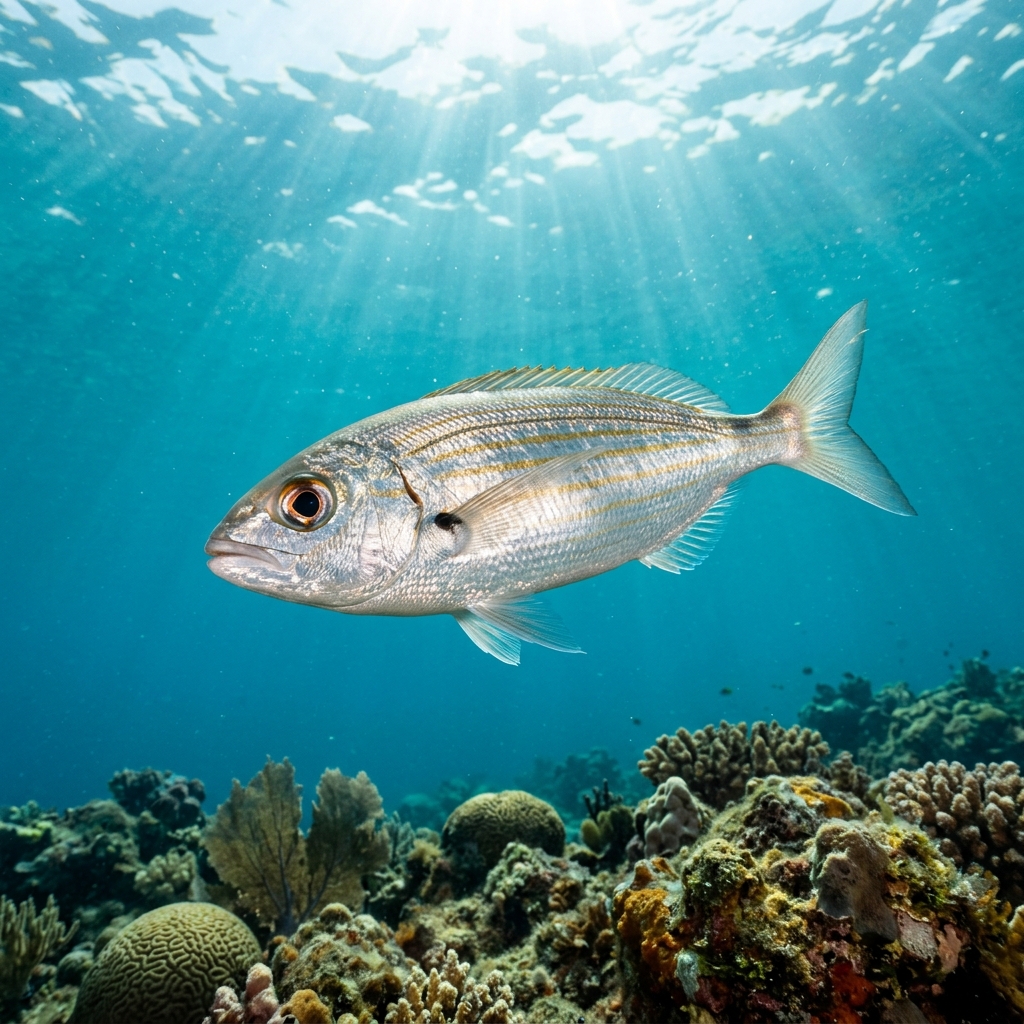
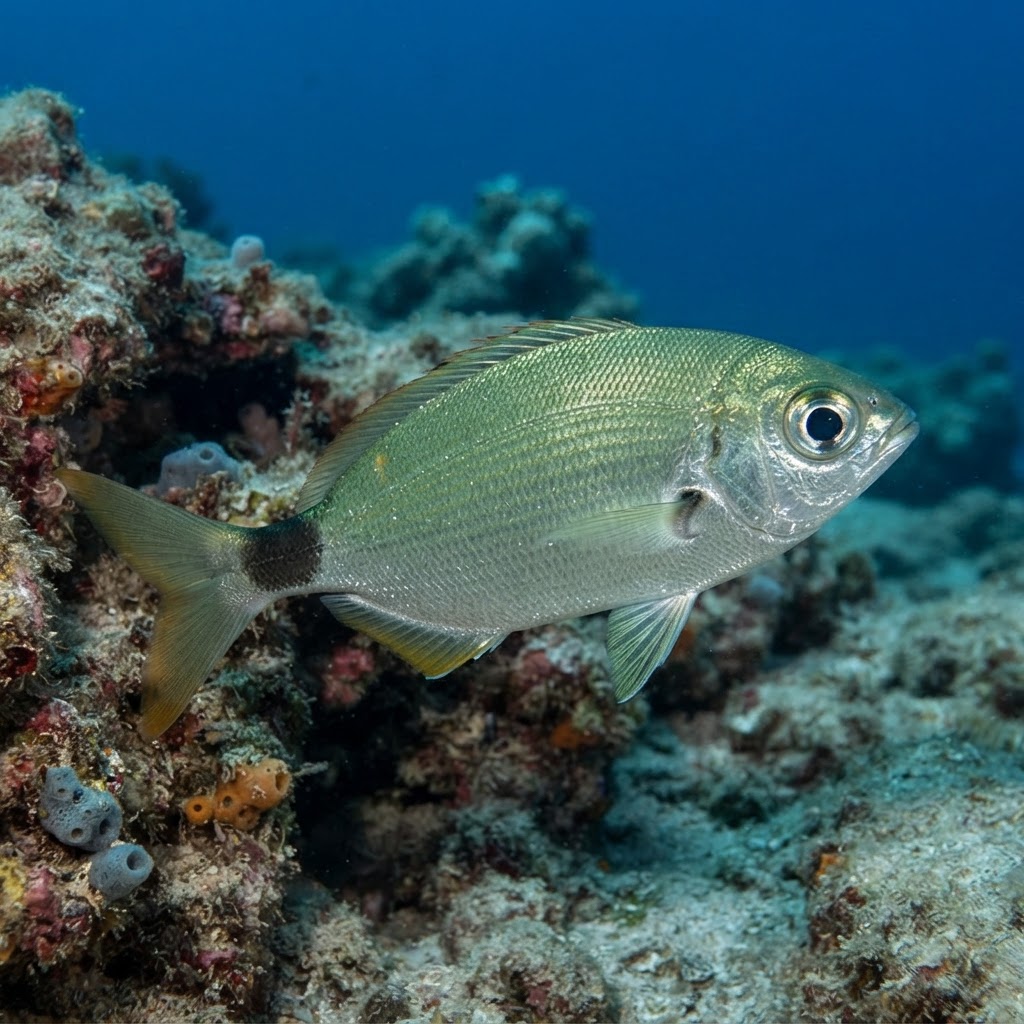
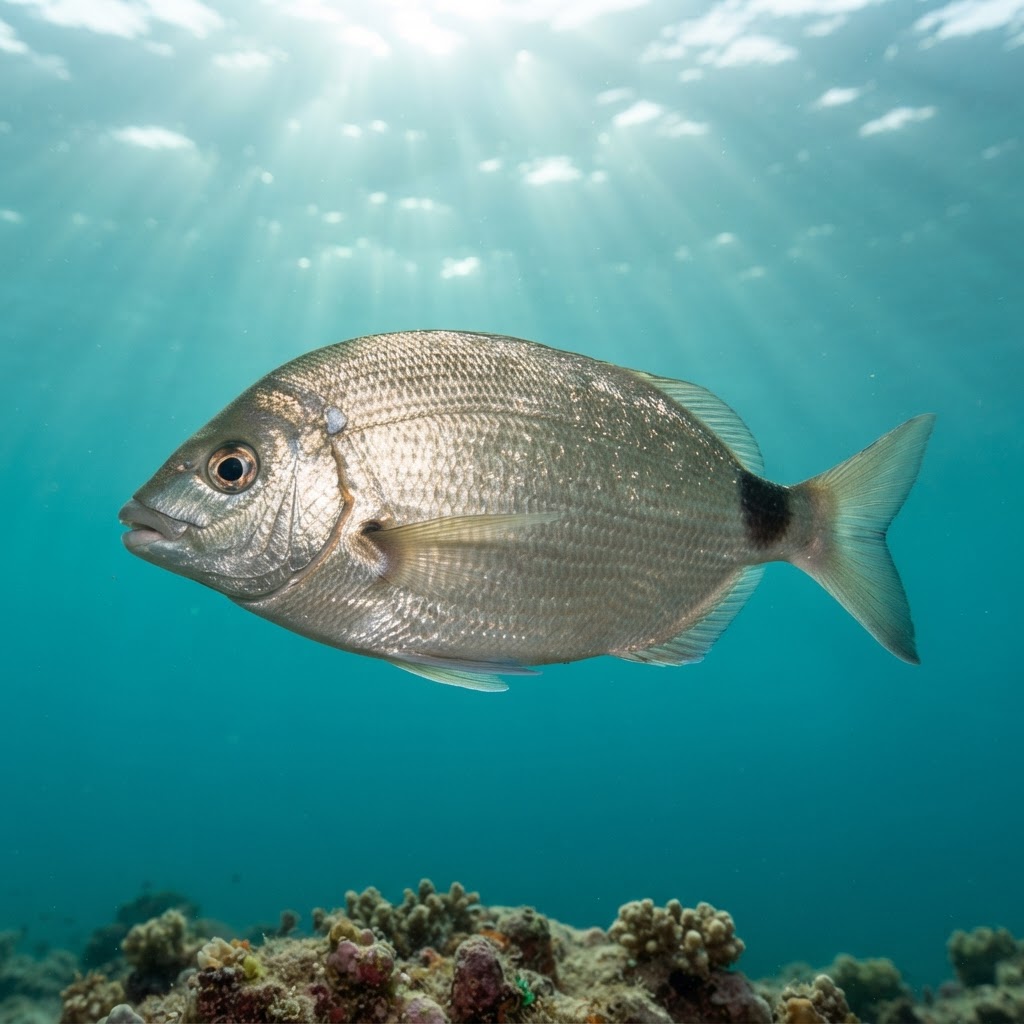
Deep, laterally compressed body with an overall bright silver sheen that flashes as it turns in the light. Look for a dark blotch or bar near the base of the tail, a mild giveaway against the plain silver flanks and pale fins. Adults reach around 27cm, roughly a dinner-plate-sized fish moving in loose groups or singly over rock and reef.
Usually seen cruising rocky reefs and boulder slopes alone or in small loose groups, picking at algae and encrusted growth on the rock. It's an unremarkable swimmer around divers, neither bold nor especially shy, and tends to hold its position on the reef rather than bolting. Most sightings are on daytime dives over mixed rock and sand rather than open water.
It's most often logged as uncommon rather than abundant, so a sighting on a Brazilian rock reef is a nice tick rather than a given, even at its strongest sites.
No clear seasonal pattern shows up in sightings, so treat it as a year-round fish. It's logged in water from about 21 to 26C, a range that holds through most of the diving season on these coasts.
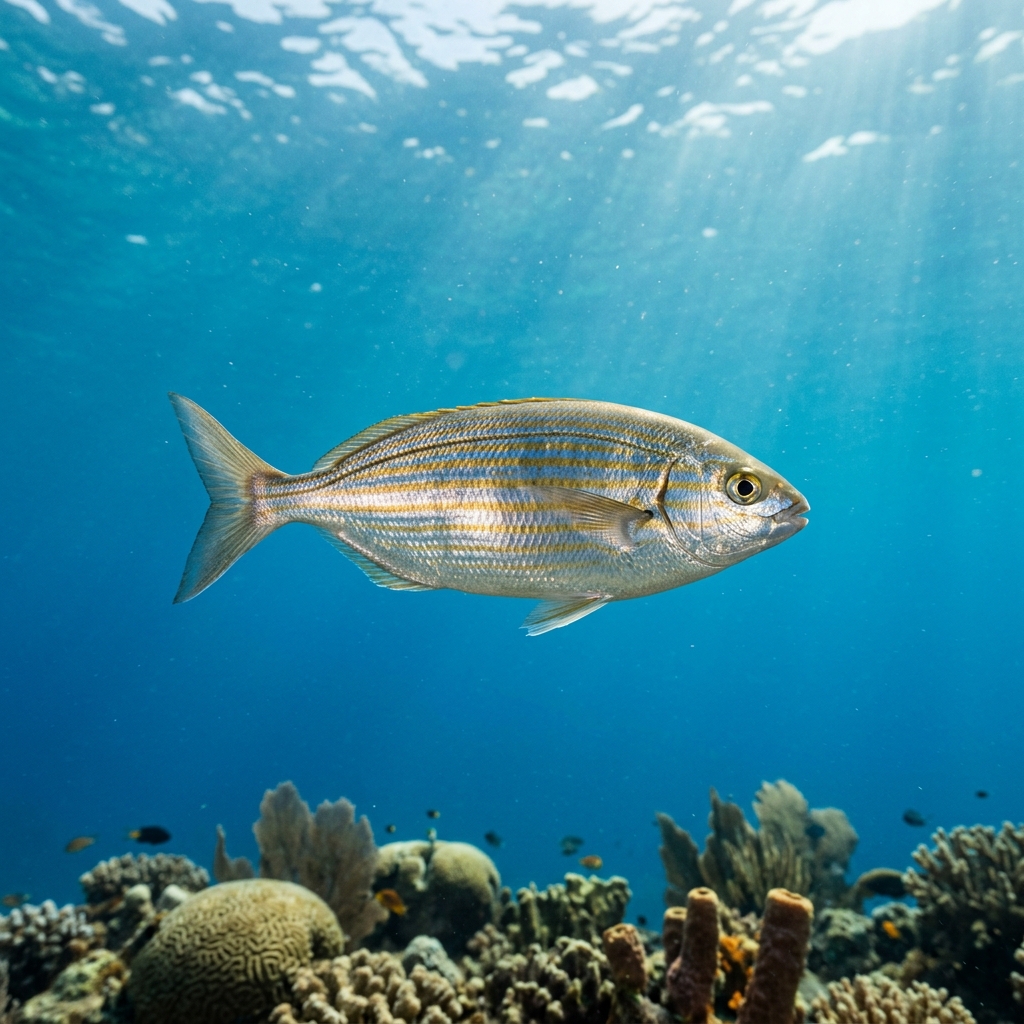
Reef neighbours a diver could mistake it for. Use the identification notes above to tell them apart.
Most reliably logged along the Brazilian coast, with strong numbers around Rio de Janeiro and Santa Catarina, plus a good showing in São Paulo state. Divers in Argentina pick it up around Puerto Madryn, making this a South Atlantic species rather than a Caribbean or Indo-Pacific one.
Mapping where Silver Porgy is logged…
Brazil is the stronghold, especially Rio de Janeiro and Santa Catarina, with more sightings around São Paulo state. Across the border, Puerto Madryn in Argentina is the other reliable spot.
There's no strong seasonal signal in sightings, so it's considered a year-round fish on these coasts. It's been recorded in water between about 21 and 26C.
Look for a deep-bodied, flat-sided fish with an all-over silver sheen and a dark mark near the tail base. It grows to around 27cm and is usually seen alone or in small loose groups over rocky reef.
They typically reach about 27cm, a solid, deep-bodied fish roughly the size of a dinner plate when seen head-on underwater.
No, they're not considered a risk to divers and simply go about their business on the reef when approached.
Site and sighting data is aggregated from diver logs, iNaturalist and GBIF. For taxonomy and conservation status:
Boga
2,853 sites