Lagocephalus sceleratus
Uncommon but memorable on Turkey's Turquoise Coast, this oversized pufferfish shows up year-round in water from 21.6 to 28.6°C.
Safety warning
Not aggressive towards divers, but it can deliver a serious bite with its beak-like teeth if cornered, provoked, or hand-fed, so keep hands to yourself and admire from a comfortable distance. Never touch or attempt to hold one, since its skin and internal organs contain tetrodotoxin, a toxin dangerous if it contacts open cuts or is ingested.
Handle with care
Toxic if eatenGeneral first-aid guidance, not a substitute for professional medical care. In an emergency, call your local emergency number.
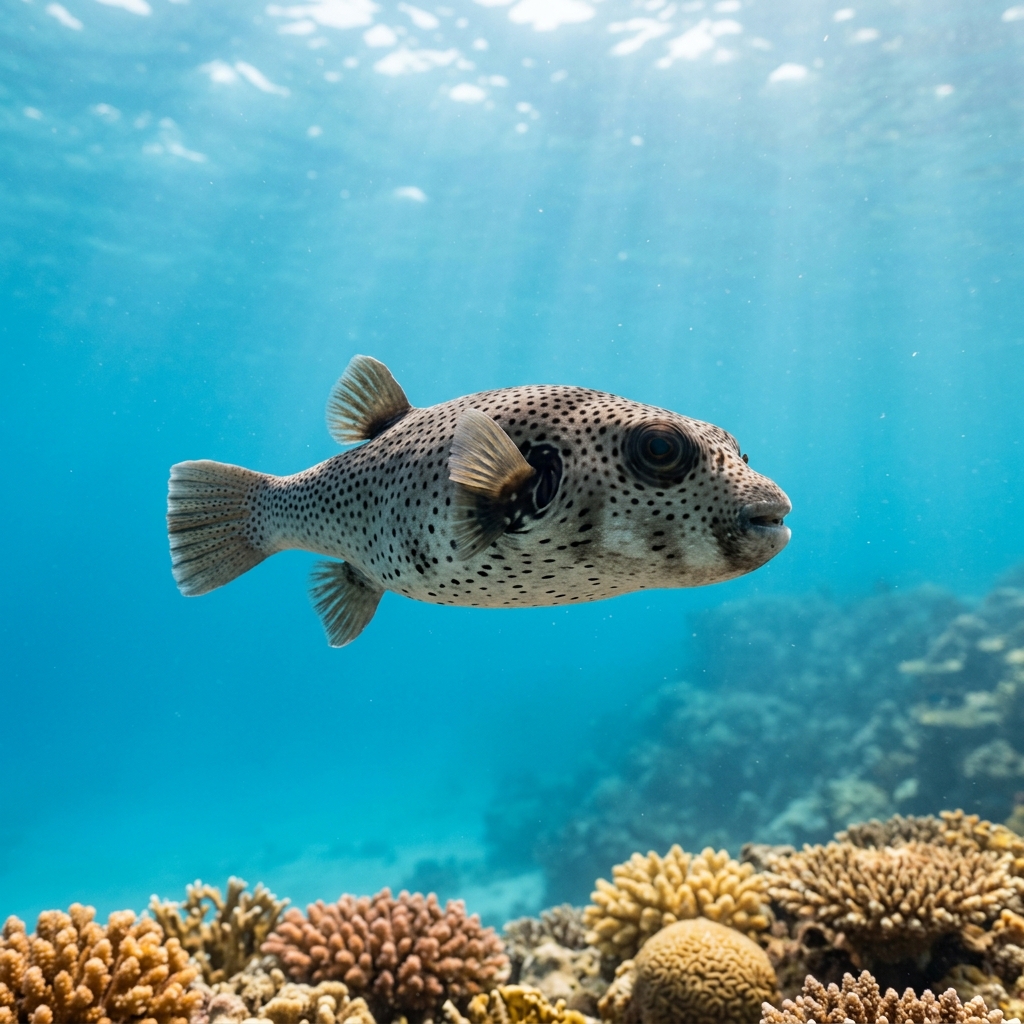
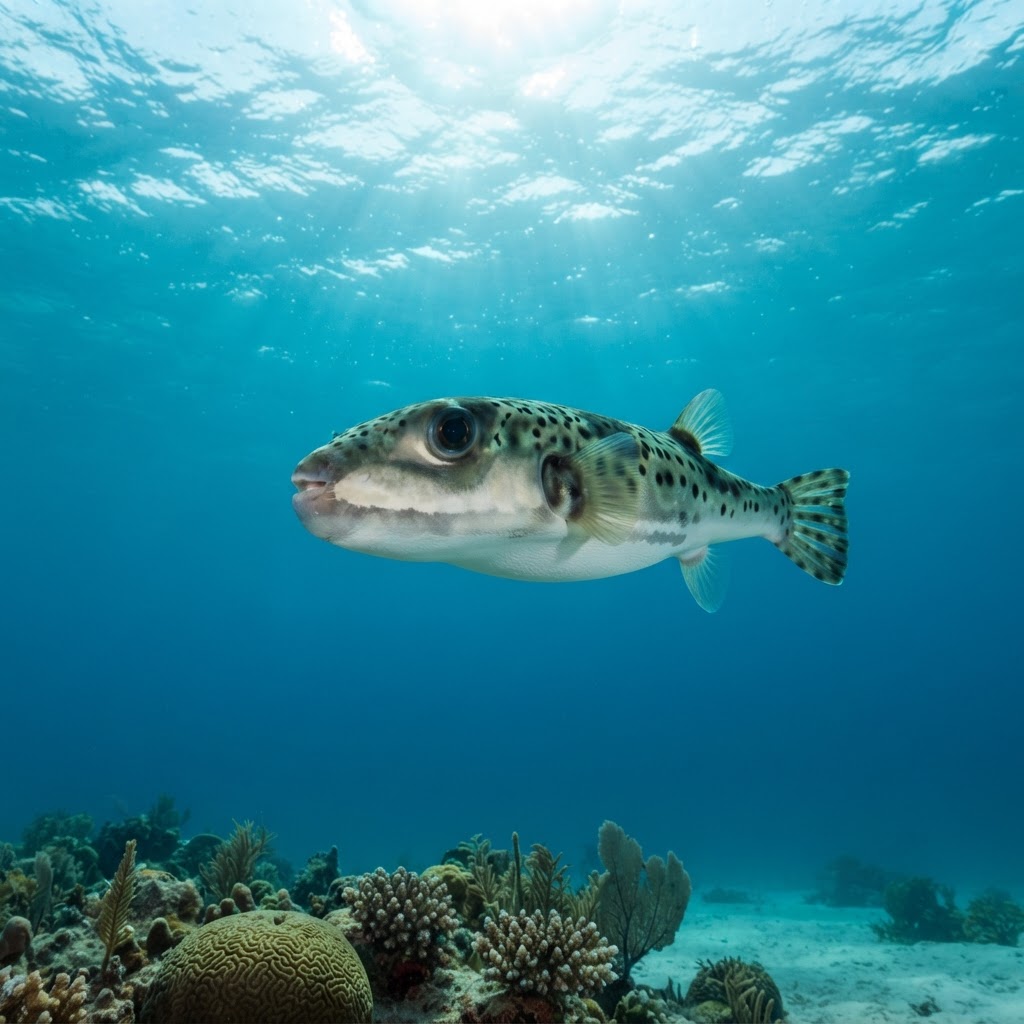
Bulky, torpedo-shaped body that can push past 70cm, far larger than most reef pufferfish you'll bump into. Skin is grey to olive-brown on top fading to a silvery-white belly, with no bold spot pattern to speak of, which is itself a clue given how patterned its lookalikes are. Small eyes set high on a blunt head, and the classic fused beak-like teeth of a pufferfish visible up close. Moves with slow, deliberate fin beats rather than a quick dart.
Typically seen cruising slowly over rock and rubble bottoms or hanging near reef structure, unhurried and easy to approach compared with smaller, jumpier puffers. Divers log it as uncommon rather than rare, so it's more a welcome surprise than something you can plan a dive around. It doesn't school and tends to be encountered alone, going about its business regardless of divers nearby.
It's an invasive species in the Mediterranean, having spread in from the Red Sea via the Suez Canal, and its flesh and organs carry tetrodotoxin, a potent nerve toxin, which is why handling or eating it is strongly discouraged in the region.
No clear seasonal pattern shows up in the data, and with a comfortable range of 21.6 to 28.6°C it can turn up on Mediterranean dives across most of the year rather than in one narrow window.
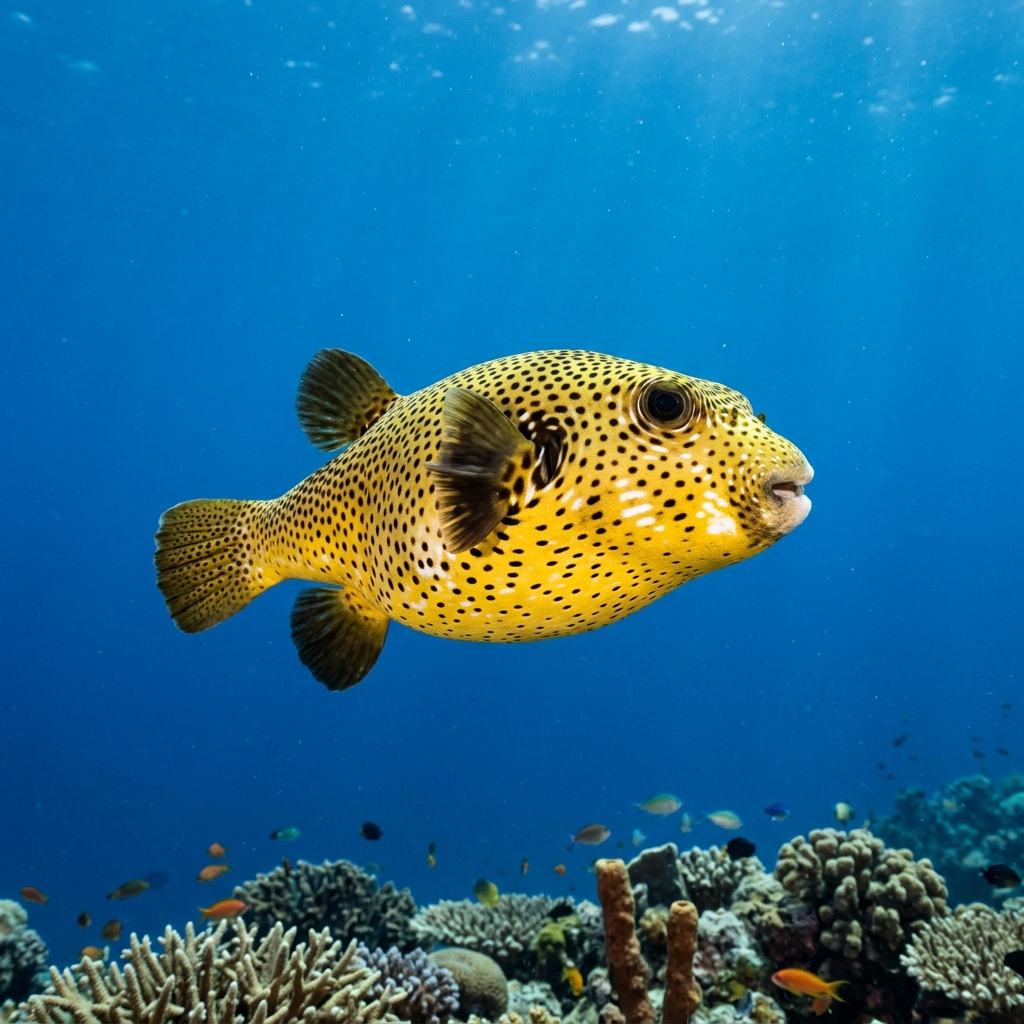
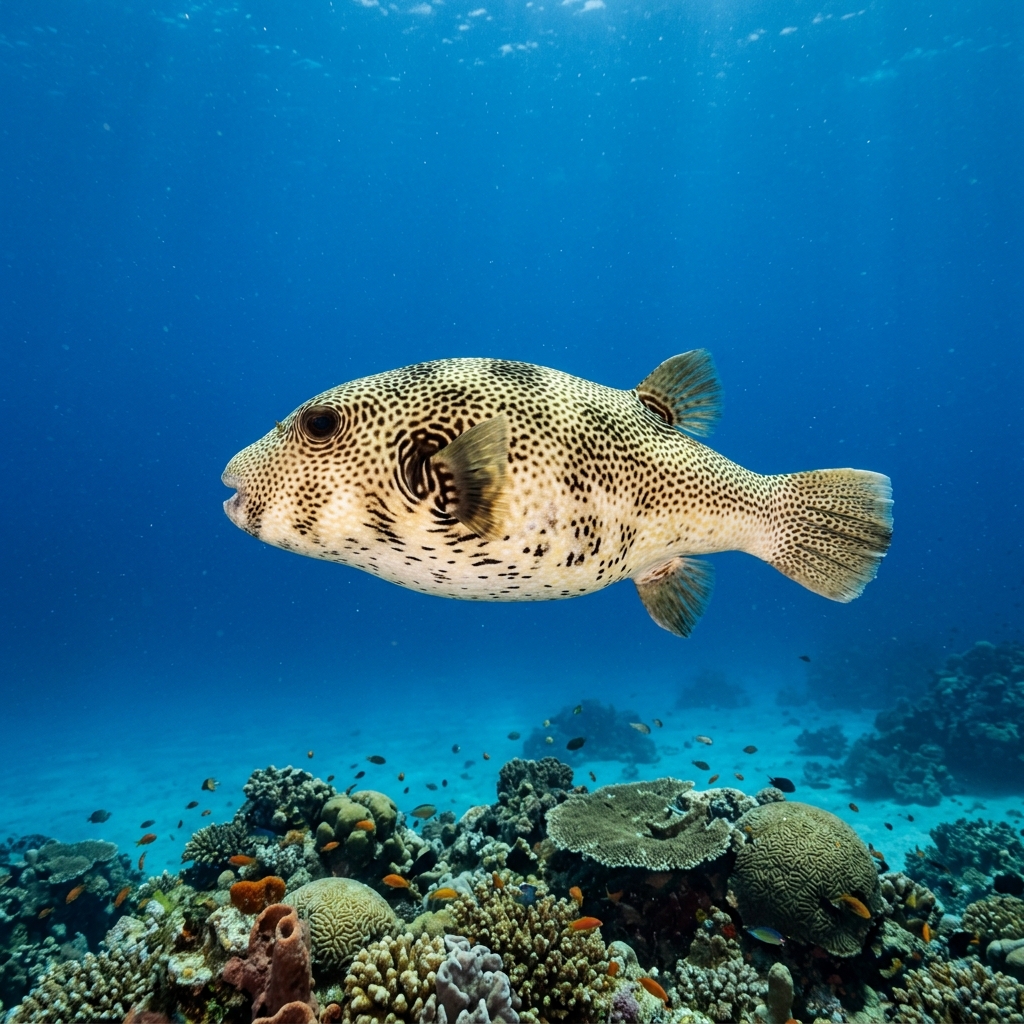
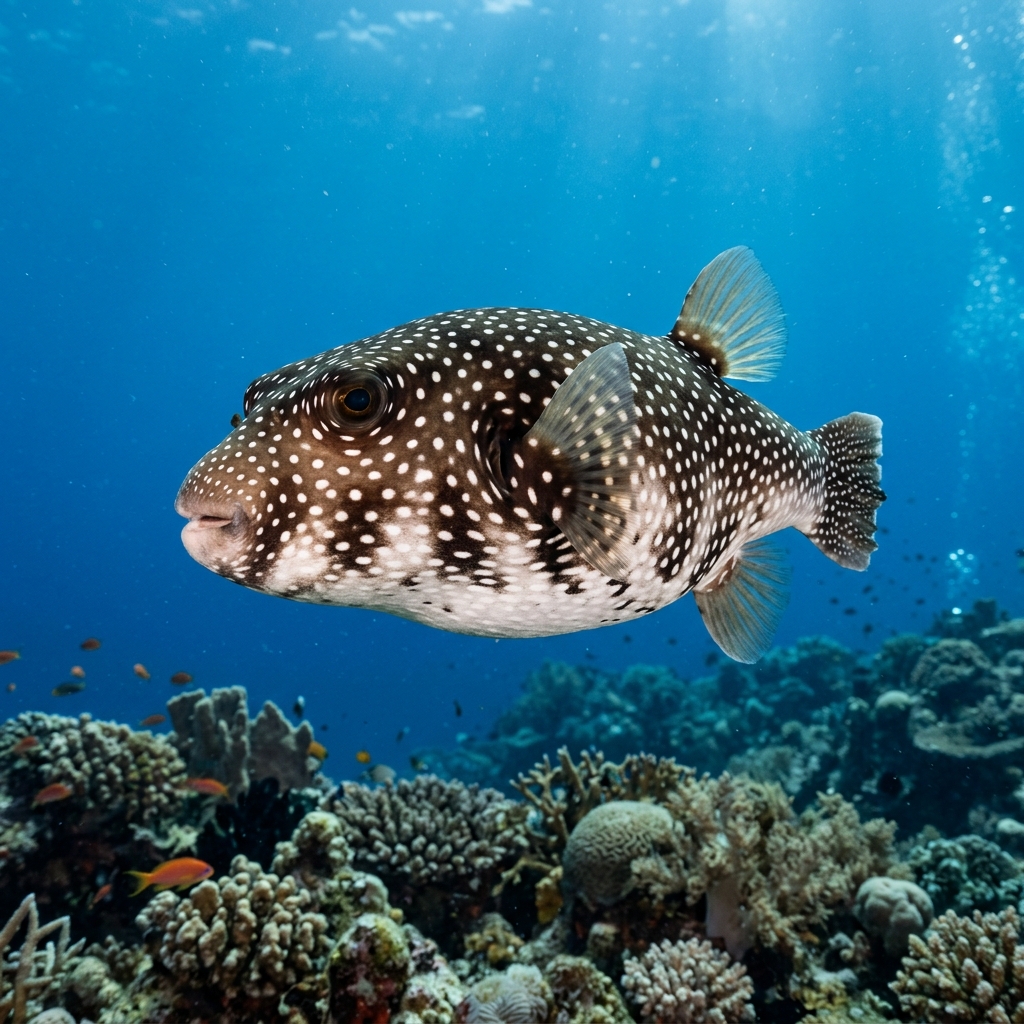
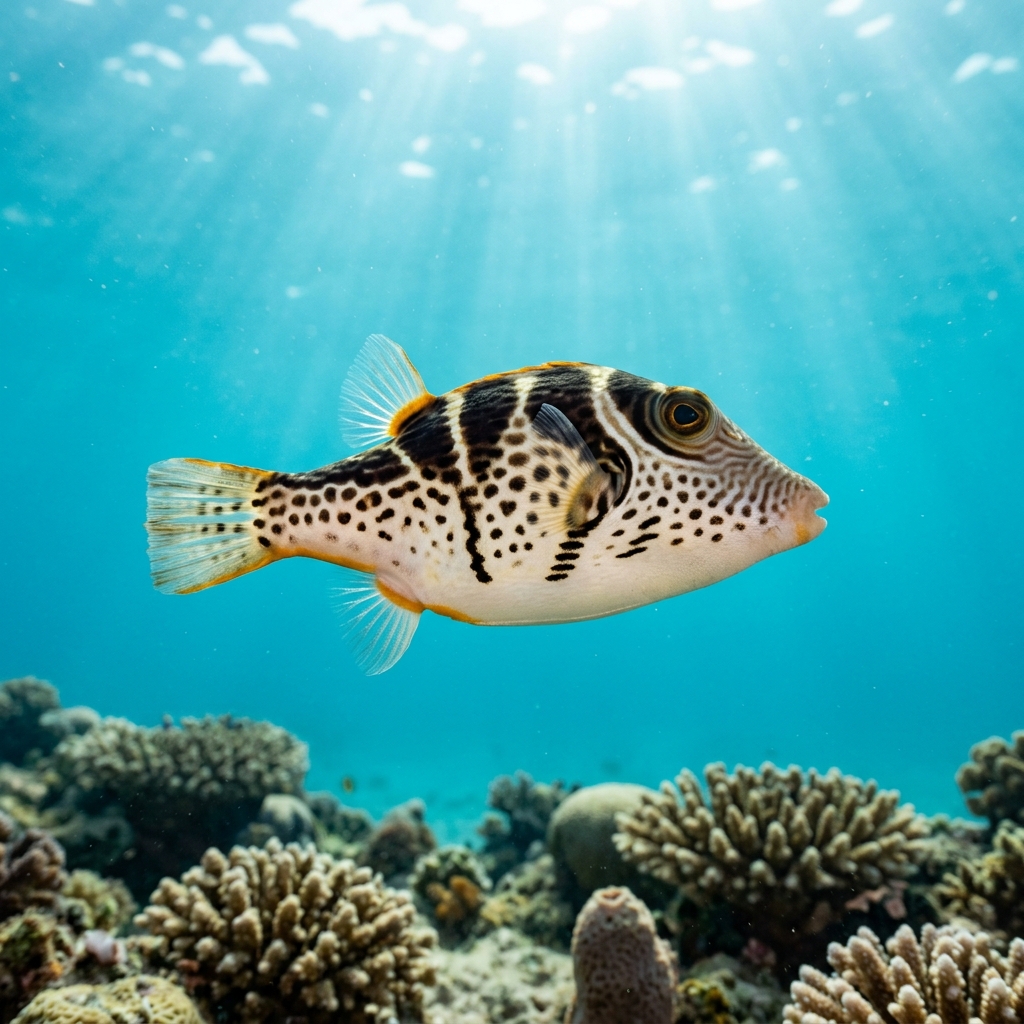
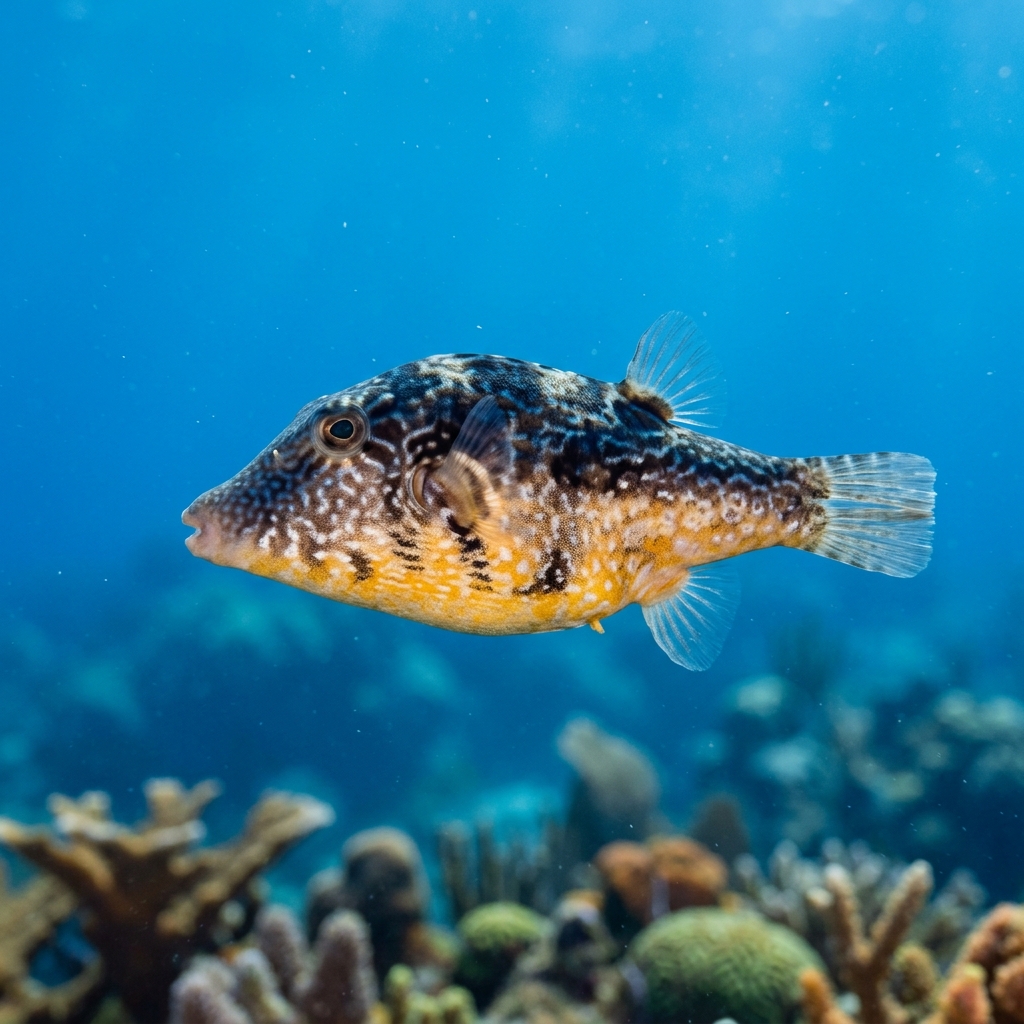
Reef neighbours a diver could mistake it for. Use the identification notes above to tell them apart.
Most reliably logged along Turkey's Turquoise Coast, with further sightings around Antalya and a smaller presence in Greece's Dodecanese islands. Turkey accounts for the overwhelming majority of logged encounters, making the southwest Turkish coast the strongest bet.
Mapping where Silver-cheeked Toadfish is logged…
The strongest sightings come from Turkey's Turquoise Coast and Antalya region, with a smaller number of records from Greece's Dodecanese islands.
There's no strong seasonal pattern in sightings, and it tolerates water from roughly 21.6 to 28.6°C, so divers report it across most of the year rather than one specific season.
They can bite hard with beak-like teeth if provoked or handled, and their tissues contain tetrodotoxin, a potent nerve toxin, so never touch or attempt to feed one.
Look for a large, torpedo-shaped body over 70cm long, plain grey-brown back, silvery belly, and a blunt head with small eyes, moving with slow, unhurried fin strokes.
They typically reach around 77cm, making them noticeably larger than most other pufferfish divers encounter on Mediterranean reefs.
It's a Red Sea species that invaded the Mediterranean through the Suez Canal, and its organs and skin carry tetrodotoxin, a nerve toxin potent enough to be dangerous if ingested.
Site and sighting data is aggregated from diver logs, iNaturalist and GBIF. For taxonomy and conservation status:
Valentini Pufferfish
2,830 sites