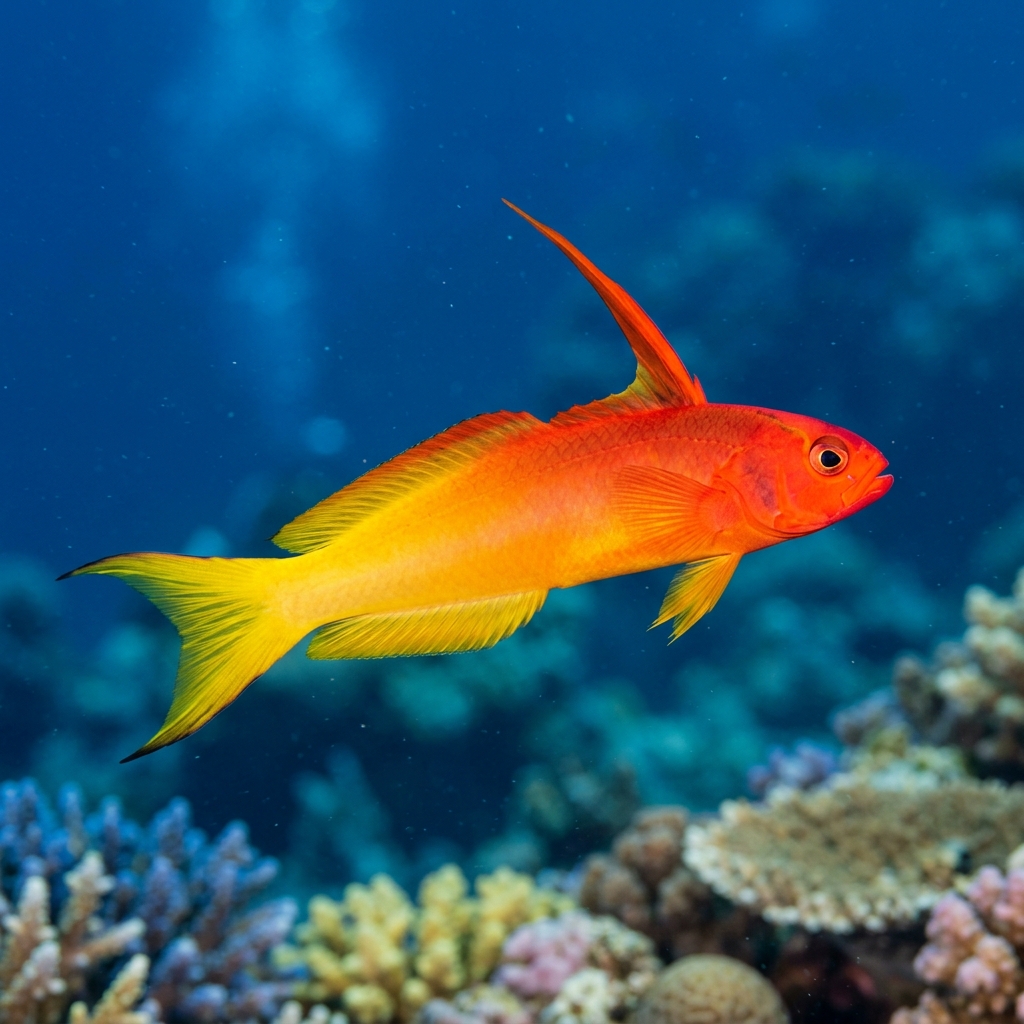
Signigobius biocellatus
Spot the Crab-eye Goby in the Rock Islands of Palau or Sipadan, Malaysia. Warm 26-29 °C Indo-Pacific reefs, year-round. ID tips inside.
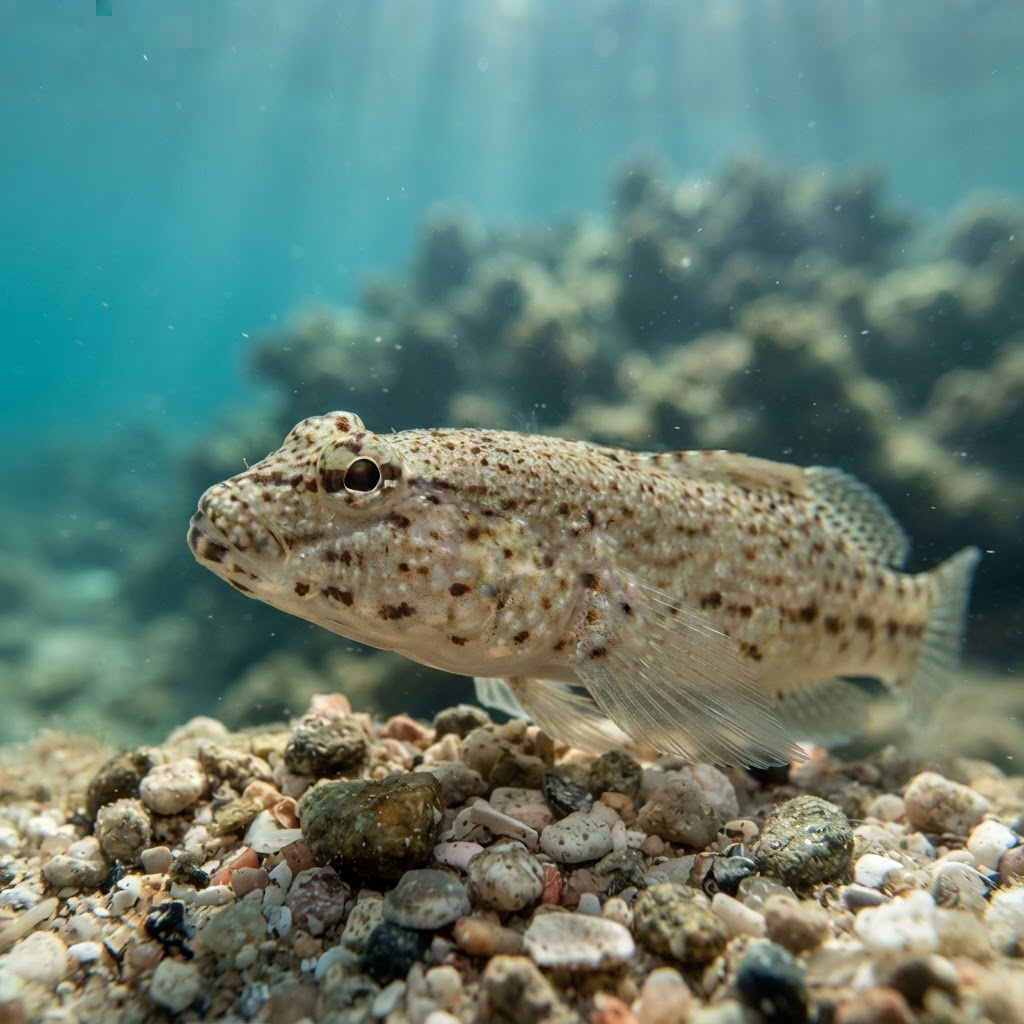
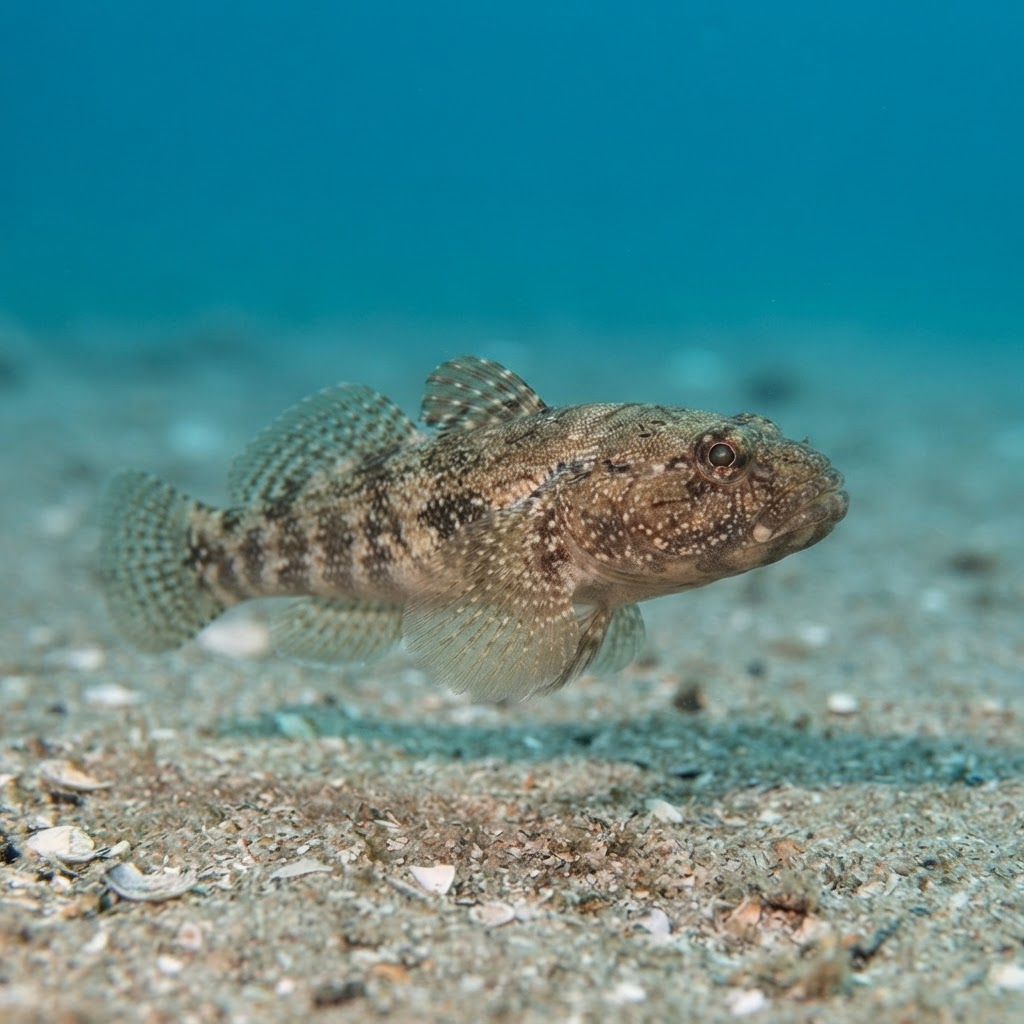
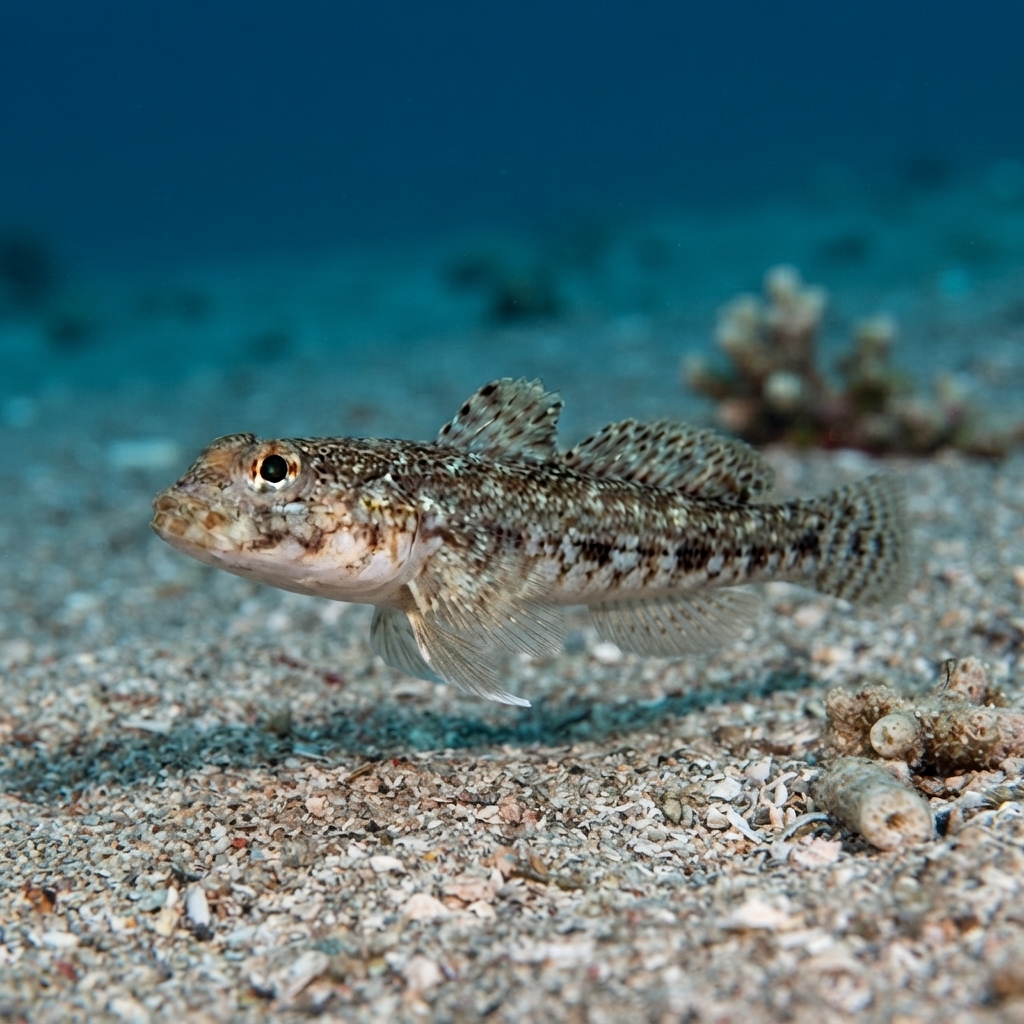
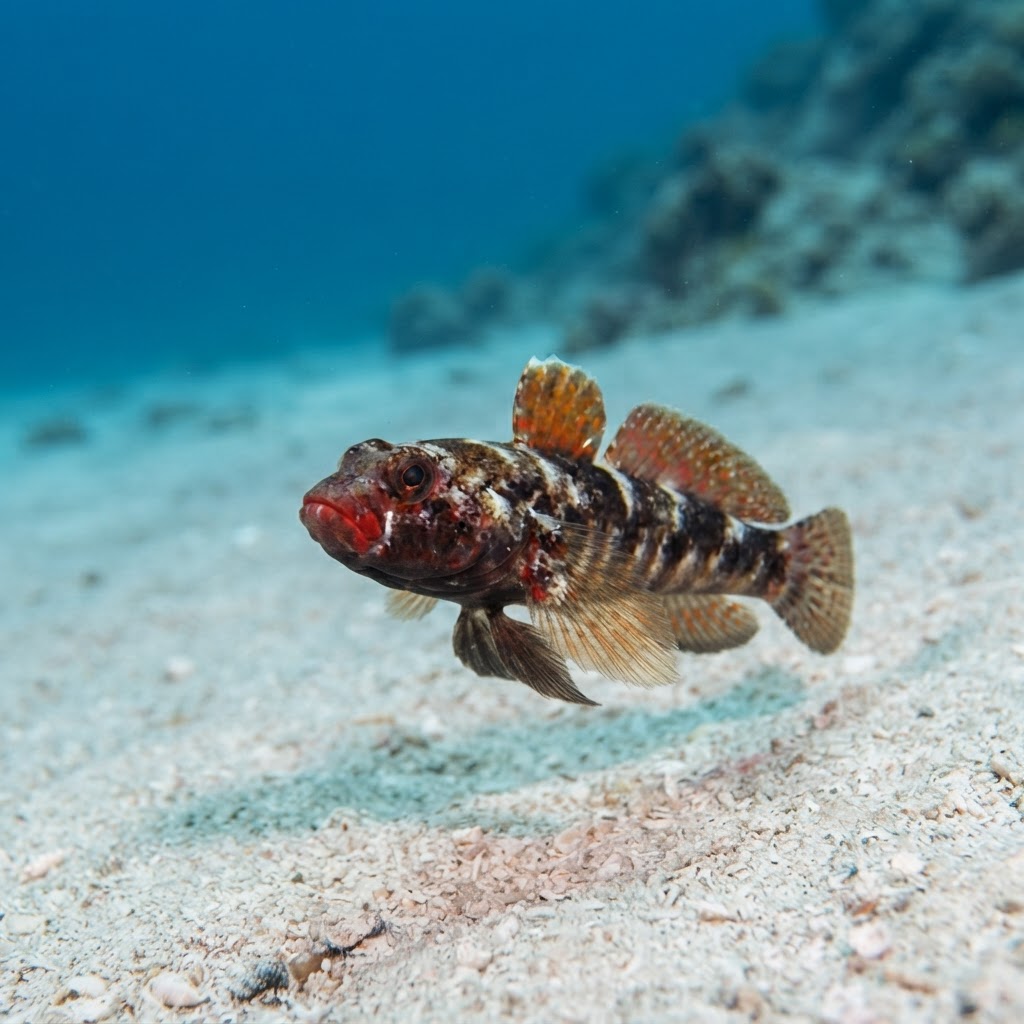
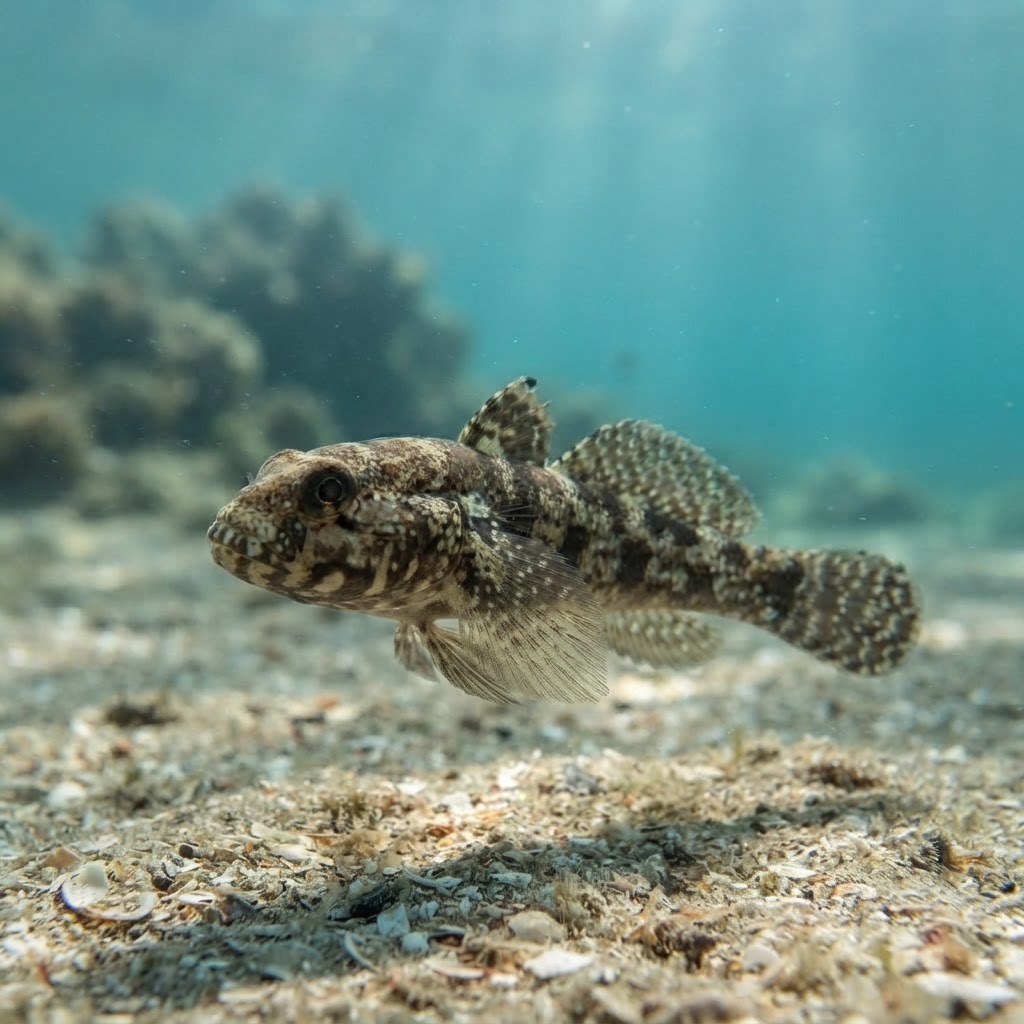
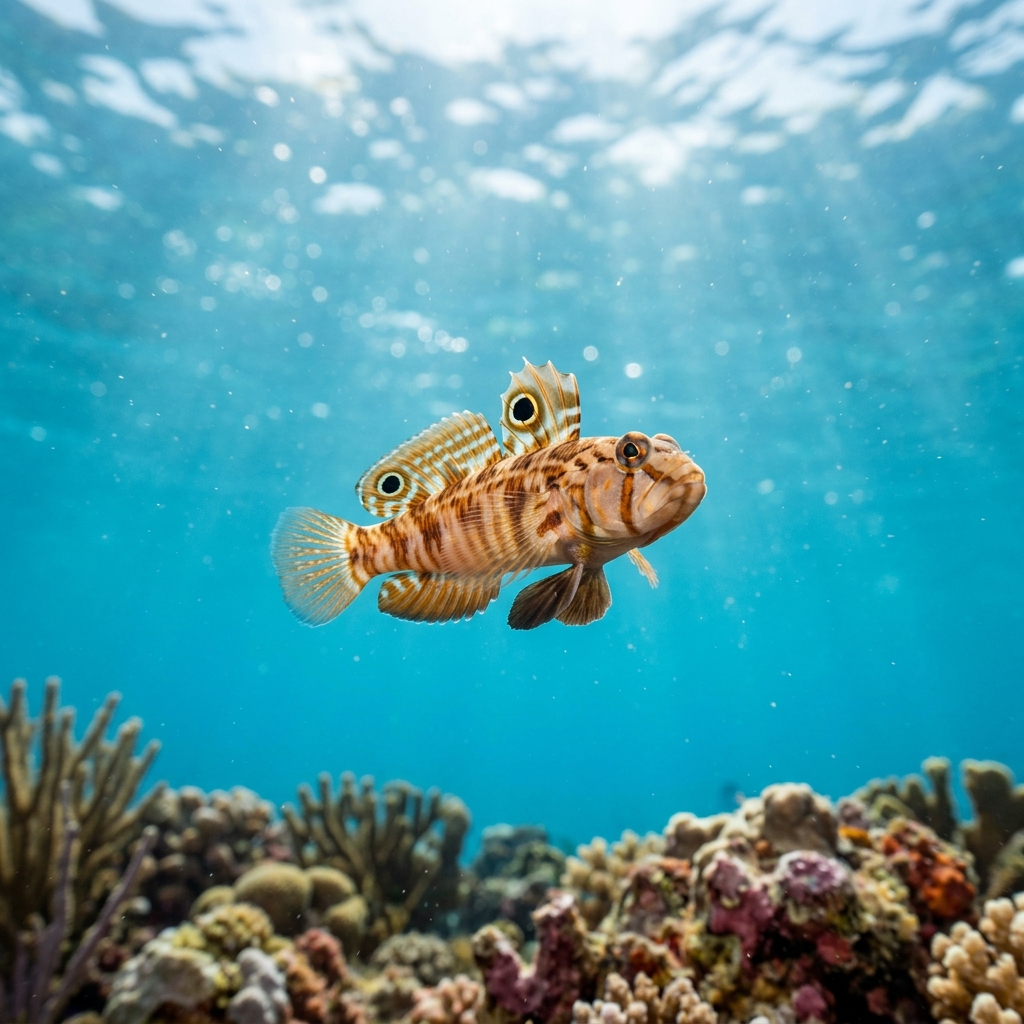
Two large, vivid false eyespots (ocelli) on the dorsal fins are the giveaway, making the fish look uncannily like a crab from a distance. The body is pale cream to tan with brown mottling, and the fish typically perches low on the substrate on its pelvic fins. At typical viewing size it sits small enough that those eyespots dominate the profile, drawing your eye immediately. The paired false eyes mimic the front claws and eye-stalks of a crab, a mimicry so convincing it is the defining ID feature underwater.
Expect to find it hovering just above sandy rubble or mixed coral-sand patches, often in pairs, moving with a slow, jerky side-to-side swagger that amplifies the crab illusion. When approached it rarely bolts, instead tilting its body to display the eyespots more fully, a threat posture aimed at bluffing predators. Patient, slow-moving divers who stay low tend to get the best looks as the fish holds its ground for extended periods.
The crab-mimicry is active, not passive. When threatened, the fish spreads its dorsal fins, rocks its body and mimics the threat display of a Trapezia guard crab, which is a species that reef predators have learned to avoid. It is one of the few fish known to perform active behavioural mimicry rather than relying on appearance alone.
No strong seasonal pattern emerges from the sighting data, so it can be treated as a year-round resident. It is associated with warm tropical water in the 26 to 29 °C range, which is available on Indo-Pacific reefs throughout the year.
Most consistently logged in Palau, where the Rock Islands and Koror and Babeldaob areas account for the lion's share of sightings globally. Strong records also exist across Maluku and Papua in Indonesia, Queensland in Australia, and Tufi in Papua New Guinea. Sipadan and East Sabah in Malaysia and Palawan and Apo Reef in the Philippines round out the reliable Indo-Pacific destinations.
Mapping where Crab-eye Goby is logged…
Palau is the top destination, particularly the Rock Islands, where divers log it more consistently than anywhere else. Indonesia's Maluku and Papua region, Queensland in Australia, Tufi in Papua New Guinea, and Sipadan in Malaysia are also reliable spots across the Indo-Pacific.
Sightings are spread across the year with no clear seasonal peak, so any time works. It favours warm water around 26 to 29 °C, which tropical Indo-Pacific reefs maintain year-round, meaning your dive schedule can be driven by other factors like visibility and weather.
Look for the two bold false eyespots on the dorsal fins, which together with mottled tan-brown colouring and a low, rocking posture make it resemble a small crab. No other common reef goby shares this combination of paired ocelli and active crab-mimicking behaviour, making it one of the easier small gobies to identify once you know what you are looking for.
They are a small fish, typically reaching around 6 to 8 cm in length. Their small size means they are easy to overlook on sandy rubble patches, but the prominent eyespots on the raised dorsal fins help draw attention to them.
It mimics the aggressive Trapezia crabs that live among coral branches and which predators actively avoid. By spreading its dorsal fins to display the eyespots and rocking its body from side to side, it bluffs potential predators into treating it as a threat rather than a meal. This is active behavioural mimicry, not just a colour pattern match.
Site and sighting data is aggregated from diver logs, iNaturalist and GBIF. For taxonomy and conservation status:
Slender Goby
806 sites