Siganus vulpinus
Spot the foxface rabbitfish across Indonesia, Malaysia and Palau. Bold yellow body, striking face mask, warm 23-29 °C reef waters. Here's where and when to look.
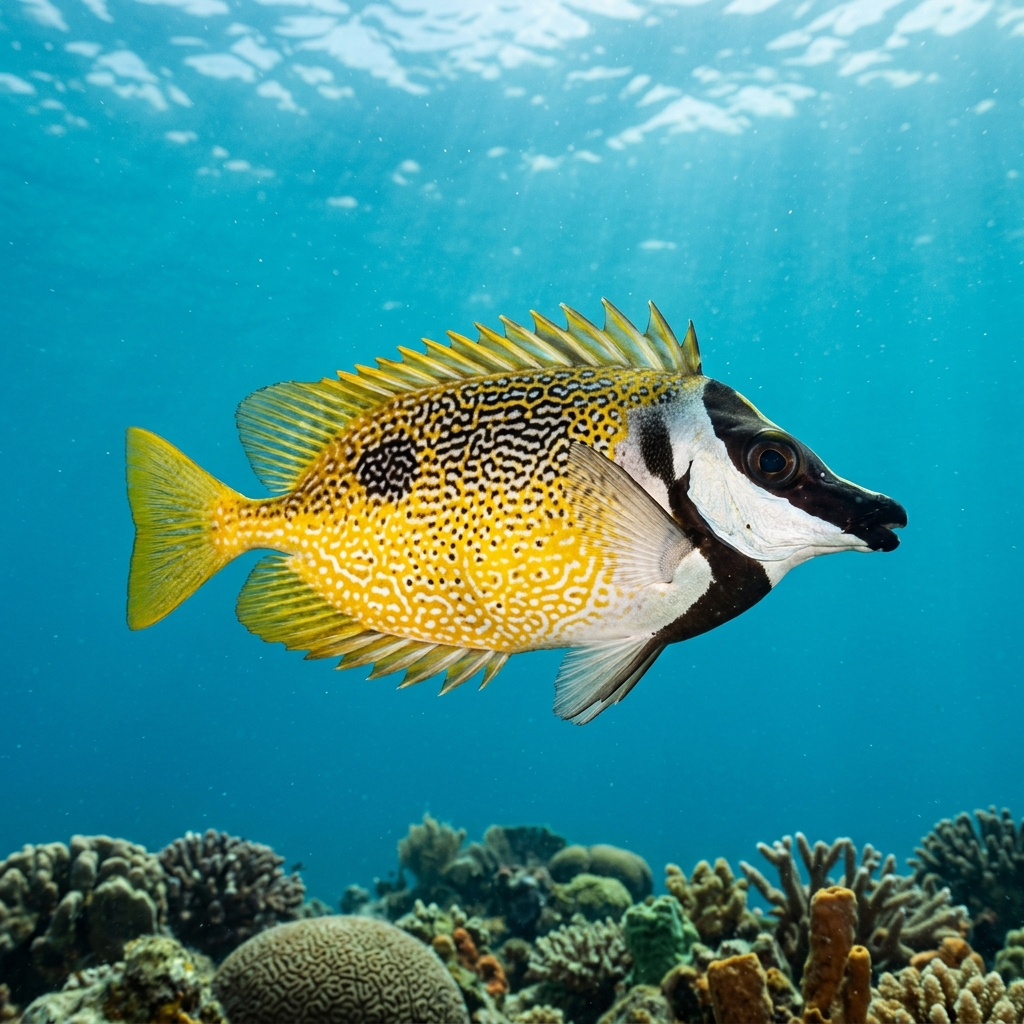
Few reef fish are easier to pick out than this one: a vivid yellow body paired with a striking black-and-white striped face mask that runs from snout to gill cover, giving it a fox-like look that earns its name. The snout is distinctly elongated and tubular, used to pick food from coral crevices. Body shape is laterally compressed and oval, reaching around 25 cm in most reef encounters. Juveniles share the same bold face pattern but may appear slightly paler overall.
Foxface rabbitfish are most often seen picking busily at coral and algae with their pointed snouts, usually singly or in pairs rather than in large groups. They tend to keep close to the reef structure and will drift calmly away rather than bolt when approached, making for relaxed observation. If cornered or handled, they erect their venomous dorsal spines as a warning, but simply giving them space means you will never have a problem.
The spines of the dorsal, pelvic, and anal fins are venomous and can deliver a painful sting. The fish uses them purely defensively, so the risk to divers is essentially zero as long as you avoid grabbing or pinning one against the reef.
In Northern Hemisphere destinations such as Malaysia and the Philippines, sightings concentrate in May through July. In Southern Hemisphere locations like Queensland, Australia, peak activity falls in September through January and again in April through July, though the species' tolerance for warm tropical water (23-29 °C) means it can be encountered year-round wherever those temperatures persist.
Most commonly logged across Indonesia and Malaysia, with particularly strong records from Pulau Tioman, the Perhentian and Redang islands, and the Maluku and Papua regions of Indonesia. Queensland, Australia is another reliable destination, and Rock Islands, Palau also produces consistent sightings. The Philippines, Vanuatu, Timor-Leste, and New Caledonia round out the confirmed range.
Mapping where Foxface Rabbitfish is logged…
Indonesia and Malaysia together account for the largest spread of sighting records, with Pulau Tioman and the Perhentian and Redang islands in Malaysia and Maluku and Papua in Indonesia being particularly productive. Queensland, Australia and Rock Islands, Palau are also strong bets, and confirmed sightings extend to the Philippines, Vanuatu, Timor-Leste, and New Caledonia.
In Malaysia and the Philippines, May to July sees the most concentrated sightings. In Australia and other Southern Hemisphere sites, September through January and April through July are the peak windows. Because this species favours warm tropical water around 23-29 °C, year-round encounters are possible on reefs that stay within that range.
Look for a bright yellow, oval-bodied fish with a dramatically patterned face: bold black and white stripes running from the snout across the cheeks to the gill cover. The elongated, tube-like snout is also distinctive. No other common Indo-Pacific reef fish combines that face pattern with an all-yellow body in quite the same way.
Most individuals encountered on the reef measure roughly 20-25 cm in length, roughly the size of a large hand. They have a laterally flattened, oval body that makes them appear deeper-bodied than their length alone suggests.
They are not aggressive, but their dorsal, pelvic, and anal spines are venomous. A sting is painful but not life-threatening, and it only happens if someone grabs or traps the fish. Observe from a respectful distance and there is no risk at all.
The bold black-and-white facial striping is thought to serve as a warning signal, drawing attention to the fish's venomous spines and signalling to predators that an attack is not worth the trouble. This kind of conspicuous colouration paired with a chemical or physical defence is common across reef fish families.
Site and sighting data is aggregated from diver logs, iNaturalist and GBIF. For taxonomy and conservation status:
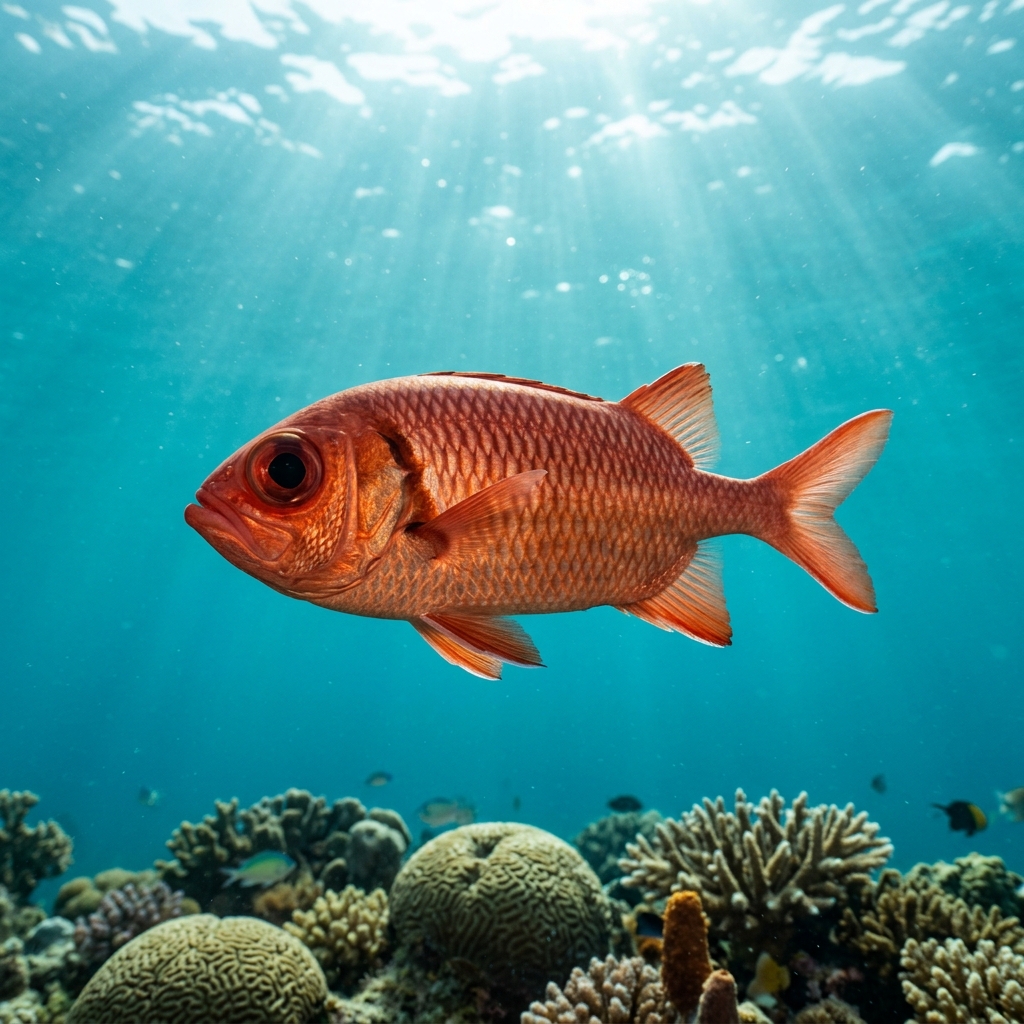
Soldierfish
3,612 sites