Hypoplectrus guttavarius
Small, dark-bodied reef fish common on Grenada and Colombia's Caribbean coast in warm 27-28C water, year-round.
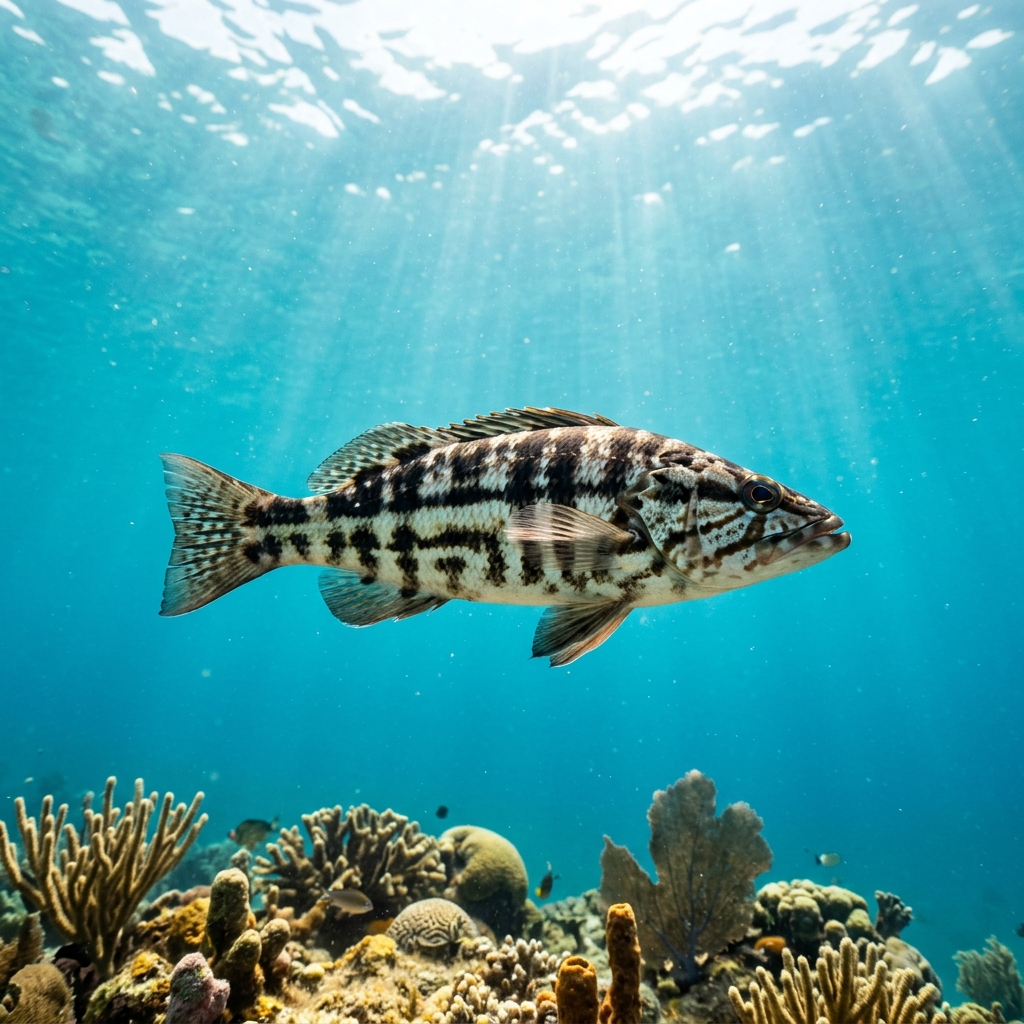
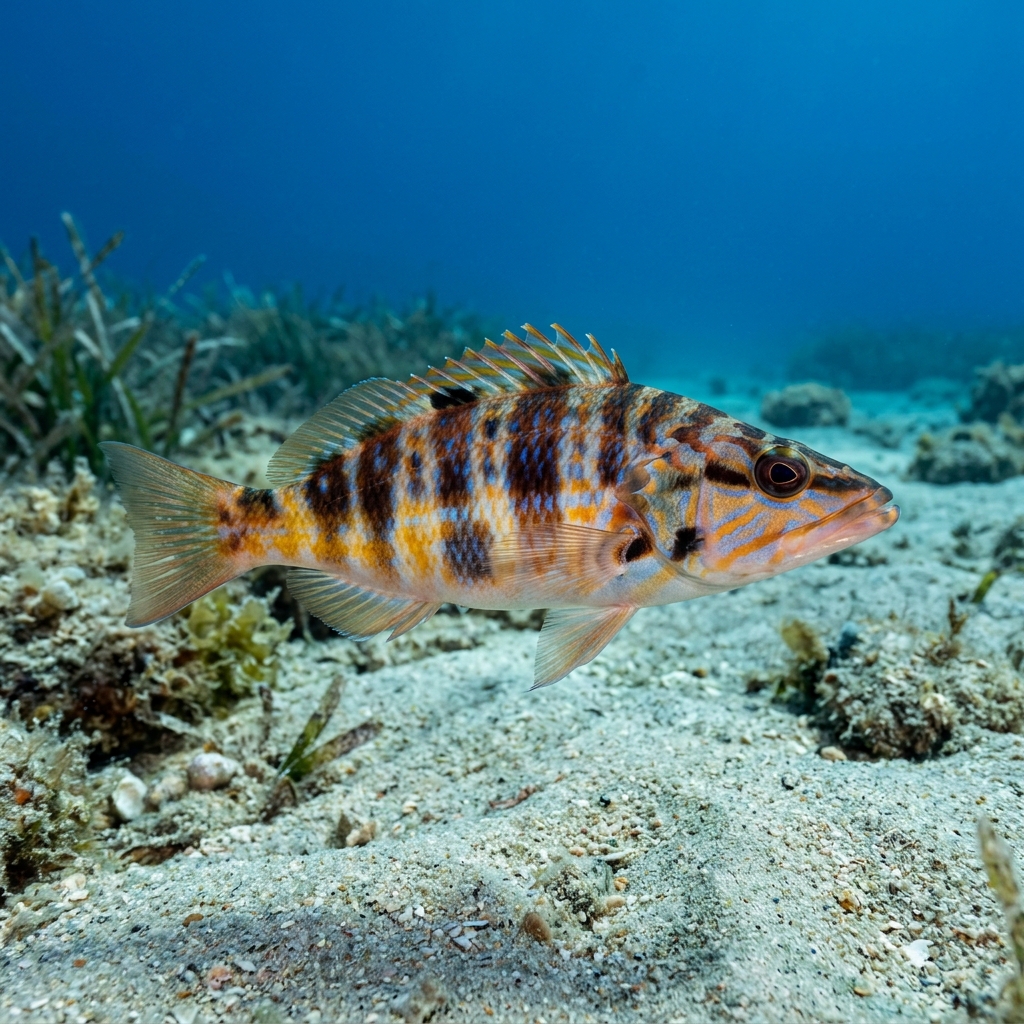
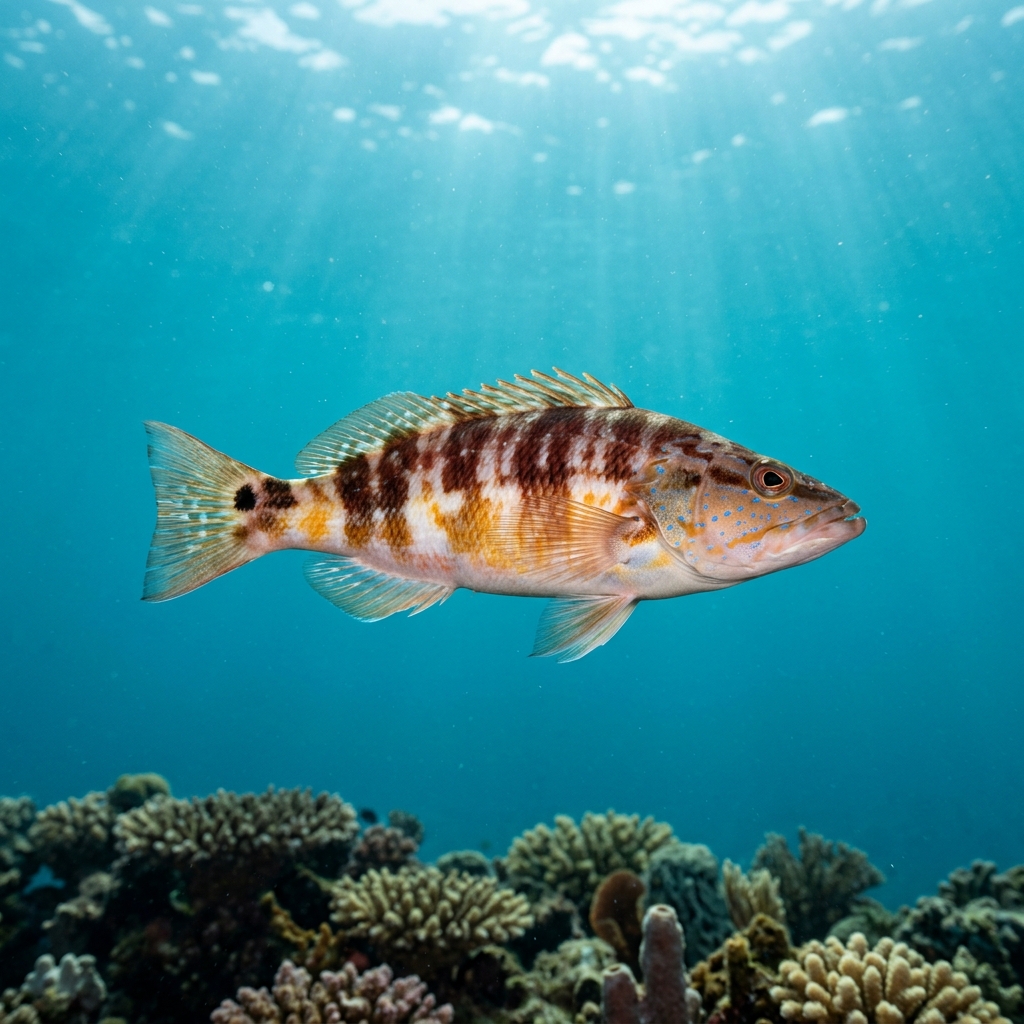
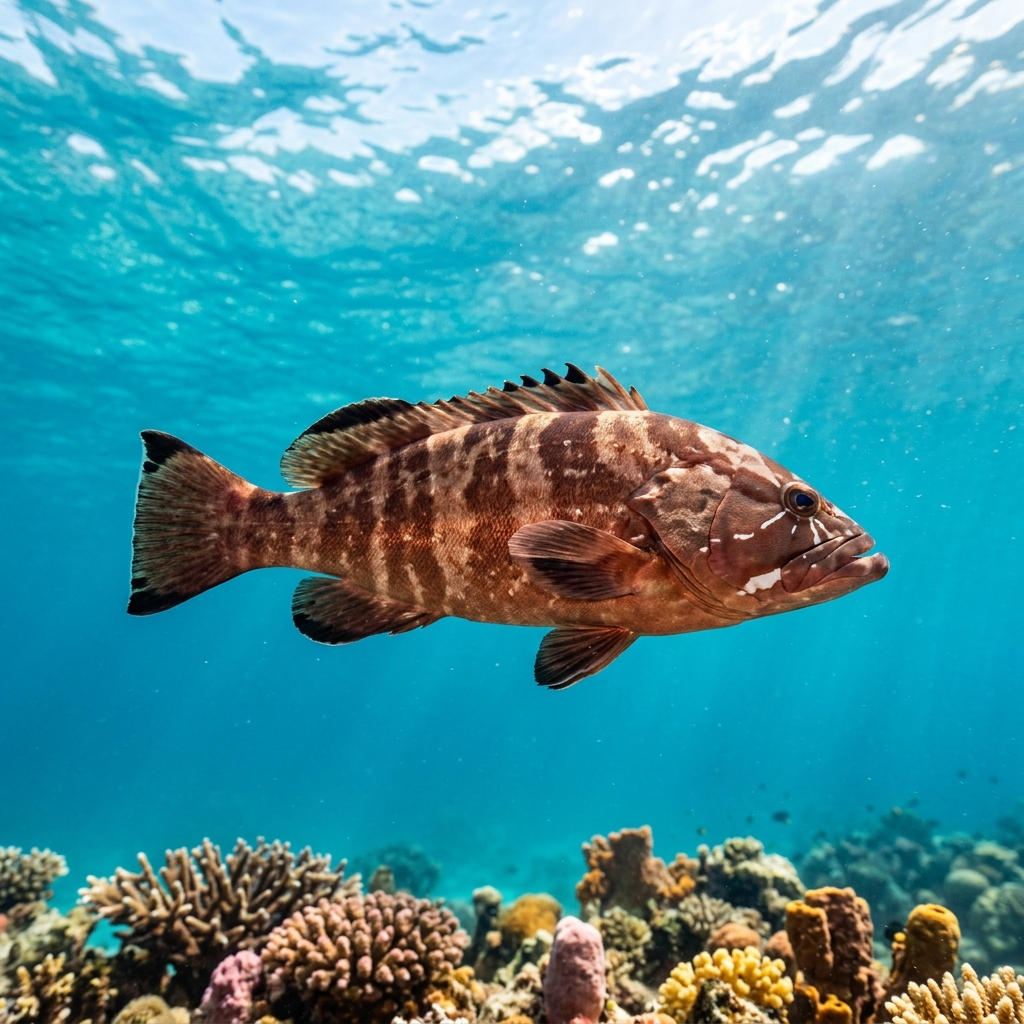
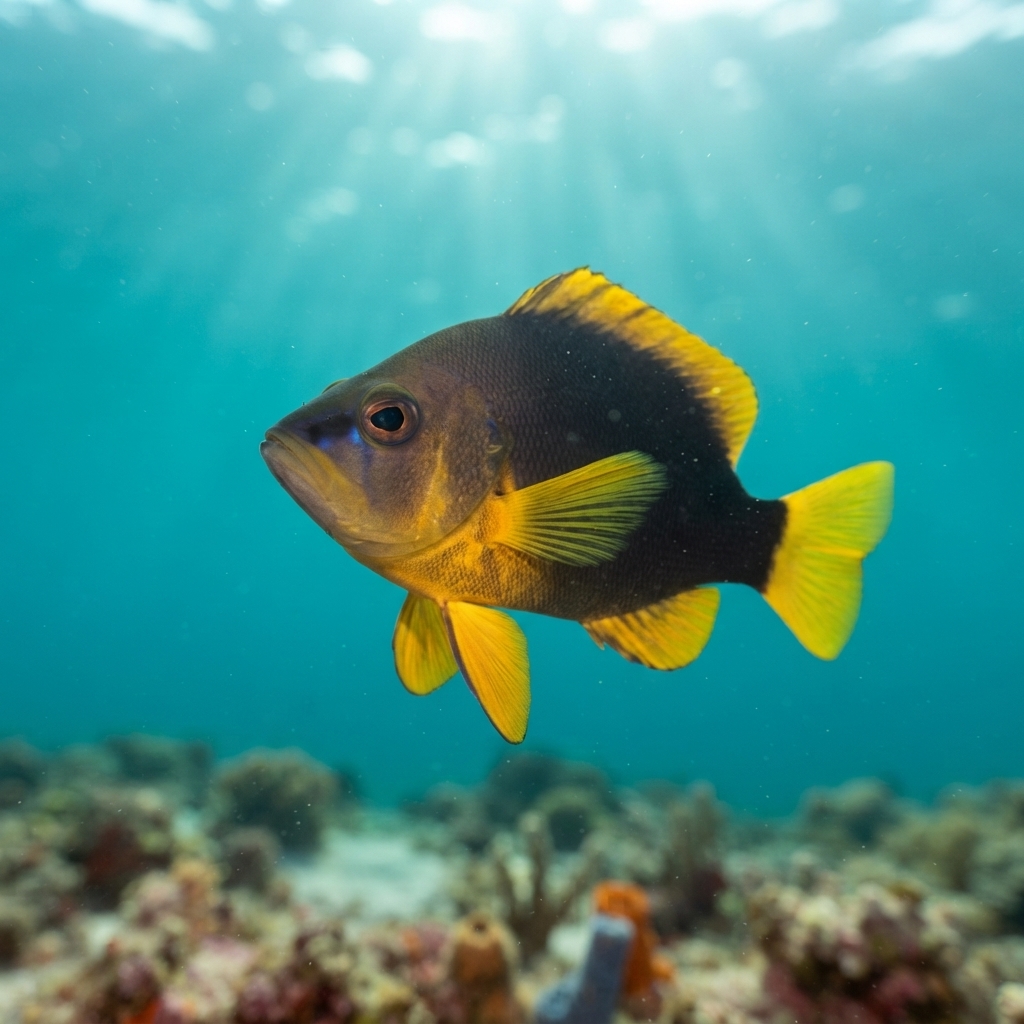
A small, deep-bodied reef fish around 9 cm, with an overall dark chocolate-brown to purplish body that sets it apart from the paler hamlet species it shares reefs with. Look for a bright yellow-orange patch running through the rear dorsal fin and tail, contrasting against the dark flanks. It hovers close to the reef structure rather than out in open water, with a compact, perch-like shape typical of hamlets.
Divers typically spot this one holding a low position close to coral or rubble, tucked into the reef rather than cruising open water. It's generally logged as uncommon rather than abundant, so expect to search patch reef and ledges carefully rather than counting on an easy encounter. Like other hamlets, it tends to sit still and let divers approach rather than bolting for cover.
Hamlets are simultaneous hermaphrodites that pair up at dusk and take turns releasing eggs and sperm, switching roles between spawning bouts rather than committing to one sex.
No clear seasonal pattern shows in the data, and with water temperatures sitting comfortably between 26.6 and 28.2C year-round across its Caribbean range, it's a fish you can look for on any dive trip.
Most consistently logged in Grenada, particularly around Grenada Island, and along Colombia's Caribbean coast. Dominica's Soufriere-Scotts Head Marine Reserve and Portsmouth area, Sint Eustatius, Saint Lucia's Soufriere region, and Grand Cayman also produce sightings, though in smaller numbers.
Mapping where Shy Hamlet is logged…
Grenada Island and Colombia's Caribbean coast are the strongest spots, with additional sightings around Dominica, Sint Eustatius, Saint Lucia, and Grand Cayman.
There's no strong seasonal signal in sighting data, and warm Caribbean reef temperatures year-round mean it can turn up on any dive, any month.
Look for a small, dark brownish-purple body around 9 cm with a yellow-orange patch across the rear dorsal fin and tail. It sits low against reef structure rather than swimming in open water.
They stay small, reaching roughly 9 cm as adults, so they're easy to overlook against reef rubble and coral heads.
They're simultaneous hermaphrodites: paired fish take turns releasing eggs and sperm during spawning, swapping sexual roles back and forth rather than being fixed as one sex.
Site and sighting data is aggregated from diver logs, iNaturalist and GBIF. For taxonomy and conservation status:
Blacktip Grouper
2,726 sites