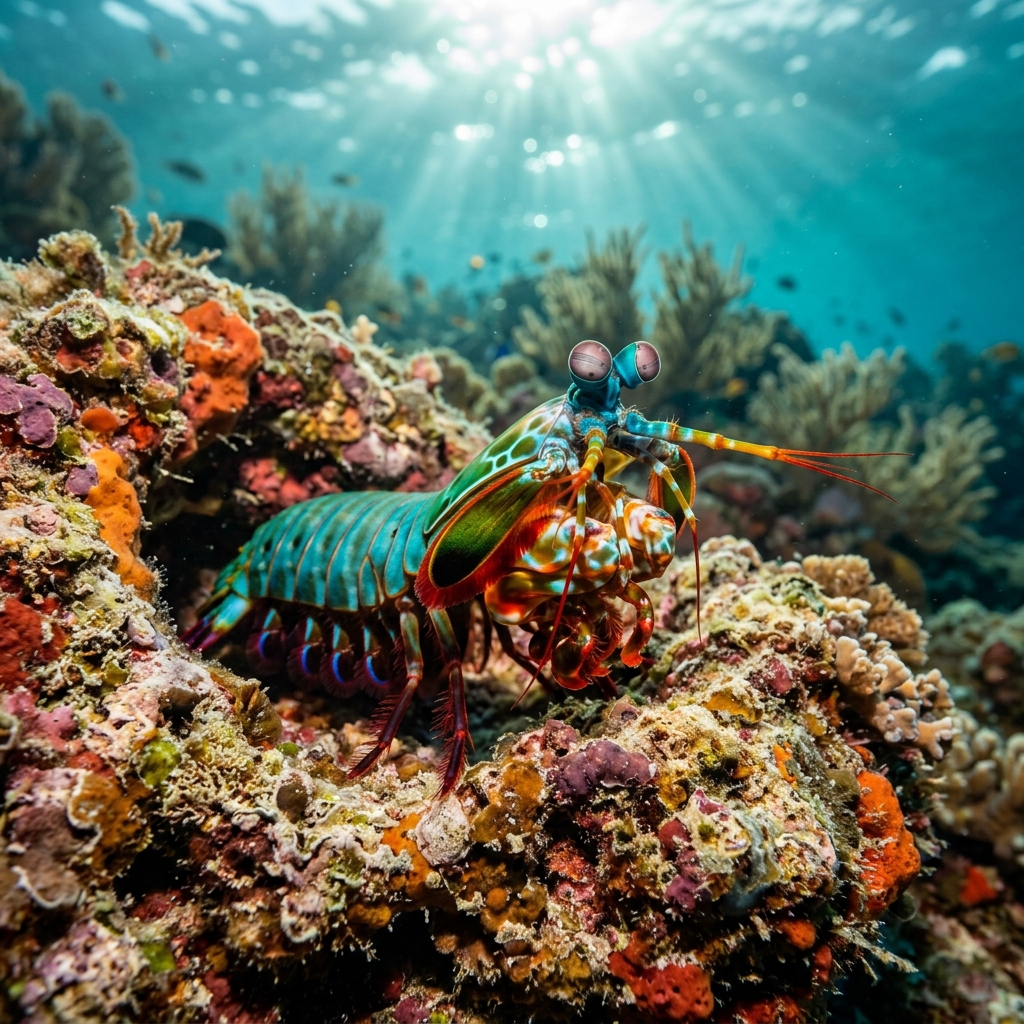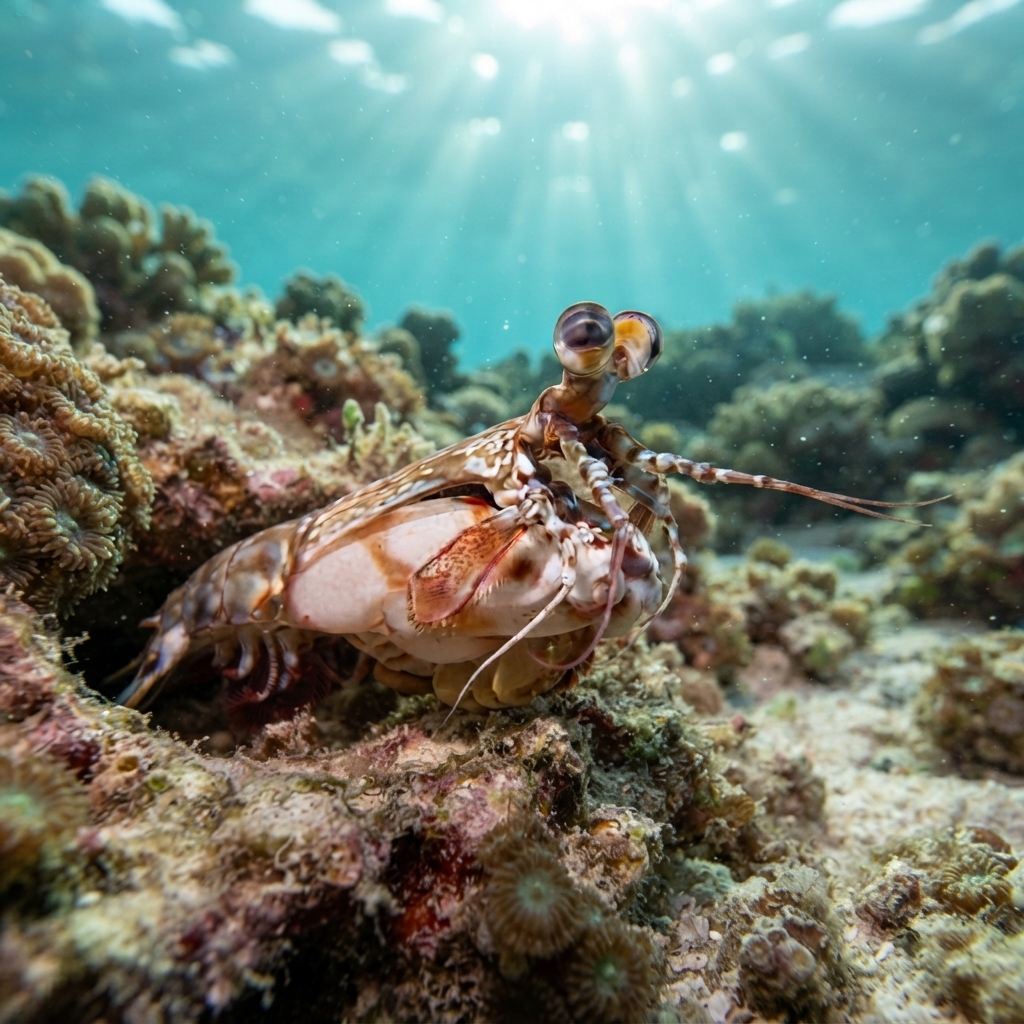
Odontodactylus brevirostris
Spot the shortnose mantis shrimp on tropical reefs between 22.5 and 28.5 C, a smasher-clawed hunter divers rarely see but should respect.
Safety warning
Do not attempt to handle or provoke it. The strike from a smashing-type mantis shrimp claw is fast and forceful enough to cut skin or break a fingernail, and a direct hit to bare fingers has caused real injuries to divers and aquarists reaching into crevices.
If you're struck
Powerful strikeGeneral first-aid guidance, not a substitute for professional medical care. In an emergency, call your local emergency number.
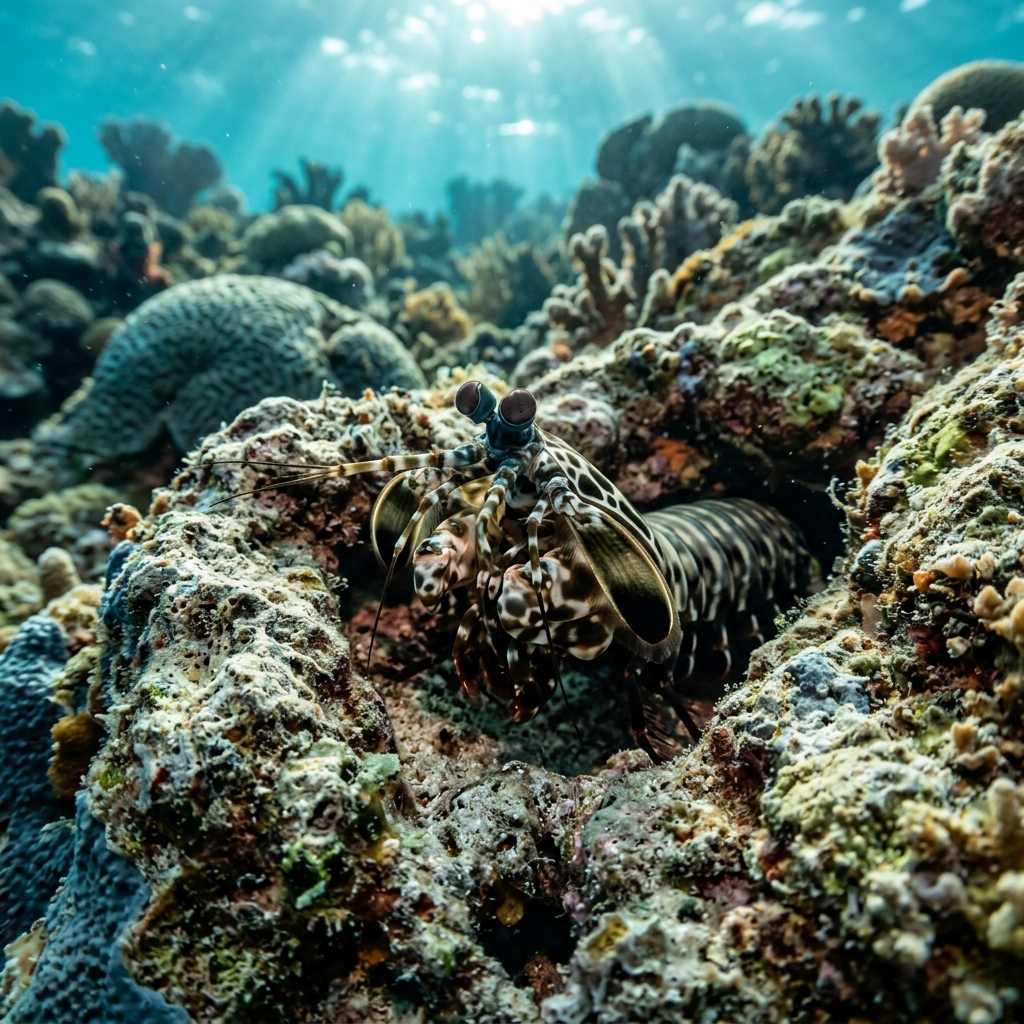
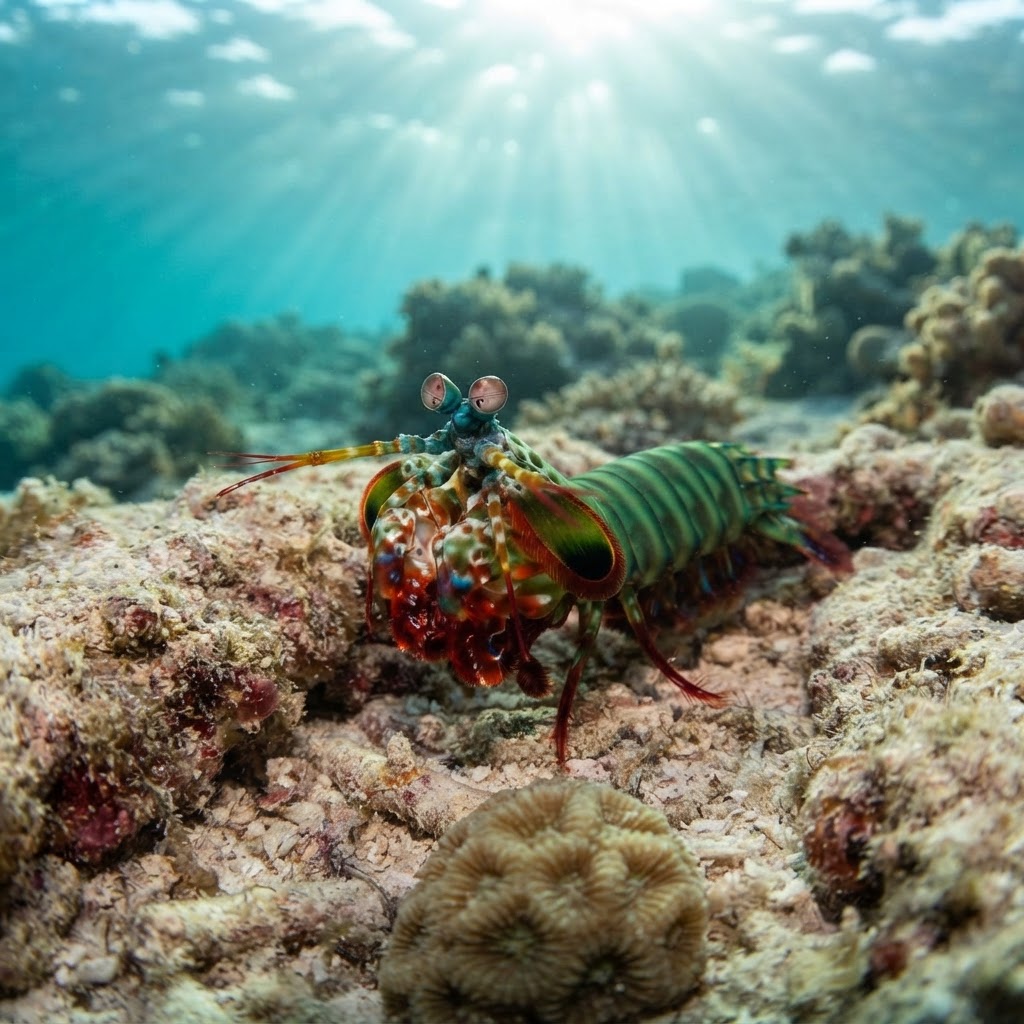
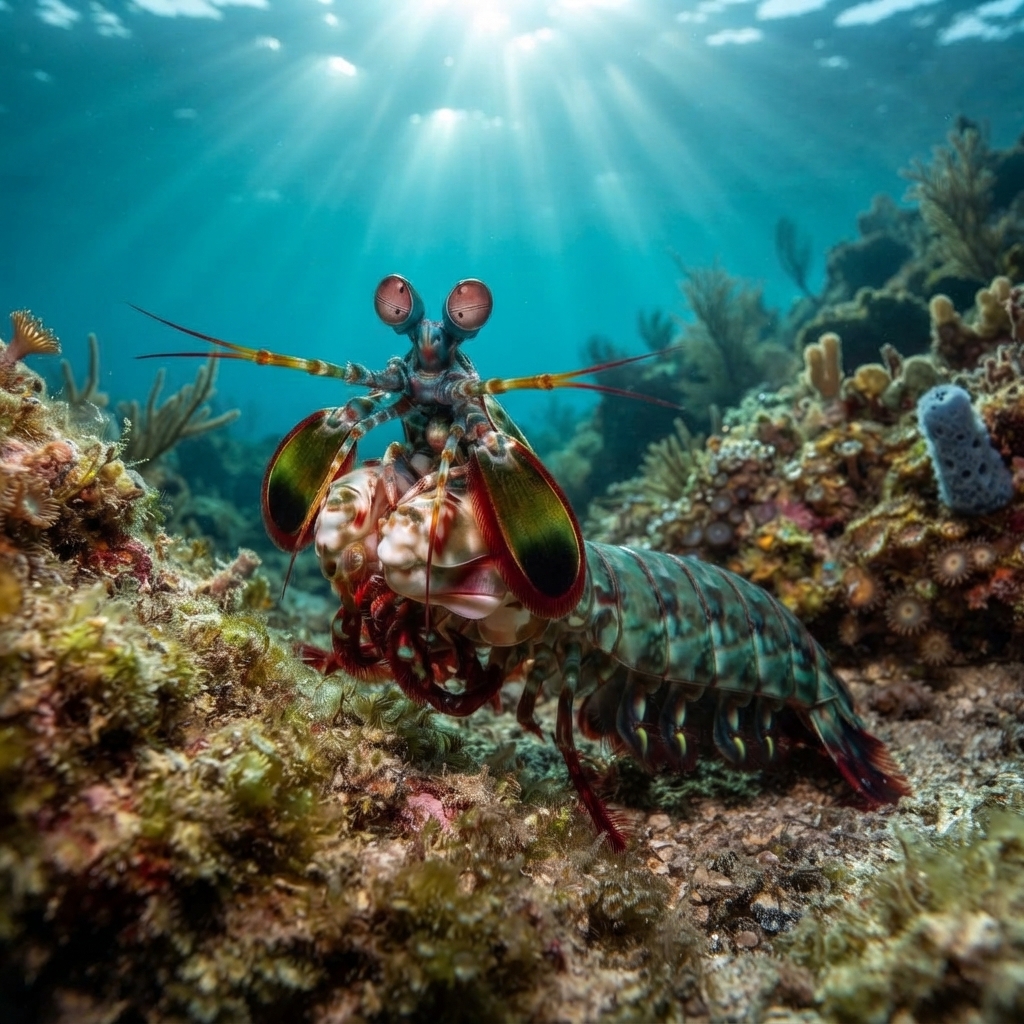
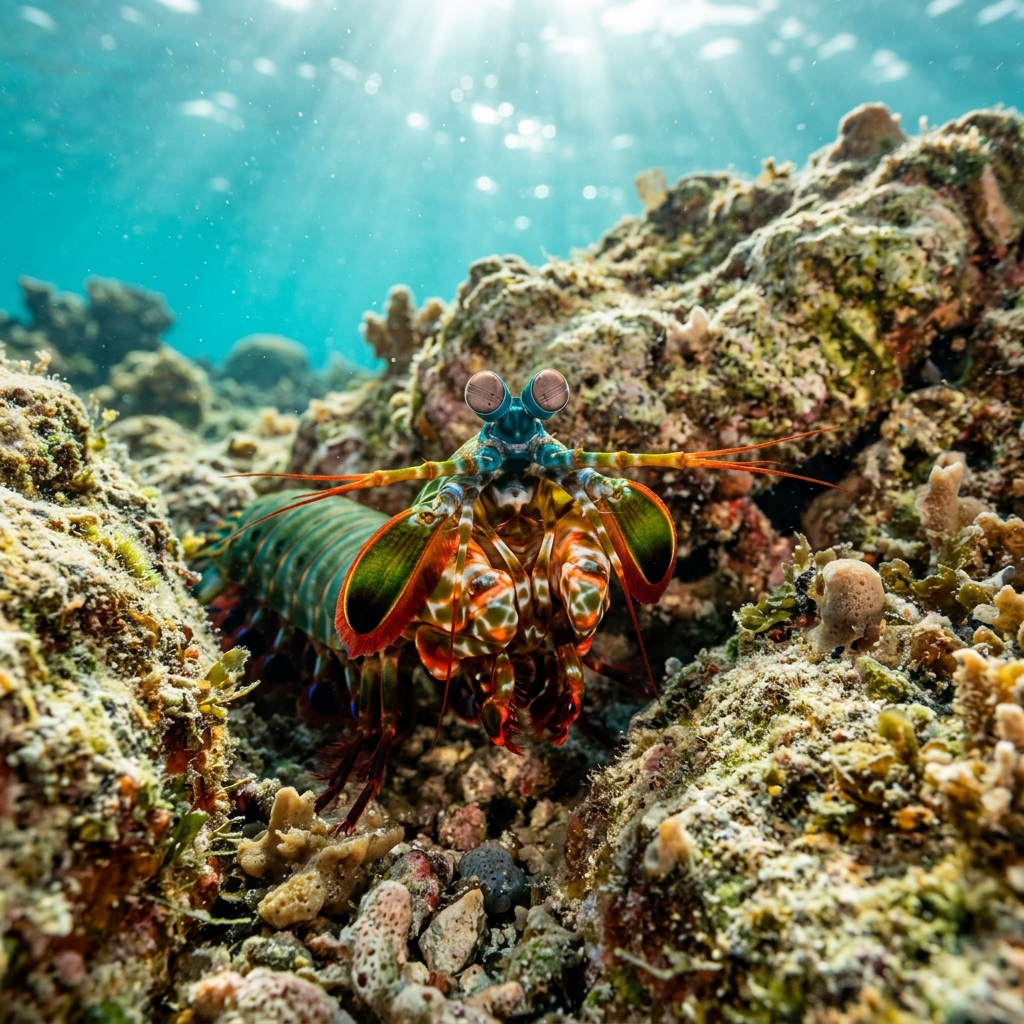
A stocky, armoured crustacean that shelters in a burrow or reef crevice and only shows its front half, with a mottled brown-to-olive body and large raised eyes on independent stalks. The giveaway is the folded raptorial claw tucked under the head, thicker and more rounded than a typical shrimp's pincer, built for smashing rather than grabbing. Most divers only get a glimpse before it backs out of view, so look for the eyes tracking you first.
Divers typically find it wedged into a burrow or crevice on reef or rubble bottom, with only the eyes and front claws visible, watching the water column for prey or threats. It reacts fast to close approach, retreating deeper into its hole rather than bolting across open ground. Most sightings happen while divers are working slowly along the substrate rather than mid-water cruising.
Mantis shrimp in this genus use their raptorial claws to strike with enough speed to shatter shell and glass, one of the fastest recorded strikes of any animal, generating a shockwave that can stun prey before contact.
Logged in water between 22.5 and 28.5 C, a range that holds year-round on most tropical reefs, and there isn't enough monthly data to point to a season, so treat sightings as opportunistic any time you're diving warm reef habitat.
Reef neighbours a diver could mistake it for. Use the identification notes above to tell them apart.
Sighting records for this species are too sparse to name reliable regions or dive sites with confidence. If you're specifically hunting mantis shrimp, tropical Indo-Pacific reef and rubble sites in general are the places to search burrows and crevices.
Mapping where Shortnose Mantis Shrimp is logged…
No match
Look for a mottled brown or olive body tucked into a reef crevice or burrow, with stalked eyes and a thick folded claw visible at the entrance. It rarely shows its full body, so the eyes and claw shape are the main clues.
Yes. Its smashing claw strikes fast enough to cut skin or damage a fingernail, so never reach into a crevice where one is sheltering.
There's no clear seasonal pattern in sightings. It's found in water from about 22.5 to 28.5 C, a range typical of tropical reefs year-round, so encounters are opportunistic rather than seasonal.
Their raptorial claws deliver one of the fastest strikes in the animal kingdom, fast enough to create a small shockwave in the water that can stun prey before the claw even makes contact.
Site and sighting data is aggregated from diver logs, iNaturalist and GBIF. For taxonomy and conservation status:
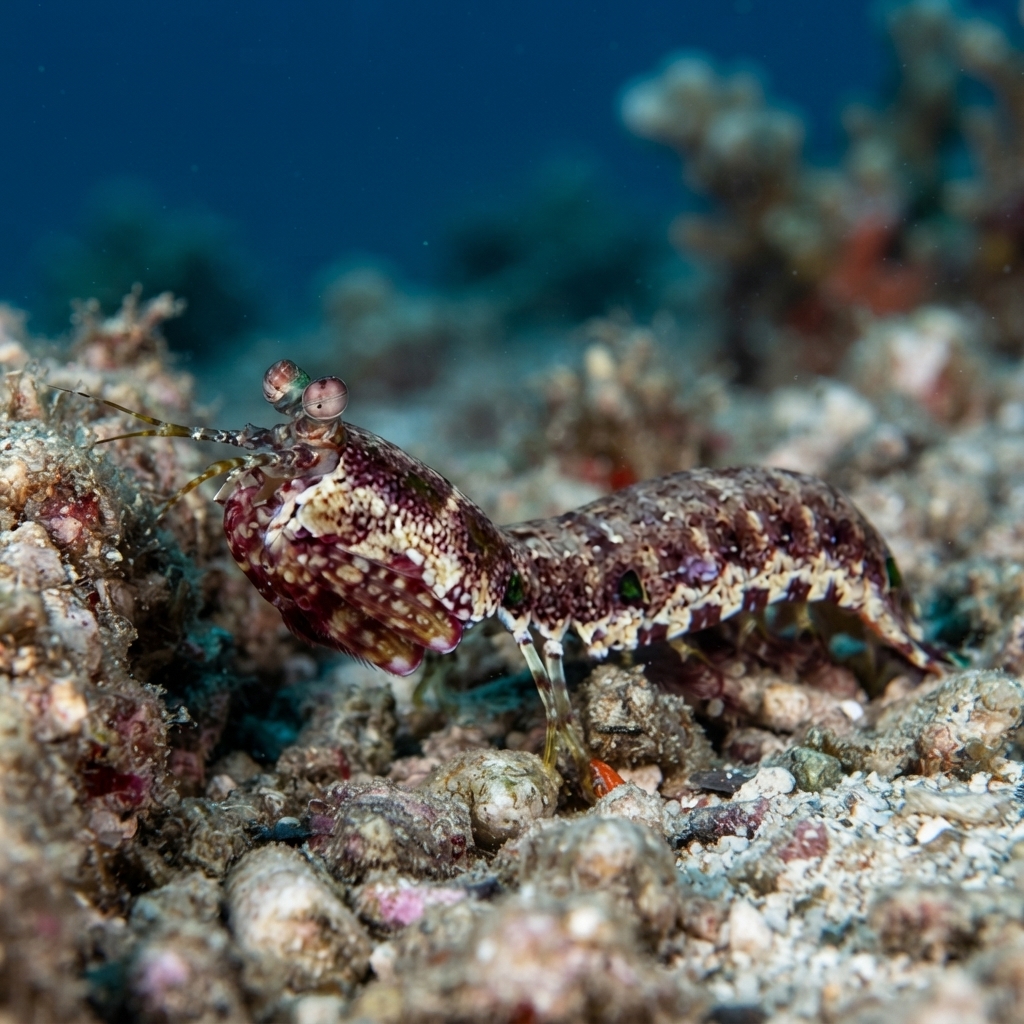
Pseudosquilla ciliata
Mantis Shrimp
30 sites