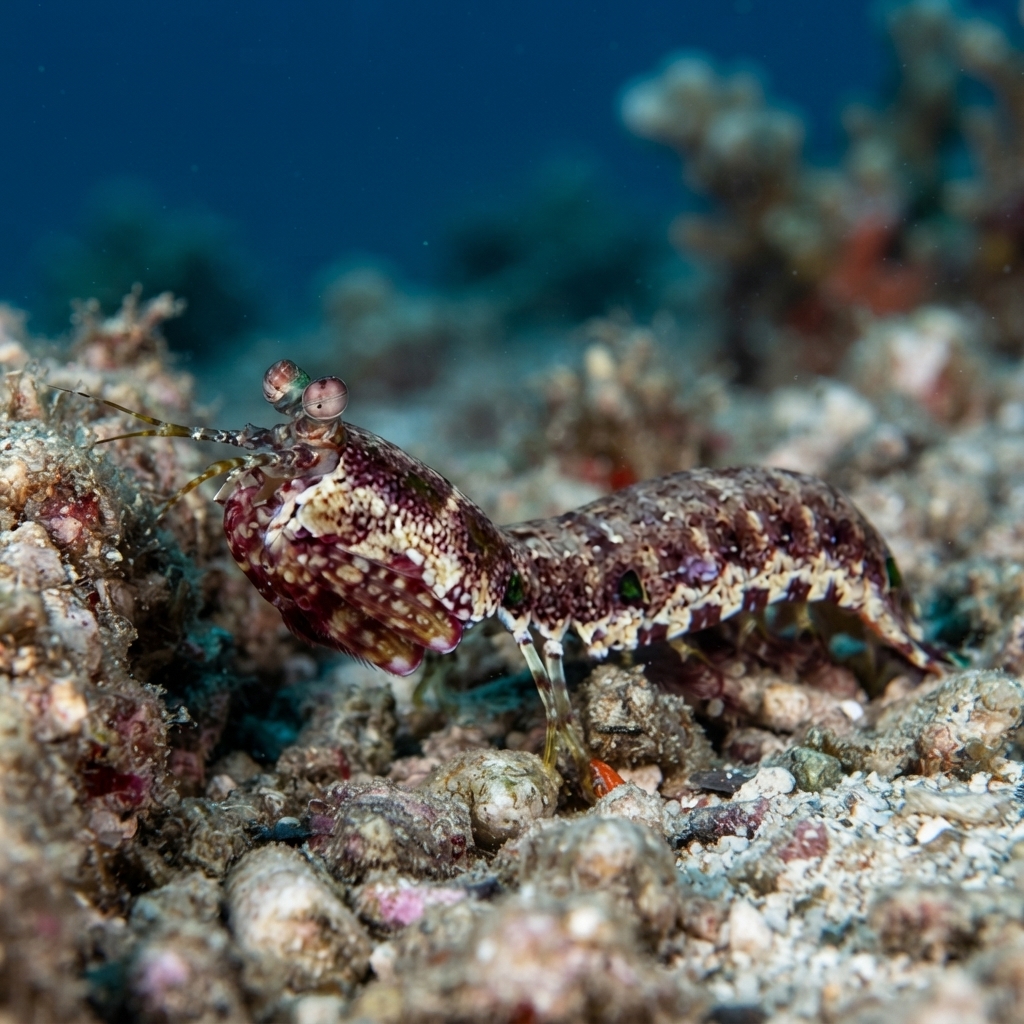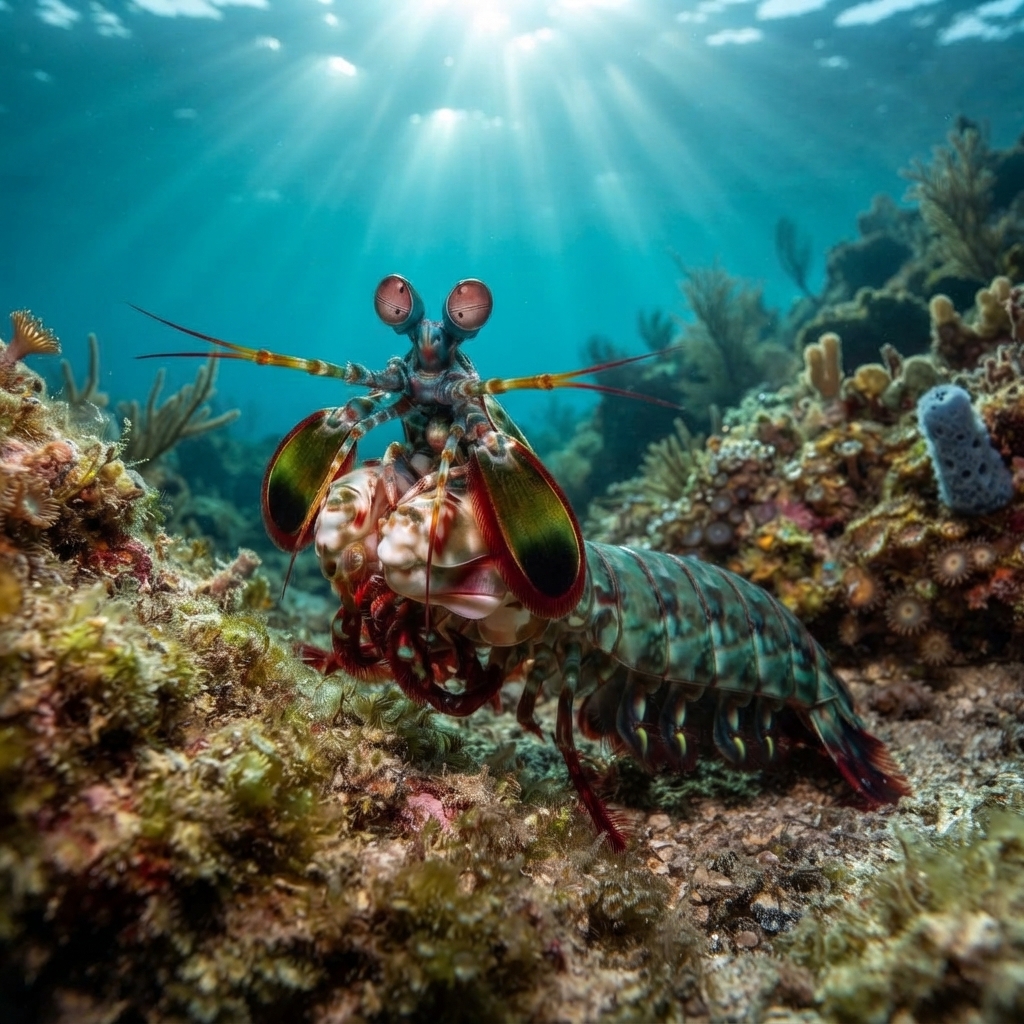
Odontodactylus latirostris
Uncommon but rewarding: this mantis shrimp turns up on burrows across the Visayas, in warm 25.6-31.6C water, year-round.
Safety warning
The strike is aimed at prey and burrow intruders, not divers, but a finger poked into a burrow entrance can get hit hard enough to cut skin or bruise bone. Keep hands away from burrow openings and photograph from a comfortable distance rather than trying to coax it out.
If you're struck
Powerful strikeGeneral first-aid guidance, not a substitute for professional medical care. In an emergency, call your local emergency number.
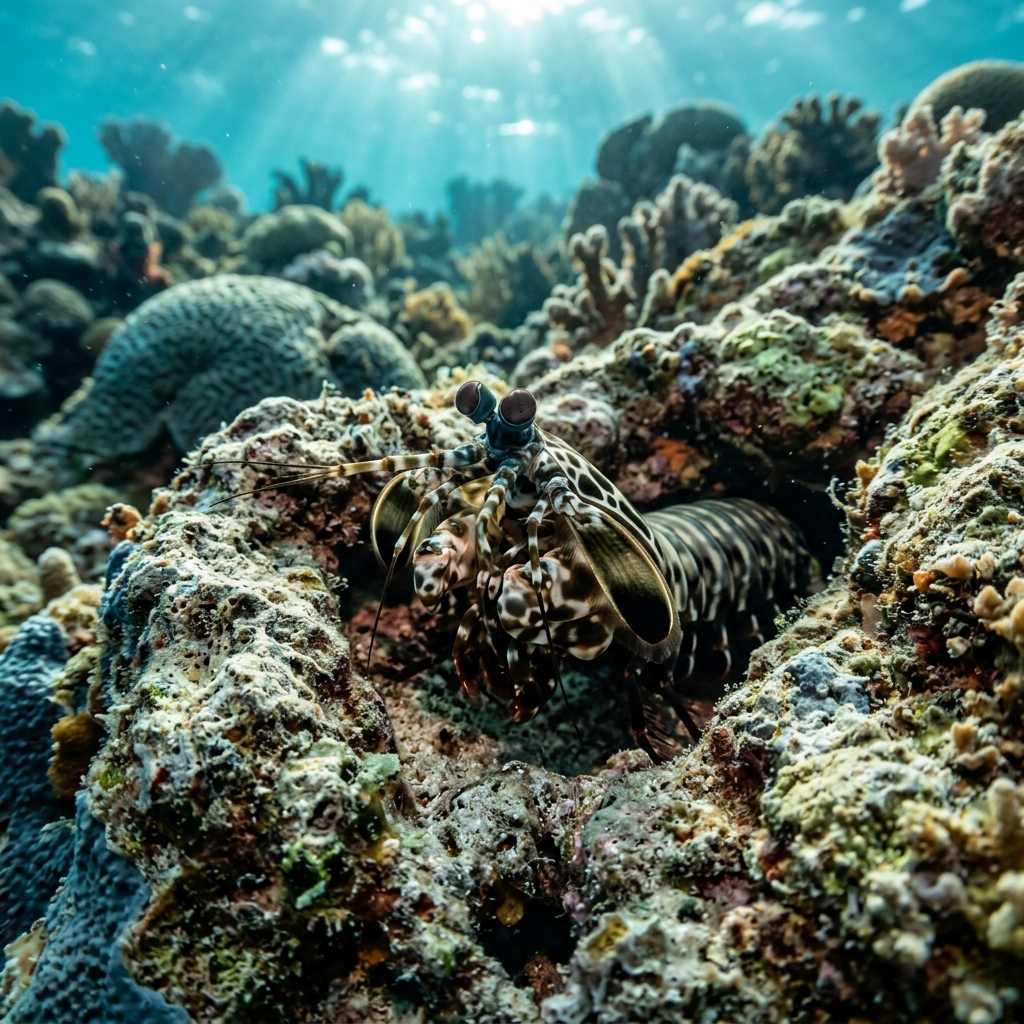
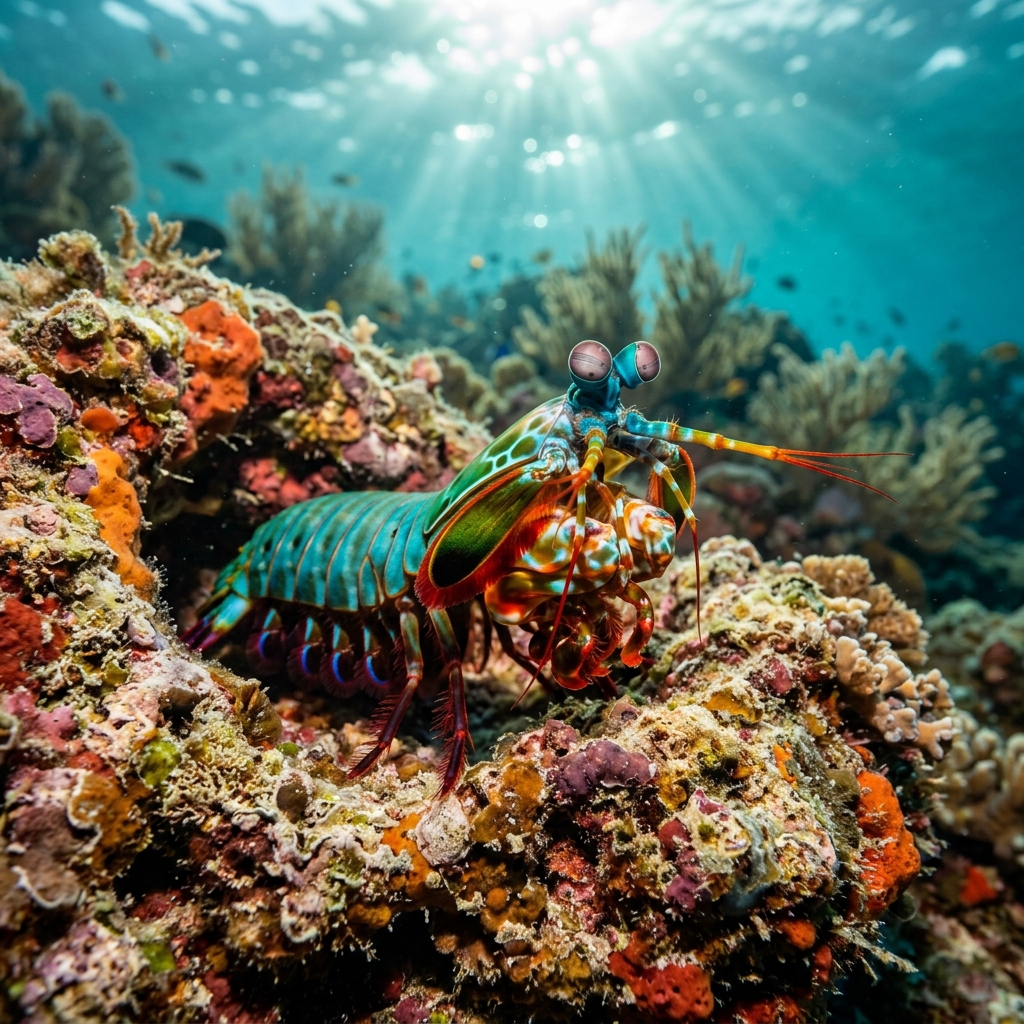
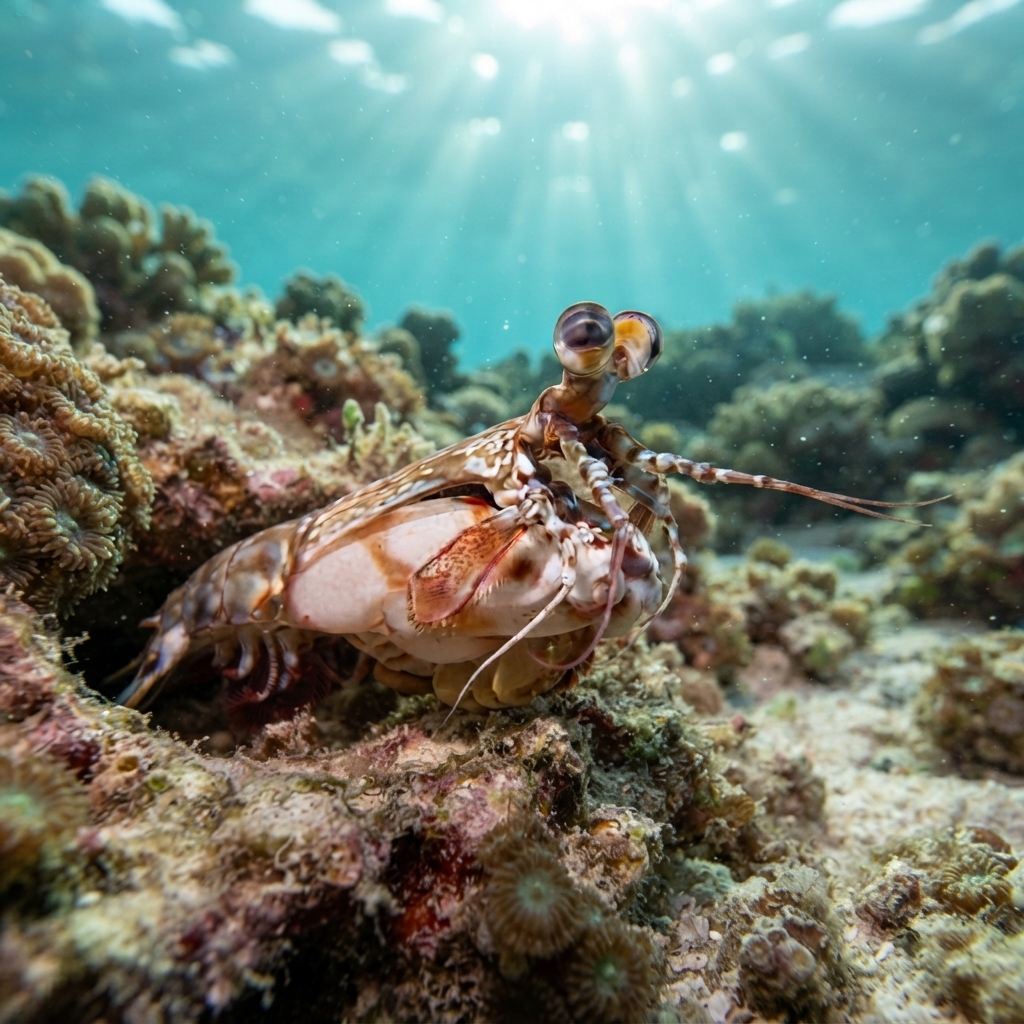
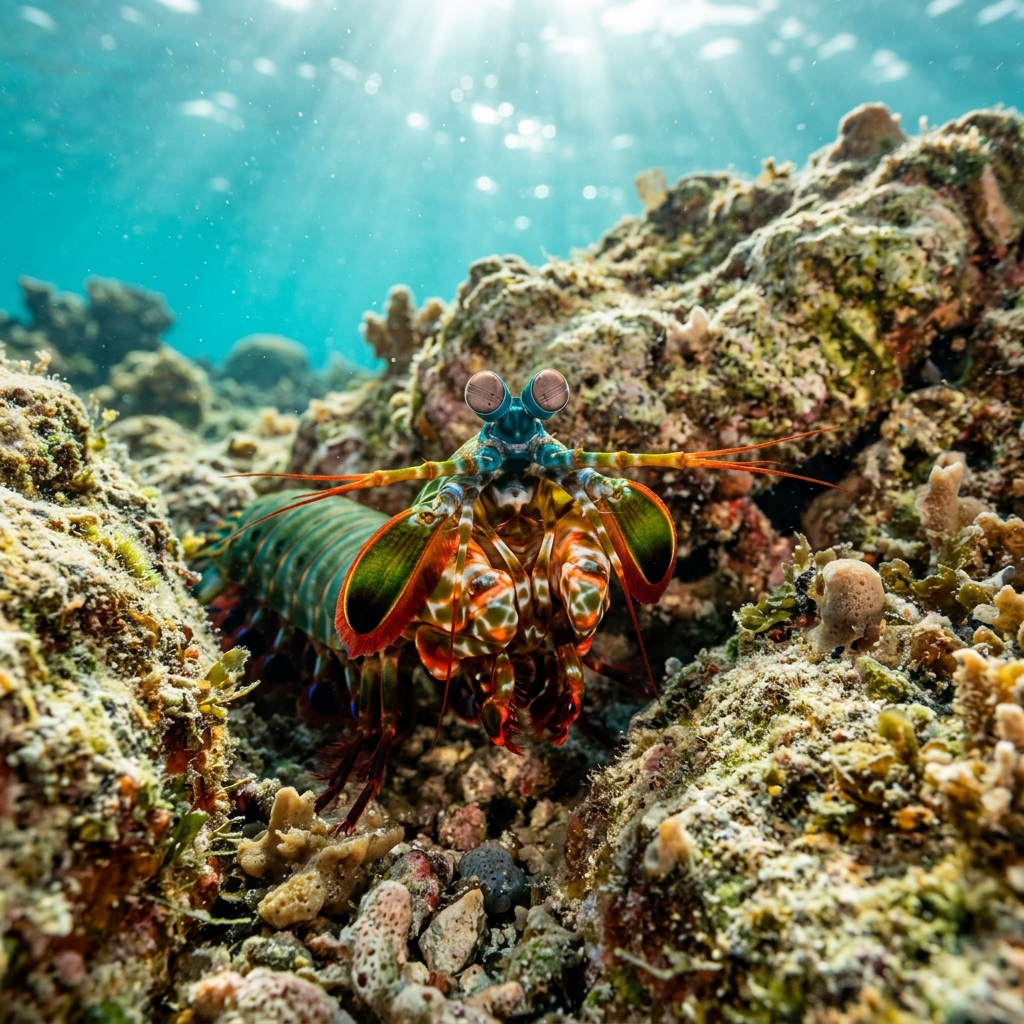
Look for a slender, armoured body tucked into a burrow entrance in sand or rubble, with only the head and stalked eyes visible most of the time. Eyes swivel independently and constantly, which is often the first thing that catches your torch beam. Colouring runs to mottled browns and greens that blend with the substrate rather than the loud colours of some reef mantis shrimp, so divers usually spot the eyes and antennae before the body. Size is modest in the water, more shrimp-sized than lobster-sized, and it retreats into its burrow the moment it feels threatened.
Divers usually find this one stationed at the mouth of a burrow in sand or rubble, eyes tracking movement while the body stays hidden below. It reacts fast to a close approach or a direct light, snapping back into its hole in a blink, so a slow, low approach with the torch angled off to the side gives better odds of a longer look. Sightings lean towards muck and sand patches rather than hard coral, and it is logged as uncommon even at sites where divers know to look for it.
Mantis shrimp strike with a raptorial claw that can move fast enough to cavitate the water, producing a shockwave used to crack open hard-shelled prey.
No clear seasonal pattern shows up in the sighting data, and the observed water temperature range of 25.6 to 31.6C is stable tropical warmth year-round, so any month on the Visayas reefs gives a fair shot at finding one.
Reef neighbours a diver could mistake it for. Use the identification notes above to tell them apart.
Most consistently logged across the Visayas region of the Philippines, which accounts for the large majority of recorded sightings, with a scatter of additional records from Luzon. Indonesia adds a single confirmed site in Sulawesi, so the Philippines is the reliable destination for this species.
Mapping where Pink-eared Mantis Shrimp is logged…
The Visayas region is by far the most reliable area, with additional but sparser records from Luzon. A single confirmed site also exists in Sulawesi, Indonesia.
There's no detected season in the sighting data, and water stays a steady 25.6 to 31.6C year-round on these reefs, so sightings are possible in any month.
They can be. The claw strike is meant for prey and defence, not divers, but a hand placed near a burrow entrance risks a painful hit. Watch from a distance and never reach into a burrow.
Look for independently swivelling stalked eyes peeking from a sand or rubble burrow, with mottled brown-green colouring that camouflages the body. It vanishes into the burrow quickly once it notices a diver approaching.
Size varies by species, but the ones divers log on Philippine reefs are modest and shrimp-scaled rather than large, keeping most of their body hidden in a burrow anyway.
Their raptorial claw strikes so fast it can create a cavitation bubble in the water, generating a secondary shockwave strong enough to help crack shelled prey.
Site and sighting data is aggregated from diver logs, iNaturalist and GBIF. For taxonomy and conservation status:
Dotted Mantis Shrimp
26 sites