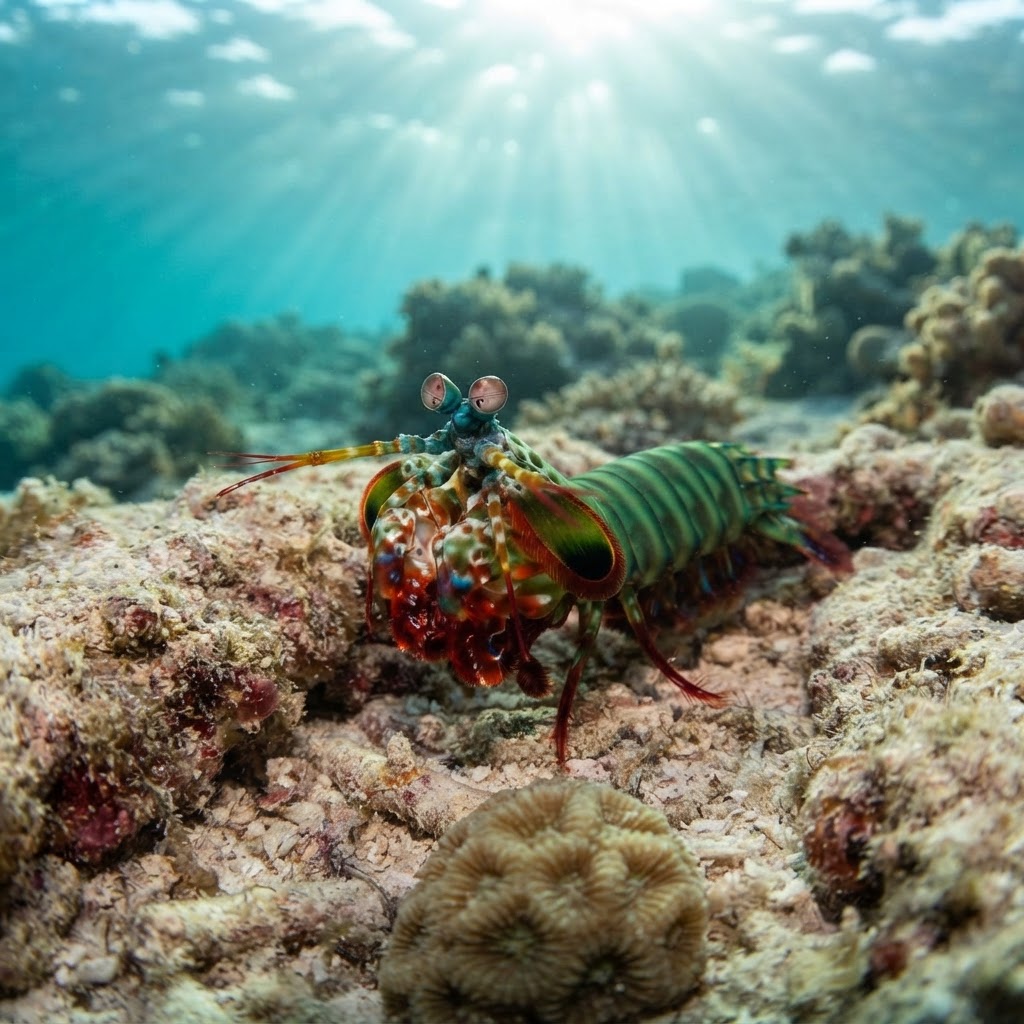
Neogonodactylus curacaoensis
Small, fast and armed like a coiled spring: here's how to find and identify mantis shrimp on tropical reefs, and why not to touch one.
Safety warning
The strike from a mantis shrimp's raptorial claw is fast and forceful enough to break skin, bruise badly, or crack a dive mask lens if you get a hand or camera too close to a burrow entrance. Never try to handle or provoke one; observe from a short distance and keep fingers away from crevices you haven't checked.
If you're struck
Powerful strikeGeneral first-aid guidance, not a substitute for professional medical care. In an emergency, call your local emergency number.
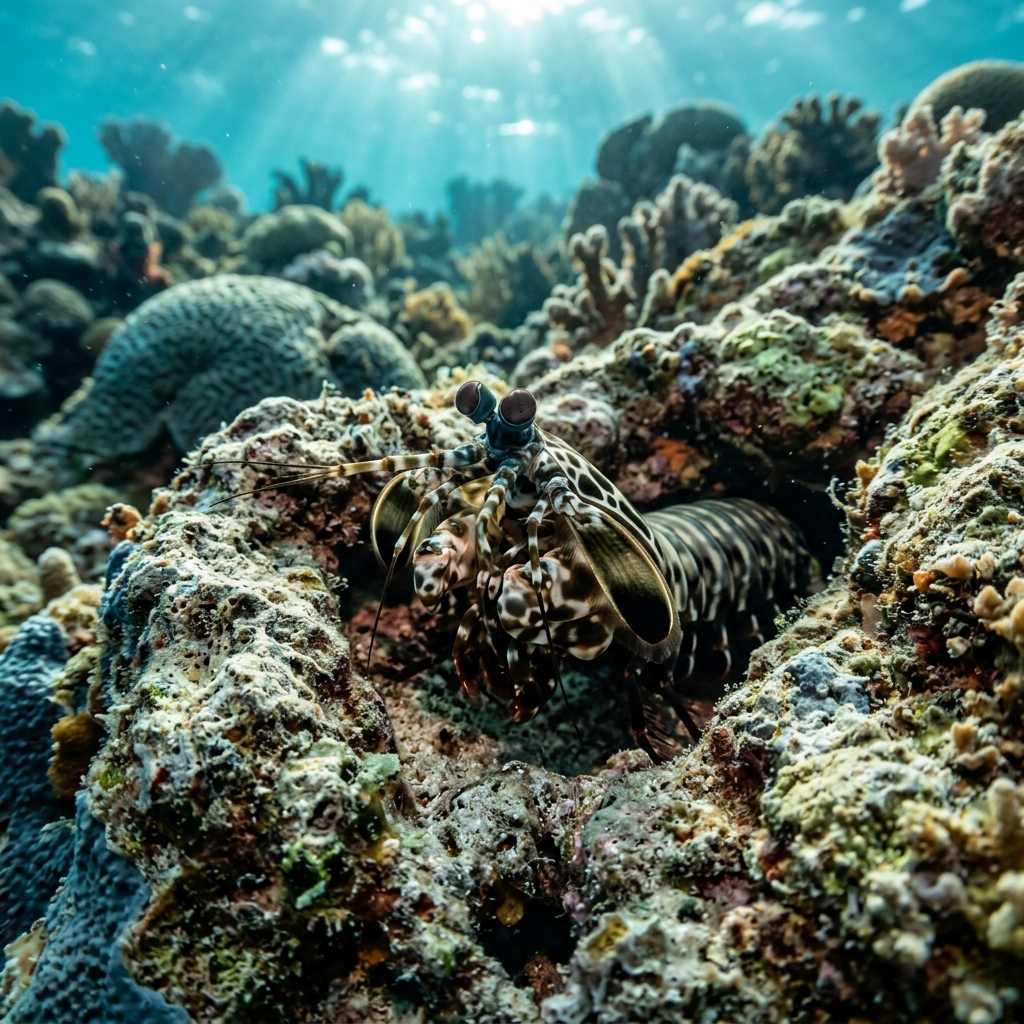
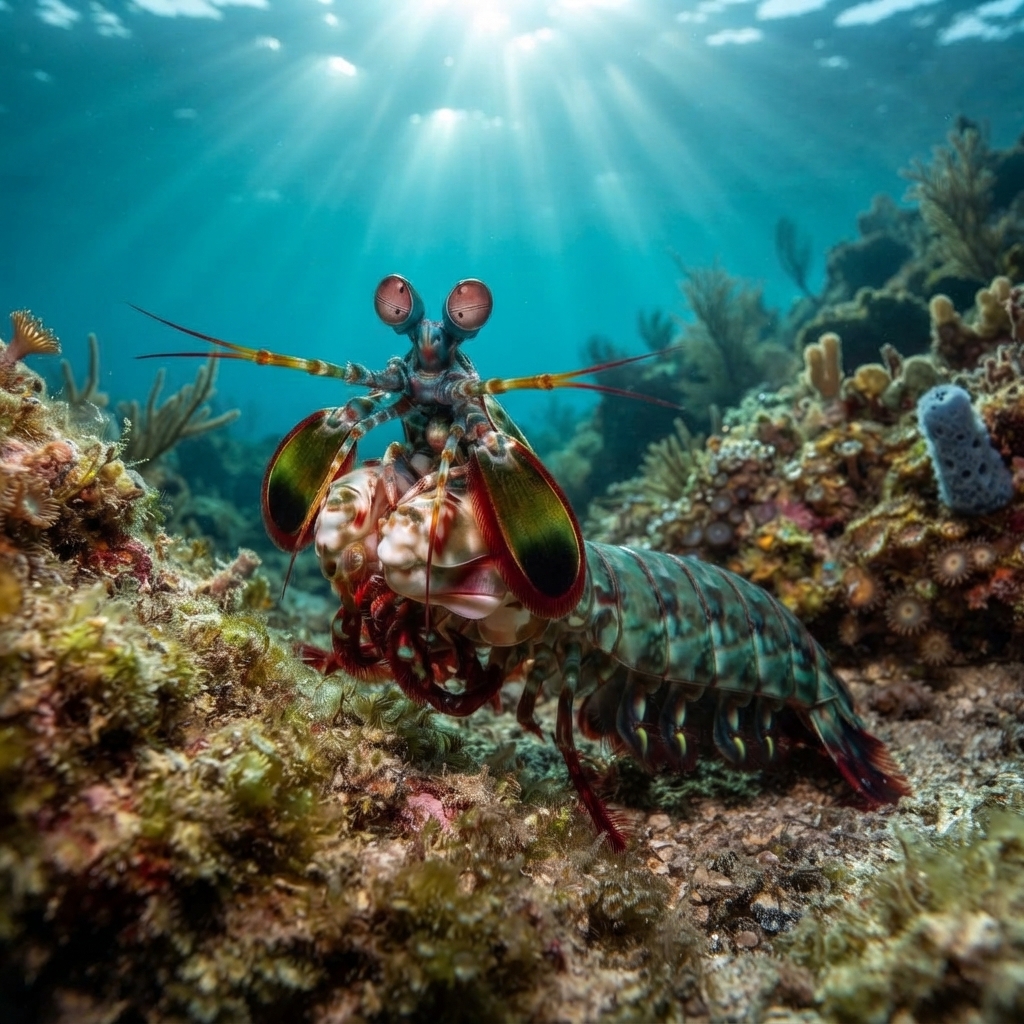
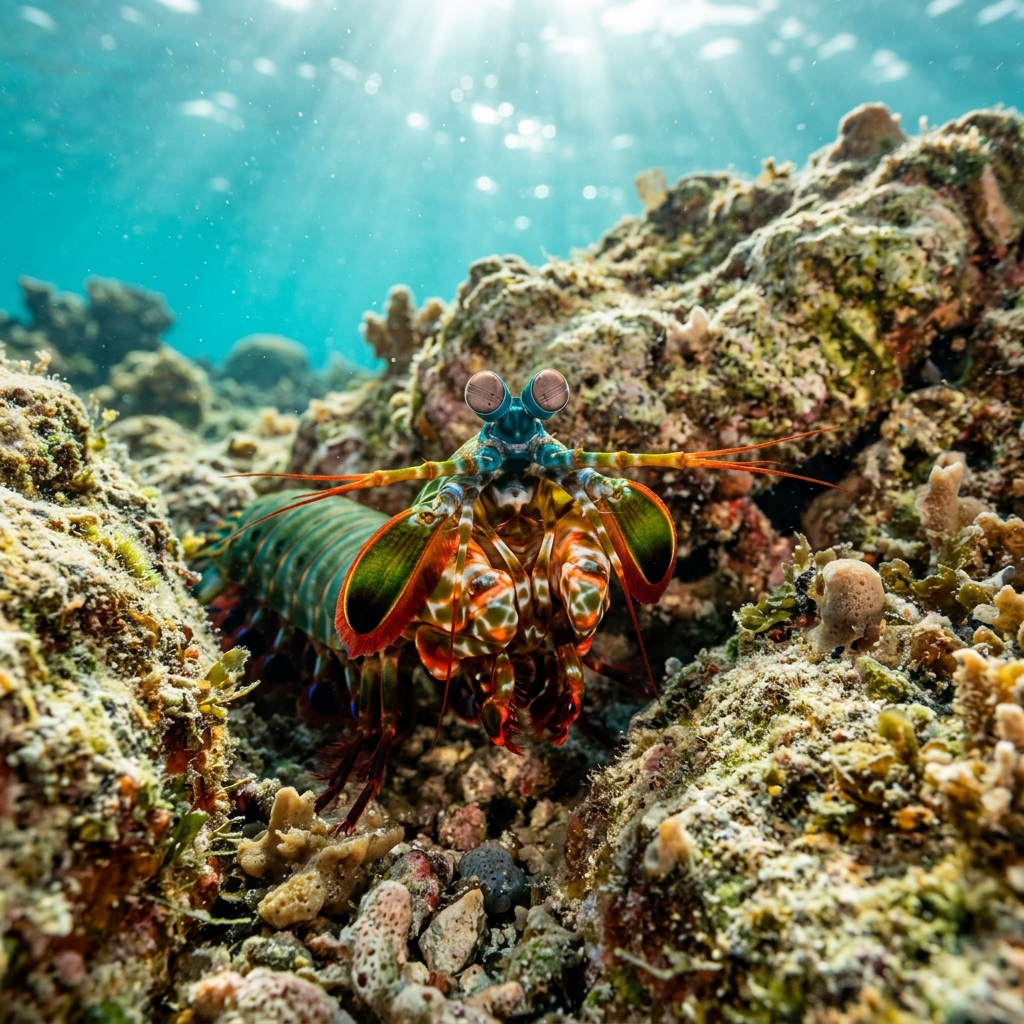
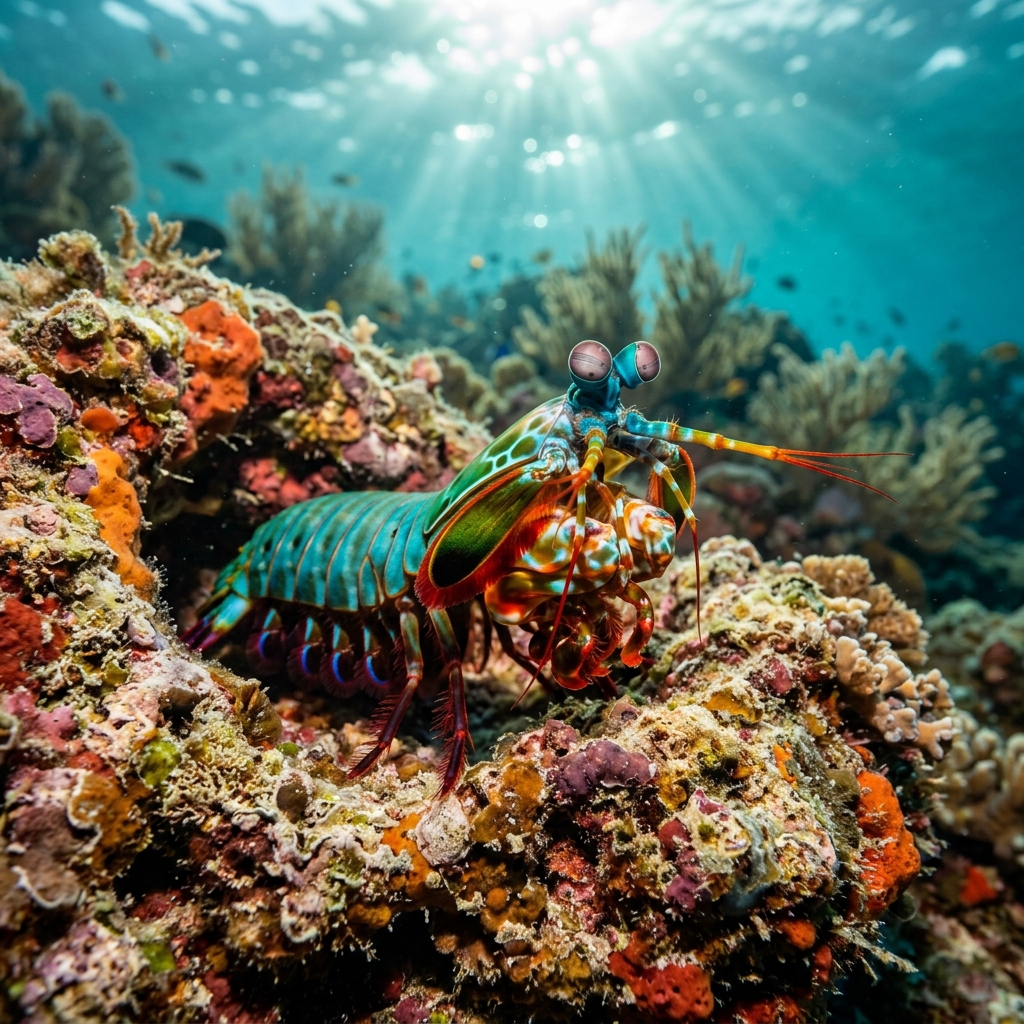
Look for a slender, segmented body tucked into a burrow or rubble crevice, usually with just the head and stalked eyes visible. The eyes are the giveaway underwater: large, independently swivelling, and often iridescent green or gold. Colouration on this species runs mottled brown to olive, blending into sand and rubble rather than standing out, so divers usually spot the eyes or the flick of a raptorial claw before the whole animal.
Spends most of the day retreated into a burrow or crevice, only the eyestalks and antennae poking out to track movement nearby. When prey (small crabs, snails, worms) wanders close, it strikes with a raptorial claw fast enough to stun or crack shell before retreating back into cover. Around divers it's typically shy, withdrawing deeper into its hole rather than confronting a torch or camera, so patient, still observation gets the best look.
Mantis shrimp strike so fast that the claw's movement can create a cavitation bubble, a brief vacuum pocket that collapses with a flash of light and heat, adding a second shockwave on top of the physical hit.
There's no clear seasonal pattern in the sightings logged so far, and the observed water temperature range of roughly 25 to 31 C sits well within a stable year-round tropical window. Treat this as a species you can look for on any dive, any month.
Reef neighbours a diver could mistake it for. Use the identification notes above to tell them apart.
Specific site data isn't well established yet for this species, but it belongs to a genus commonly found on tropical Caribbean reef and rubble habitat. Divers should check burrows, coral rubble patches and rocky crevices on shallow reef flats when hunting for it.
Mapping where Mantis Shrimp is logged…
No match
Yes. Their raptorial claw strikes with enough force to break skin, cause bruising, or even crack glass, so keep hands and cameras clear of burrow entrances and never try to handle one.
There's no strong seasonal pattern logged for this species, and its comfortable temperature range spans roughly 25 to 31 C, so sightings are possible year-round on suitable reef and rubble habitat.
Look for a mottled brown or olive body tucked into a burrow with only the head and large, swivelling eyes exposed. The eyestalks and the sudden flick of a folded claw are the most reliable clues before you see the full body.
Its raptorial claw snaps forward so fast it can create a small cavitation bubble in the water, which collapses with a burst of light and heat, effectively delivering two hits in one strike.
They're found tucked into reef rubble and crevices across tropical Caribbean reef habitat; check shallow rubble patches and rocky crevices on a slow, careful reef scan rather than expecting them in open water.
Site and sighting data is aggregated from diver logs, iNaturalist and GBIF. For taxonomy and conservation status:
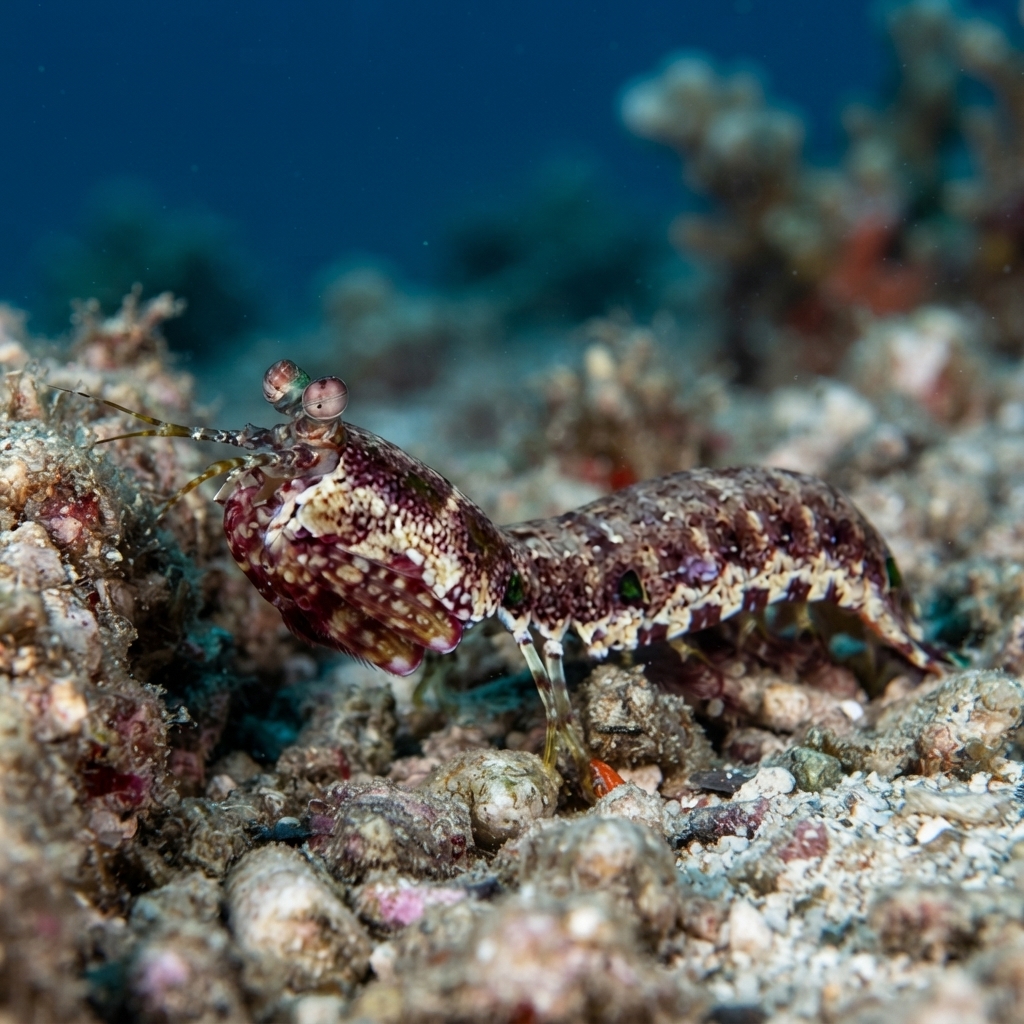
Pseudosquilla ciliata
Mantis Shrimp
31 sites