Pseudosquilla ciliata
Small, fast and easy to miss: find this mantis shrimp on sandy patches in São Vicente, Cape Verde and Hawaii's reefs year-round.
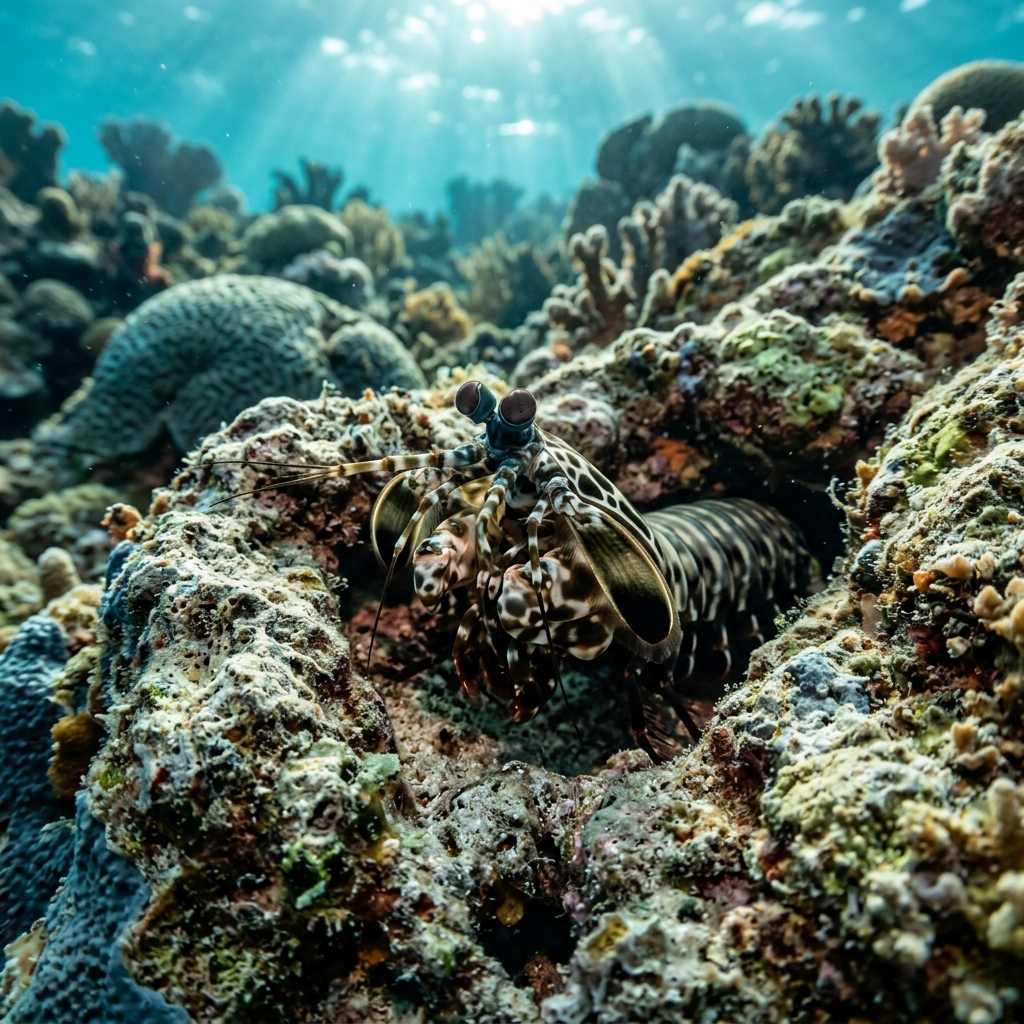
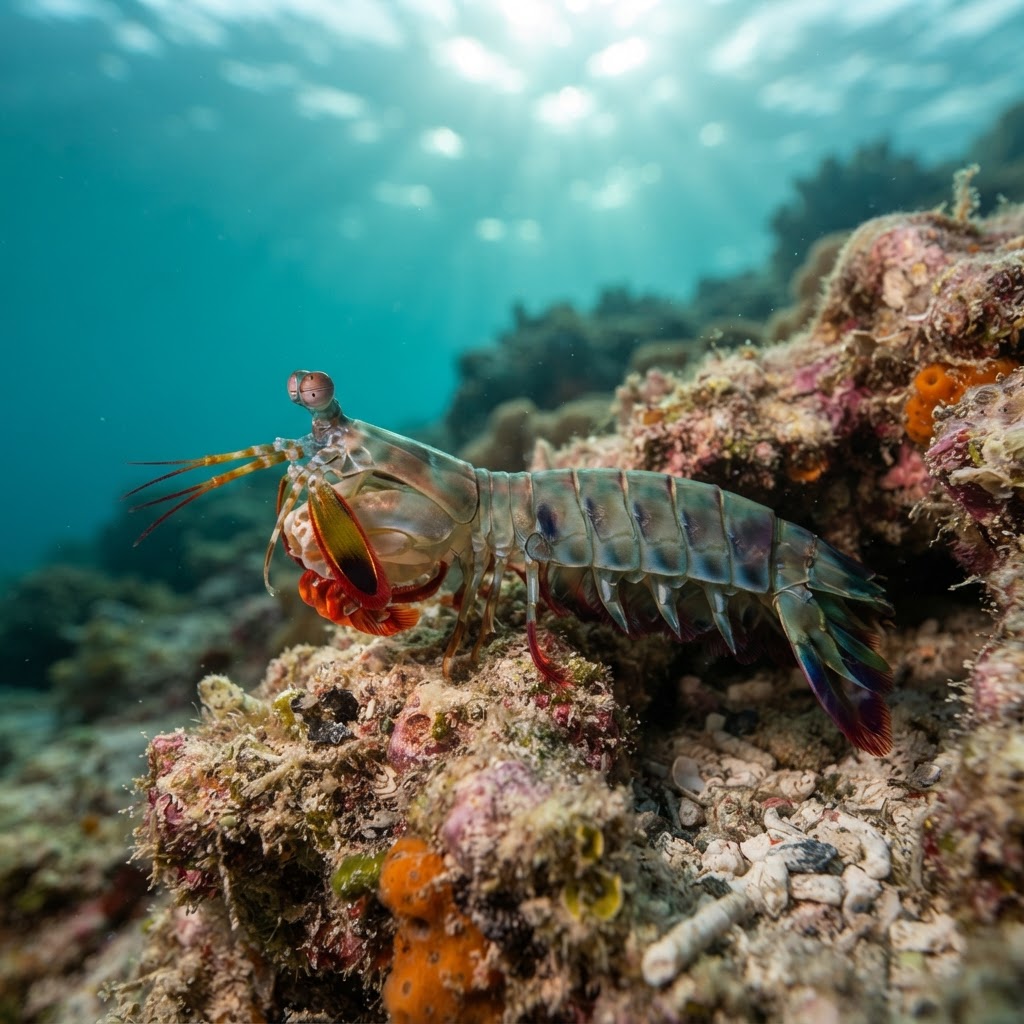
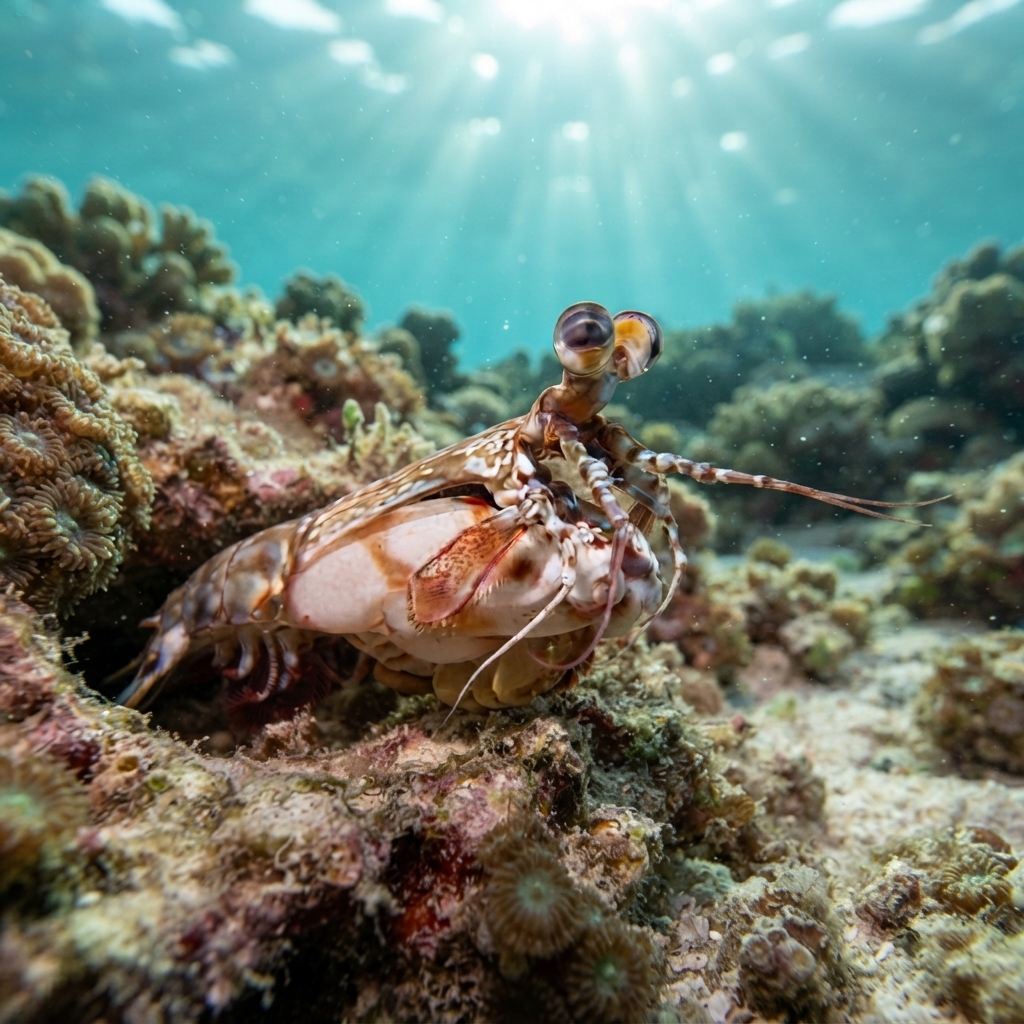
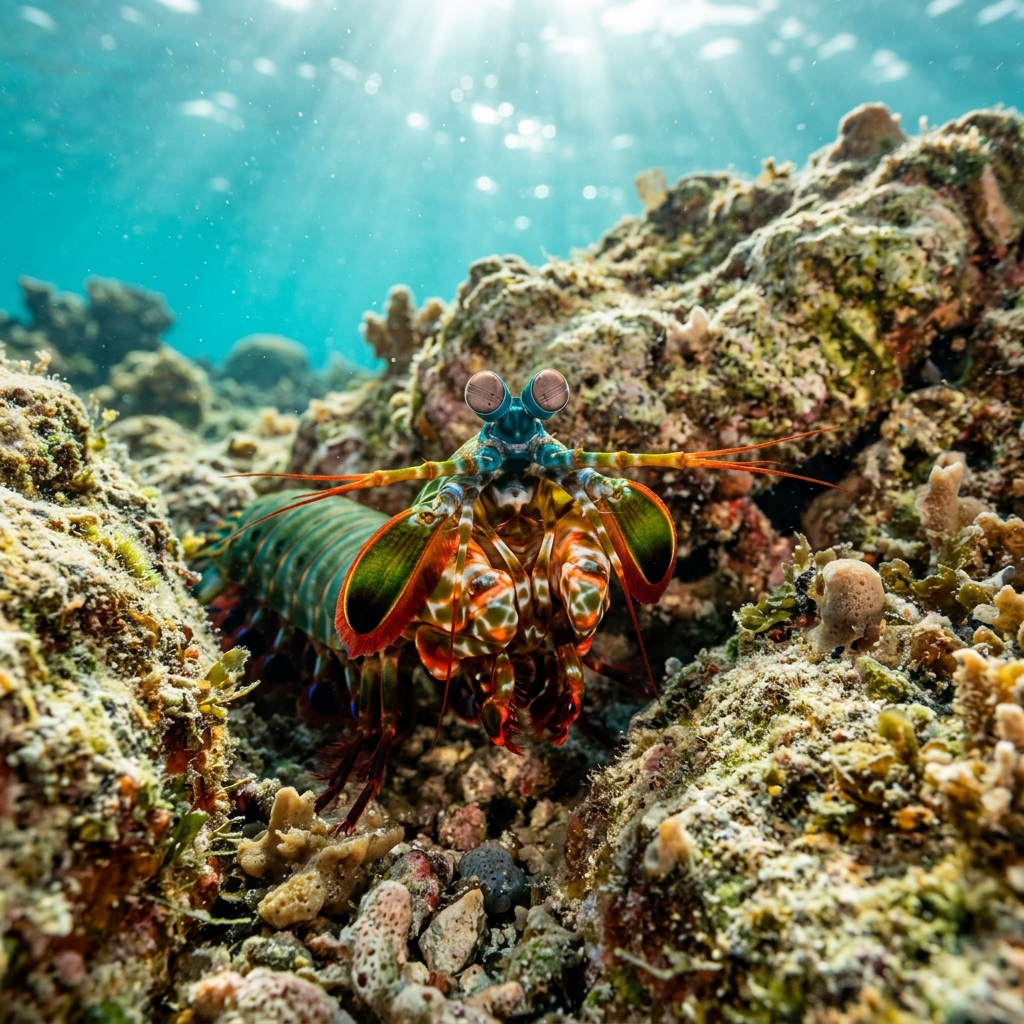
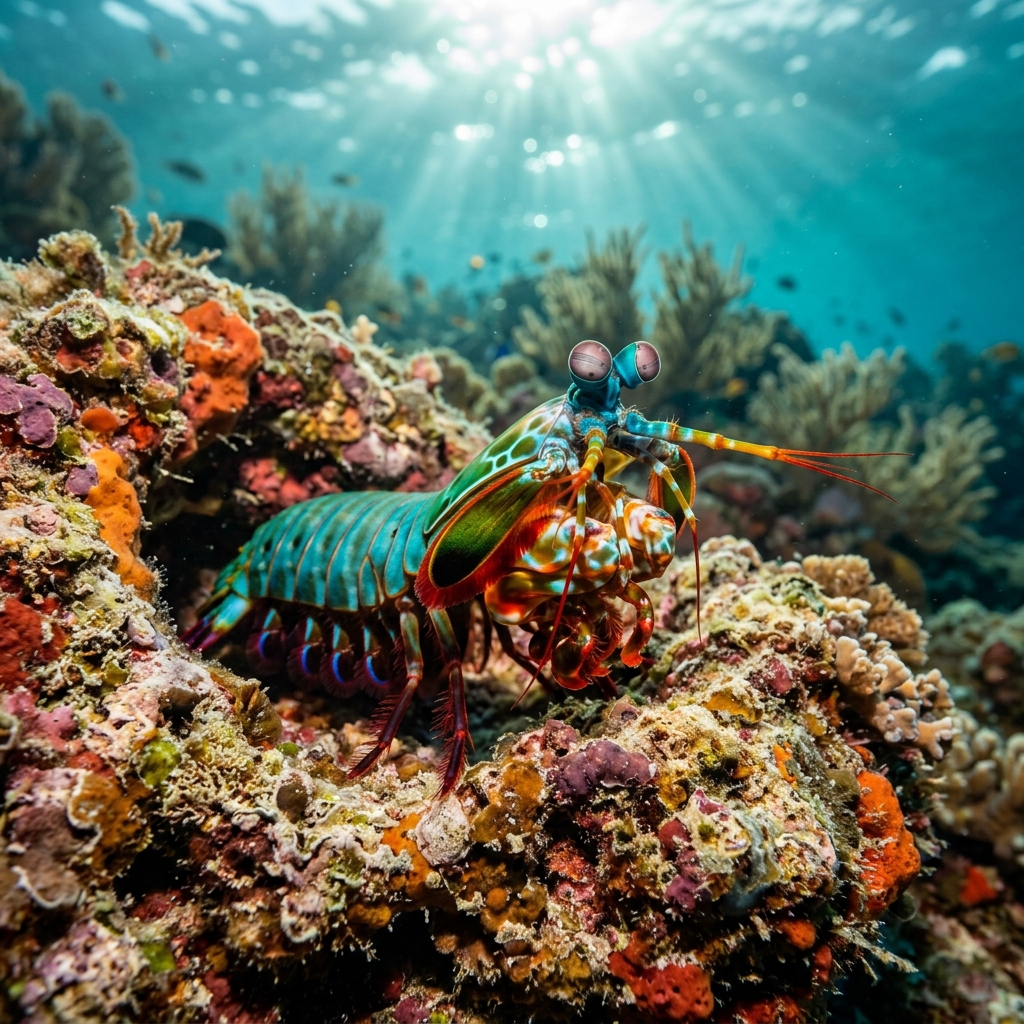
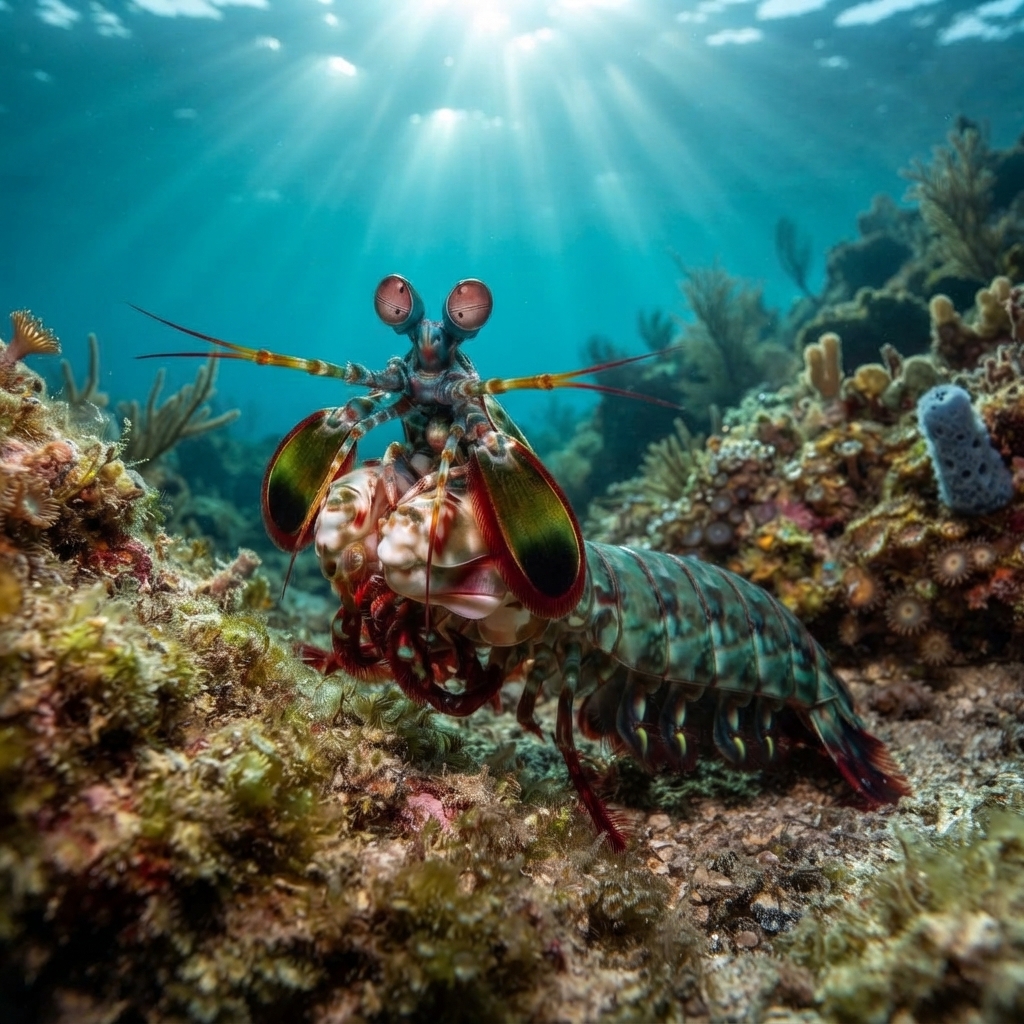
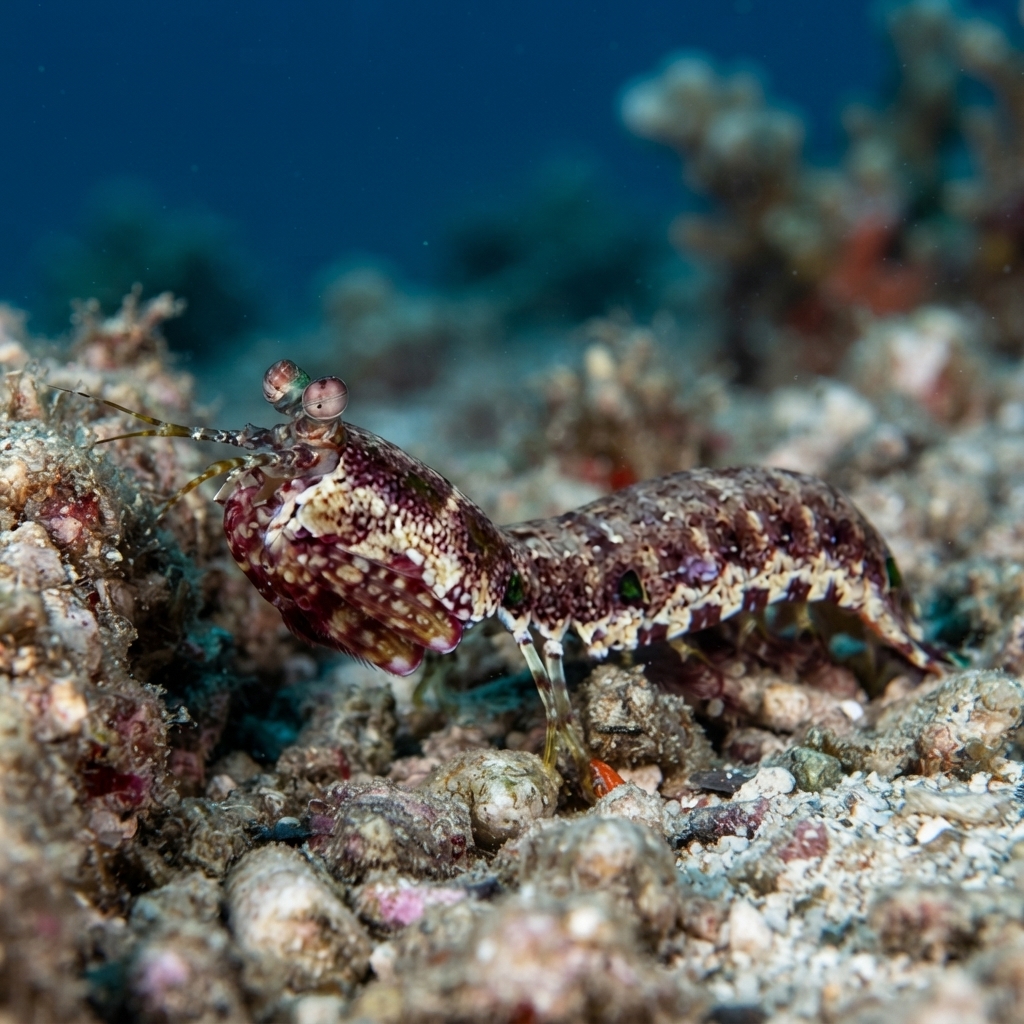
A slim, segmented body about 6 cm long, usually mottled green, brown or tan to match sand and rubble, with large dark eyes set on stalks and folded raptorial claws tucked under the head. It sits low at the mouth of a burrow, only the front half visible, and vanishes in a blink if you get too close. The tail fan often carries faint spotting, but colour is variable enough that pattern matters less than posture and habitat for a confident ID.
Look for it lurking at the entrance of a burrow in sand or rubble patches, often near mangrove edges or the sandy fringes of a reef, watching the water with its stalked eyes. It reacts fast to shadows and movement, retreating into its burrow the instant a diver's torch or hand comes close, so slow, low approaches on a night or day dive give the best look. Most sightings are brief: a flash of colour before it disappears.
Unlike the club-swinging "smashing" mantis shrimp species, this one is a spearer, using barbed raptorial claws to snatch soft-bodied prey like worms and small fish rather than cracking shells.
No clear season shows up in the sighting data, and with a comfortable range of roughly 24 to 30°C it stays active on tropical and subtropical reefs all year round.
Reef neighbours a diver could mistake it for. Use the identification notes above to tell them apart.
Most reliably logged around São Vicente in Cape Verde, and a strong presence across Hawaii and Florida in the United States. Also turns up on dive sites in Milne Bay, Papua New Guinea, and Bali, Indonesia, though sightings there are patchier.
Mapping where Common Mantis Shrimp is logged…
The strongest sightings come from São Vicente in Cape Verde, with further records across Hawaii and Florida in the US, and scattered logs from Milne Bay in Papua New Guinea and Bali in Indonesia.
There is no strong seasonal pattern in the sighting data. Because it tolerates a wide warm-water range, it can be found on sandy reef patches at any time of year.
No. This species poses no real threat to divers; it is shy and retreats into its burrow rather than confronting anything as large as a person.
Look for a small, mottled green-brown crustacean about 6 cm long peeking out of a burrow in sand or rubble, with large stalked eyes and folded claws under its head. It disappears quickly, so spotting the burrow entrance first helps.
This species typically reaches around 6 cm in length, making it one of the smaller mantis shrimp divers encounter on tropical reefs.
This is a spearing-type mantis shrimp, striking soft prey like worms with barbed claws rather than smashing shells like its bigger, more famous relatives. Its eyes also process colour and light in ways far more complex than human vision.
Site and sighting data is aggregated from diver logs, iNaturalist and GBIF. For taxonomy and conservation status:
Dotted Mantis Shrimp
26 sites