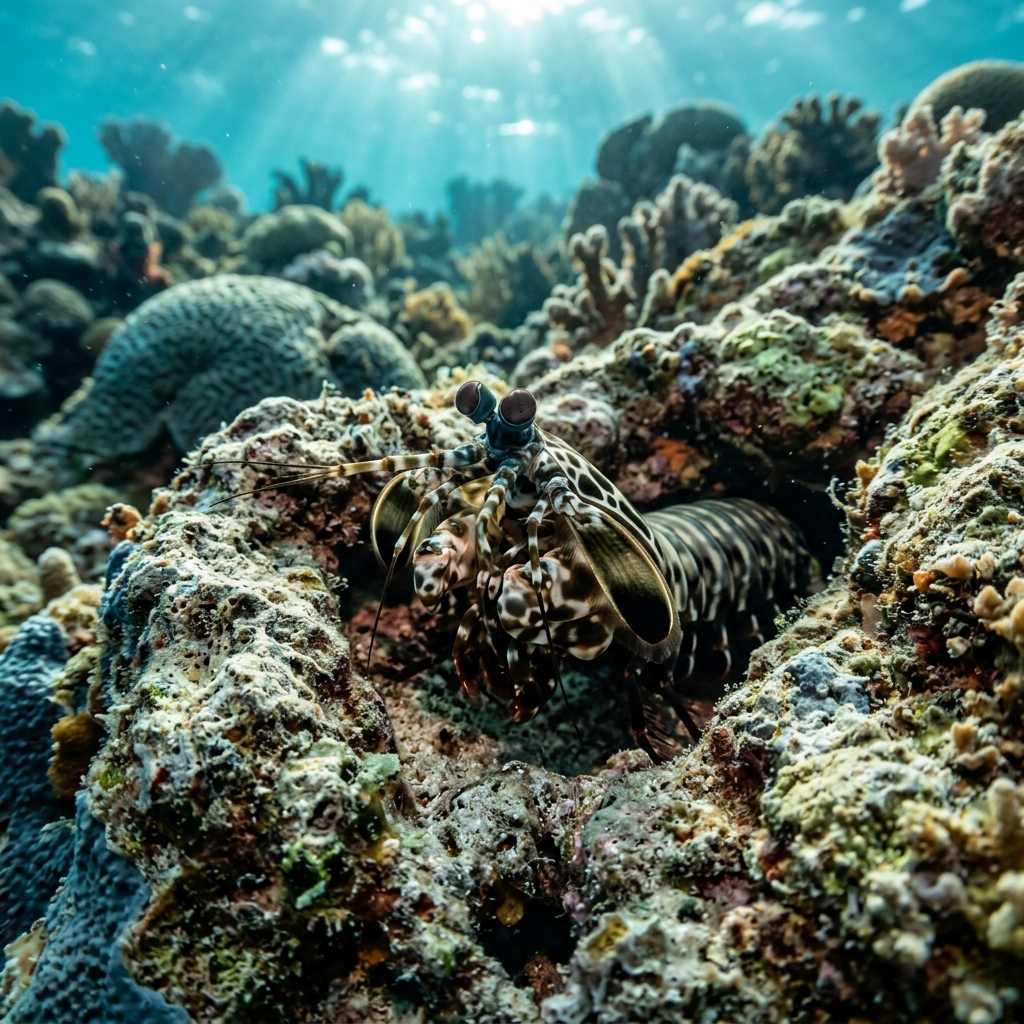
Lysiosquilla maculata
Spotted in the Visayas, Philippines, the dotted mantis shrimp is a rare and striking crustacean found in warm tropical waters around 26-29°C.
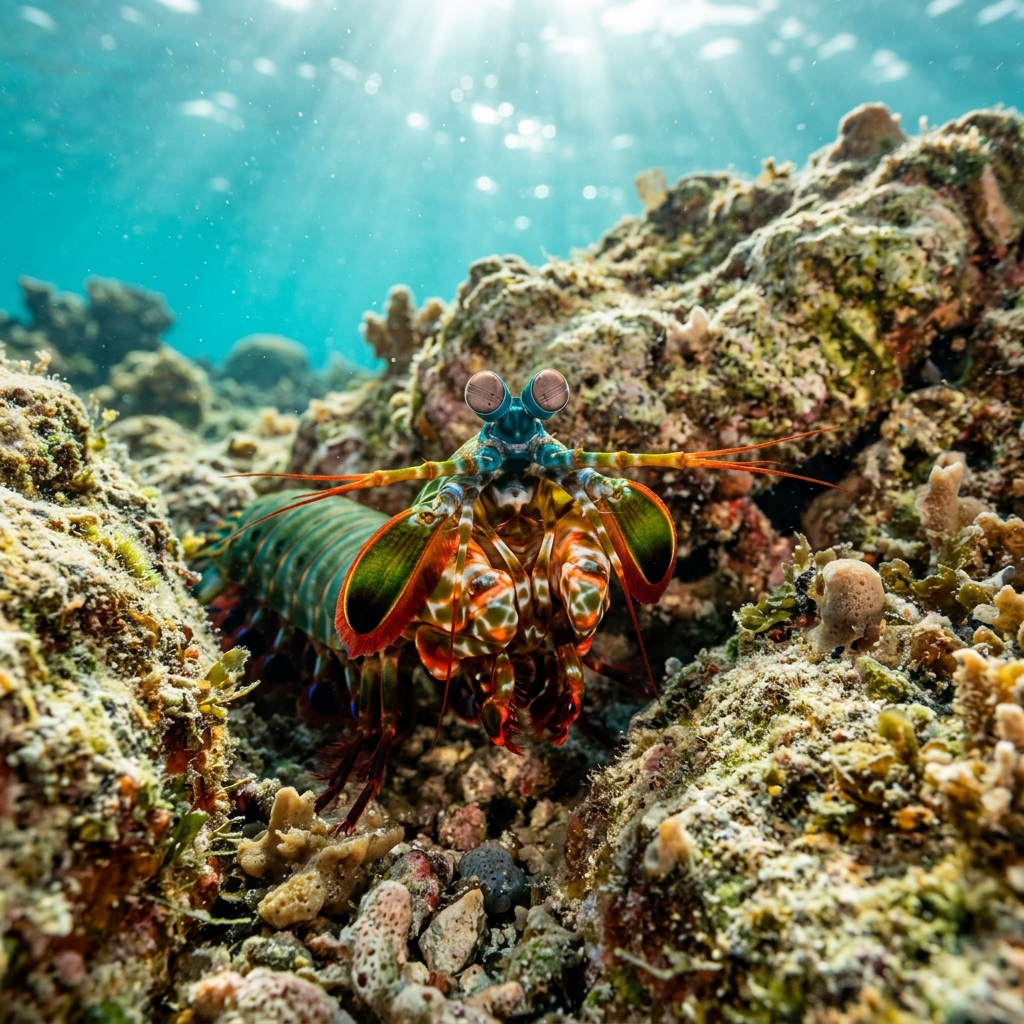
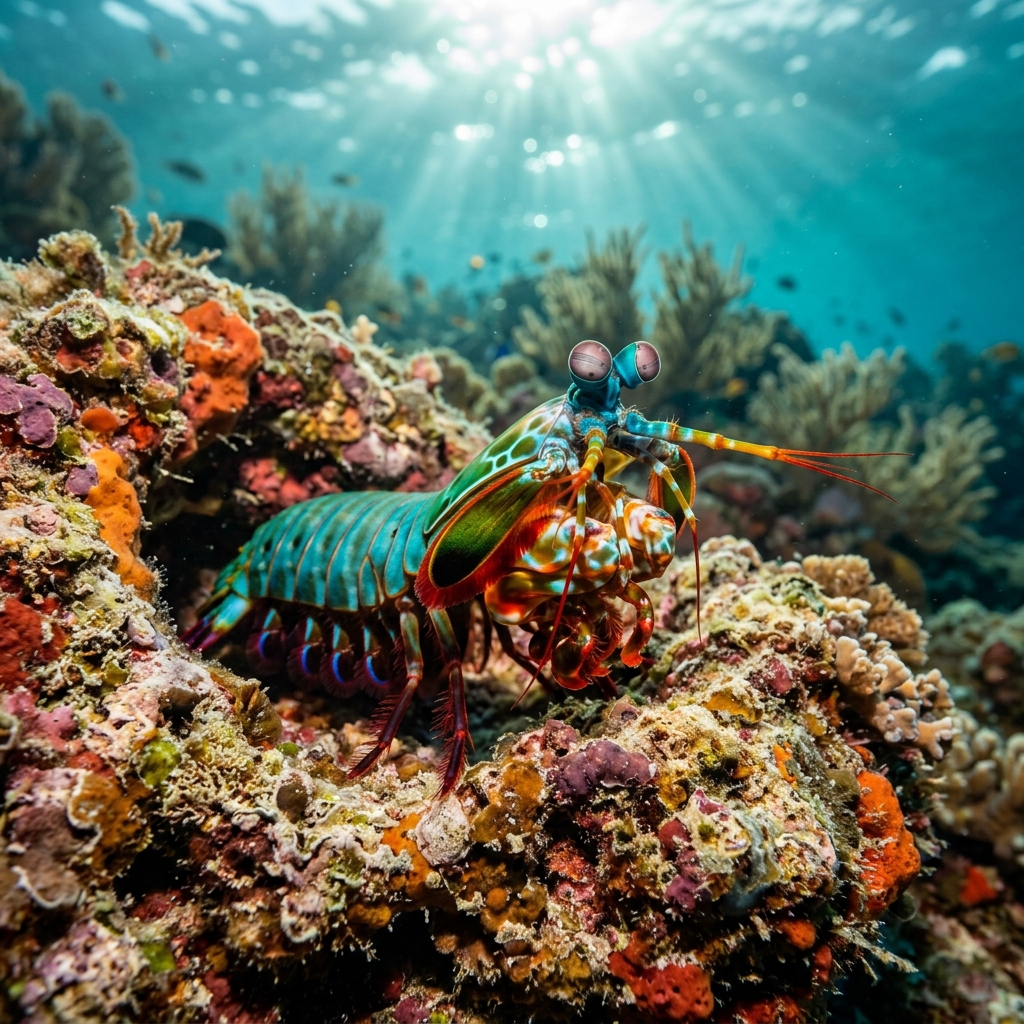
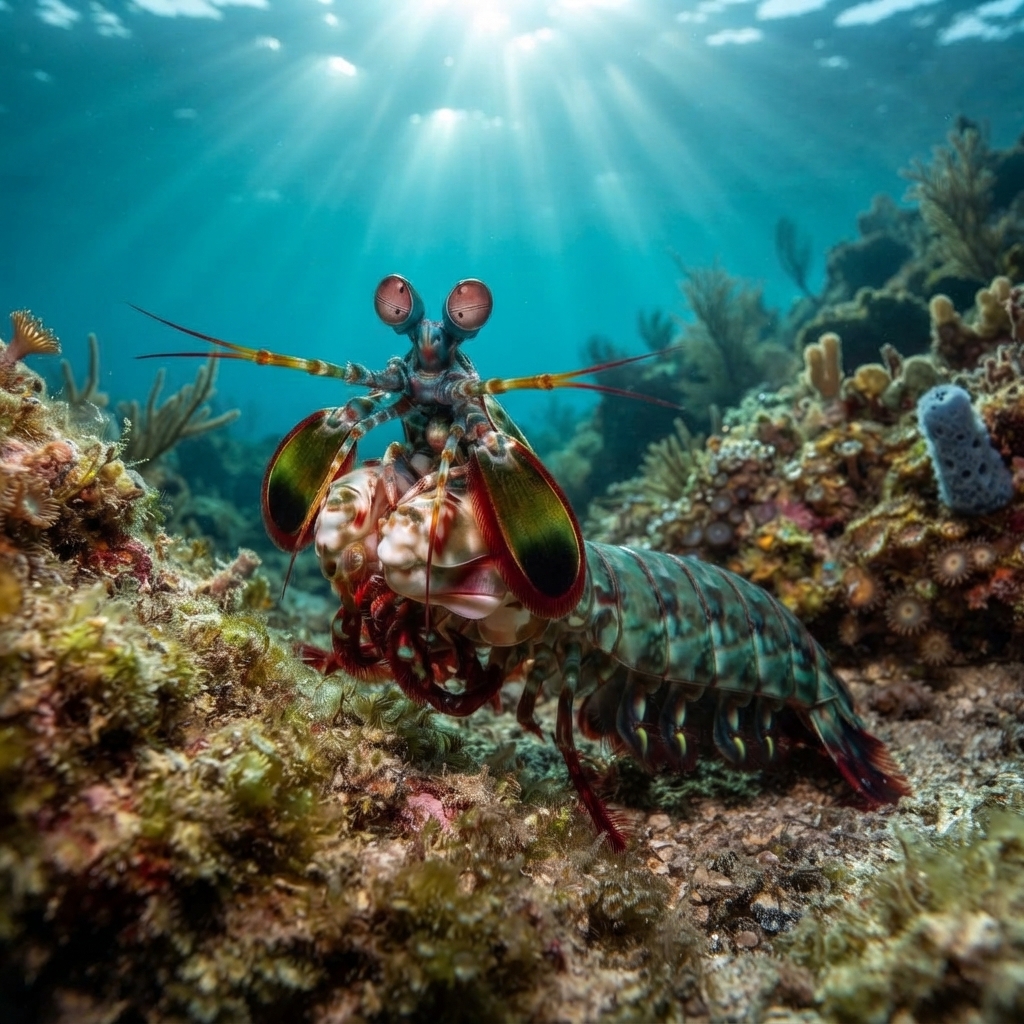
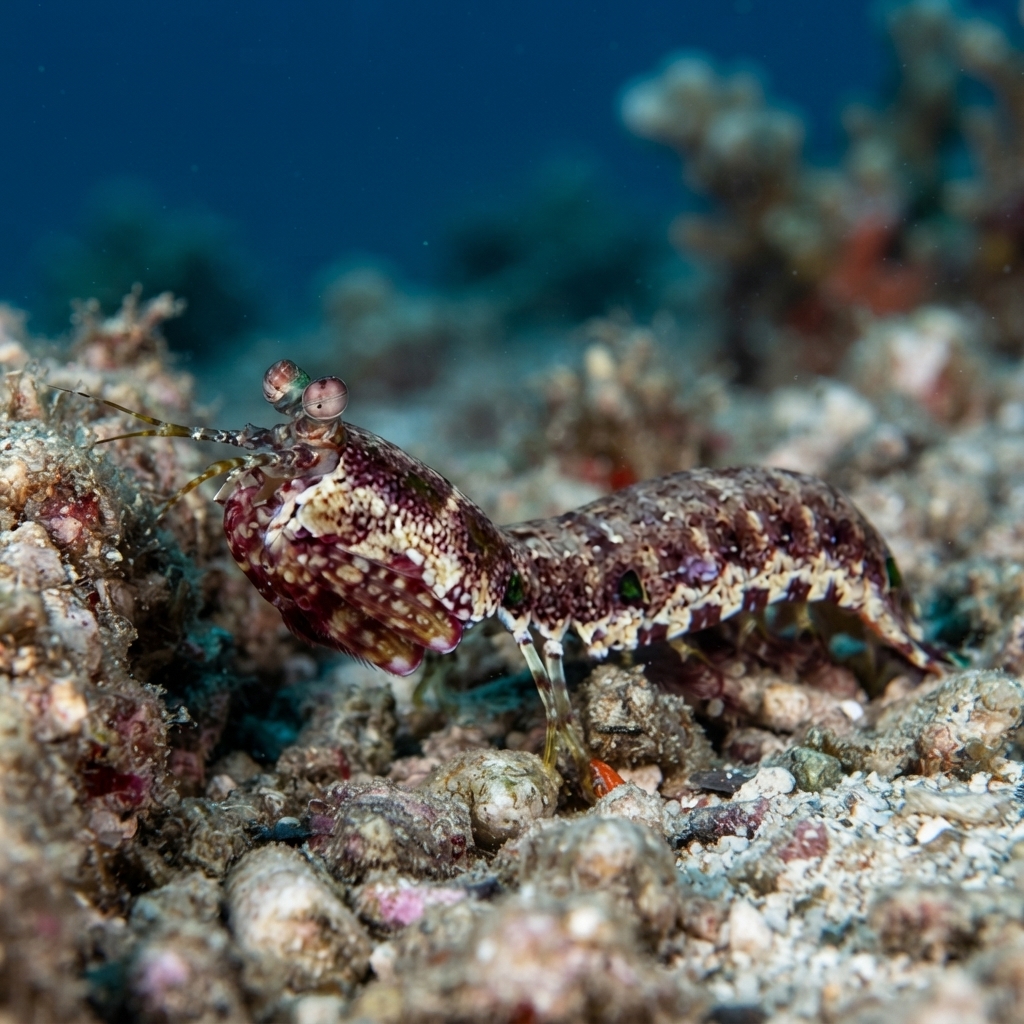
Bold dark spots scattered across a pale, elongated body are the key feature to look for. Like other large mantis shrimps, it has a flattened, segmented form with prominent eyes on stalks that swivel independently. The raptorial claws (the folded, spear-like front limbs used for striking prey) are clearly visible at rest. Spotting this animal usually means catching just the front half of the body at the entrance to its burrow.
Dotted mantis shrimps are burrowing animals; when divers encounter one, it is almost always peering out from the entrance of a sandy or rubble-bottomed burrow. They are wary and will retreat quickly if approached too directly. Slow, patient observation from a distance is the best tactic, and hovering at eye level with the burrow entrance gives the best view.
Mantis shrimps in the Lysiosquilla genus are spearers rather than smashers, using barbed raptorial claws like a harpoon to impale fish and soft-bodied prey rather than crushing hard shells.
There is not enough seasonal data to identify a peak period, so it can be treated as a year-round resident. Water temperatures at sighting sites run from about 26 to 29°C, consistent with the warm tropical conditions that Central Visayas maintains throughout the year.
Reef neighbours a diver could mistake it for. Use the identification notes above to tell them apart.
All confirmed sightings come from the Philippines, concentrated in Central Visayas. This region, home to some of the country's most-dived reefs, is currently the only documented area where divers have logged this species.
Mapping where Dotted Mantis Shrimp is logged…
All diver-confirmed sightings are from the Philippines, specifically Central Visayas. If you are hoping to find one, diving the sandy and rubble-rich areas of that region gives you the best chance currently documented.
There is no clear seasonal peak in the data, so any time of year in Central Visayas is a reasonable bet. The species occupies warm water around 26 to 29°C, which is typical of Philippine reef sites year-round.
Look for a long, flattened body covered in dark spots, usually visible only from the front half as the animal sits at its burrow entrance. The independently rotating eyes on stalks and the folded spearing claws held at the front are strong ID clues. The bold spotting separates it from most other mantis shrimps you might encounter.
They are not considered dangerous to divers. Like all mantis shrimps they should not be handled, as the spearing claws can cause a nasty puncture wound, but a mantis shrimp sitting in its burrow poses no threat to an observer who keeps a respectful distance.
They belong to the spearer group of mantis shrimps, meaning they use barbed, harpoon-like claws to impale soft prey such as fish rather than crushing hard-shelled animals. Their eyes can move independently and are among the most complex visual organs in the animal kingdom, capable of detecting types of light humans cannot see.
Site and sighting data is aggregated from diver logs, iNaturalist and GBIF. For taxonomy and conservation status:
Common Mantis Shrimp
30 sites