Scolecenchelys breviceps
A pencil-thin sand-dweller most often logged in South Australia, active in cool 14 to 19C water year-round.
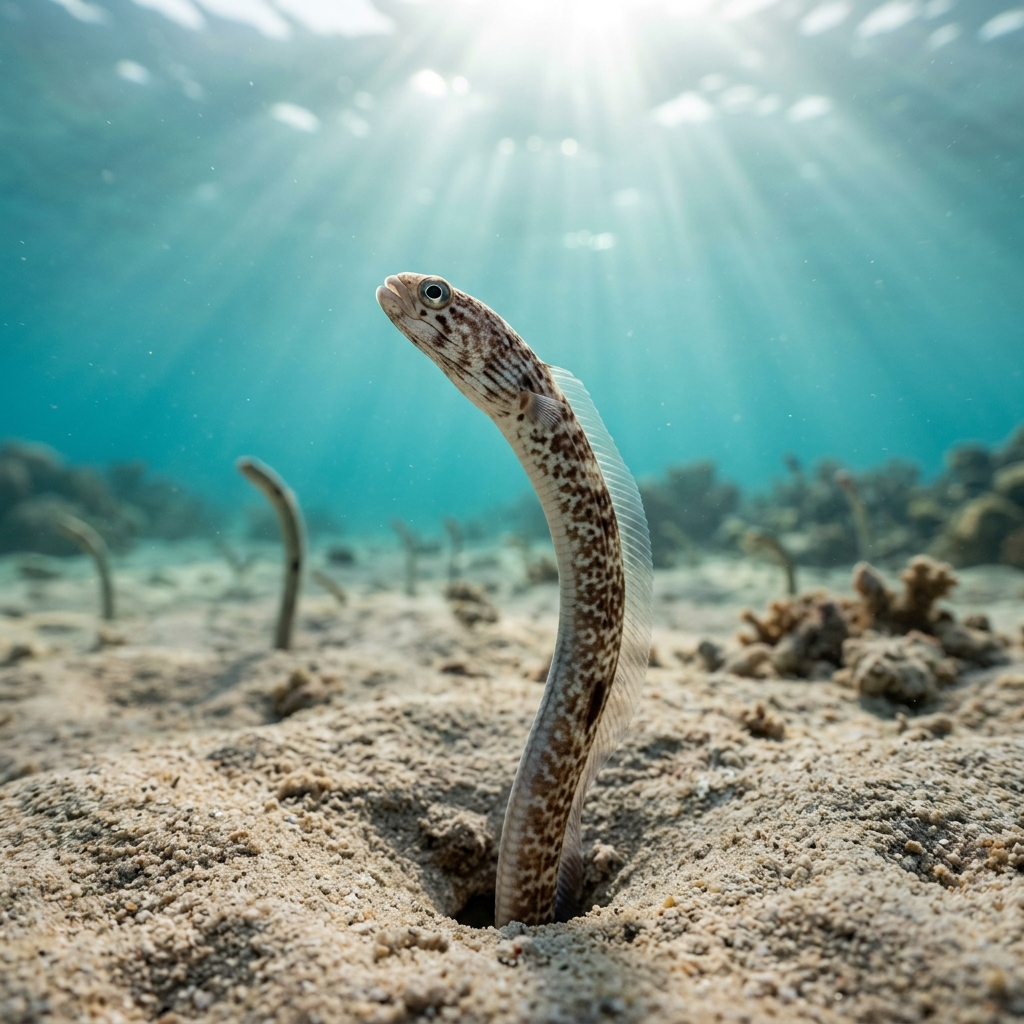
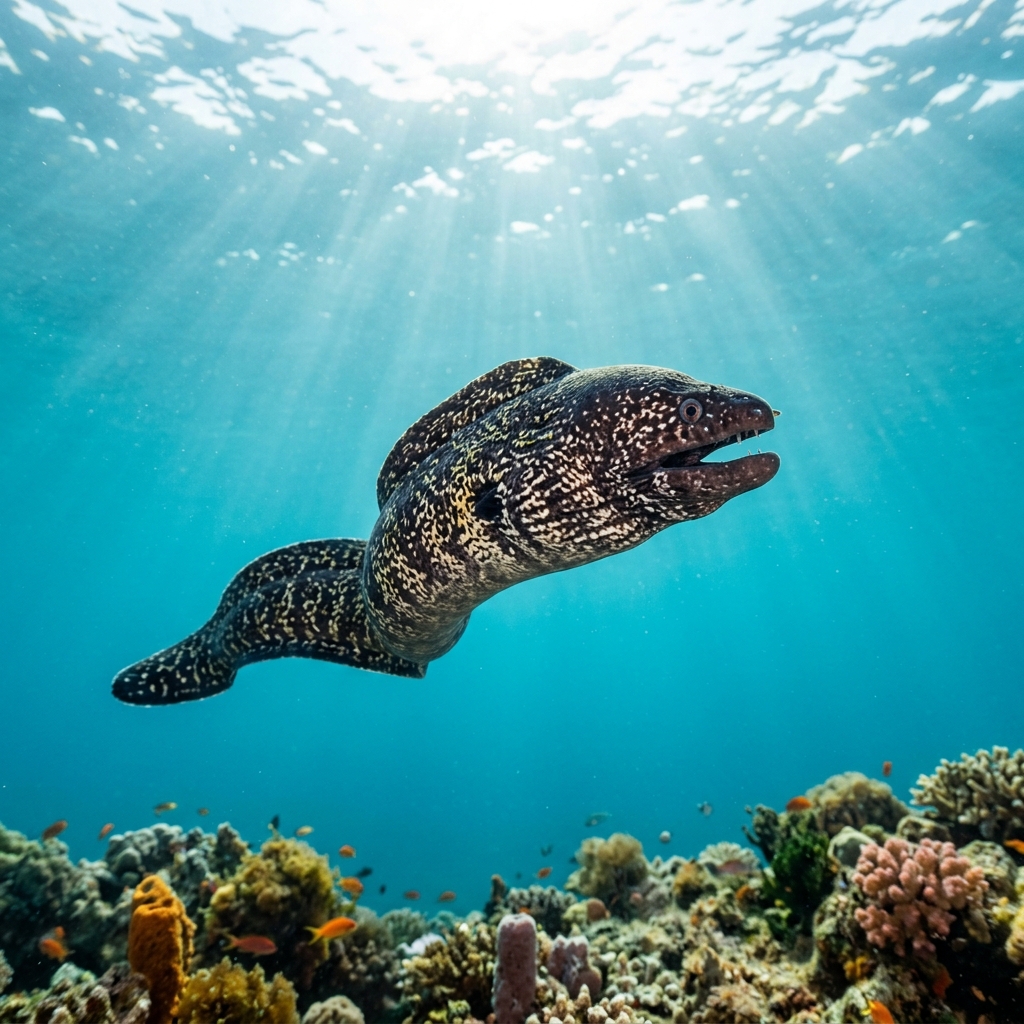
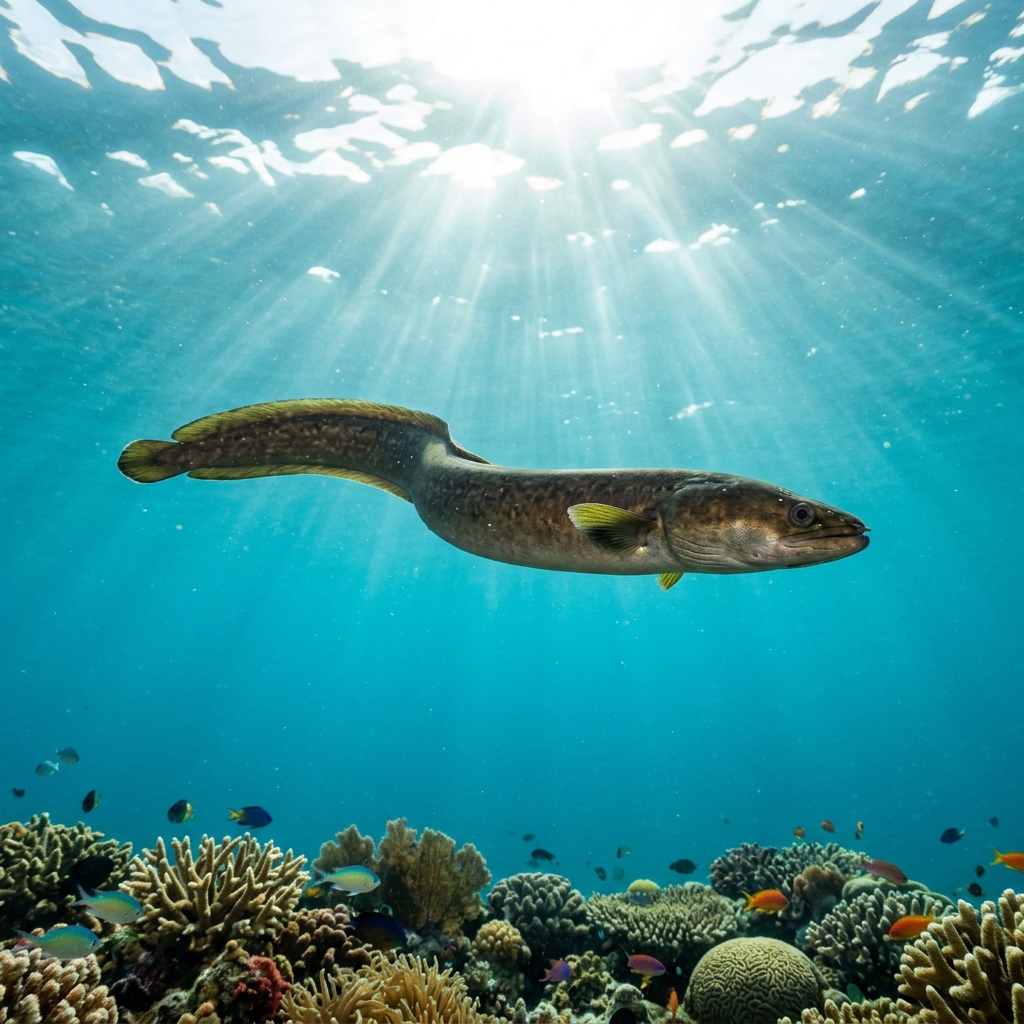
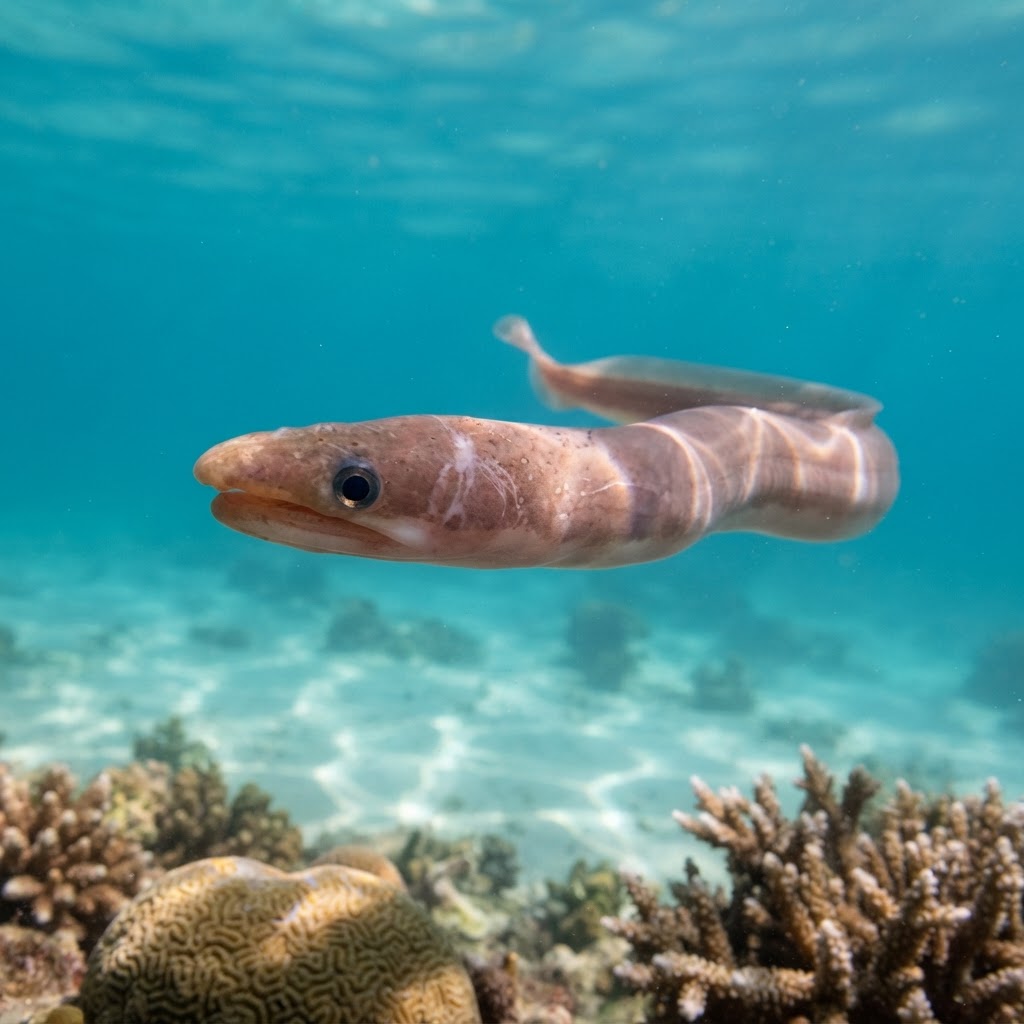
Slender and worm-like rather than eel-shaped in the usual sense, growing to about 42cm but often seen as just a thin length of body protruding from sand or rubble. Colour runs plain brown to sandy grey with no bold markings, and the head is small and blunt, which is the feature that gives it its name. Most sightings are a partial view: the front third of the body emerging from a burrow, tail buried, so divers key on the narrow, uniform, hose-like profile rather than any pattern.
Typically found with its body anchored in a burrow in sand or fine rubble, head and forebody out, holding position rather than swimming freely when divers approach. It reacts to close attention by retreating tail-first into the substrate, so slow, low-disturbance approaches give the best chance of a lingering look. Most reports describe it on open sand patches rather than reef structure, making it a target for divers scanning flat ground rather than the reef face.
Like other worm eels it can back into its burrow tail-first almost as fast as it emerged, so a good look usually depends on spotting it before it spots you.
Sightings show no detectable season, and with a water-temperature niche of 14.4 to 18.5C it is clearly a cool-temperate species active through the colder months rather than a warm-reef visitor, so plan around South Australia's cooler diving season without expecting a narrow window.
Almost all logged sightings come from Australia, with South Australia by far the strongest region and a smaller number of records from Victoria. If you are diving temperate sand and rubble patches around South Australian sites, this is one of the more reliably logged small eels there.
Mapping where Shorthead Worm Eel is logged…
South Australia is the strongest region by far, with further records from Victoria. It is logged specifically on sand and rubble patches rather than reef structure.
There is no clear seasonal pattern in the sightings, and its temperature niche of 14.4 to 18.5C points to a cool-water species present through South Australia's cooler diving months rather than a tropical-season visitor.
Look for a plain brown to grey, pencil-thin body poking out of sand or rubble with a small blunt head and no distinct markings. Most of the body stays buried, so the giveaway is the narrow, uniform, hose-like section you can see.
They reach around 42cm in length, though divers usually only see a portion of that as the rest stays buried in the substrate.
No, they are not considered dangerous to divers. They retreat into their burrow when approached rather than showing any defensive behaviour towards people.
Site and sighting data is aggregated from diver logs, iNaturalist and GBIF. For taxonomy and conservation status:
Garden Eel
2,448 sites