Cymatogaster aggregata
Small silvery schooling fish common in British Columbia's cold water, 8 to 12C, seen year-round on pilings and eelgrass beds.
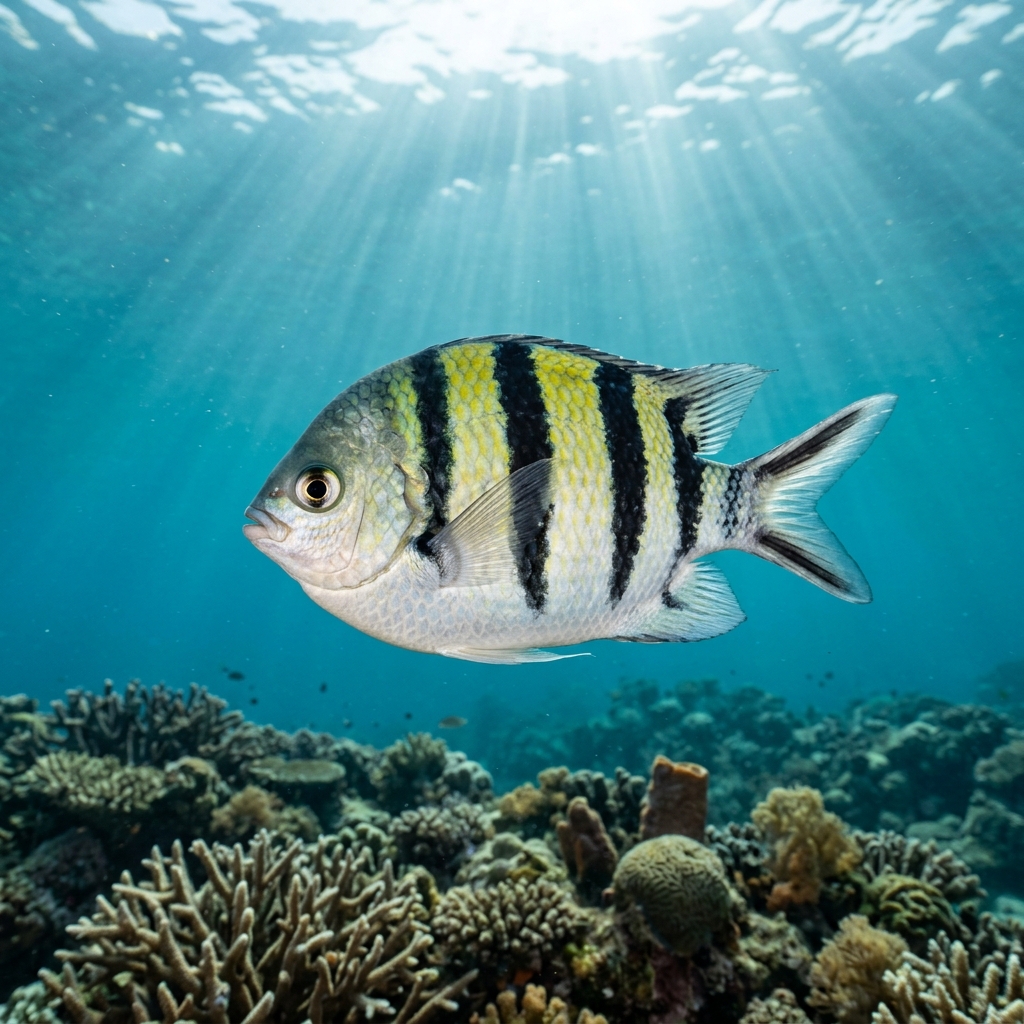
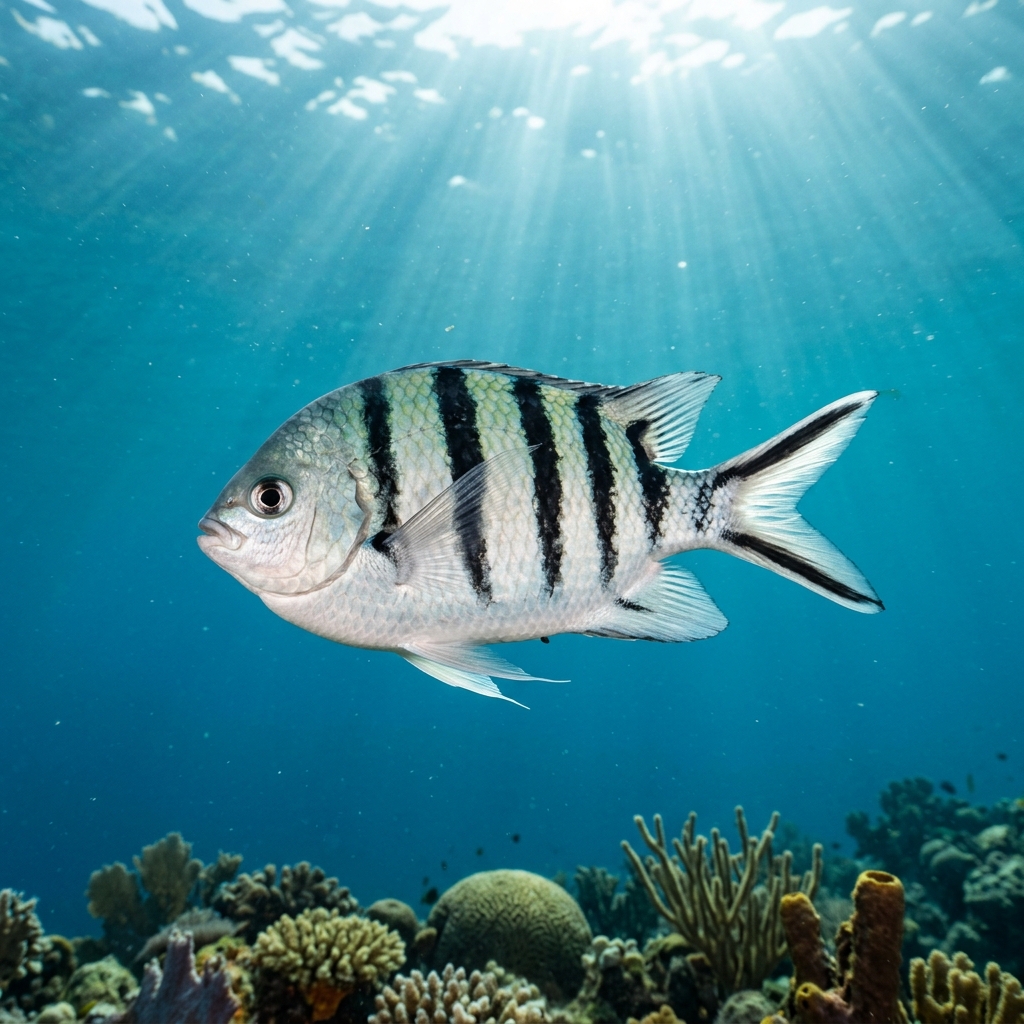
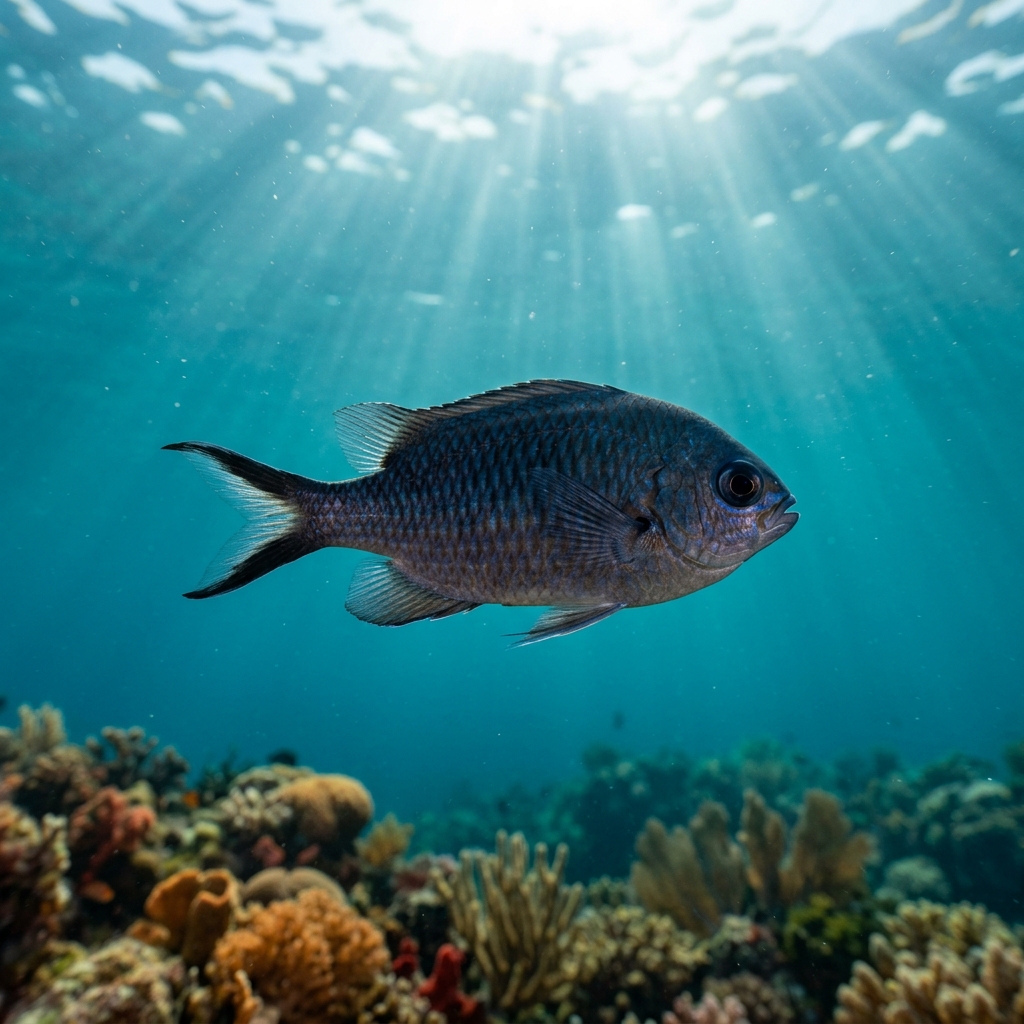
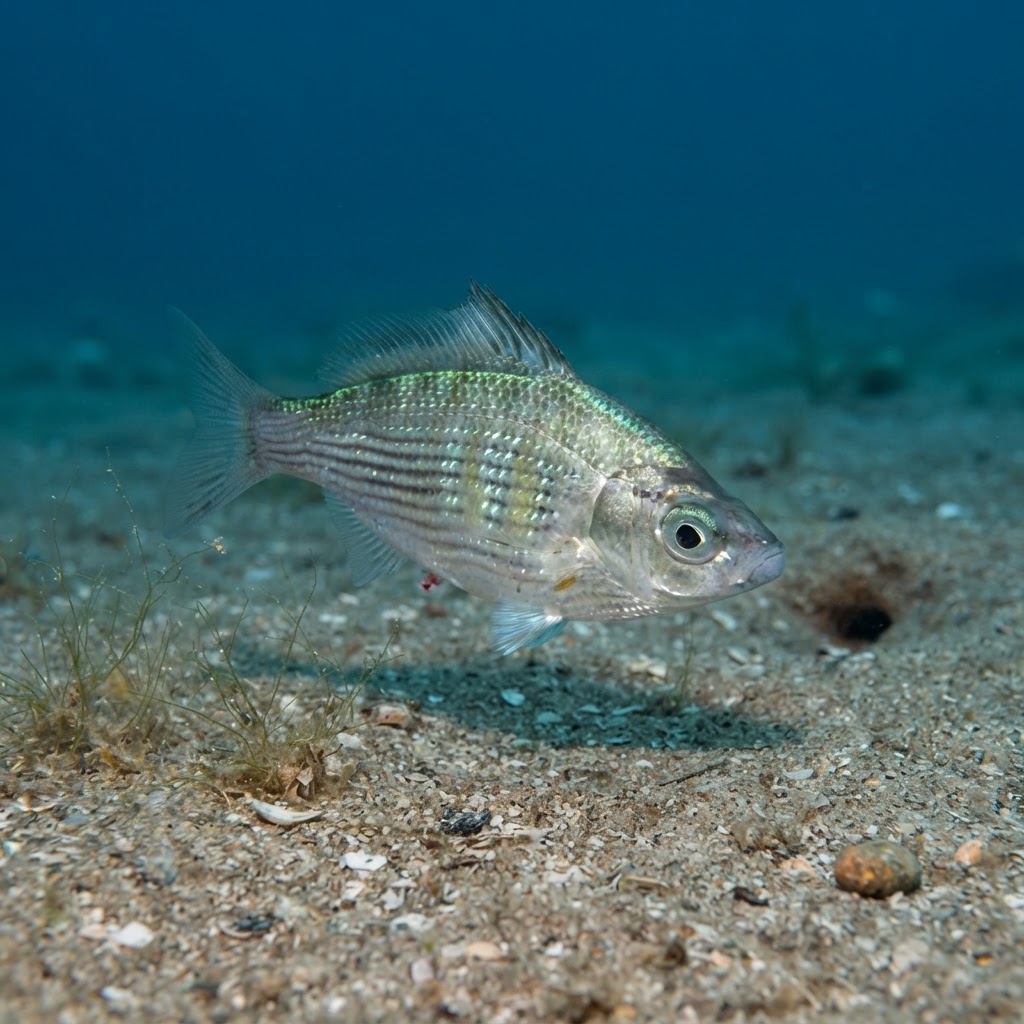
Small, deep-bodied fish around 14 cm with a silvery body flattened side to side, marked by three pale yellow vertical bars along the flank. Males in breeding condition darken and can show a blotchy black patch on the belly. They swim in loose schools close to structure rather than out in open water, holding a slightly humped, laterally compressed profile that separates them from slimmer baitfish.
Divers typically find them hovering in loose, unhurried schools around pilings, eelgrass and shallow rocky structure, picking at plankton and small invertebrates in the water column. They are not shy but are also not a fish that approaches divers; expect them to hold position or drift off slowly rather than scatter. Most logs describe them as rare to uncommon at any given site, so a sighting is more a case of being in the right shallow, sheltered spot than a guaranteed encounter.
Shiner Perch are ovoviviparous, meaning females mate in autumn, store sperm over winter, and give birth to fully formed live young the following spring or summer rather than laying eggs.
Sightings are spread across the year with no strong seasonal peak in the data, and the cold-water niche of 8 to 12C matches conditions found through most of the year in British Columbia and the Pacific Northwest, so any month is worth trying.
Most reliably logged in British Columbia, Canada, which accounts for the bulk of sightings, with further records from the Pacific Northwest and California in the United States. Look for them around pilings, docks, eelgrass beds and rocky nearshore sites rather than offshore reefs.
Mapping where Shiner Perch is logged…
British Columbia, Canada is by far the strongest area for sightings, with additional records from the Pacific Northwest and California in the United States. They favour pilings, docks and eelgrass beds in sheltered, shallow water.
There is no clear seasonal pattern in the sighting data, so they are logged year-round. Their comfort range of 8 to 12C matches typical conditions in British Columbia and the Pacific Northwest for much of the year.
No, they pose no threat to divers. They are small, non-aggressive fish that simply drift or swim off if approached.
Look for a small, deep-bodied, silvery fish around 14 cm long with three pale yellow vertical bars on its side. They school loosely near pilings, docks and eelgrass rather than out over open reef.
They typically reach about 14 cm in length, making them one of the smaller fish divers will spot around pilings and eelgrass in cold Pacific waters.
They are ovoviviparous: females store sperm from autumn mating through winter and give birth to fully developed live young the following spring or summer instead of laying eggs.
Site and sighting data is aggregated from diver logs, iNaturalist and GBIF. For taxonomy and conservation status:
Yellowtail Clownfish
3,523 sites