Archosargus probatocephalus
Grey and black banded, human-like teeth, up to 63cm: sheepshead turn up on Florida reefs year-round, most reliably around the Yucatán and Texas coast too.
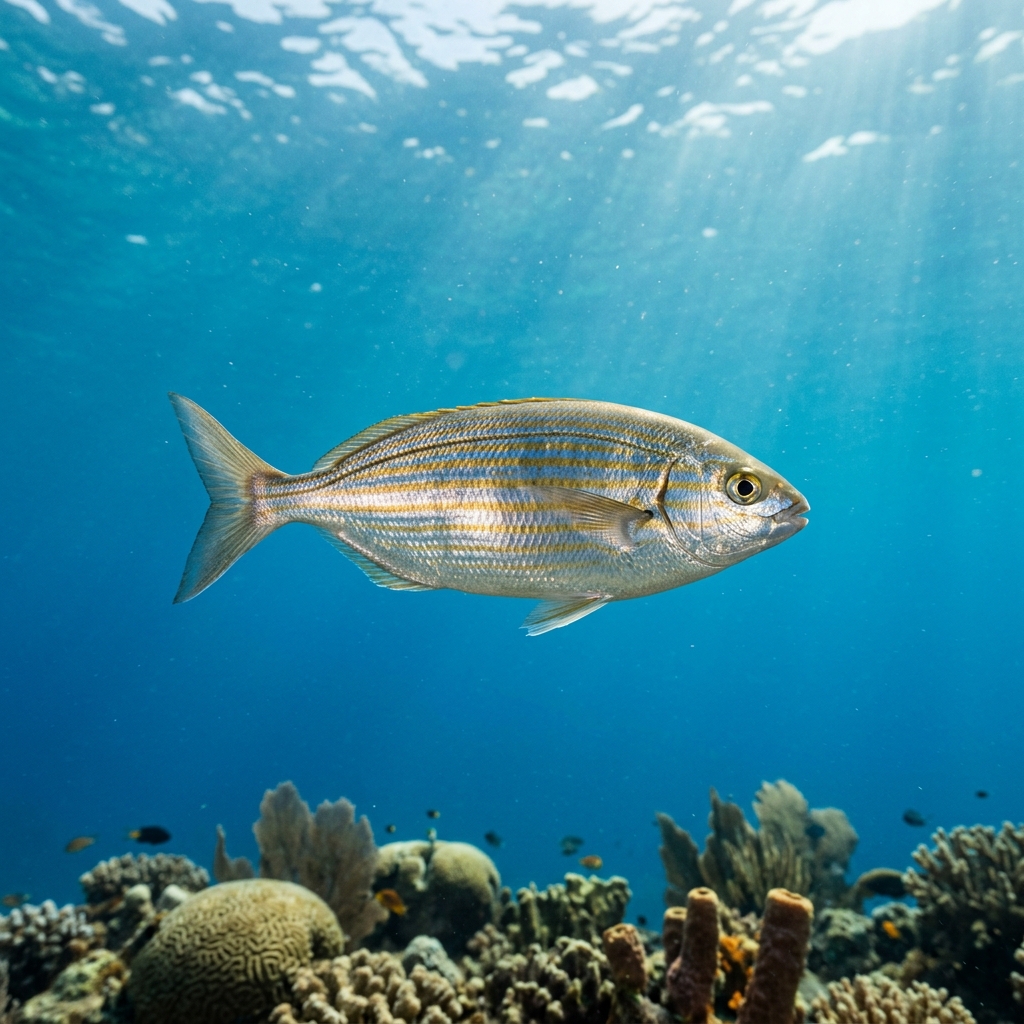
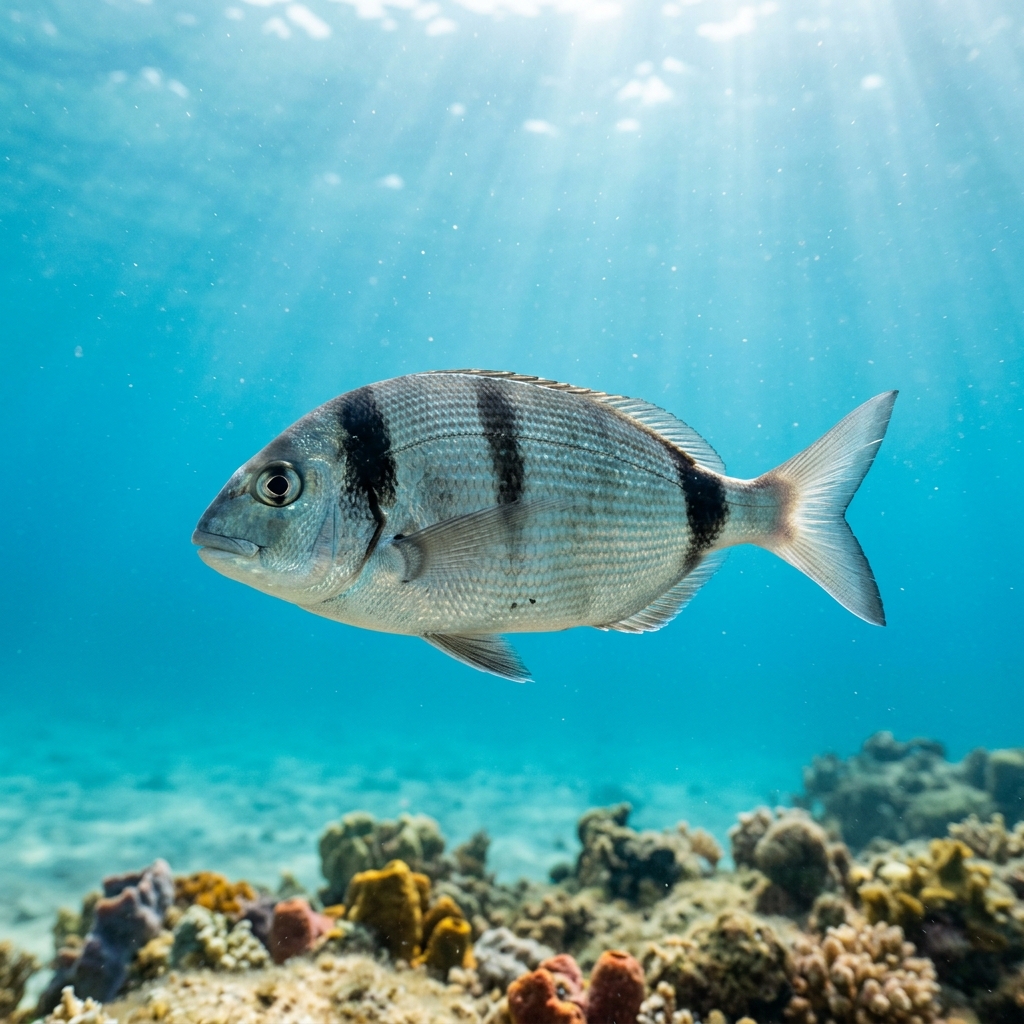
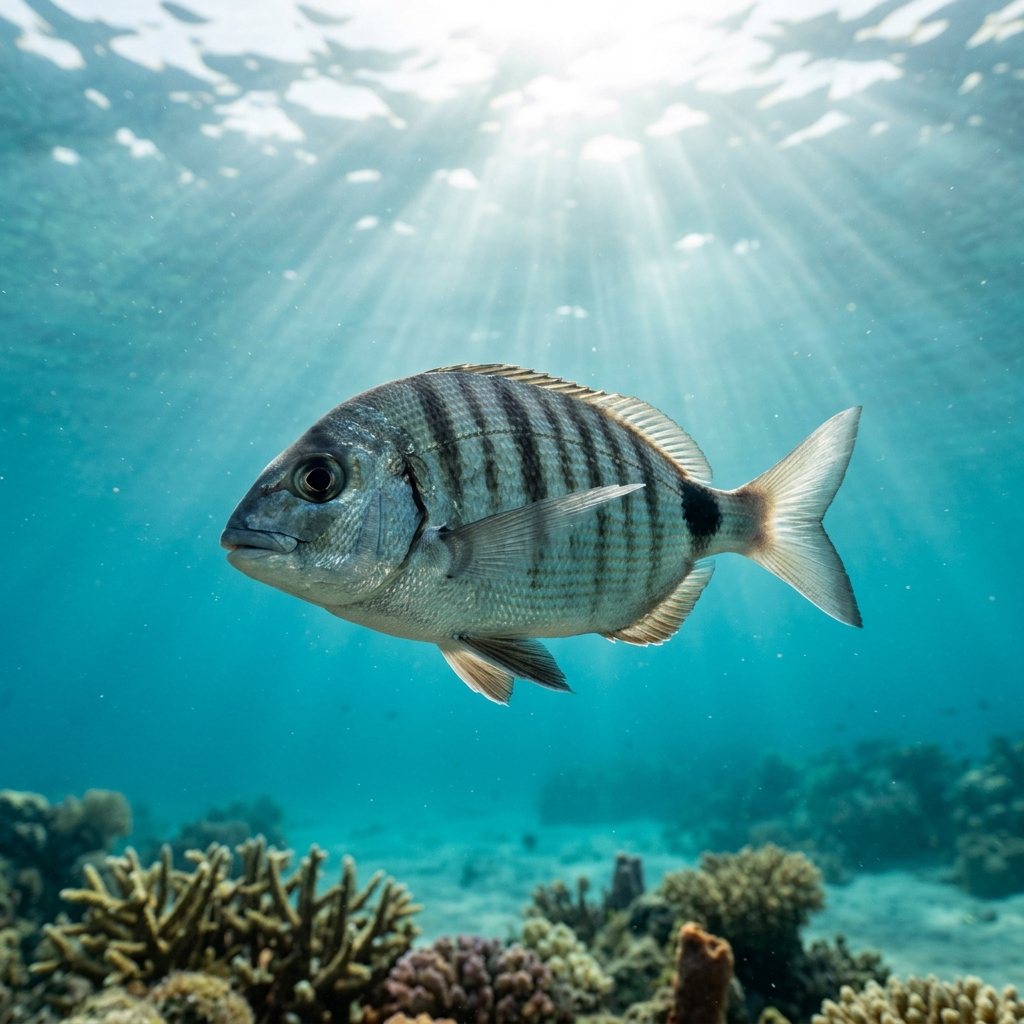
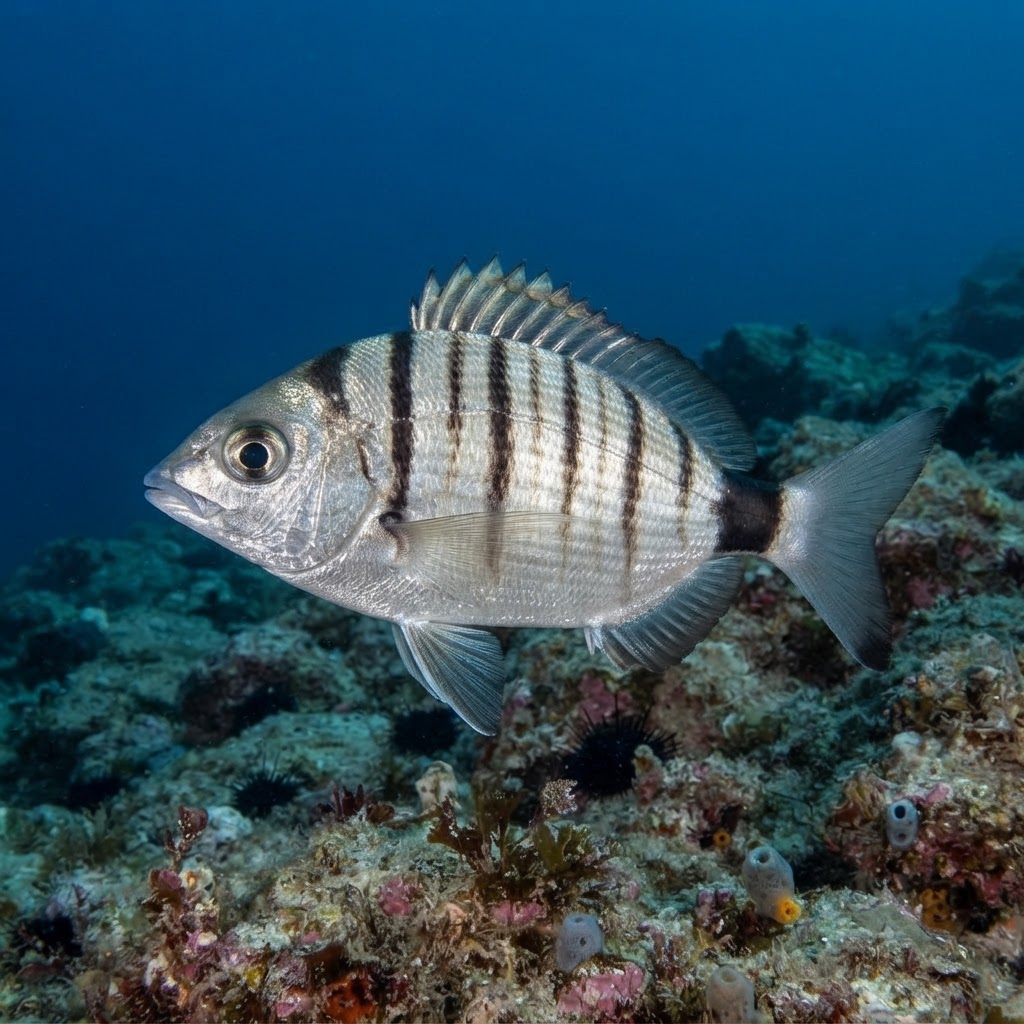
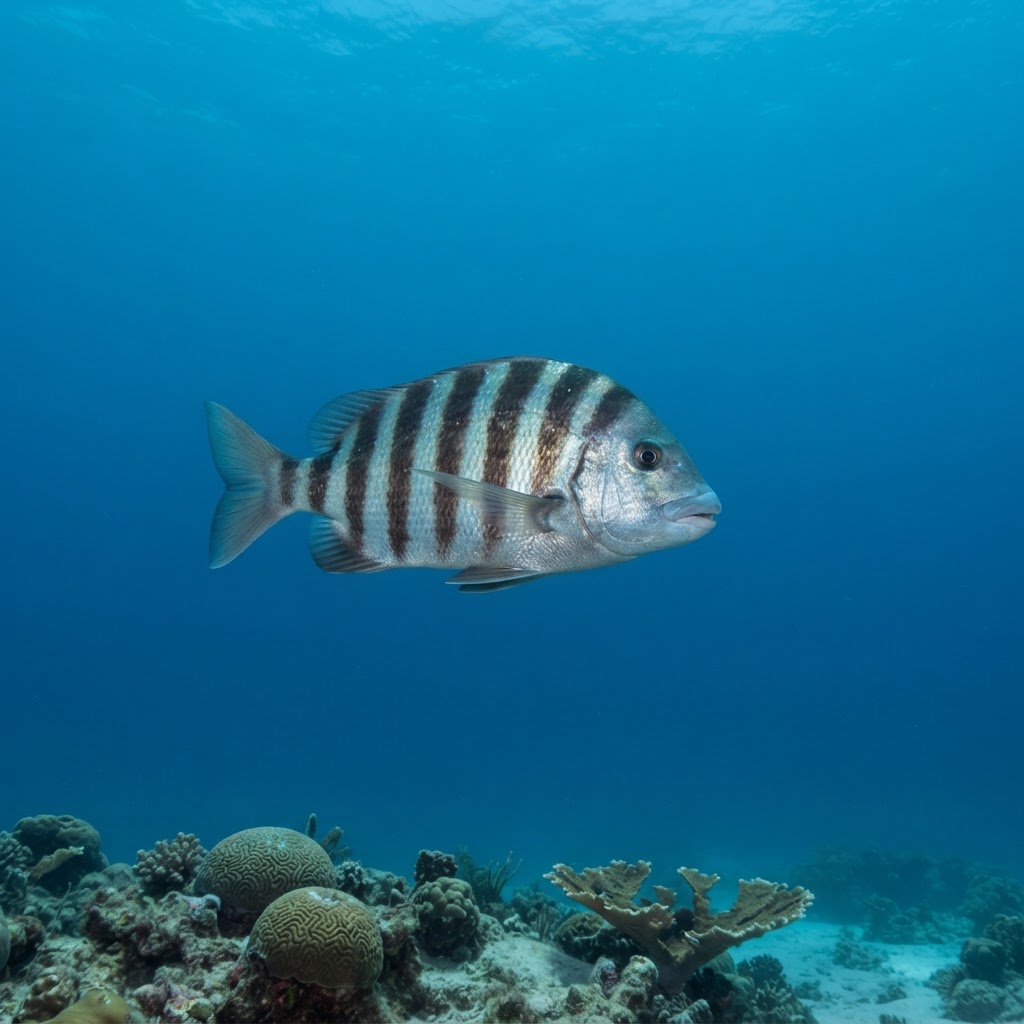
Deep, laterally compressed body banded with 5 to 6 dark vertical stripes on a silvery-grey background, growing to around 63 cm in bigger individuals. The giveaway underwater is the mouth: thick lips over a set of blunt, incisor-like teeth built for crushing rather than tearing. Body shape reads as a chunky, high-backed bream rather than something sleek, and the black stripes stay sharp even at a distance.
Usually seen hovering close to reef structure, pilings, or rubble, picking at hard-shelled prey with those distinctive crushing teeth. It tends to hold a cautious distance from divers rather than approach, drifting off into structure if you close in too fast. Most logs describe single fish or small numbers rather than large groups, consistent with an uncommon-to-rare rating at most sites.
Those blunt front teeth and heavier molars further back let it crack open barnacles, crabs, and other armoured prey that softer-mouthed reef fish cannot touch, a real specialist feeding setup rather than a generalist bite.
Sightings show no clear seasonal pattern, so treat this as a year-round species on the sites where it turns up. Observed water temperatures range from 22.9 to 28.0 C, comfortable enough across most of the year on these reef and structure habitats.
Most reliably logged around Florida, which accounts for the large majority of sites in the data, with Texas adding a further pocket of sightings along the Gulf coast. Outside the US, the Yucatán Peninsula in Mexico is the other consistent spot, giving divers a second real option if a Florida trip is not on the cards.
Mapping where Sheepshead is logged…
Florida is by far the strongest region for sightings, with additional records from Texas and the Yucatán Peninsula in Mexico. It shows up as an uncommon to rare find at most of these sites, with a smaller number reporting it as common.
There is no strong seasonal signal in the data, so it is effectively a year-round sighting on the reefs and structures where it occurs. Water temperatures logged with sightings range from about 23 to 28 C.
Look for a deep-bodied, silvery-grey fish with 5 to 6 bold black vertical stripes and thick lips over blunt, human-like teeth. The heavy jaw and crushing dentition are the clearest field marks at close range.
They typically reach around 63 cm in length, making them a solid mid-sized reef fish rather than a giant. Most divers report single fish or small numbers rather than schools.
No, they are not considered dangerous to divers. They tend to keep a cautious distance and retreat into structure rather than approach.
Their mouth carries a mix of incisor-like front teeth and flat molars further back, an adaptation for crushing barnacles, crabs and other hard-shelled prey that many reef fish cannot access.
Site and sighting data is aggregated from diver logs, iNaturalist and GBIF. For taxonomy and conservation status:
Saddled Bream
3,846 sites