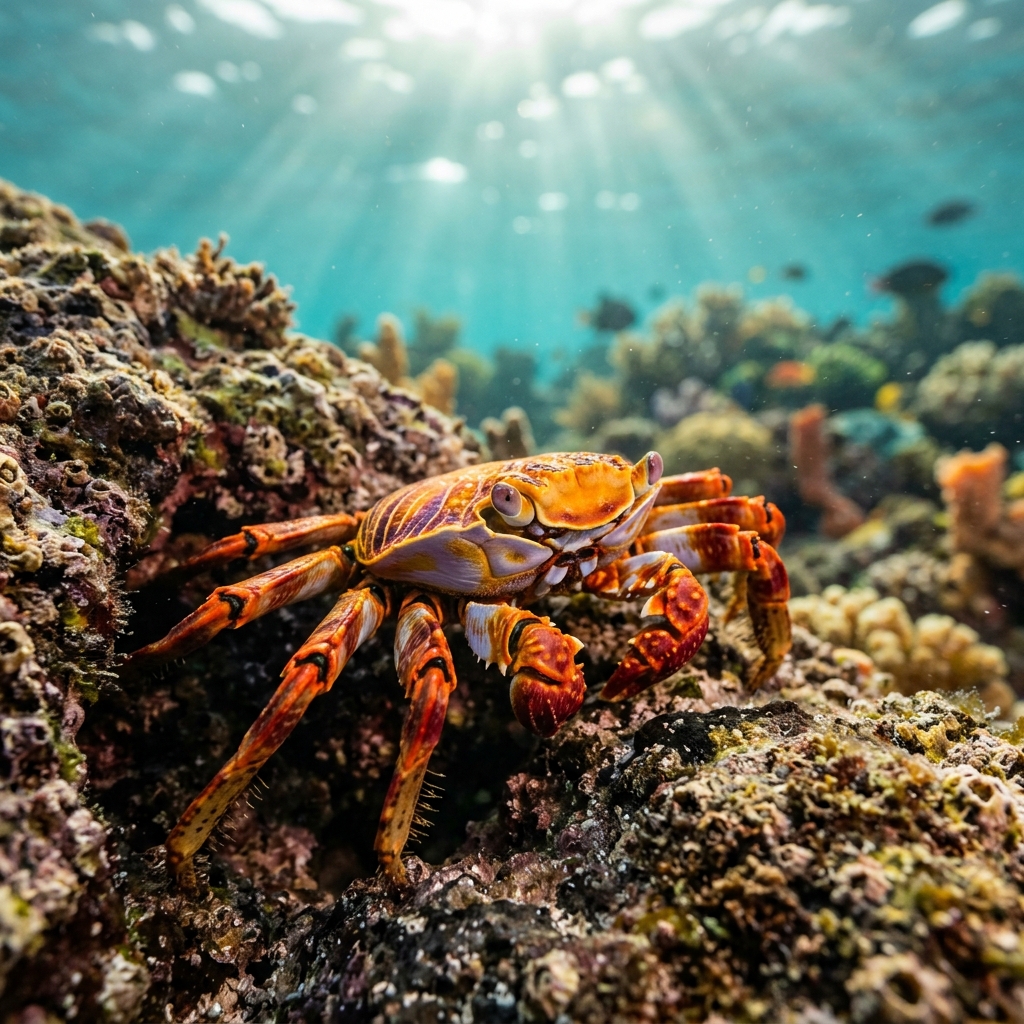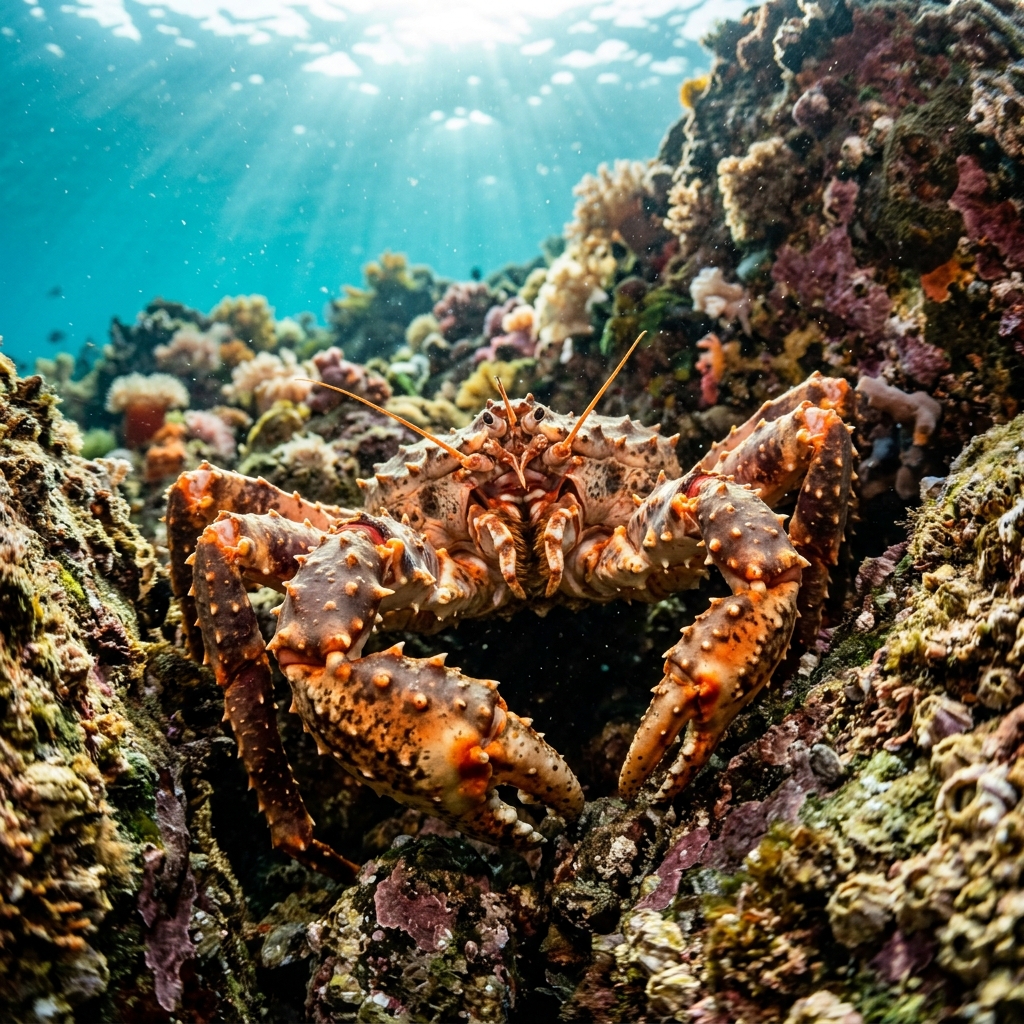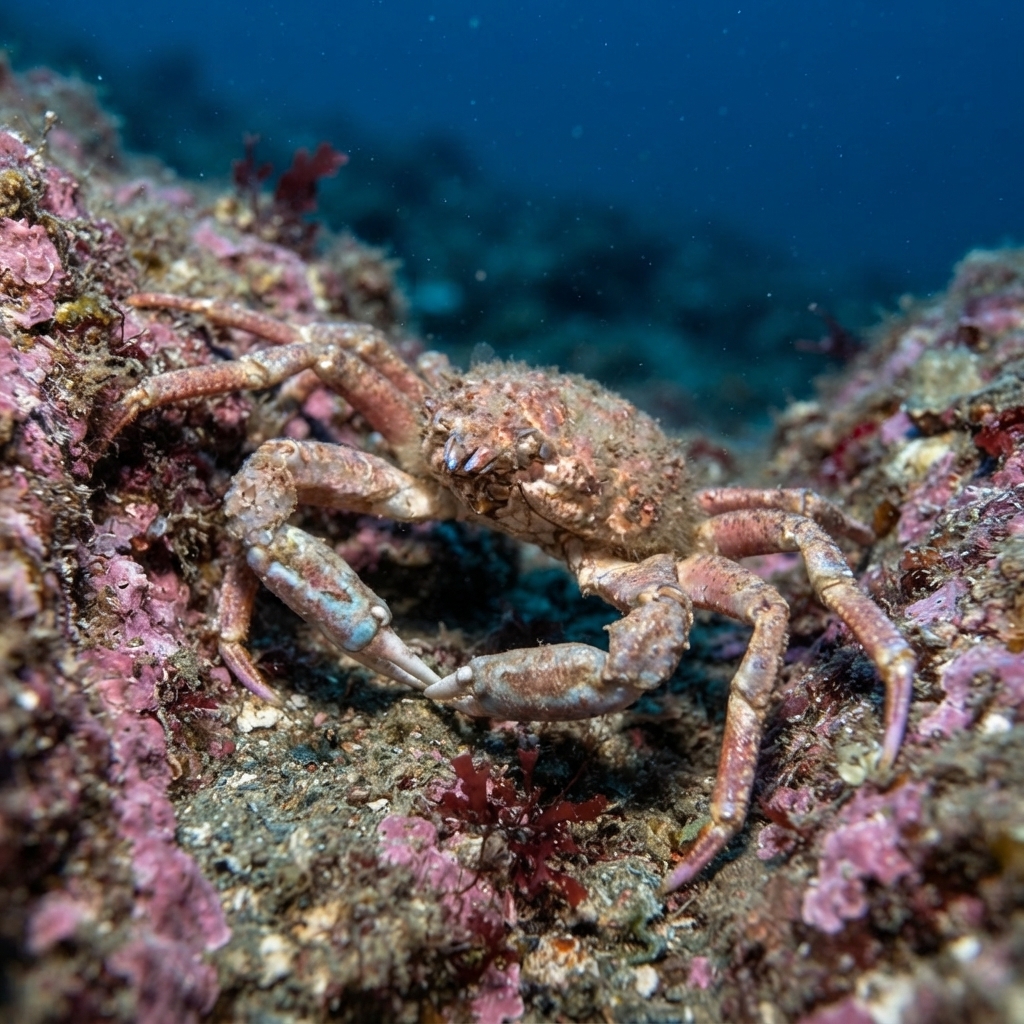
Loxorhynchus grandis
Bulky, algae-draped crab logged across California's kelp forests, from Monterey to San Diego, in cool 12-19C water year-round.
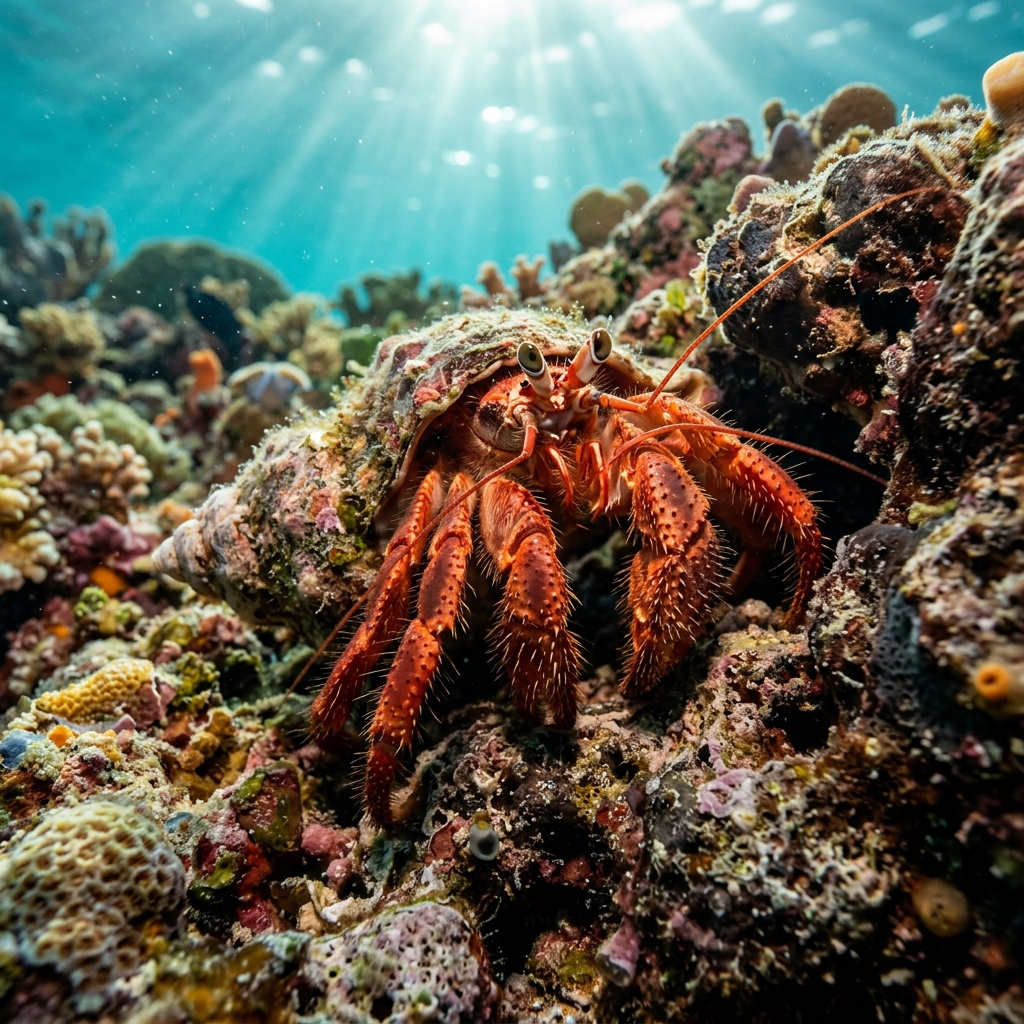
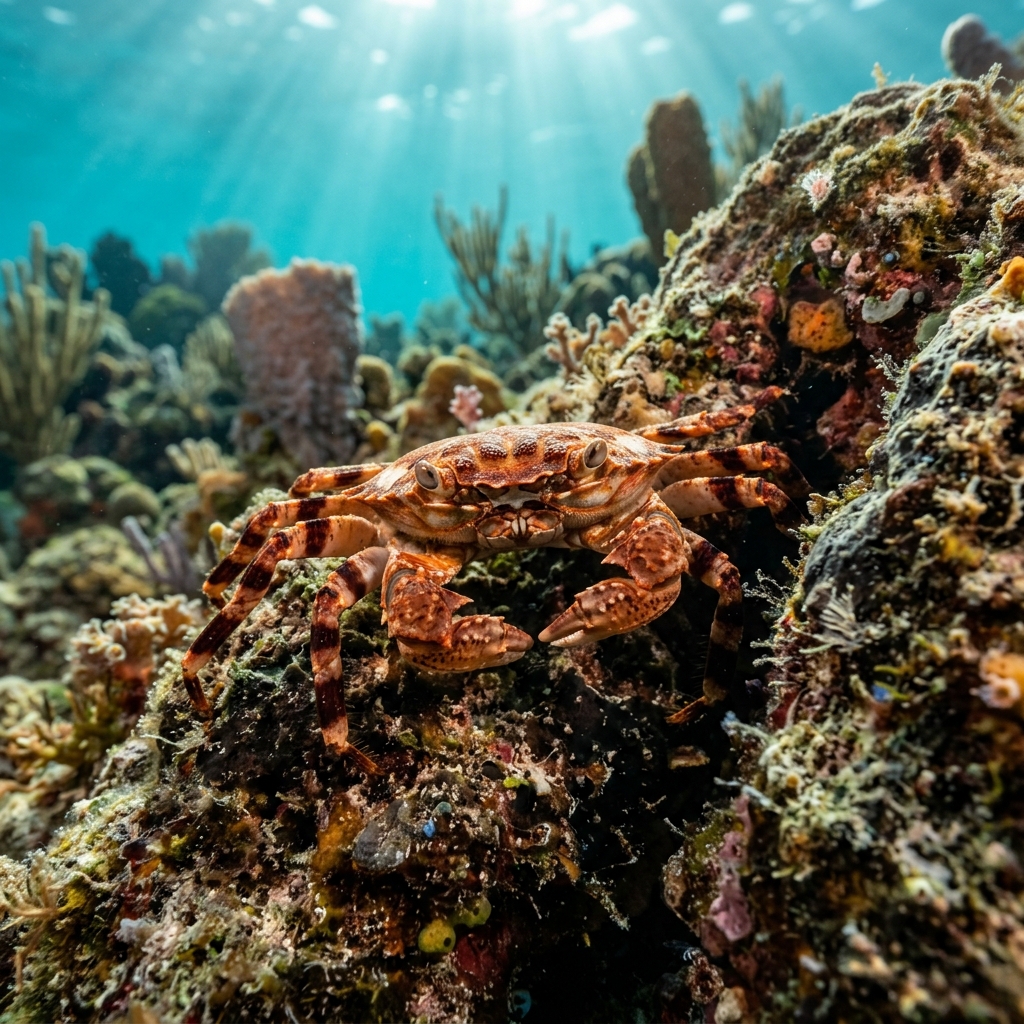
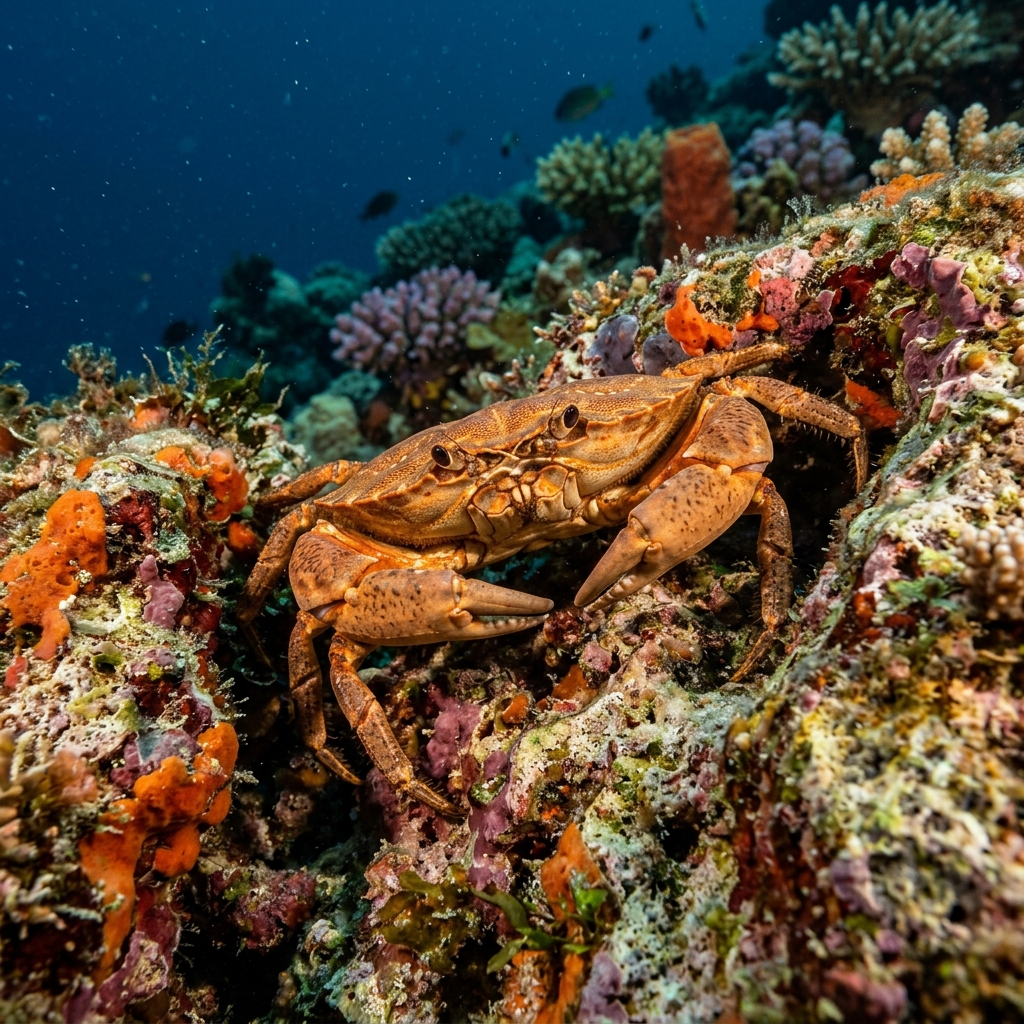
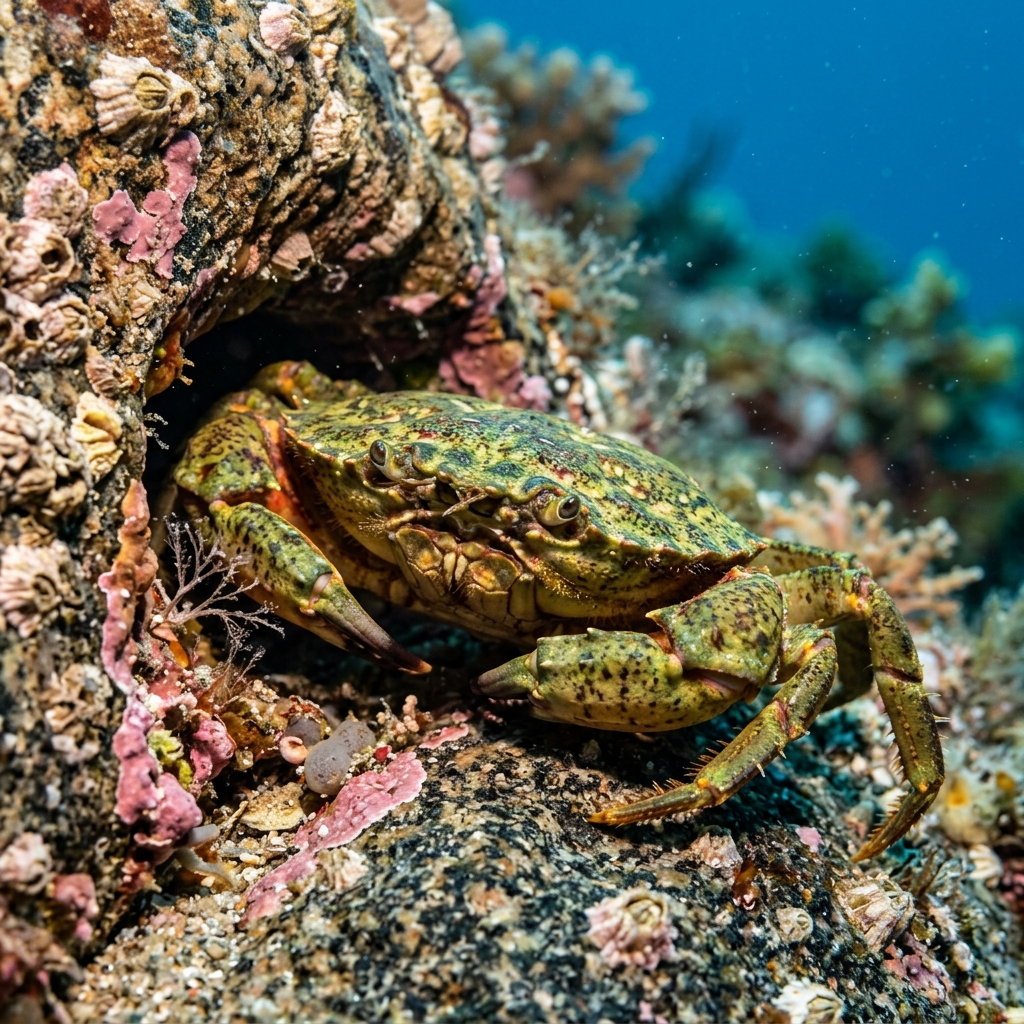
Bulky, rounded shell around 10 cm across, often so thickly coated in algae, sponge and bits of debris that it looks like a lump of reef rather than an animal. Long, spindly walking legs and a pair of oversized pincers protrude from under the disguised carapace. Look for the shape first: a mossy dome sitting still on rock or sand, legs the giveaway once you look closer.
Spends most of daylight hours sitting motionless on rock, sand or amongst kelp holdfasts, relying on its algae-covered shell to disappear into the background rather than fleeing. Divers who log it usually describe finding one by accident, often at the base of a rock wall or wedged into a crevice rather than out foraging in the open. It shows little reaction to a diver's approach and will simply hold still, trusting its camouflage over any attempt to escape.
Sheep crabs deliberately plant living algae and small invertebrates onto hooked bristles on their shell, growing a personal camouflage garden that thickens as the crab ages, so bigger individuals often look more like a rock than a crab.
No clear seasonal pattern shows up in the sightings, and it turns up year-round in the 12.3 to 18.9C water typical of California's kelp forests. Cooler months may bring slightly better visibility for spotting one tucked into the rocks, but there is no data pointing to a specific peak season.
Almost every logged sighting comes from California, with the kelp forests and rocky reefs along the state making up the core range; Monterey and San Diego-area sites are typical. A single confirmed sighting from Baja California, Mexico, shows the range extends south along similar coastline.
Mapping where Sheep Crab is logged…
California is by far the strongest region, with sightings spread across kelp forest and rocky reef sites from Monterey down to San Diego. There is also at least one confirmed sighting from Baja California, Mexico, suggesting the range continues south.
There is no strong seasonal signal in the sightings, so it is considered a year-round find. It lives in cool water between roughly 12 and 19C, which matches California's kelp forest conditions most of the year.
Look for a rounded, roughly 10 cm shell so covered in algae and debris it can be mistaken for a rock. Long spindly legs and oversized front pincers give it away once you spot movement or look closely at a mossy lump on the reef.
Typical shell width is around 10 cm, making it one of the larger crabs found in California's rocky reef and kelp forest habitats.
No, they pose no danger to divers. They sit still relying on camouflage rather than defending themselves aggressively, so they are safe to observe and photograph up close.
They actively grow their own camouflage, hooking living algae and small invertebrates onto bristles on their shell so the disguise thickens as the crab ages.
Site and sighting data is aggregated from diver logs, iNaturalist and GBIF. For taxonomy and conservation status:
European Green Crab
2,469 sites