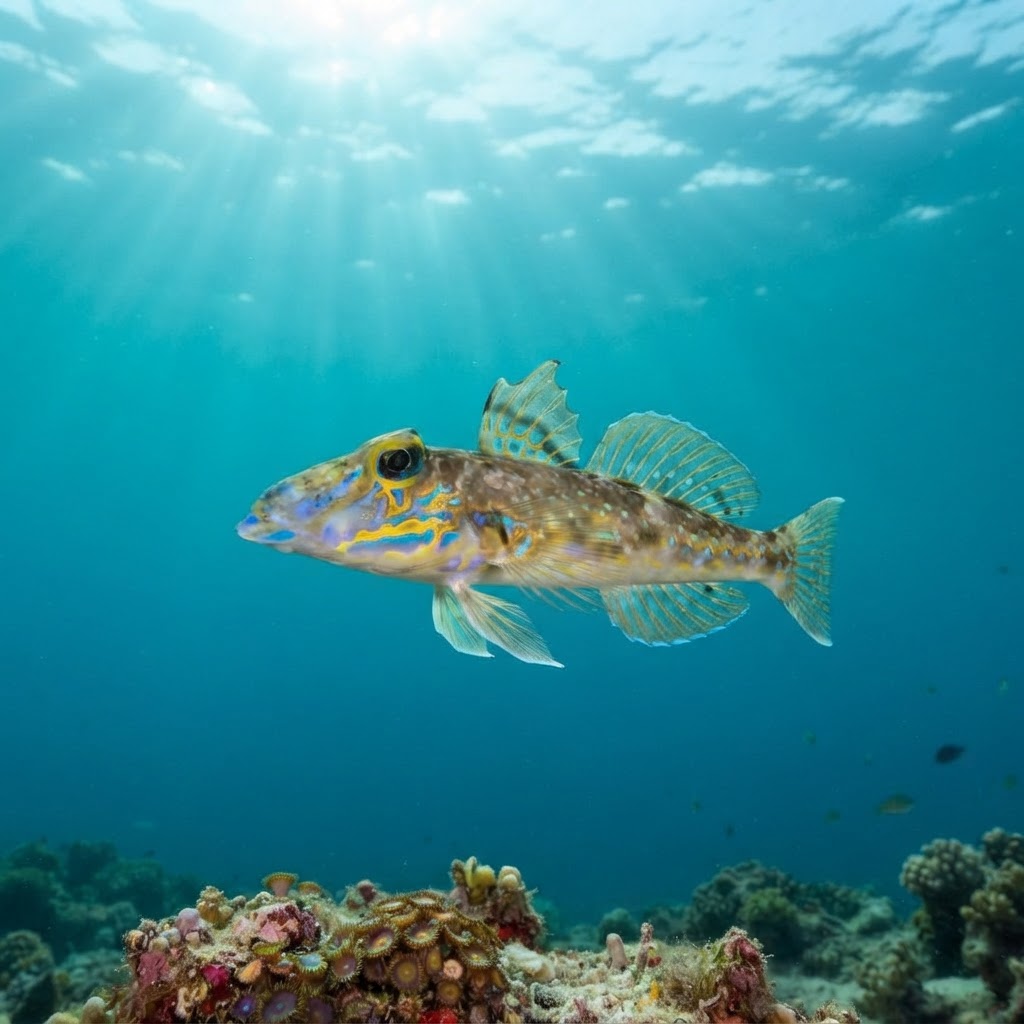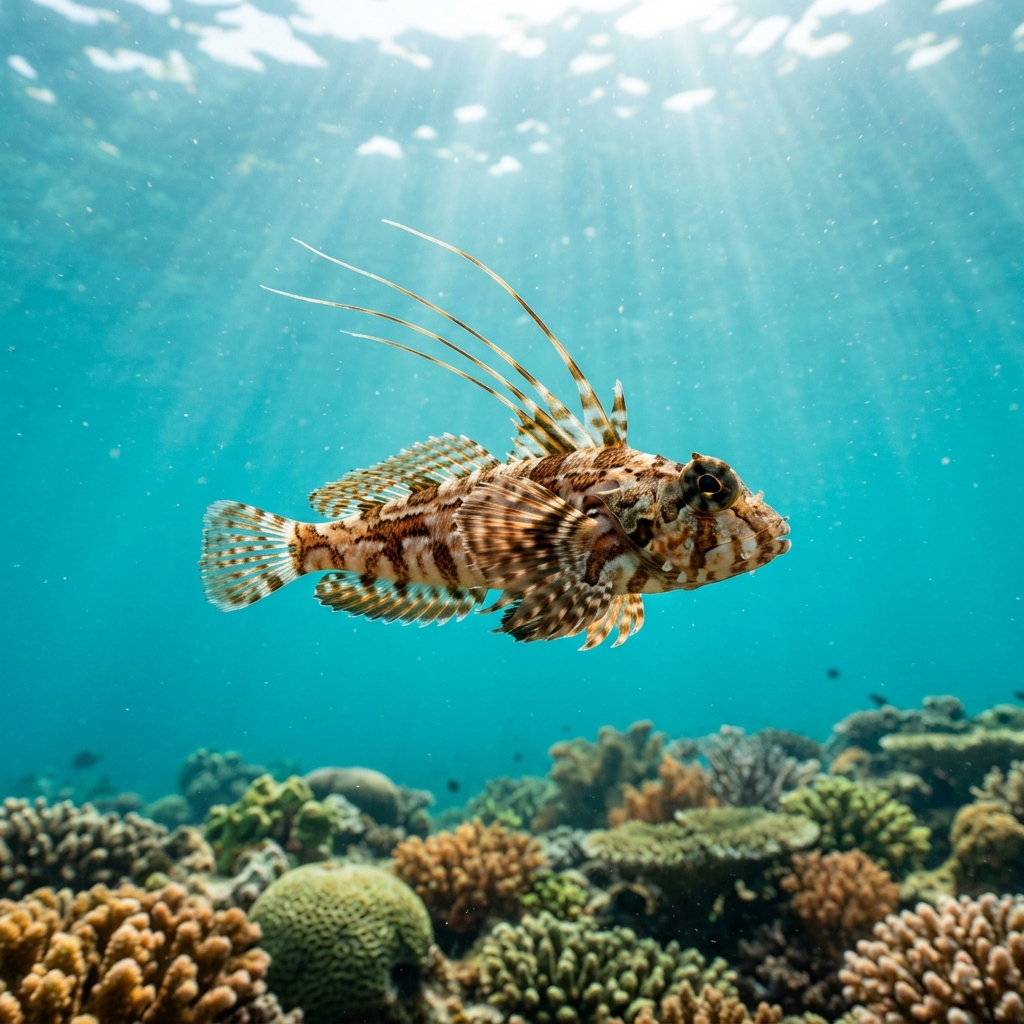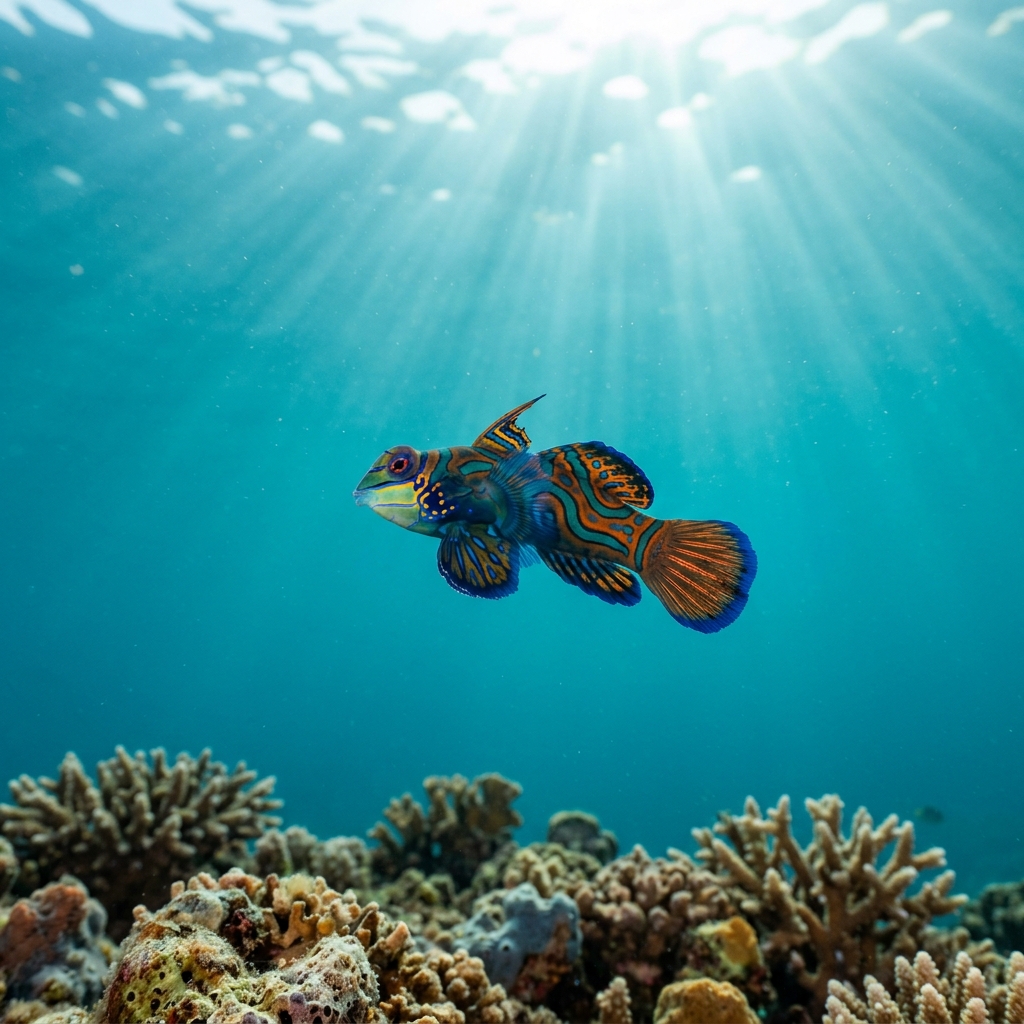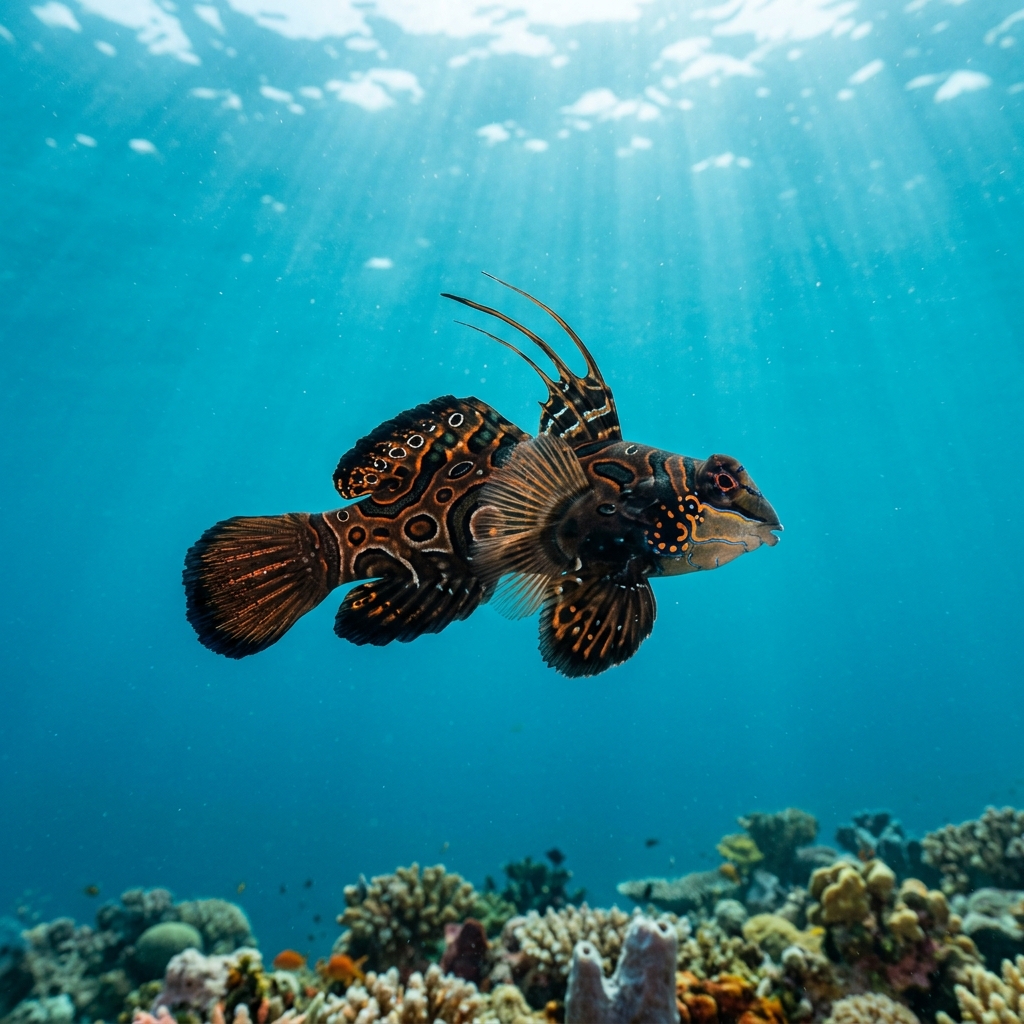
Synchiropus sechellensis
A tiny reef dweller most often logged along Turkey's Turquoise Coast, in water around 23-28C, year-round if you look close to the seabed.
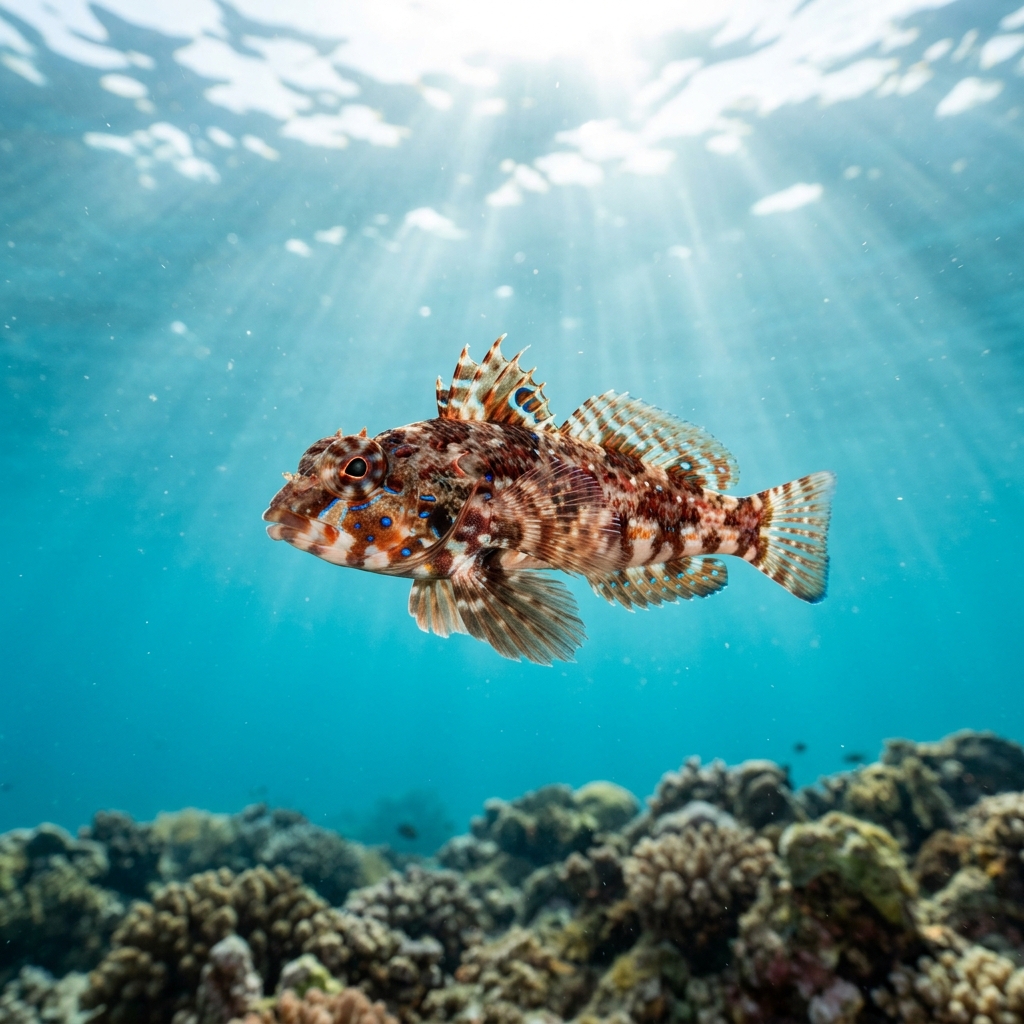
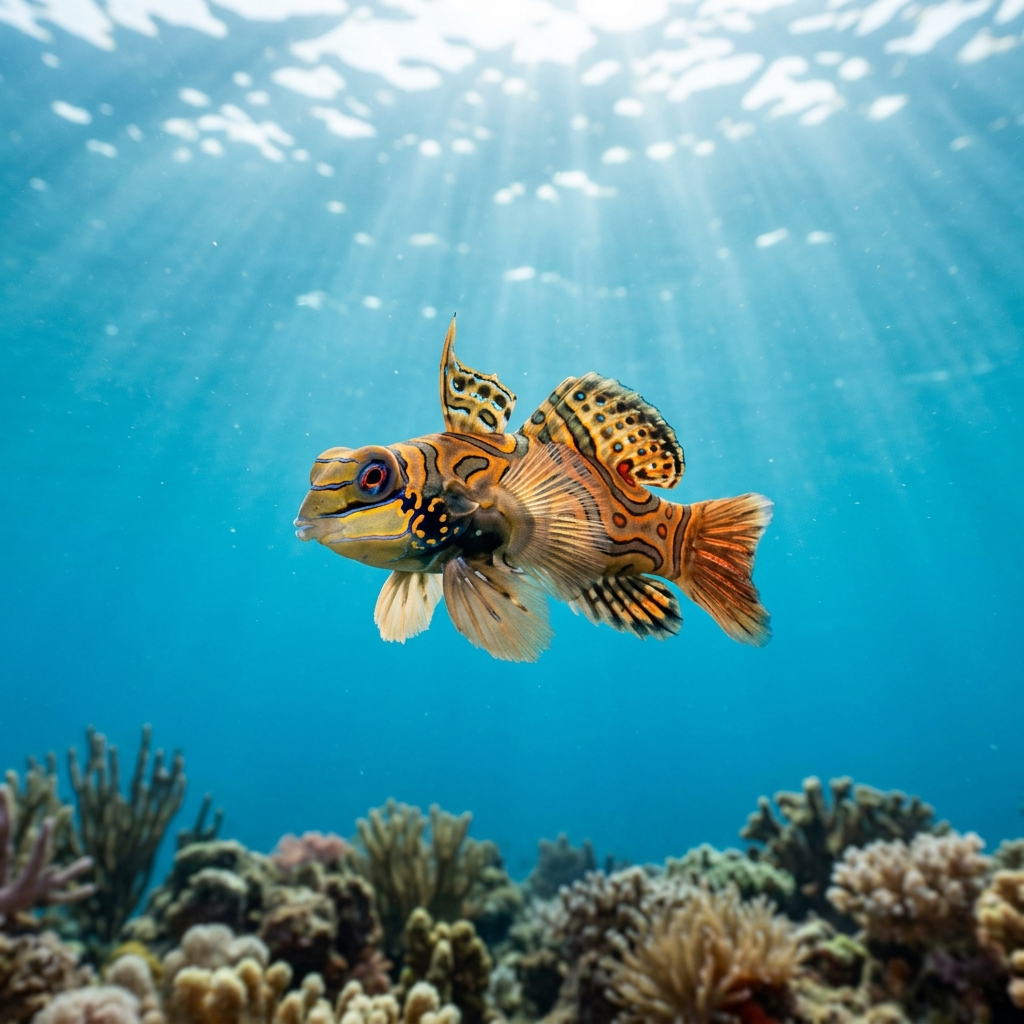
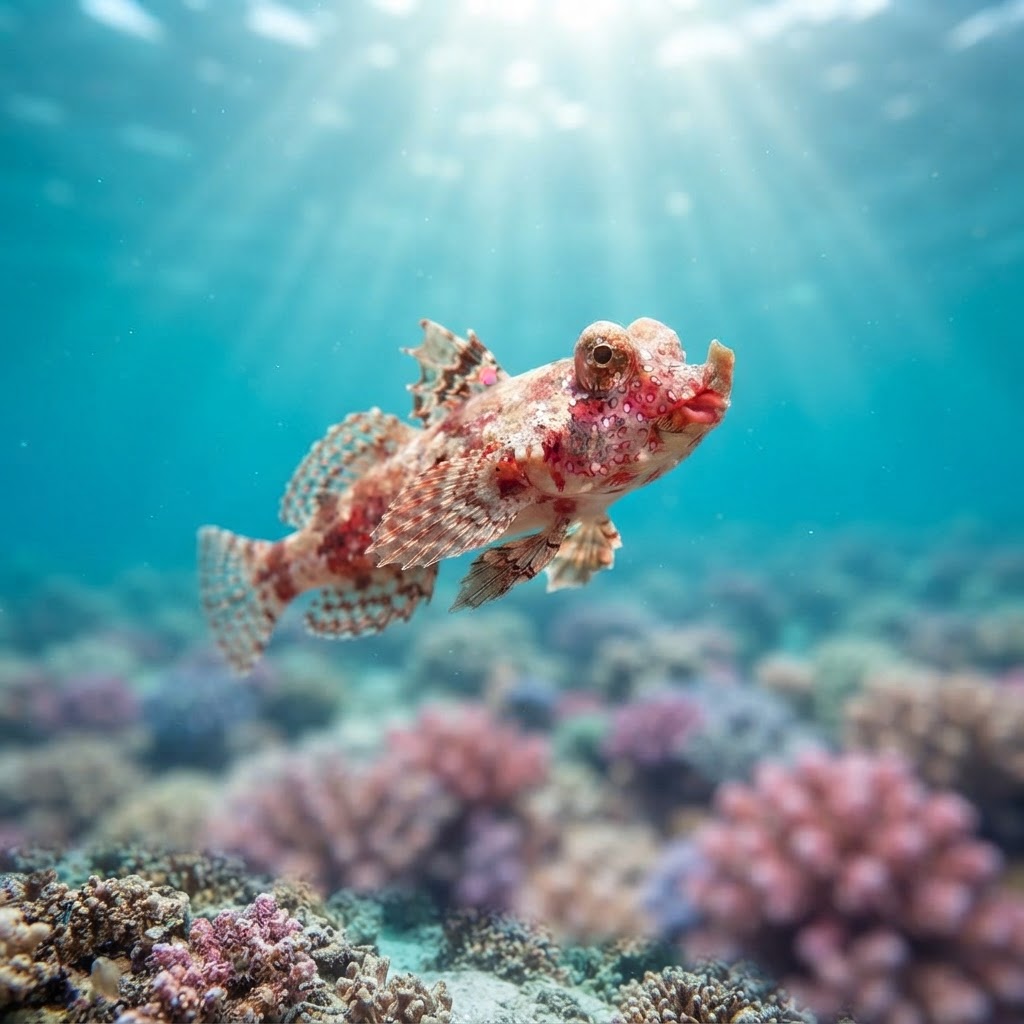
At only about 3 cm long, this dragonet is easy to swim straight past unless you slow down and scan sand patches and rubble near the reef base. Look for a mottled brown, tan and pale patterning that breaks up its outline against the seabed, a rounded head, and a low-slung body that hugs the bottom rather than swimming in open water. It moves in short hops rather than continuous swimming, which is often the first thing that catches a diver's eye.
Divers typically spot it resting or hopping short distances across sand and rubble patches near the base of reef structure, rather than out swimming over open ground. It tends to stay low and still when approached, relying on its broken-up colouring to blend into the substrate rather than bolting for cover. Slow, close looks along the sand at the reef's edge are more productive than scanning the water column.
Like other dragonets, it likely feeds by picking small invertebrates out of sand and rubble one mouthful at a time, which is why sightings cluster right at the sand-reef interface rather than on open reef face.
Sightings don't show a clear seasonal pattern, and with a comfortable range of 23.3 to 28.2C, it's a reasonable year-round find on Turquoise Coast and Dodecanese dive sites during the local dive season.
Reef neighbours a diver could mistake it for. Use the identification notes above to tell them apart.
This is a Mediterranean sighting rather than an Indo-Pacific one despite the name, most commonly logged along Turkey's Turquoise Coast, with a smaller but reliable presence in Greece's Dodecanese islands. Divers searching sandy patches and rubble zones near reef edges in these two regions have the best shot at finding it.
Mapping where Seychelles Dragonet is logged…
It's most reliably logged along Turkey's Turquoise Coast, with additional sightings in Greece's Dodecanese islands. Look on sand and rubble patches near the base of the reef rather than on open coral.
There's no strong seasonal signal in the sighting data, so it's a reasonable year-round target in water between 23.3 and 28.2C on Turquoise Coast and Dodecanese dive sites.
Look for a tiny, roughly 3 cm fish with mottled brown and tan patterning resting low on sand or rubble near the reef edge. It moves in short hops rather than swimming steadily, which helps separate it from similar small bottom-dwelling fish.
They stay small, typically around 3 cm long, which is part of why they're logged as an uncommon sighting even at sites where they're present.
No, they pose no danger to divers. They're small, sedentary bottom-dwellers that rely on camouflage rather than any defensive behaviour toward divers.
Site and sighting data is aggregated from diver logs, iNaturalist and GBIF. For taxonomy and conservation status:
Starry Dragonet
66 sites