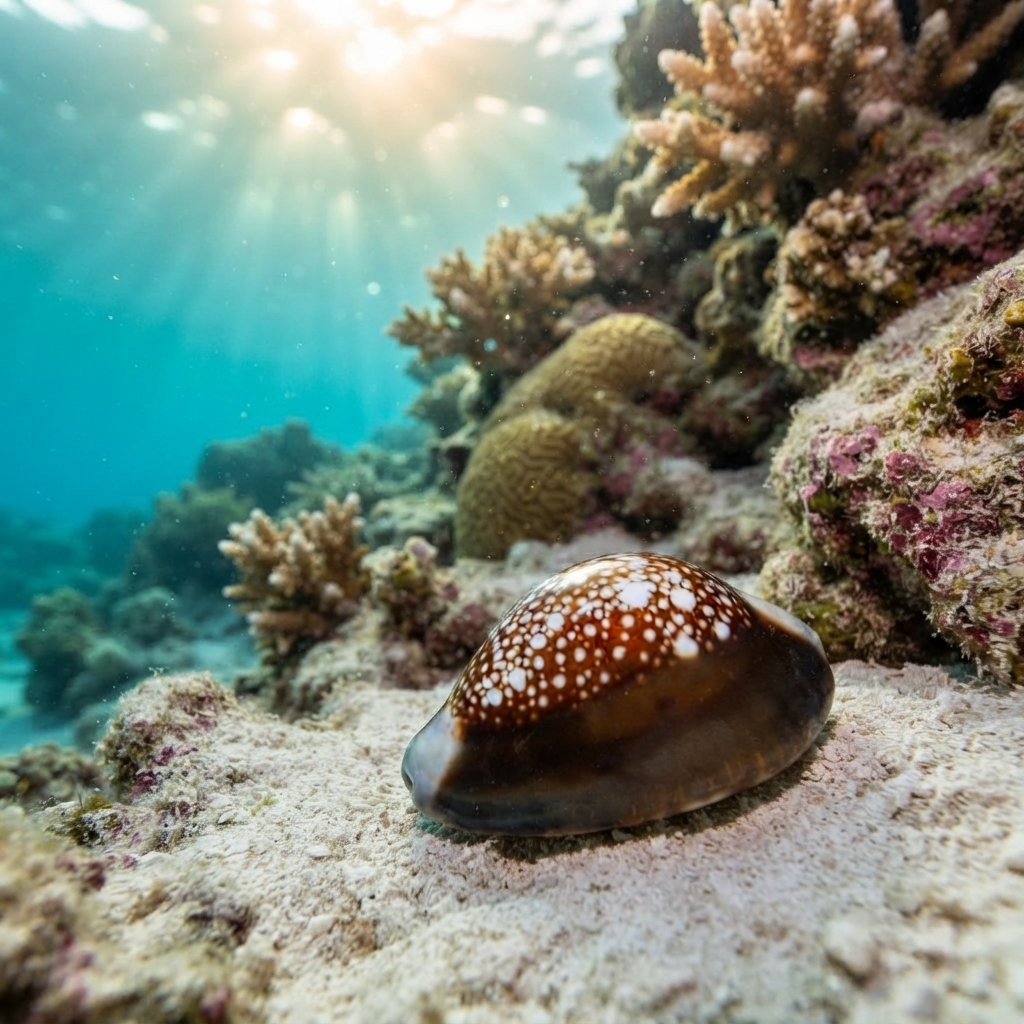
Monetaria caputserpentis
Glossy, dark-brown cowrie logged on reef flats from Okinawa to Queensland, most often turned up at night hiding under rubble.
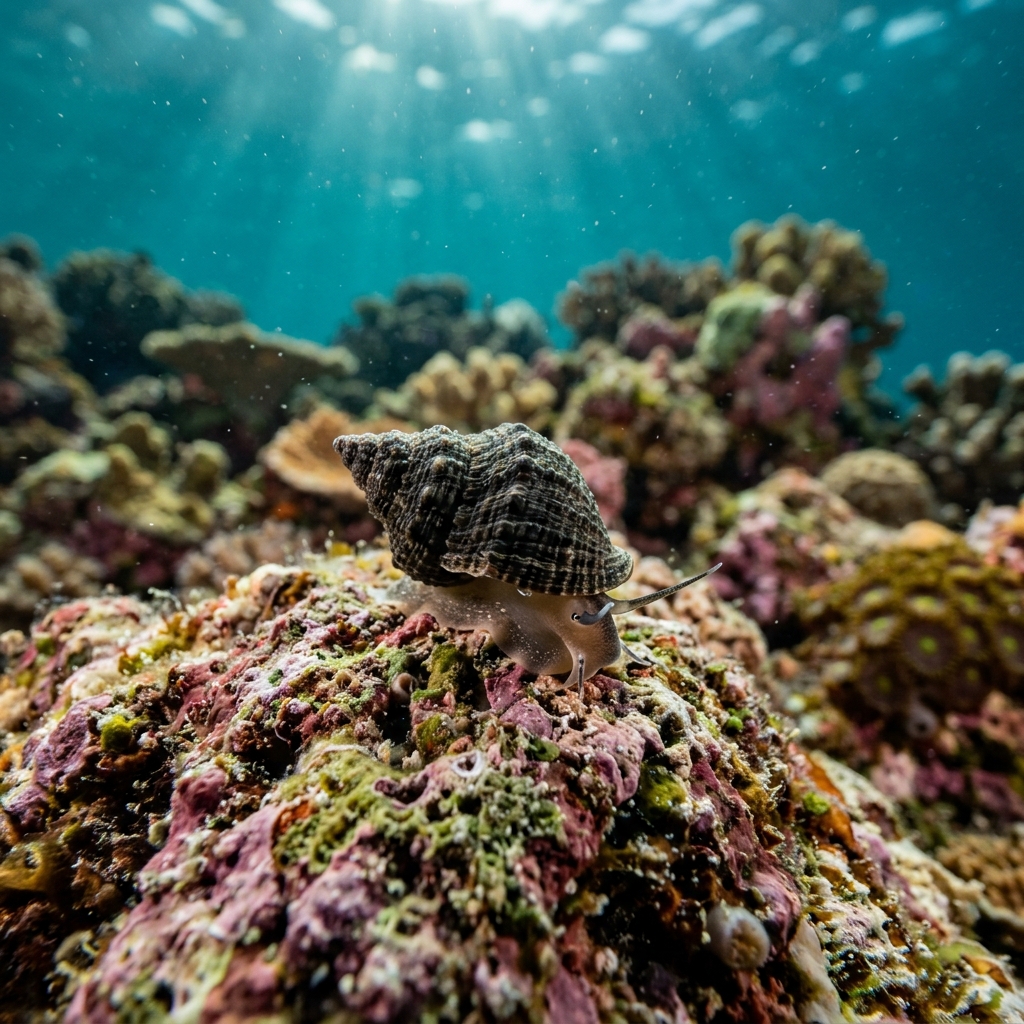
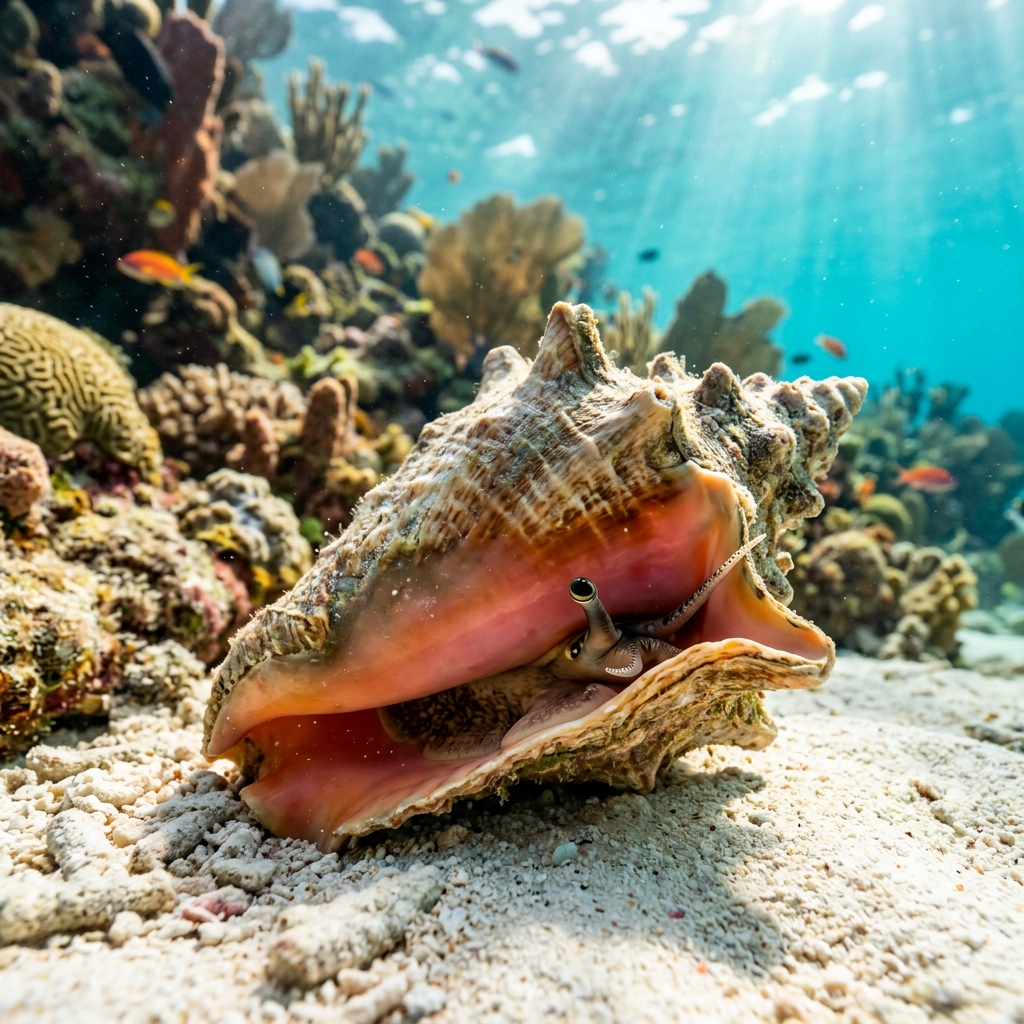
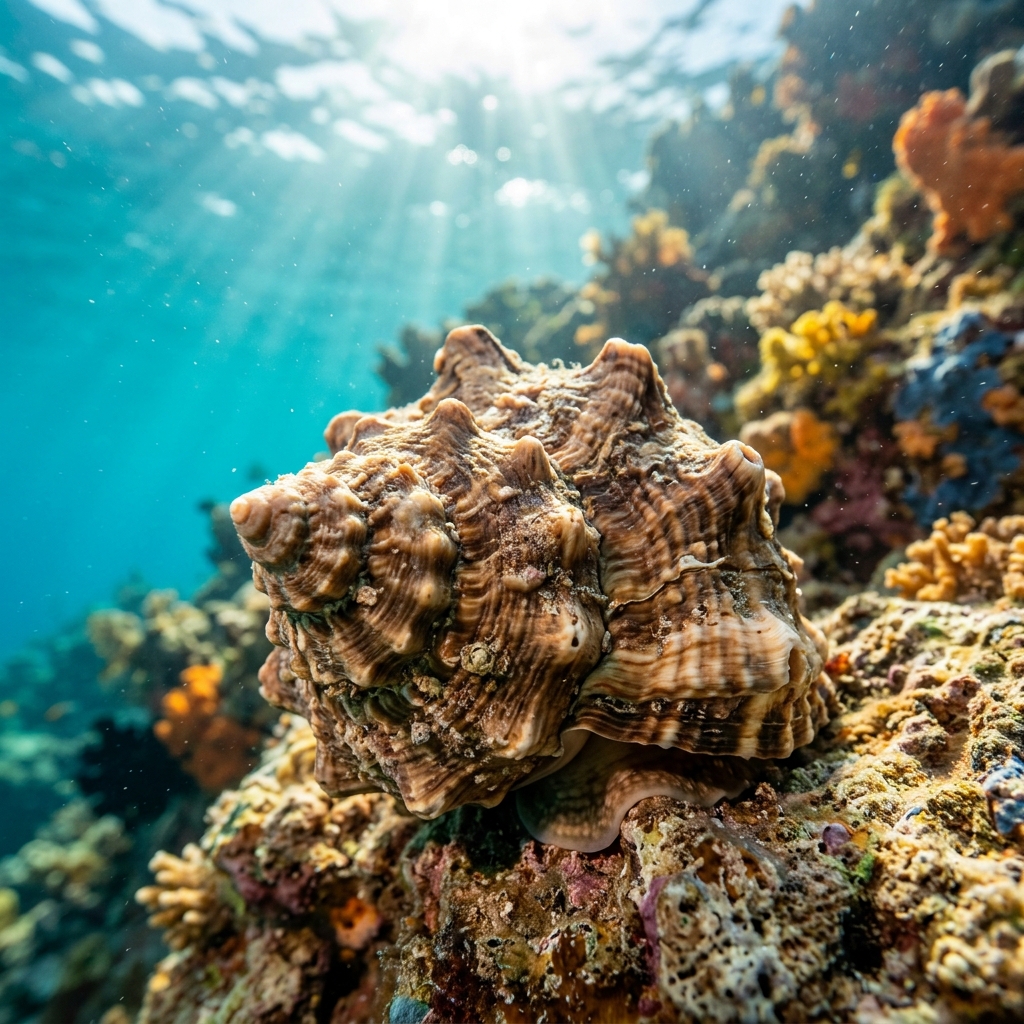
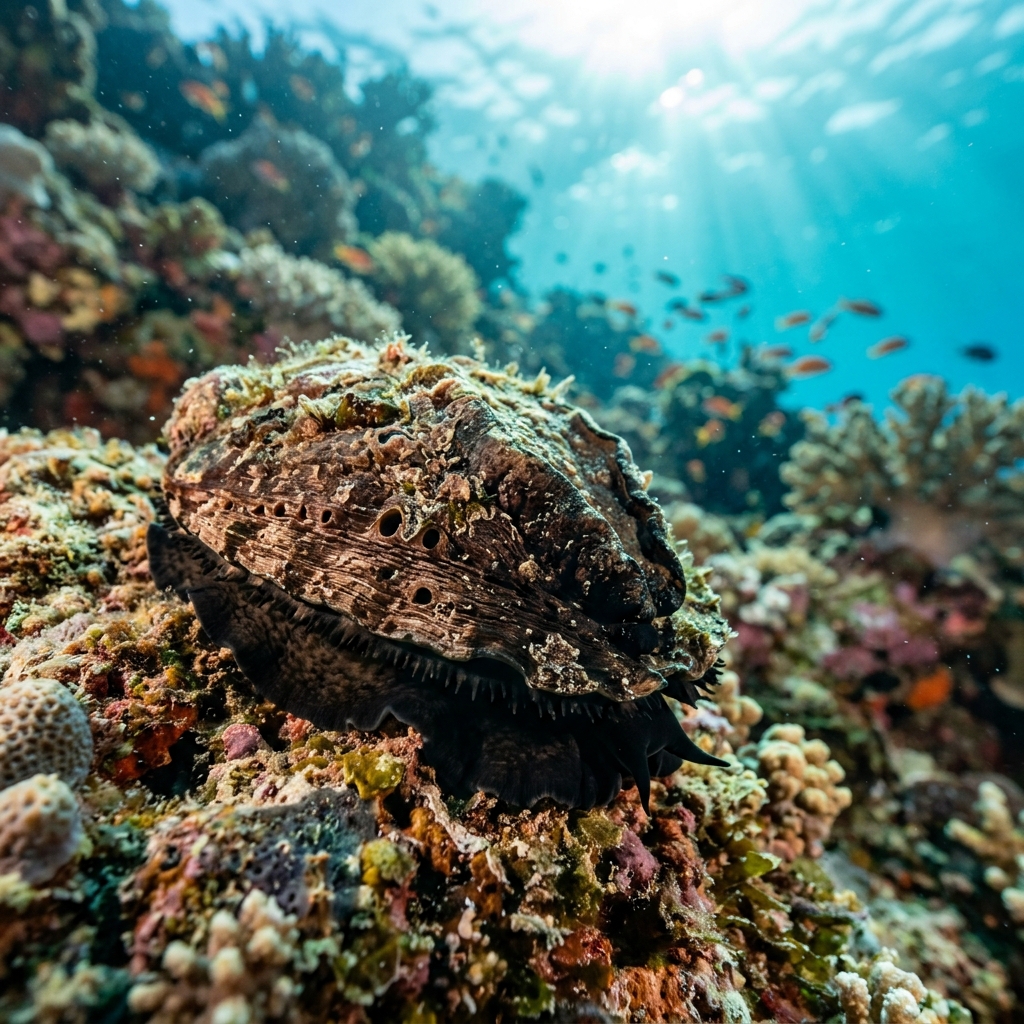
Small, glossy oval shell with a smooth porcelain-like sheen, typically dark brown to blackish with a paler, mottled band running down the centre of the back. The underside is white to pale, and the shell's mantle (the fleshy tissue that can wrap over it) may show fine dark speckling when the animal is active. Look for it tucked into crevices or under rubble by day, since the shell alone gives it away against most reef backgrounds.
Spends daylight hours wedged under coral rubble, in crevices or beneath ledges, which is why most divers find it by deliberately checking these spots rather than spotting it out in the open. It is slow-moving and shows no reaction to divers beyond withdrawing its mantle if disturbed. Most logs describe it as an uncommon find, so treat any sighting as a nice bit of reef detective work rather than an expected tick.
Like other cowries, it feeds by grazing algae and detritus off rock and rubble surfaces at night, retracting its fleshy mantle back over the shell by day to keep that glossy surface polished and protected.
No clear seasonal pattern shows up in the sighting data, and with a comfortable range of roughly 19.6 to 29.5 C it turns up on these reefs year-round rather than in a particular window.
Most reliably logged in Okinawa and the Ryukyu Islands in Japan, and across Queensland and New South Wales in Australia, with a further strong showing at Orchid Island and Green Island in Taiwan. Sri Lanka's Hikkaduwa and the Society Islands in French Polynesia also turn up regular sightings, with smaller numbers reported from Western Australia, South Africa and the Cook Islands.
Mapping where Serpent's Head Cowrie is logged…
Best logged in Okinawa and the Ryukyu Islands in Japan, plus Queensland and New South Wales in Australia. Taiwan's Orchid Island and Green Island, and Hikkaduwa in Sri Lanka, are also solid spots to check rubble and crevices.
There is no strong season in the sighting data. It sits comfortably in water from about 19.6 to 29.5 C, so it is present on these reefs throughout the year.
Look for a small, glossy dark brown oval shell with a paler mottled stripe down the back and a white underside. It hides under rubble and in crevices by day, so check dark gaps rather than open sand or coral.
Most dive logs describe it as uncommon, with rare sightings more frequent than common ones. Finding one usually means deliberately searching under rubble and ledges rather than spotting it in the open.
No. It has no sting, bite or venom of concern to divers and simply withdraws its mantle if disturbed.
Site and sighting data is aggregated from diver logs, iNaturalist and GBIF. For taxonomy and conservation status:
Triton Shell
2,297 sites