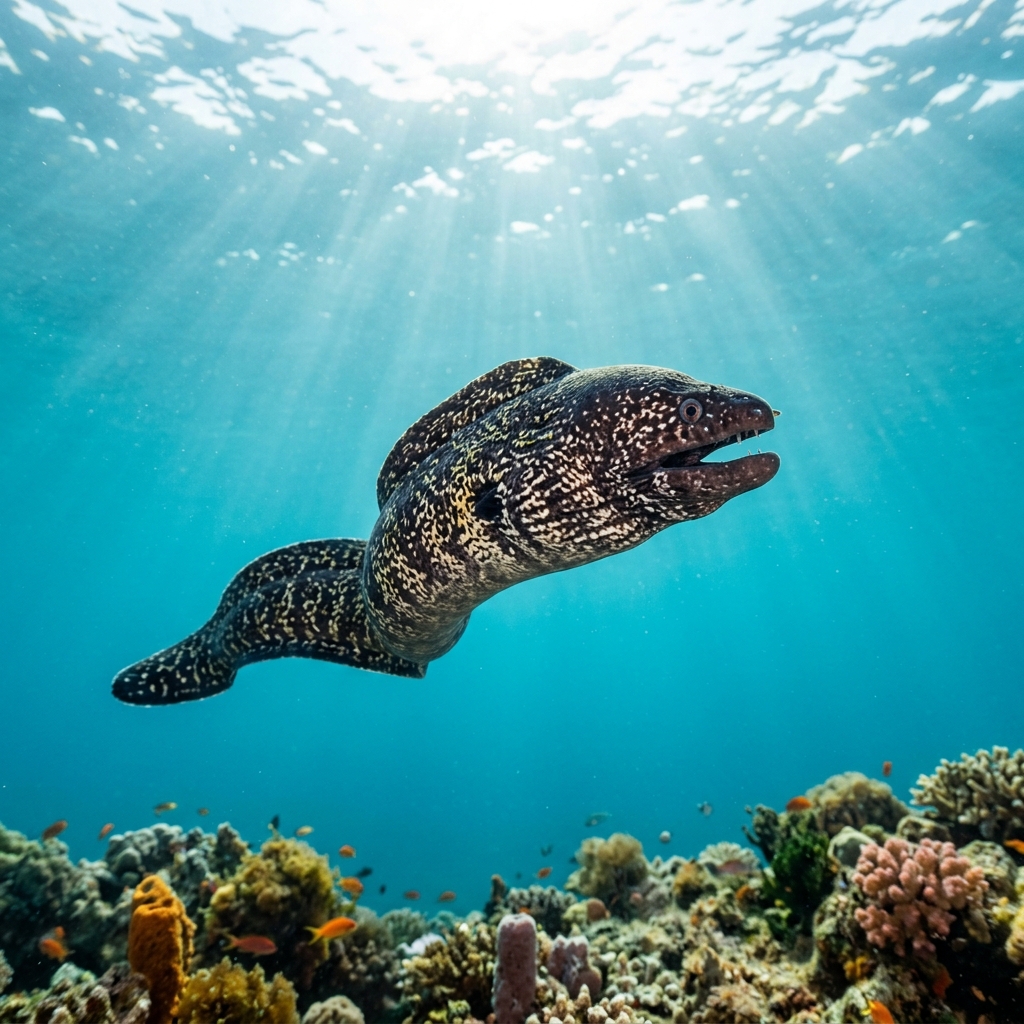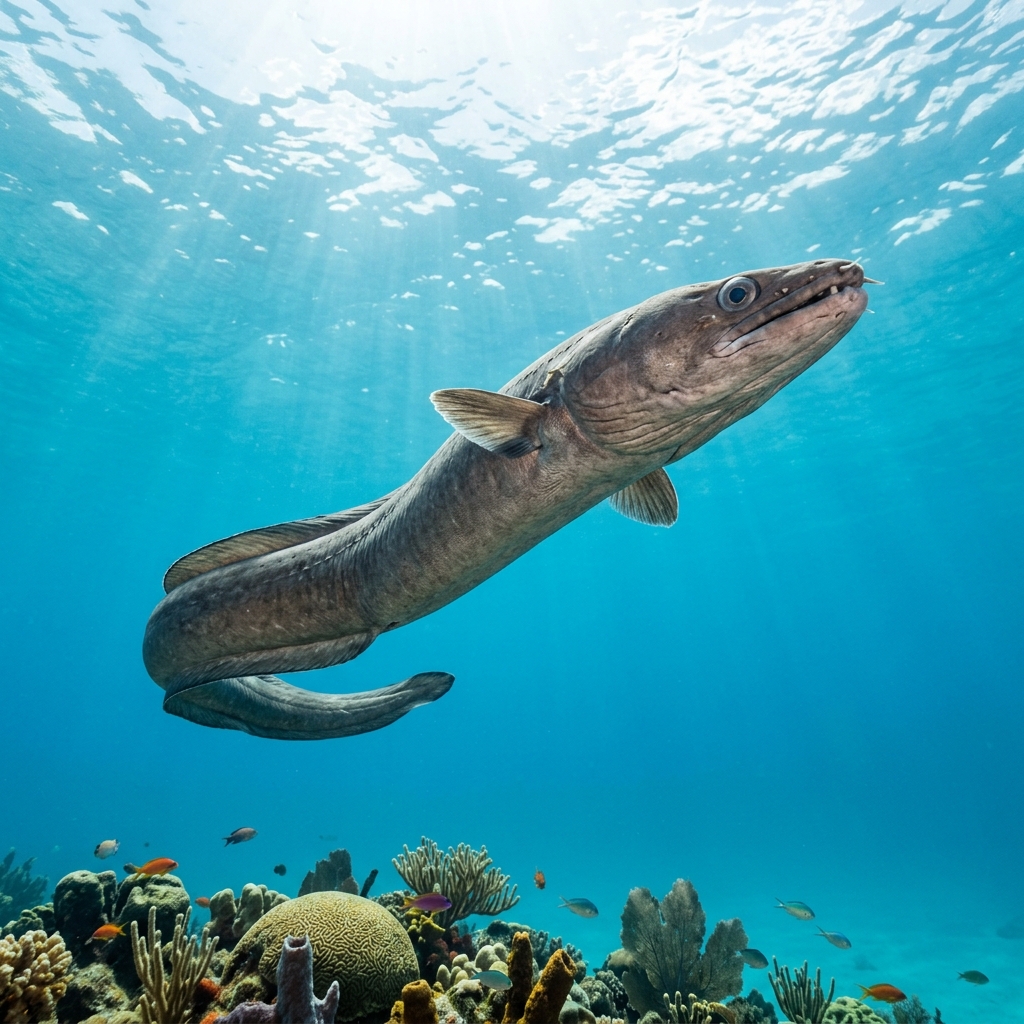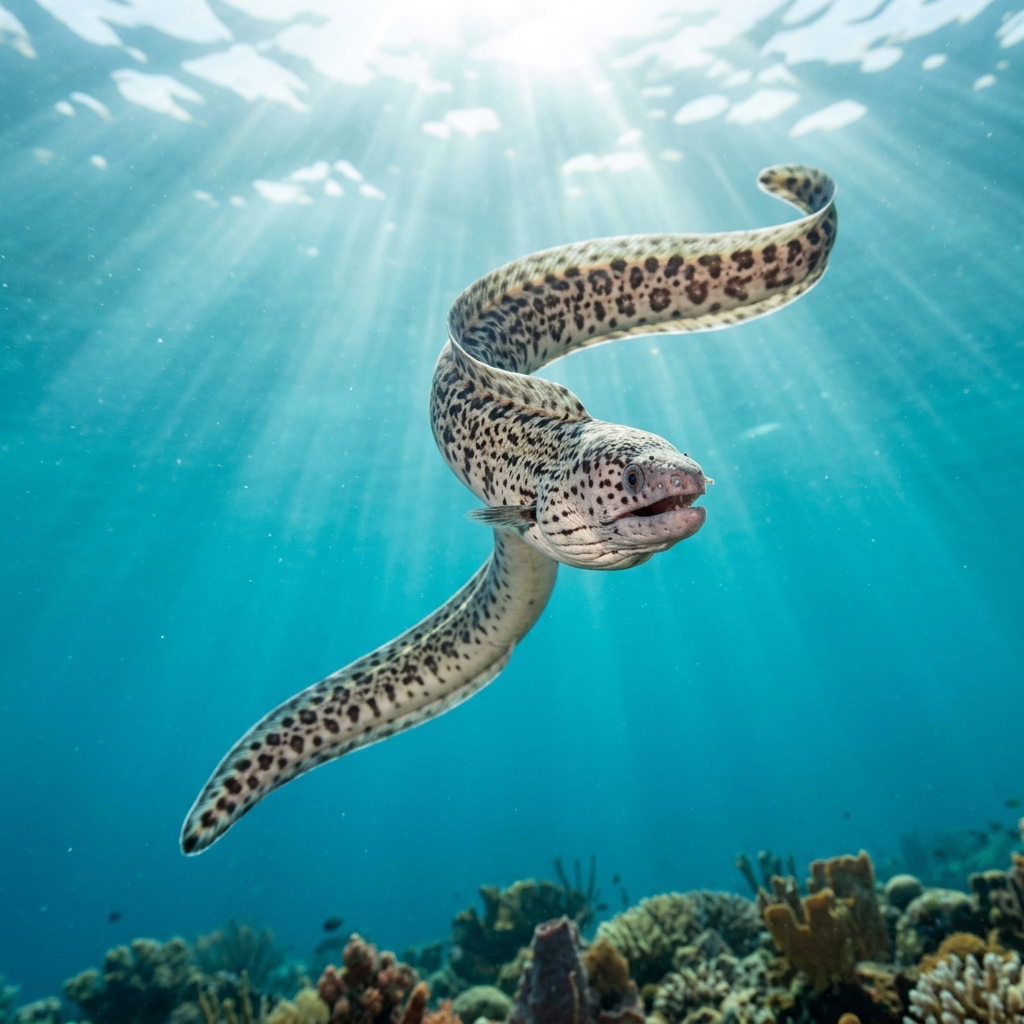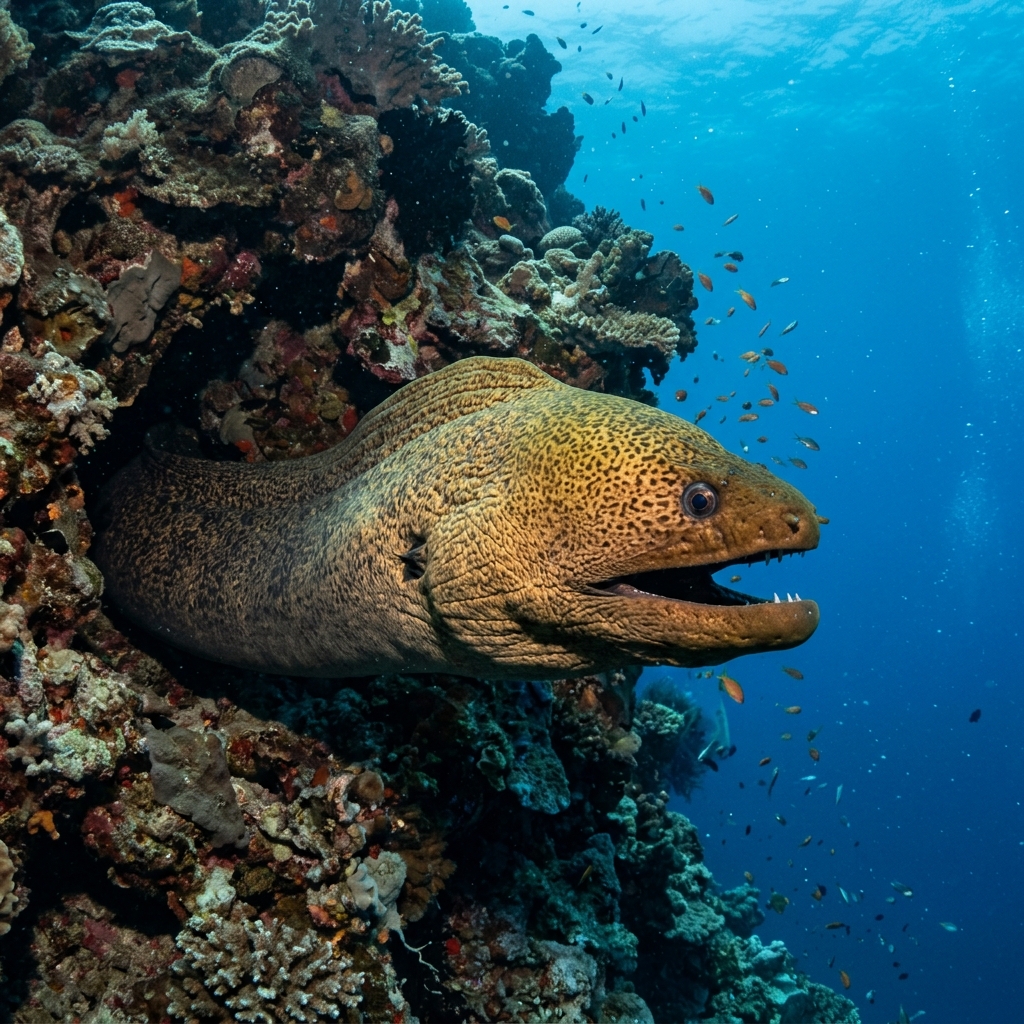
Ophisurus serpens
A thin, snake-like eel logged from the French Riviera to New Zealand, comfortable in waters from 13 to 27 C year-round.
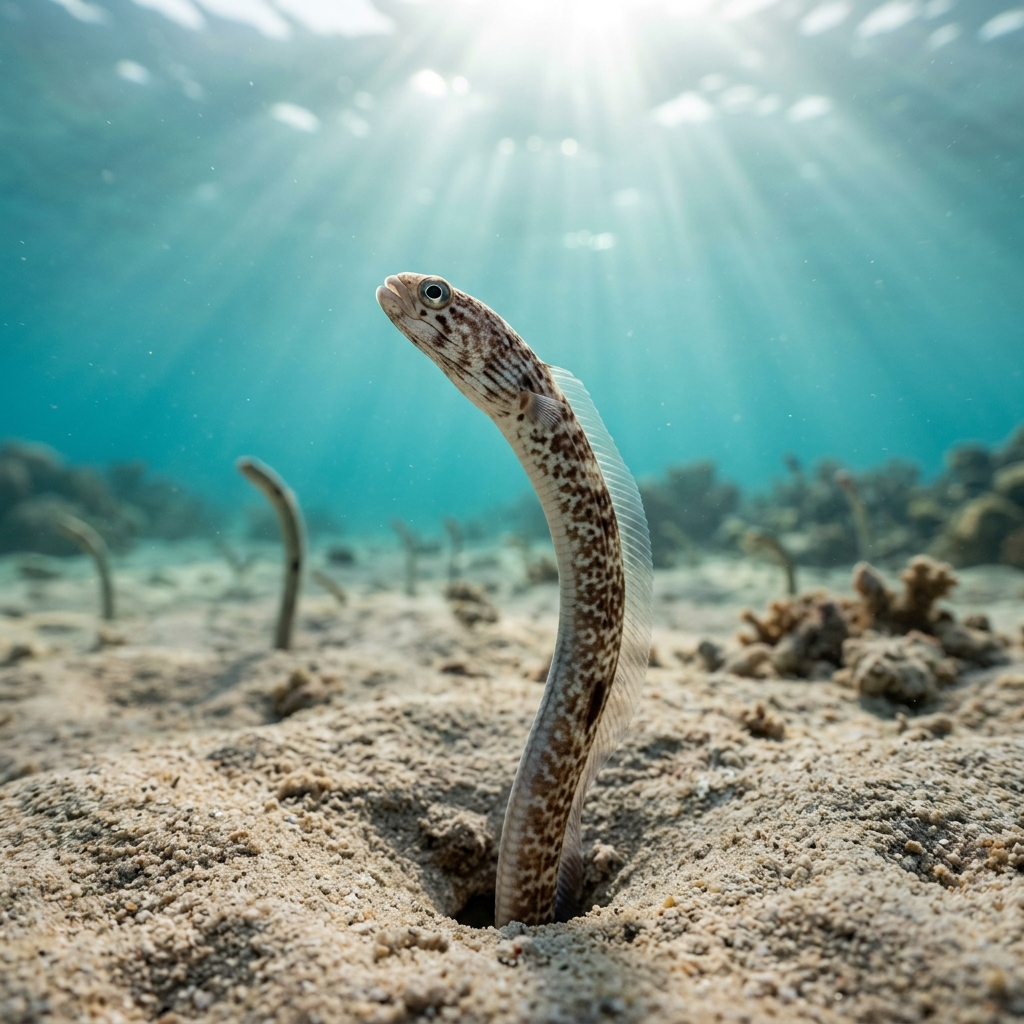
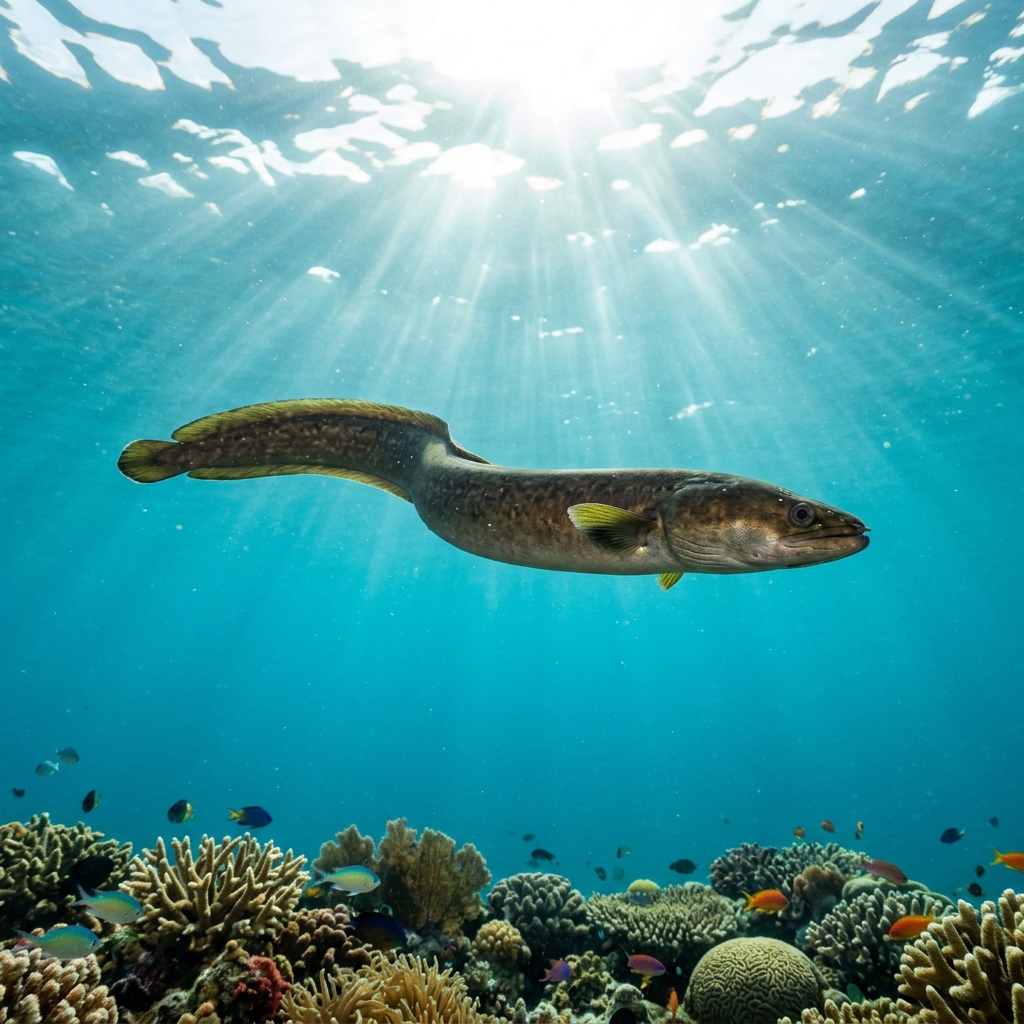
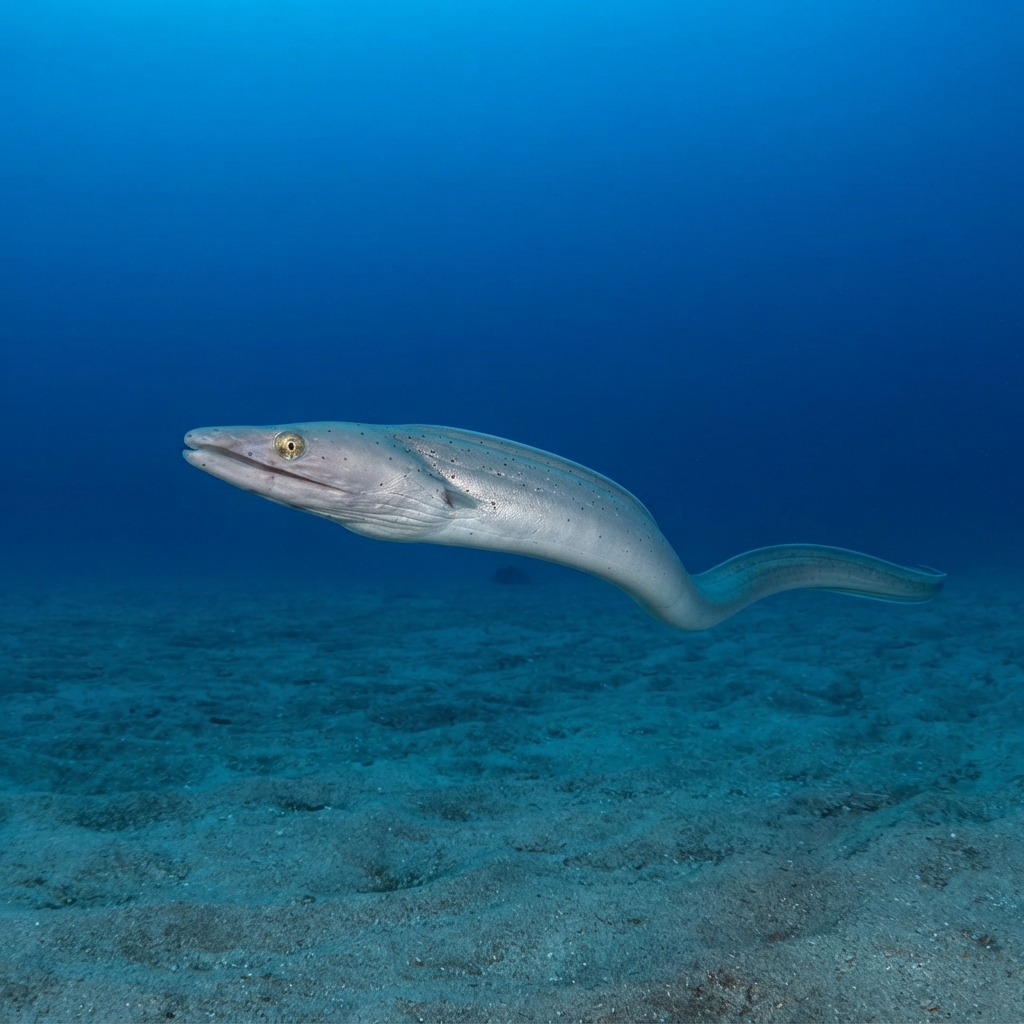
Extremely long and thin, growing to around 175 cm but with a body diameter closer to a garden hose than a typical eel, giving it a true snake-like silhouette. Colour runs yellowish to olive-brown above with a paler, almost yellow underside, and the snout is long and pointed rather than blunt like a moray's. Most sightings are of the body partly buried in sand or gravel with just the head or a stretch of body visible, so divers key on that thin, uniform, unbanded shape rather than any bold pattern.
Divers most often find it lying still with its body sunk into sand or fine gravel on flat, open bottoms rather than on reef structure itself. It is generally logged as uncommon to rare, so most encounters are a slow drift over sandy patches at the base of a reef or wall where a length of its body is exposed. It tends to hold position rather than bolt, letting a calm diver get a reasonable look before it withdraws further into the substrate.
Its long, cylindrical, scaleless body and reduced fins are built for burrowing tail-first into sand, which is why divers usually see only a partial length of it rather than the whole animal.
Sightings run year-round with no clear seasonal peak in the data, which fits a species comfortable across a wide range from about 13 to 27 C. Plan around good visibility and calm sand-diving conditions at your chosen site rather than a specific month.
Reef neighbours a diver could mistake it for. Use the identification notes above to tell them apart.
Most reliably logged in France, particularly the French Riviera and Provence and Corsica, with strong numbers also from Lazio in Italy and Andalusia and Catalonia in Spain. Outside the Mediterranean it turns up on North Island, New Zealand, and in Western Australia, so it is a realistic find on sandy patches at temperate dive sites on both sides of the world.
Mapping where Serpent Eel is logged…
It is most consistently reported along the French Riviera and Provence and Corsica in France, Lazio in Italy, and Andalusia and Catalonia in Spain, with further sightings on North Island, New Zealand, and in Western Australia.
There is no strong seasonal pattern in sightings, and it tolerates a wide temperature range from about 13 to 27 C, so it can turn up on sandy dive sites at any time of year.
Look for a very thin, snake-like body, yellowish to olive-brown above and pale below, with a pointed snout, usually seen partly buried in sand rather than swimming freely in open water.
They reach around 175 cm in length but stay slim throughout, which is why the overall impression underwater is more of a long thin rope than a bulky eel.
No, they are not considered dangerous to divers and typically stay low to the seabed, retreating into sand rather than approaching or reacting aggressively to divers nearby.
Rather than sheltering in reef crevices like most eels, it buries itself tail-first into sand or gravel on open, flat seabed, often leaving just its head or part of its body exposed.
Site and sighting data is aggregated from diver logs, iNaturalist and GBIF. For taxonomy and conservation status:
Garden Eel
2,448 sites