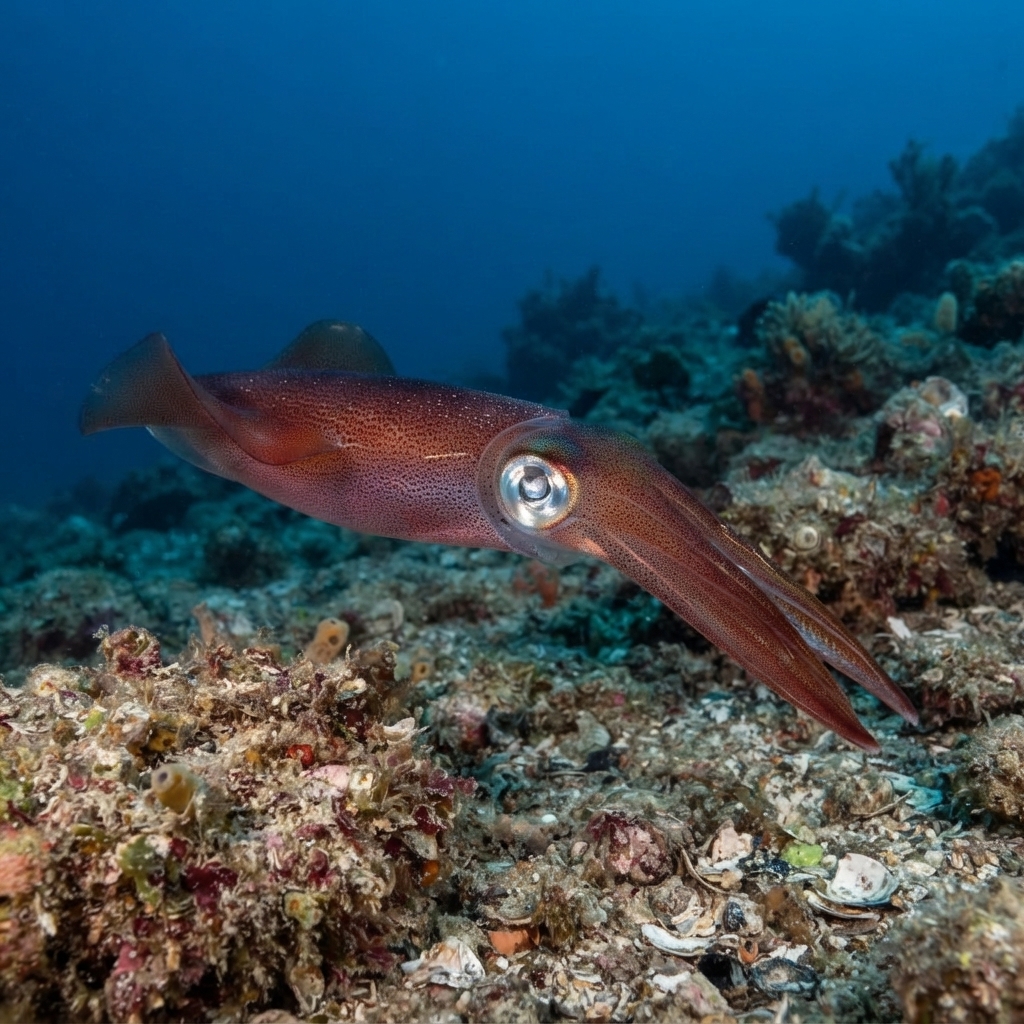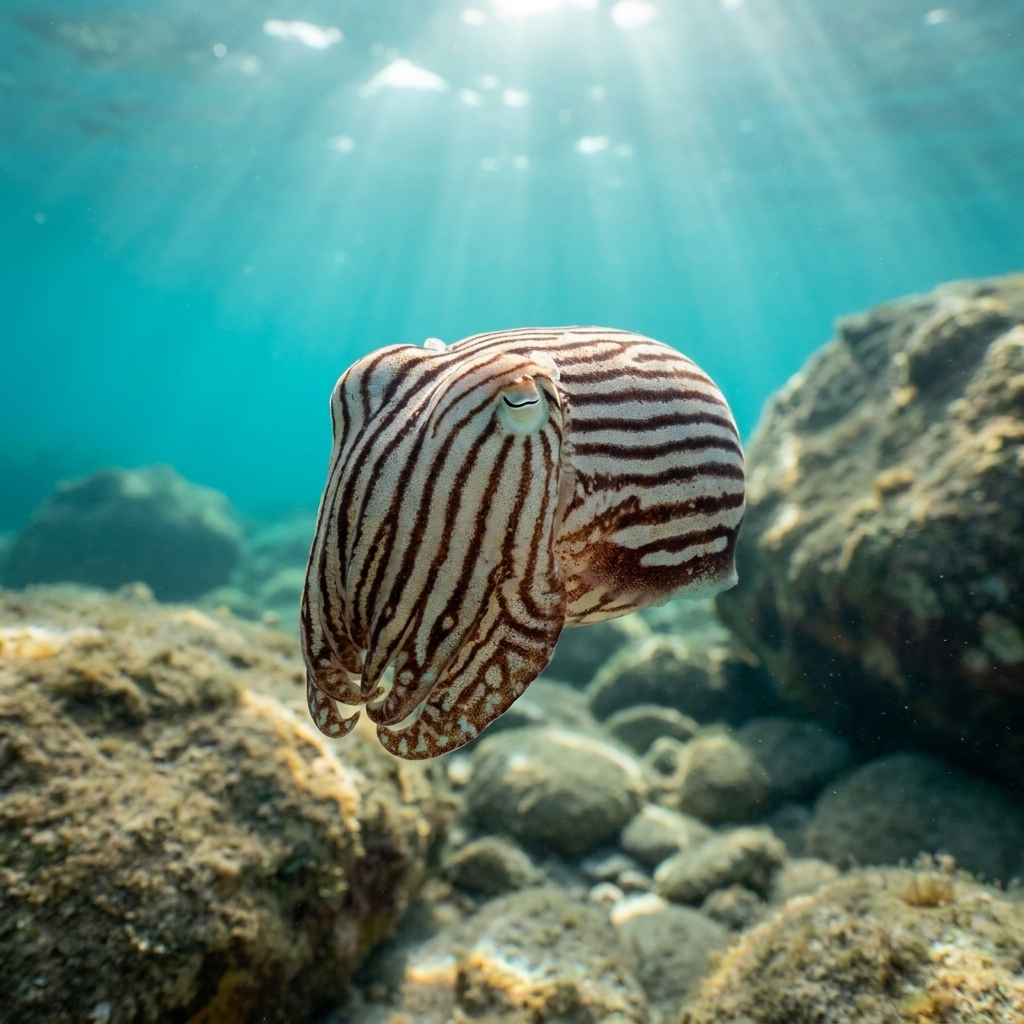
Sepioloidea lineolata
Spot the boldly striped pyjama squid in Western Australia and New South Wales. Rare but unmistakable, best found in 18-23 °C coastal Australian waters.
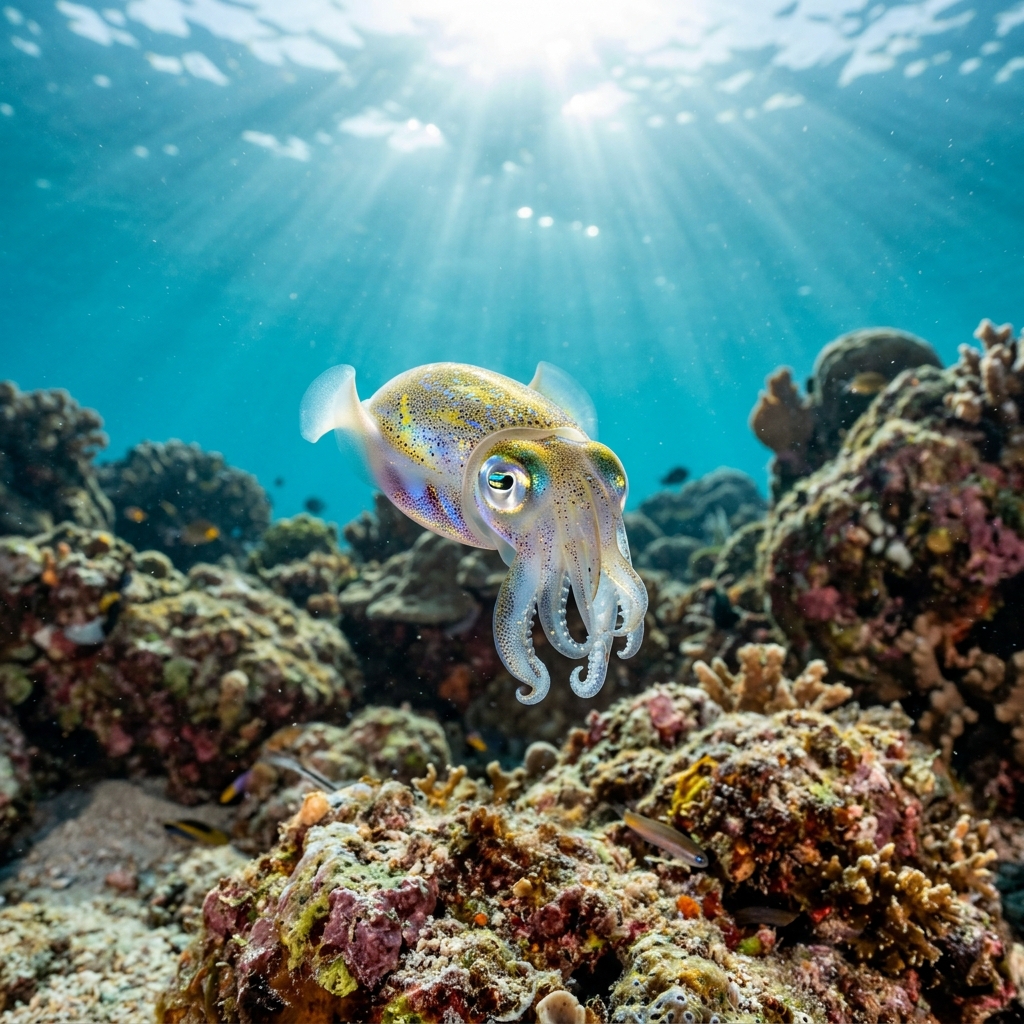
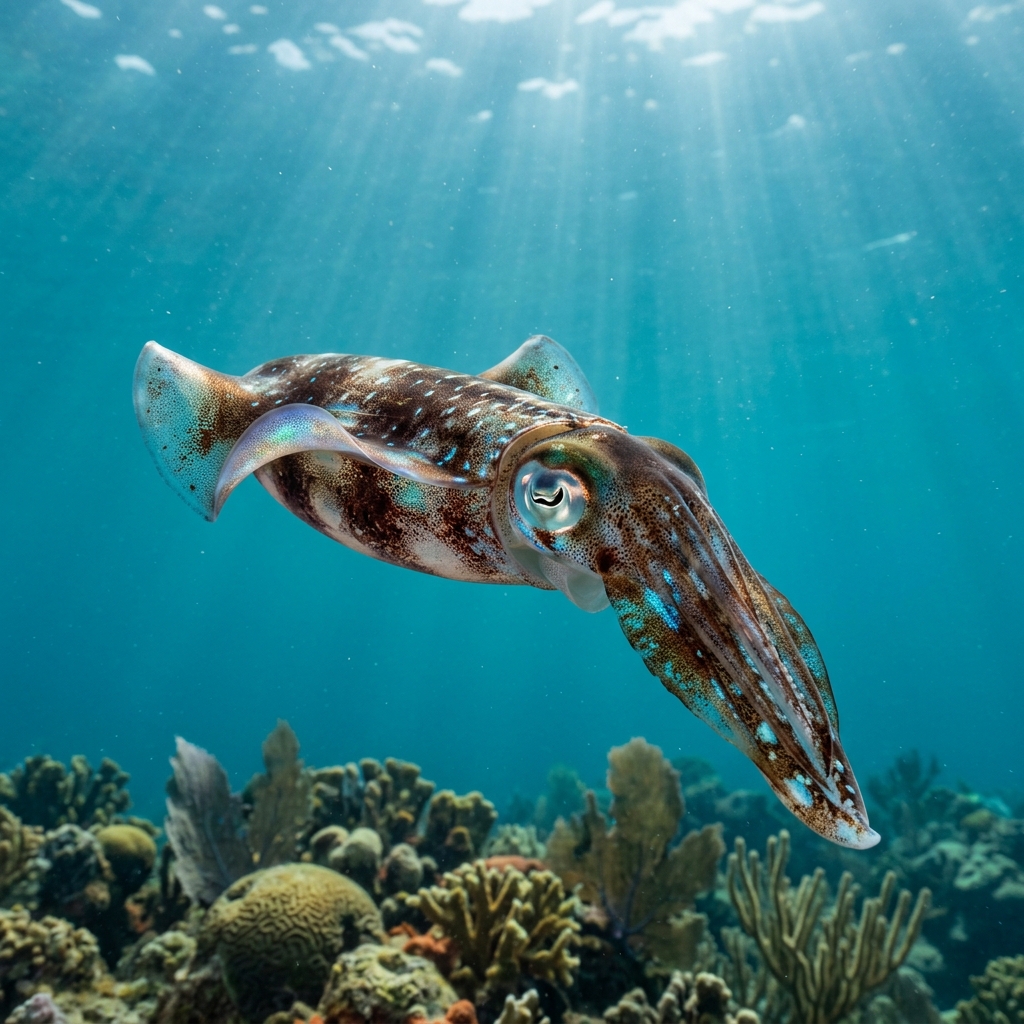
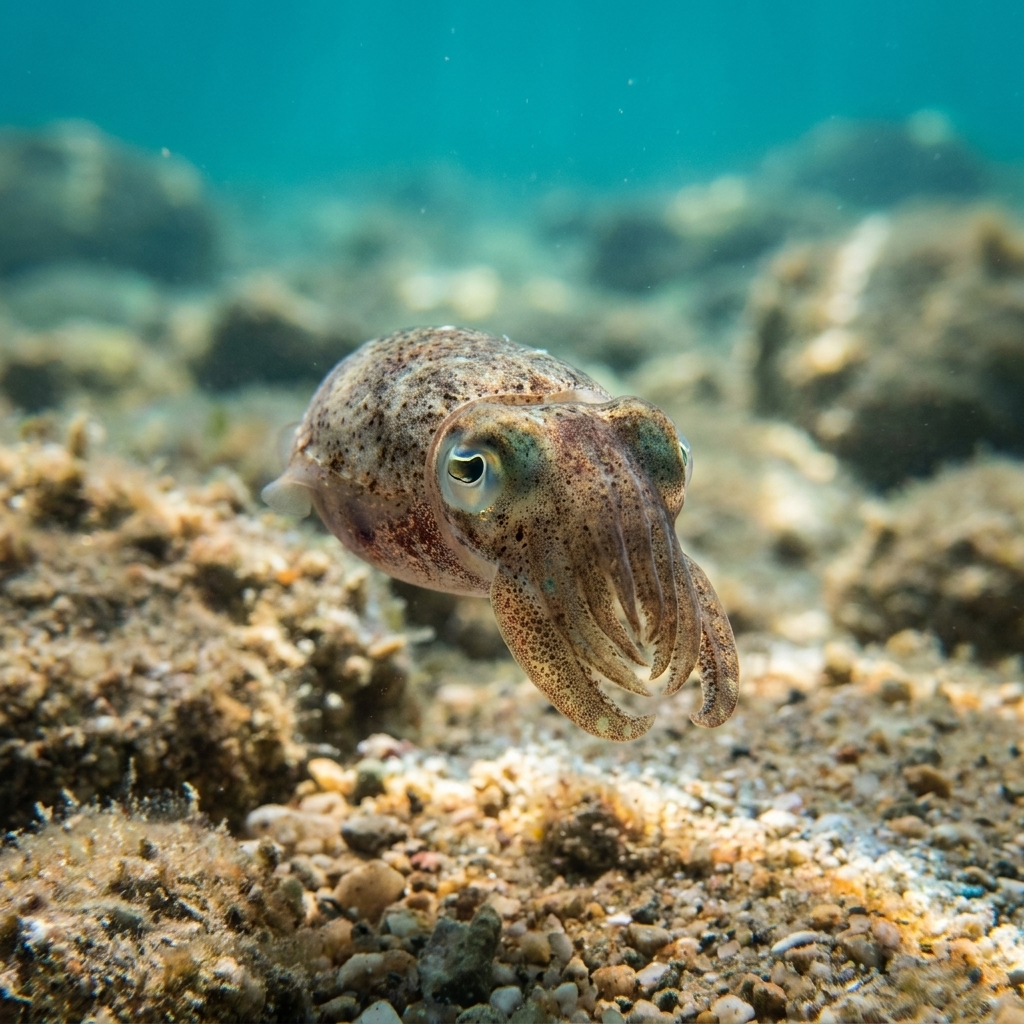
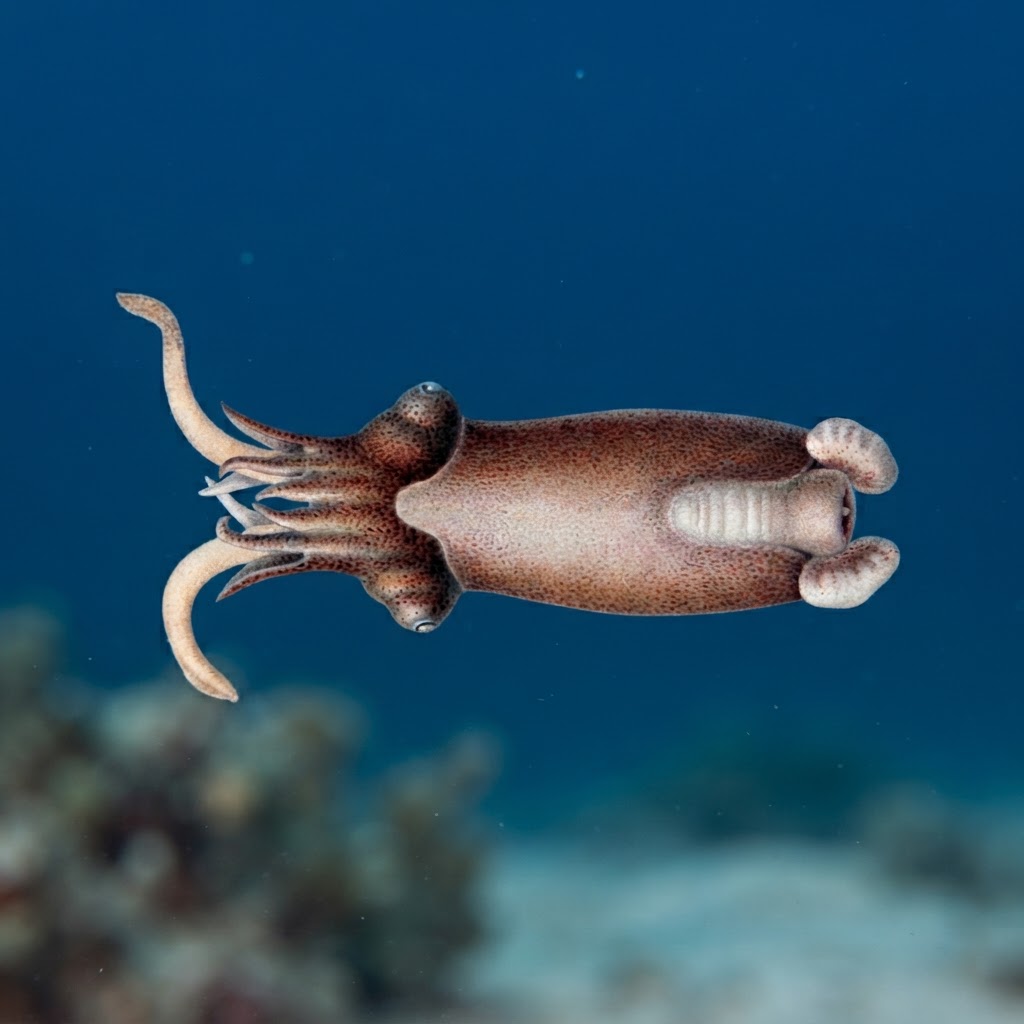
Bold, alternating dark brown and white longitudinal stripes running the full length of a compact, rounded body make this small cephalopod unmistakable at close range. Despite the name it is not a true squid but a pygmy bobtail squid, with a plump, sac-like mantle and very short arms that give it a stubby, almost egg-shaped silhouette. Colouration is vivid and consistent, unlike most octopuses that shift tone constantly, which helps clinch the ID. Look down at sandy or silty patches rather than up at the reef structure.
Pyjama squid are typically found resting or moving slowly across sand and silt at night, burying themselves during the day with only their eyes exposed. When approached they tend to freeze or inch away rather than flee rapidly, which gives patient divers a chance to observe them closely. They are solitary and bottom-oriented, so scanning the substrate slowly with a torch rather than searching the water column is the key technique.
Like several bobtail squid relatives, pyjama squid are thought to harbour bioluminescent bacteria in a specialised light organ, a relationship that may help them counter-illuminate against downwelling light and avoid predators from below.
There is not enough seasonal data to point to a peak month, so treat it as year-round. Its observed water temperature range of roughly 18 to 23 °C aligns with temperate Australian coastal conditions, meaning cooler-water dives in southern and southwestern Australia are your best environmental match.
Every observation in the data comes from Australia, with the overwhelming majority logged across sites in Western Australia. New South Wales accounts for most remaining sightings, and a small number of records come from South Australia. If you are specifically targeting this animal, the WA coastline offers the most sites where it has been confirmed.
Mapping where Striped Pyjama Squid is logged…
All confirmed dive-site records are from Australia. Western Australia has the most logged sites, with additional sightings along the New South Wales coast and a smaller number from South Australia. Temperate, sandy-bottomed coastal reefs are the habitat to target.
There is no clear seasonal peak in the available data, so they can potentially be encountered year-round. Their observed temperature range of 18 to 23 °C suggests temperate Australian autumn and winter conditions suit them well, but summer sightings also occur.
Look for a small, plump, sac-like body covered in bold alternating dark brown and white longitudinal stripes running nose to tail. Unlike octopuses, the colouration is stable and consistent rather than shifting. The stubby, rounded mantle and short arms are distinctive. Find them on sand or silt, not on the reef wall.
No, despite the name it is a pygmy bobtail squid in the family Sepiadariidae, more closely related to cuttlefish and bobtail squid than to true squid. The compact, rounded body shape is a giveaway once you know what to look for.
Exact size data for this species is limited, but bobtail squid in general are small animals. Most individuals encountered by divers are only a few centimetres in mantle length, making them easy to overlook without a careful eye on the substrate.
Site and sighting data is aggregated from diver logs, iNaturalist and GBIF. For taxonomy and conservation status:
Inshore Squid
390 sites