Solea senegalensis
Flat, sand-coloured and easy to miss: find Senegalese Sole on sandy bottoms in Murcia, the Algarve and Andalusia year-round.
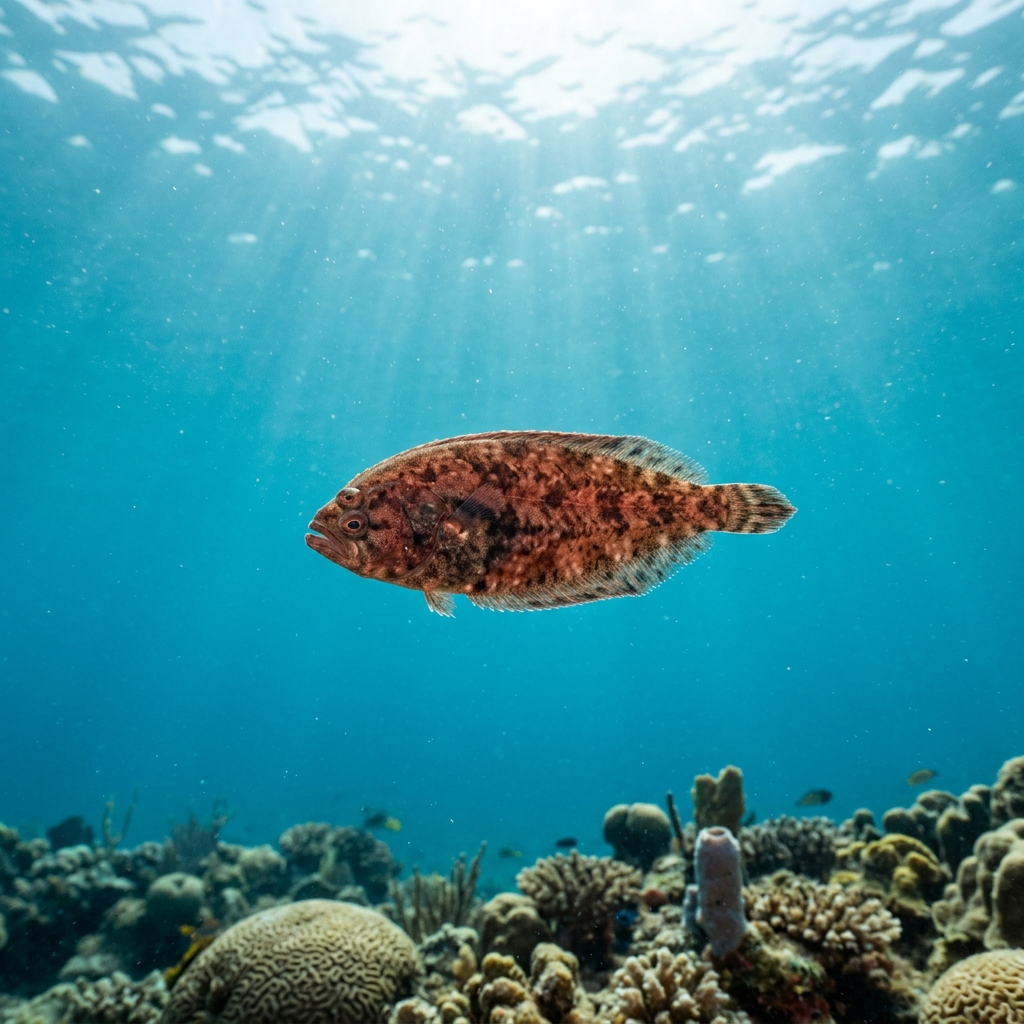
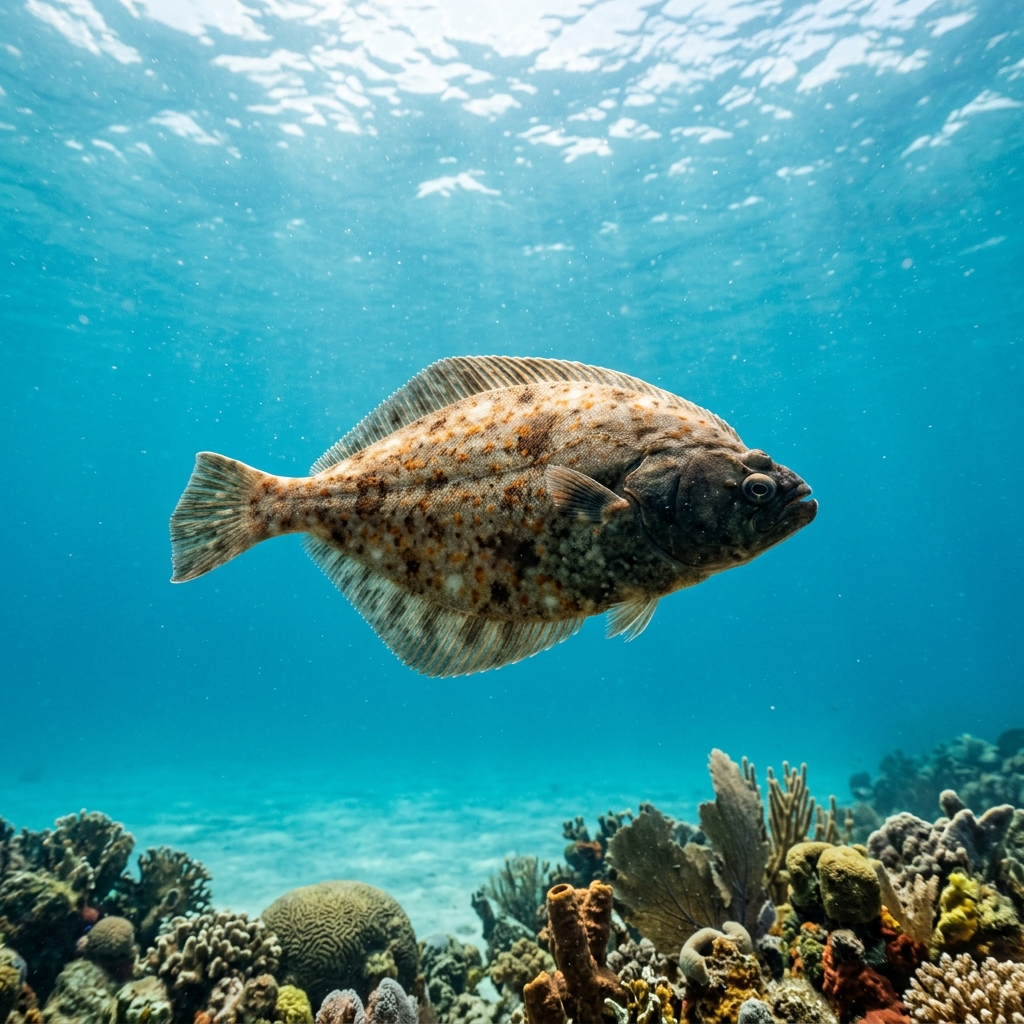
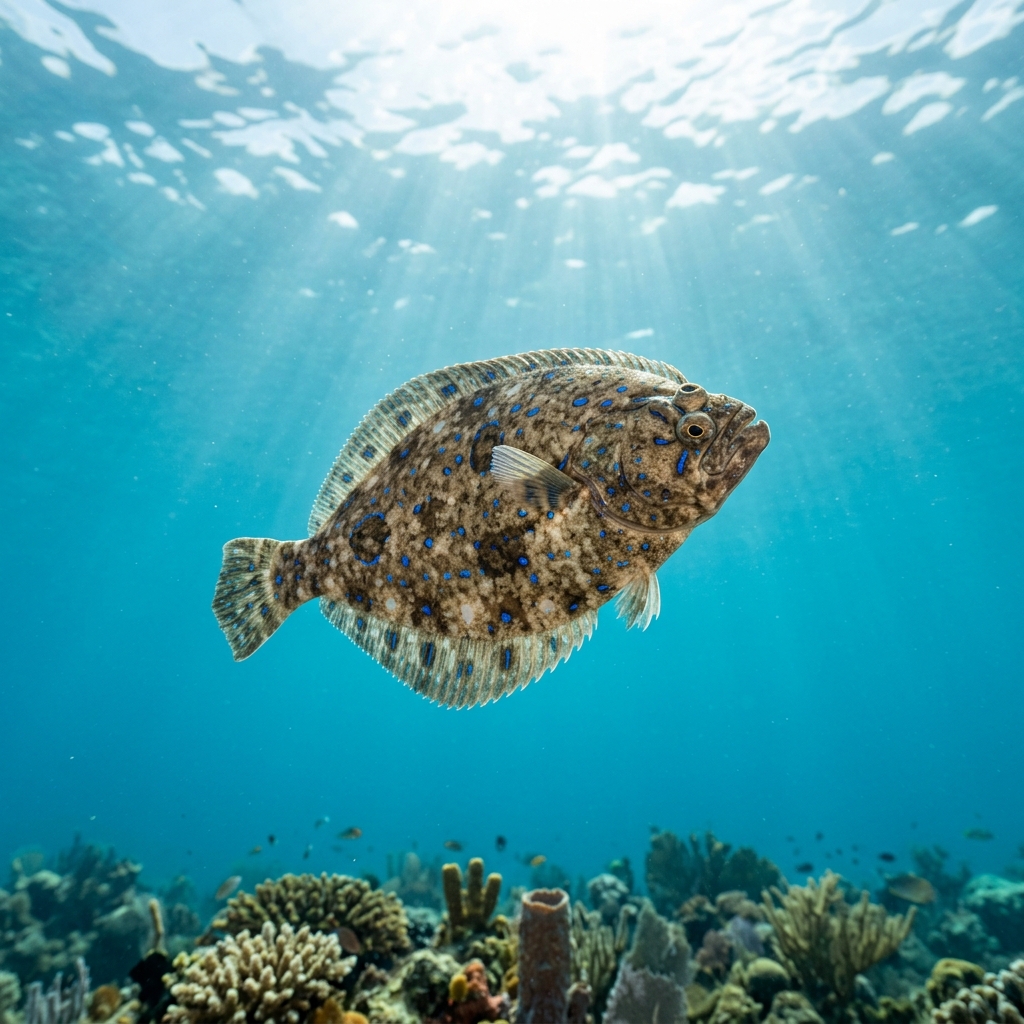
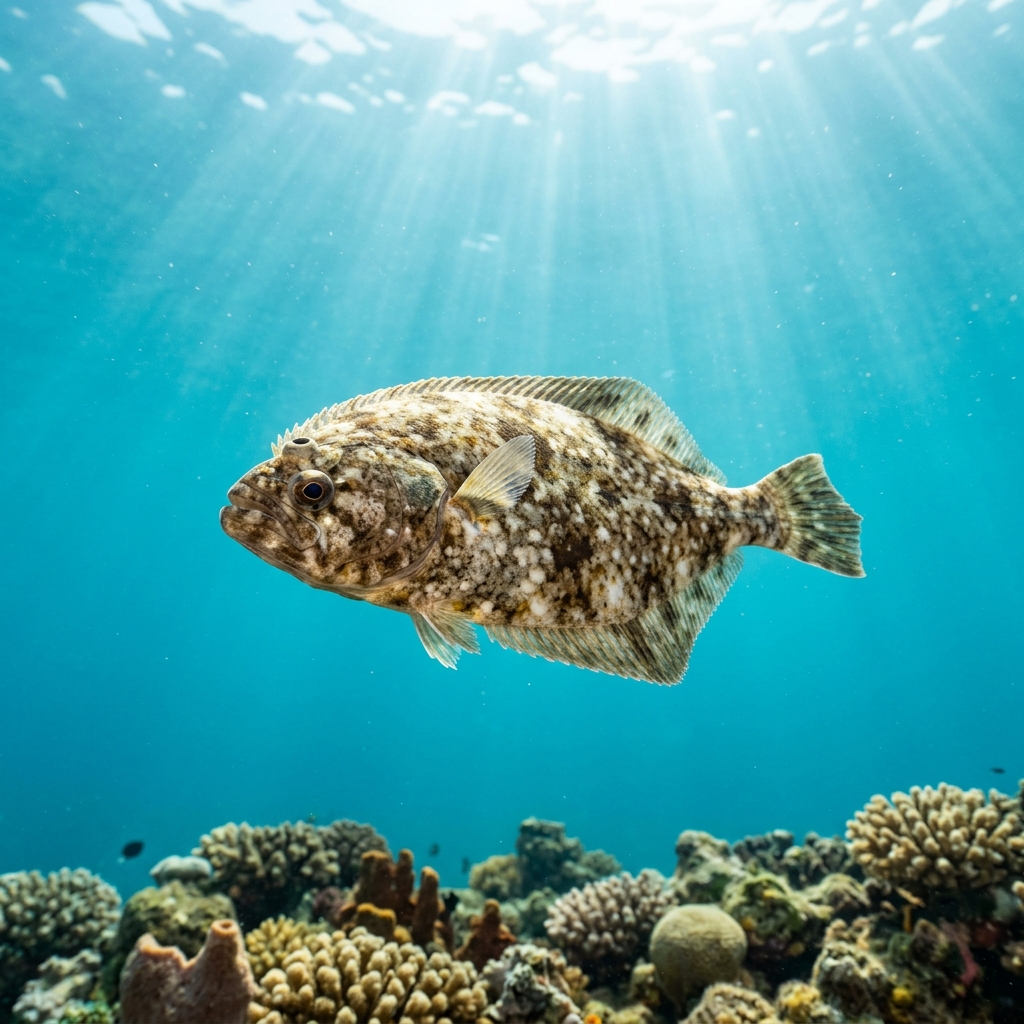
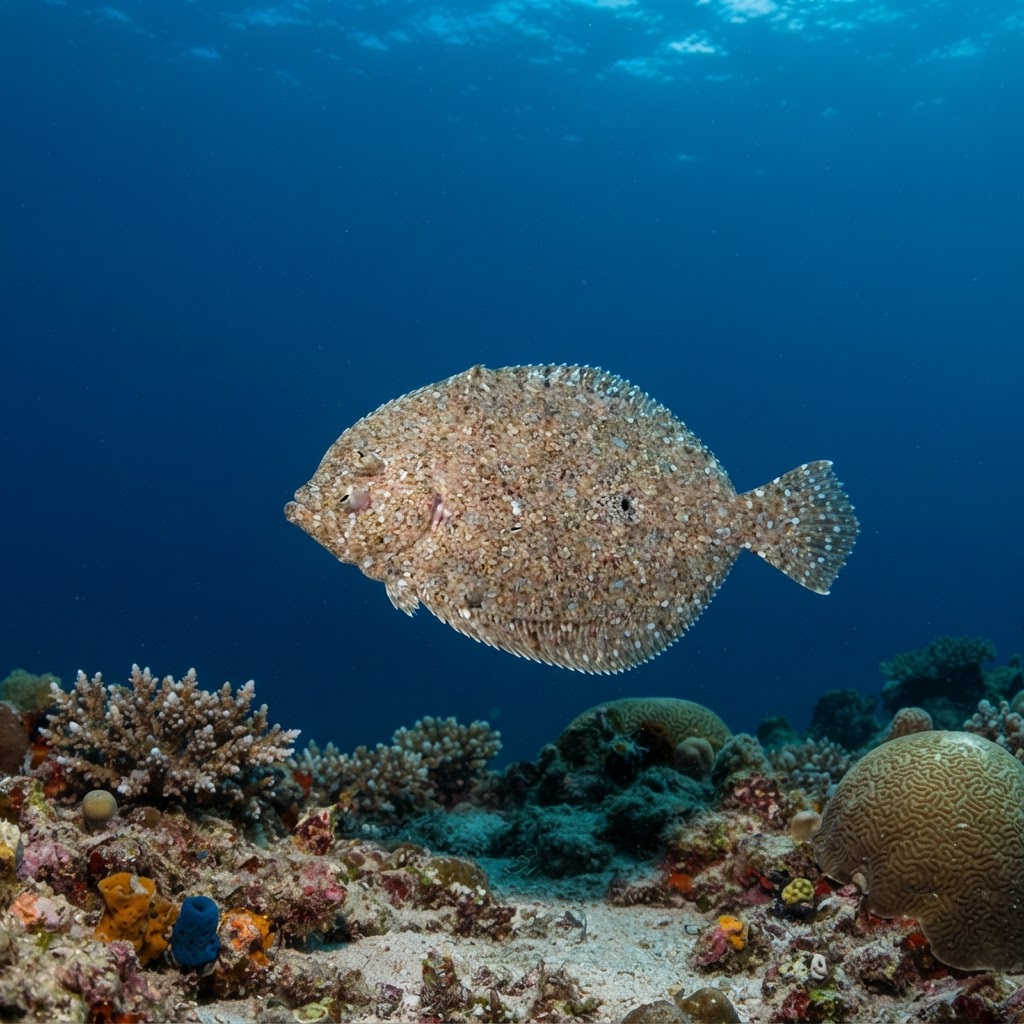
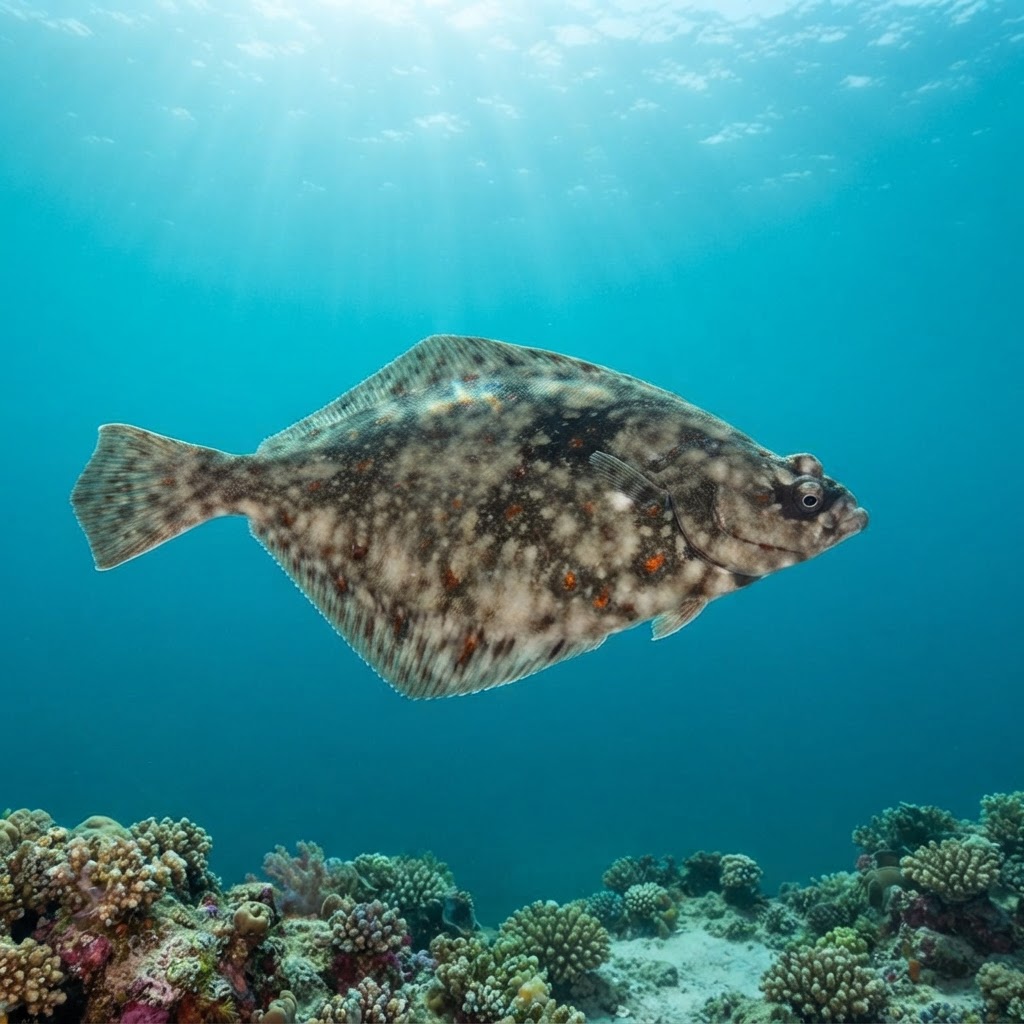
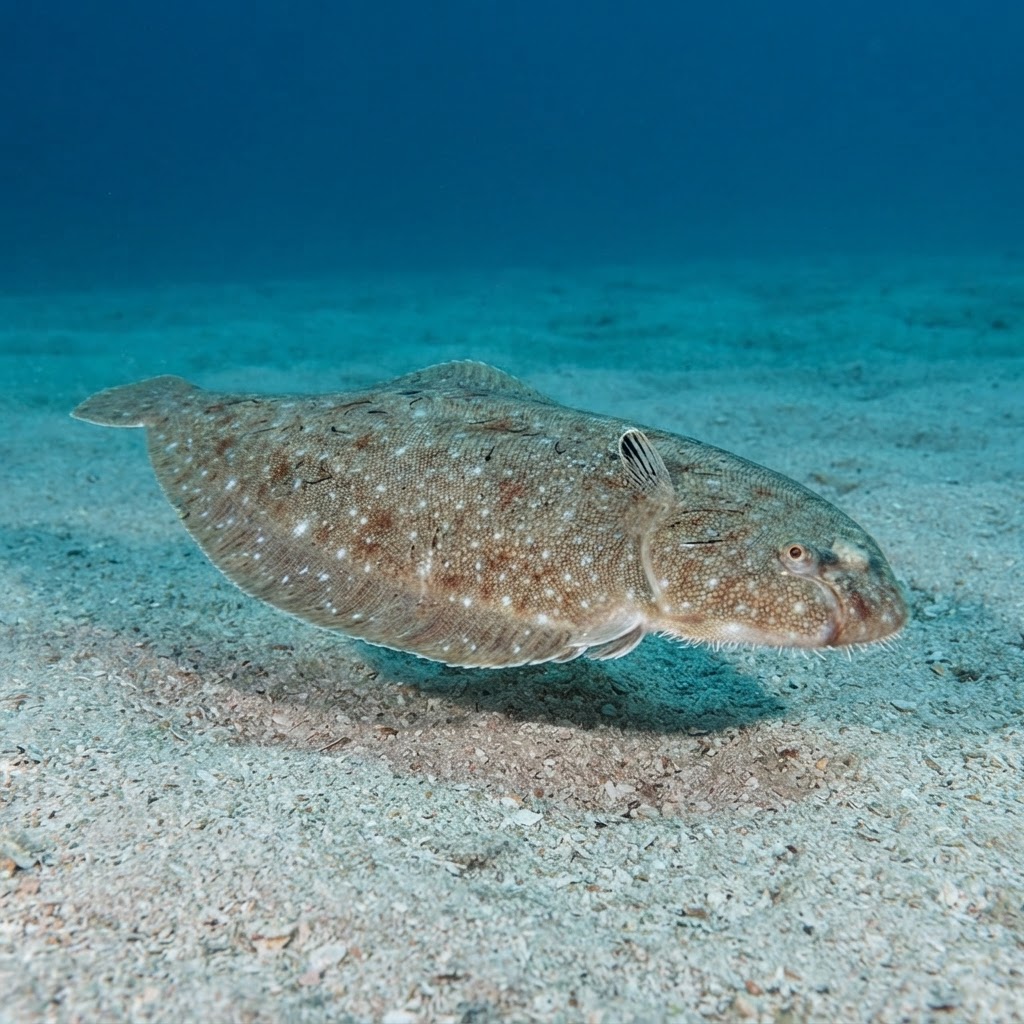
Flat, oval-bodied fish lying directly on sand or mud, reaching around 42 cm, with both eyes on the right side of its head. Skin is mottled brown to grey and matches the seabed so closely that it often only gives itself away when it shifts position or a diver's torch catches the outline. Look for the small, rounded pectoral fin and the continuous fin margin running around the body rather than a distinct tail shape.
Spends most of its time lying still and half-buried on sand or fine sediment, relying on camouflage rather than flight to avoid attention. Divers usually find it during slow drifts or careful scans of flat, featureless bottoms between 12 and 100 metres, often close to reef edges or seagrass margins where prey gathers. It tends to stay put unless approached closely, then makes a short, low glide to resettle a few metres away.
Like other soles, it starts life swimming upright with an eye on each side, then one eye migrates across the head as the fish matures and settles into its flattened, bottom-lying life.
No clear seasonal pattern shows up in diver logs, so treat sightings as possible year-round. Its observed temperature range of 13.6 to 21.6 C spans typical winter-to-summer conditions on Iberian and southern French coasts, which fits with it being seen across the calendar rather than in one narrow window.
Most reliably logged along the coasts of Spain, Portugal and France, with strong numbers of sightings in Murcia, the Algarve, Andalusia and the French Riviera & Provence. Divers also report it in smaller numbers around the Lisbon Coast and Occitanie, usually over open sand or mixed sand-and-rock bottoms rather than reef structure.
Mapping where Senegalese Sole is logged…
It shows up most often on sandy bottoms in Spain, Portugal and France, with Murcia, the Algarve and Andalusia among the most consistently logged regions. It also turns up along the French Riviera & Provence and, less often, the Lisbon Coast and Occitanie.
There is no strong seasonal pattern in diver sightings, so it can be found year-round. It has been logged in water from about 13.6 to 21.6 C, covering both cooler and warmer months on Iberian coasts.
Look for a flat, oval fish lying still on sand, coloured in mottled browns and greys that blend into the seabed. Both eyes sit on the right side of its head, and it usually only becomes obvious when it moves.
They typically reach around 42 cm in length, making them a mid-sized flatfish rather than a small one. Most individuals seen by divers are lying flat, which can make their true length harder to judge underwater.
No, they pose no danger to divers. They have no venomous spines or defensive behaviour of concern and simply rely on camouflage and stillness to avoid disturbance.
Juveniles start out symmetrical with one eye on each side of the head, like a typical fish. As they grow, one eye migrates across the skull so both eyes end up on the same side, matching their flattened, bottom-dwelling adult lifestyle.
Site and sighting data is aggregated from diver logs, iNaturalist and GBIF. For taxonomy and conservation status:
Wide Eyed Flounder
1,624 sites