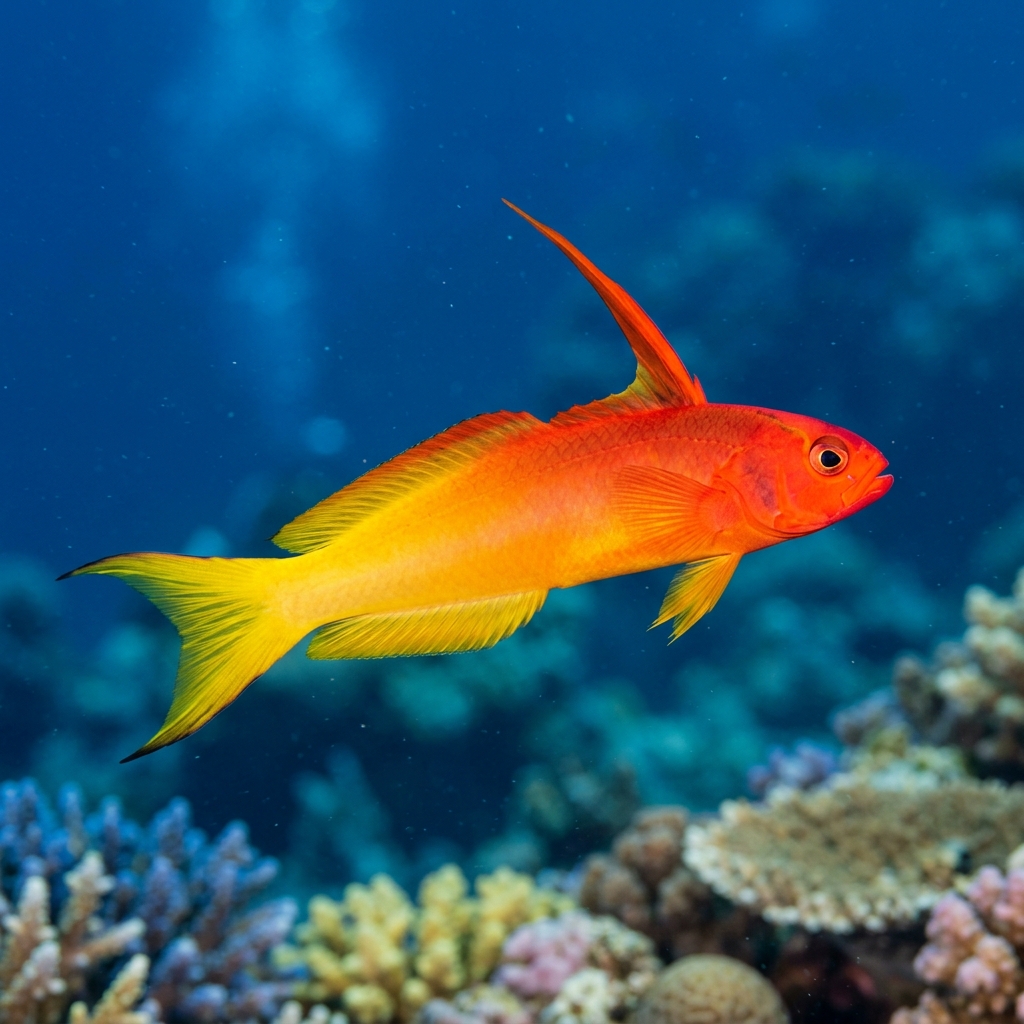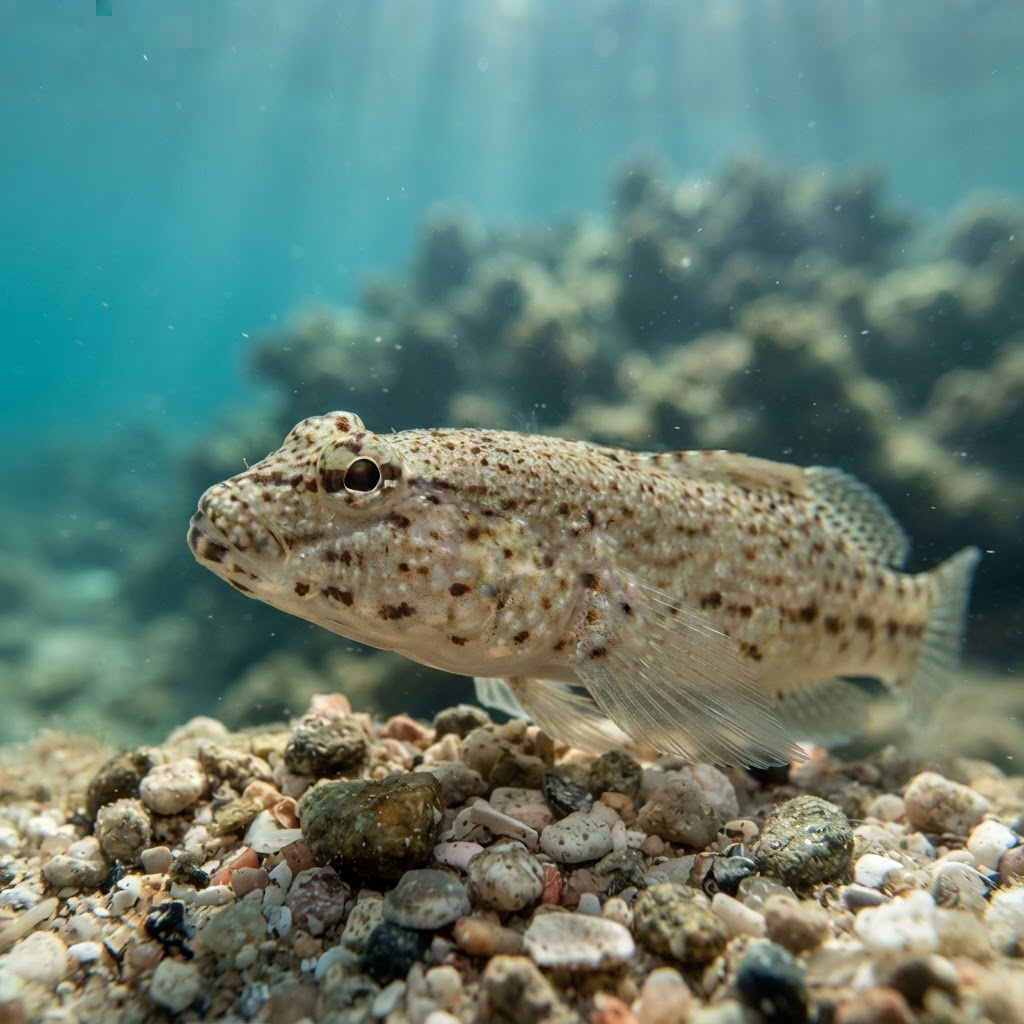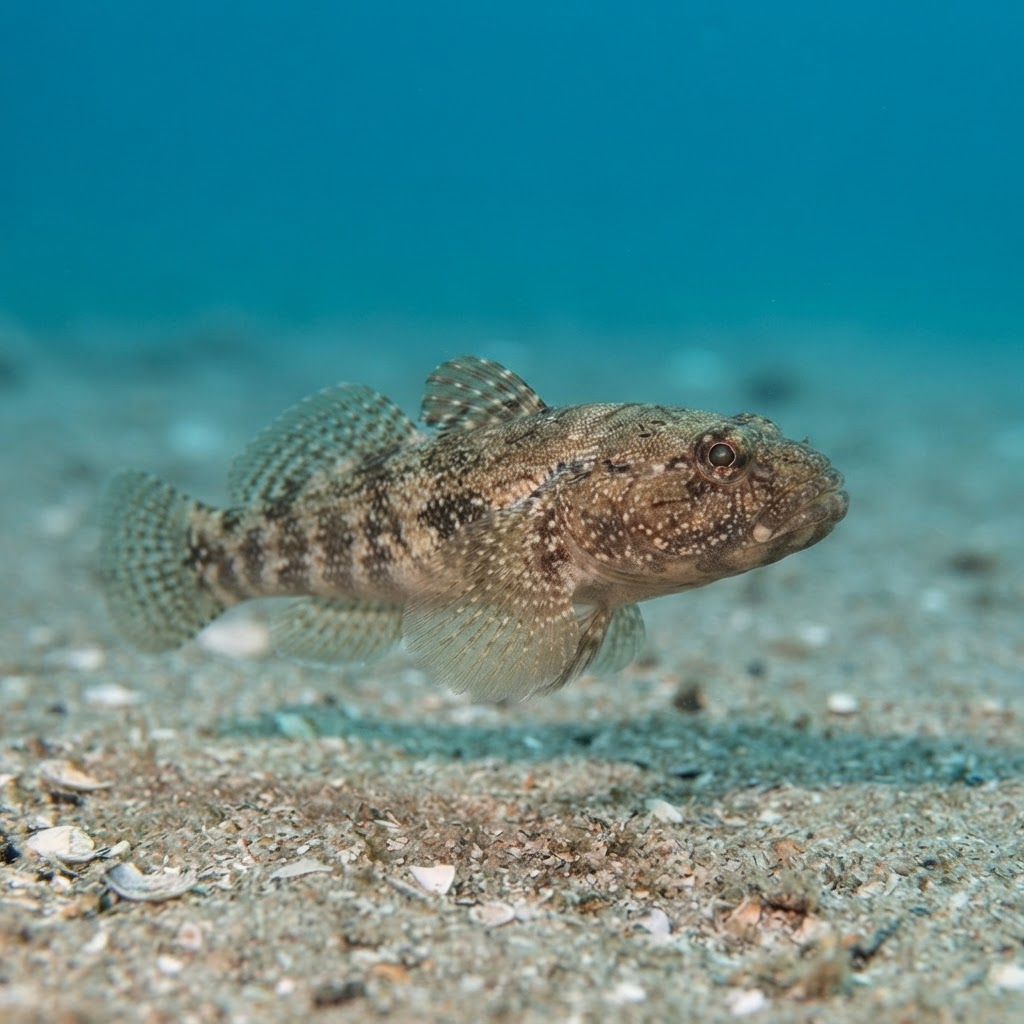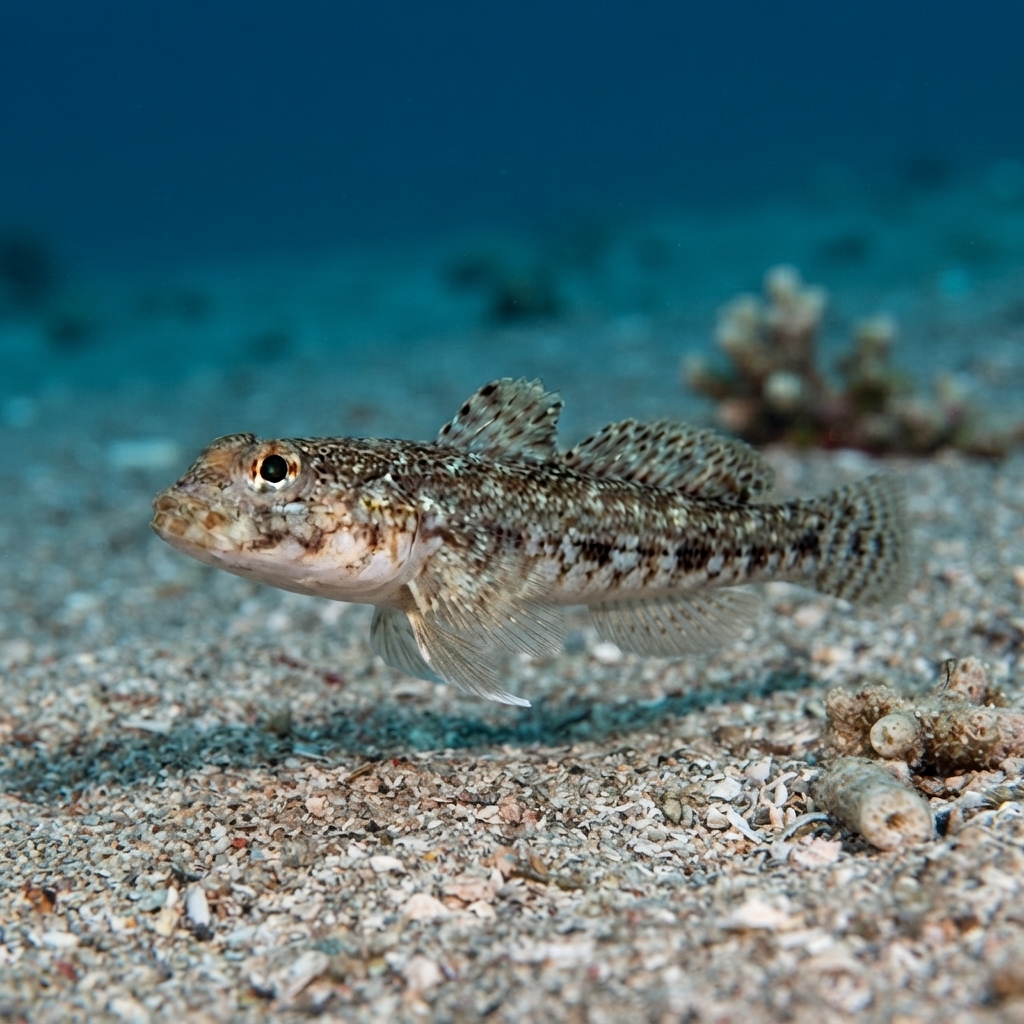
Eviota sebreei
A 1cm goby that hides on reefs from Koh Lipe to the Visayas, present year-round in warm 26-29C water once you know where to look.
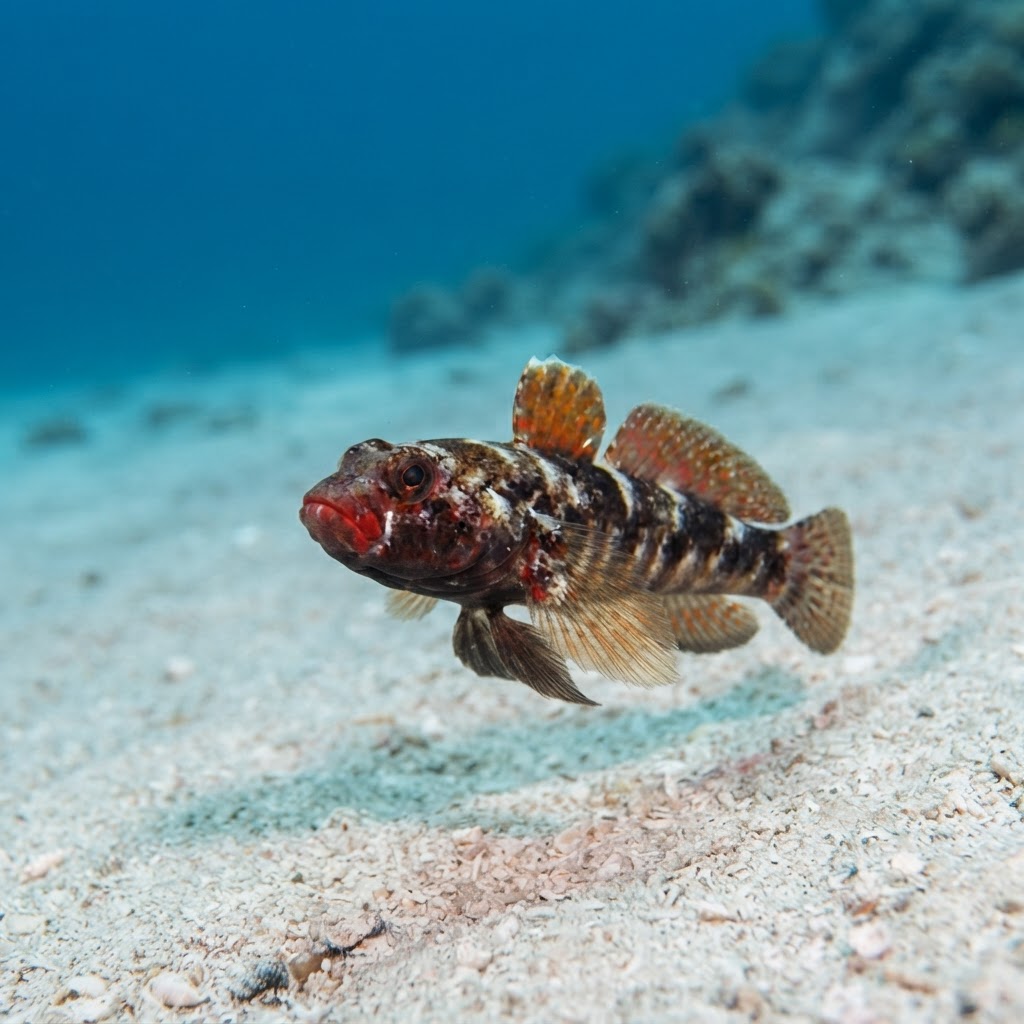
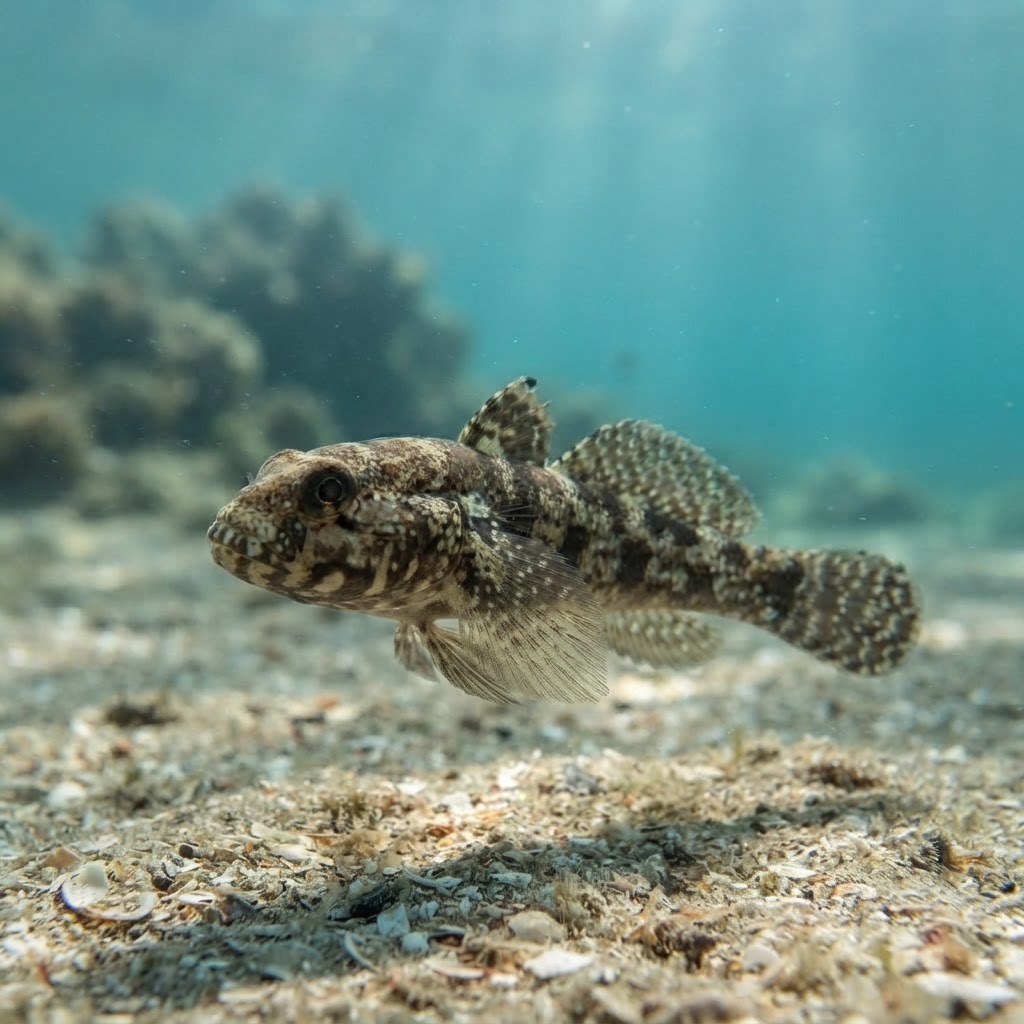
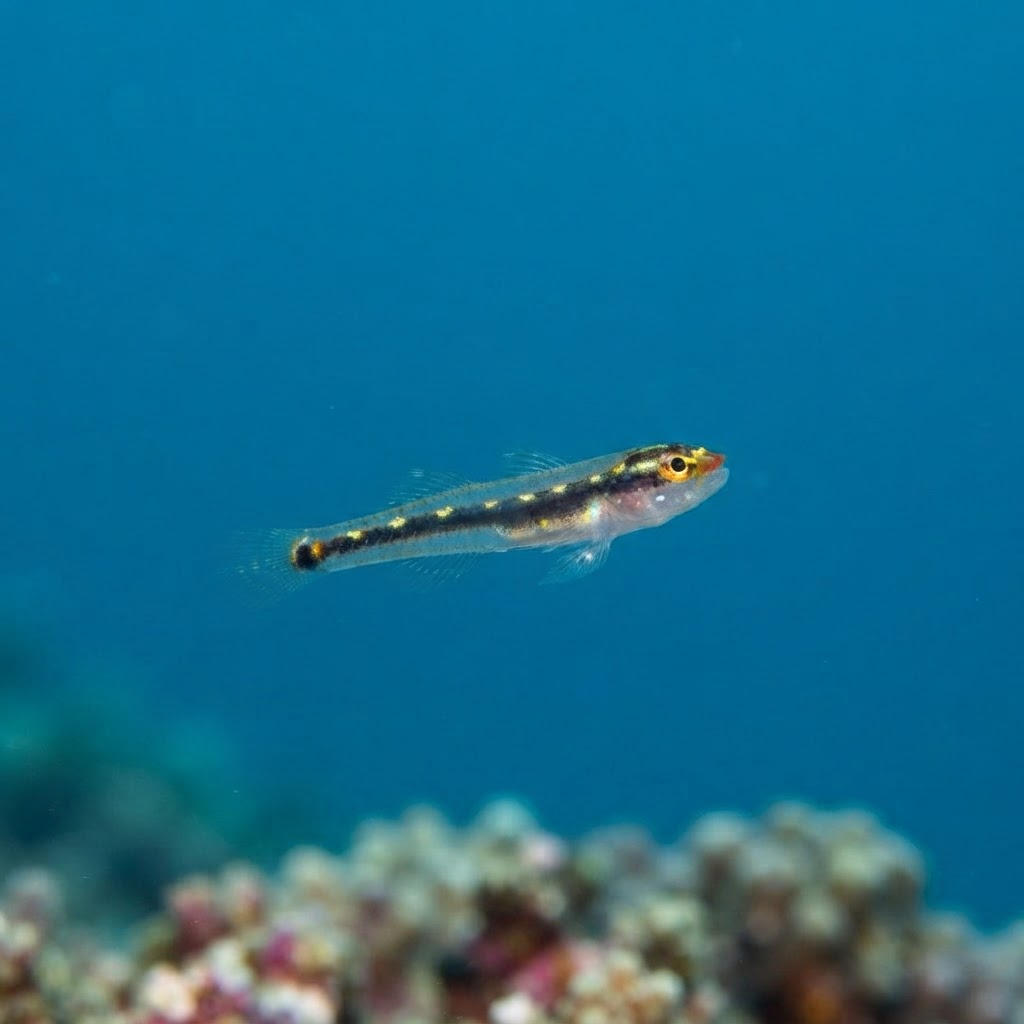
At about 1 cm long, this goby is one of the smallest reef fish you will ever try to photograph, so start by scanning bare coral rubble and dead coral heads rather than open water. Look for a slender, semi-translucent body with faint dusky bars or speckling along the flanks and a pair of large dark eyes that seem oversized for the body. It perches rather than swims, propped up on its pelvic fins in short, still stretches between quick darts. There is no described colour split between males and females or juveniles and adults, so size and posture are your main clues, not pattern.
Watch a patch of rubble or a dead coral head for a minute and you will likely see one of these gobies hop a few centimetres, freeze, then hop again, using its fused pelvic fins as a tripod between moves. They rarely stray far from a chosen perch and tend to ignore divers entirely unless a hand or camera dome comes within a few centimetres. Most sightings happen on shallower sections of reef where light is good enough to pick out something this small against the substrate.
Gobies in the Eviota genus, including this species, are thought to have some of the shortest lifespans known among reef fish, often just a few weeks to a couple of months, which helps explain why individual sightings can feel like spotting a different fish every visit.
There is no clear seasonal pattern in the sightings, and with a comfortable range of roughly 25.8 to 29.3C it lives on warm tropical reefs year-round. Plan your dive around the destination's usual visibility and conditions rather than chasing a goby season.
This goby turns up across a wide arc of the Coral Triangle and its fringes, with the strongest logs coming from the Visayas in the Philippines and the east coast of Peninsular Malaysia. Thailand's Koh Lipe is another reliable spot, and it has also been recorded around Queensland in Australia, Longdong in Taiwan, Kwajalein Atoll in the Marshall Islands, Luzon in the Philippines, and Raja Ampat in Indonesia. Across nearly all of these sites divers rate it uncommon rather than common, so treat any sighting as a small win rather than an expectation.
Mapping where Sebree's Pygmy Goby is logged…
It is most reliably logged in the Visayas region of the Philippines and along the east coast of Peninsular Malaysia, with further sightings at Koh Lipe in Thailand, in Queensland, Australia, and around Taiwan's Longdong and the Marshall Islands' Kwajalein Atoll.
There is no strong seasonal pattern in the sightings, and it lives in water around 26 to 29C year-round, so it can turn up on any dive at a suitable site regardless of month.
Look for a translucent, faintly barred fish only about 1 cm long perched on rubble or dead coral rather than swimming freely. It moves in short hops and freezes between them, relying on its size to stay hidden rather than colour.
They max out at roughly 1 cm, making them one of the smallest fish a diver is likely to try to spot and photograph on a reef.
Like many Eviota gobies, it is thought to live only a few weeks to a couple of months, one of the shortest lifespans recorded among reef fish, so the individual you see is unlikely to still be there on your next dive.
Site and sighting data is aggregated from diver logs, iNaturalist and GBIF. For taxonomy and conservation status:
Slender Goby
806 sites