Archosargus rhomboidalis
Silvery, deep-bodied sea bream turn up as an uncommon find in the Bay Islands of Honduras and Florida, in warm 23-28C water year-round.
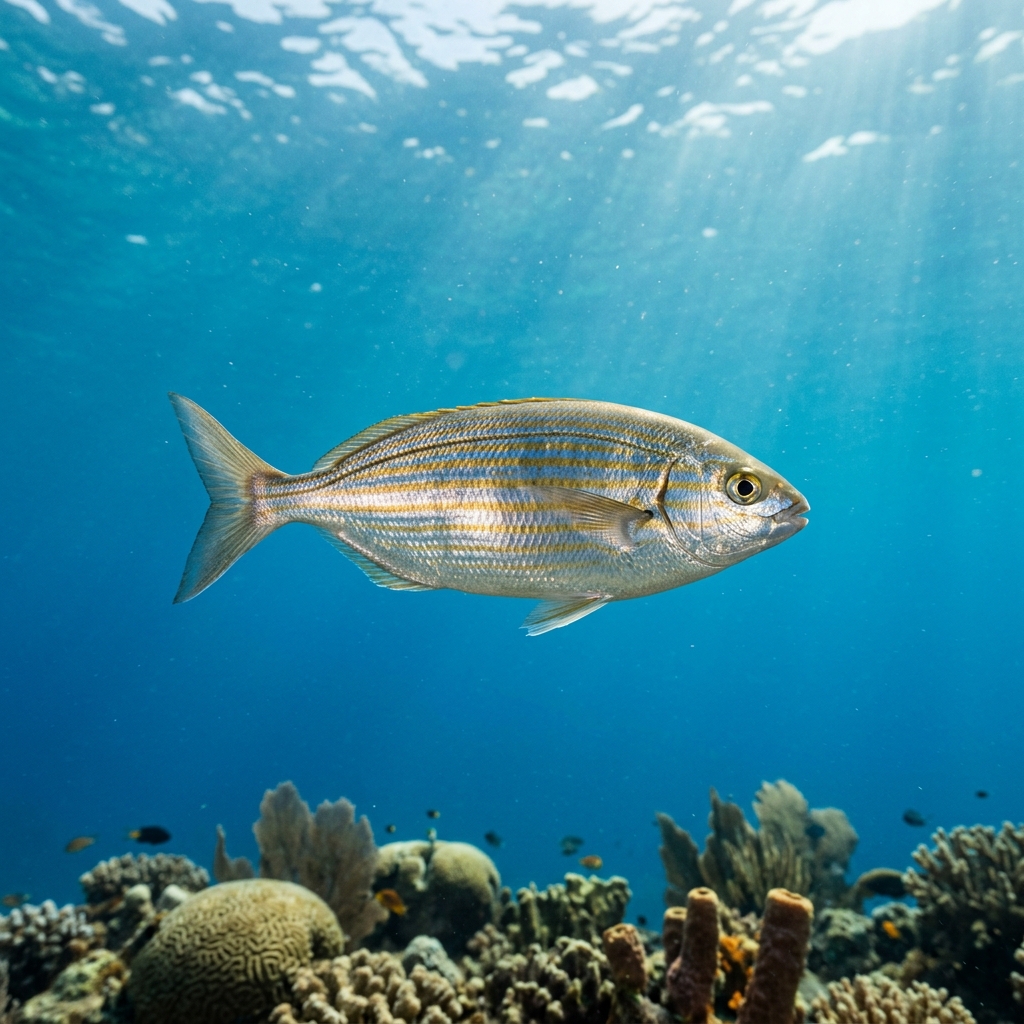
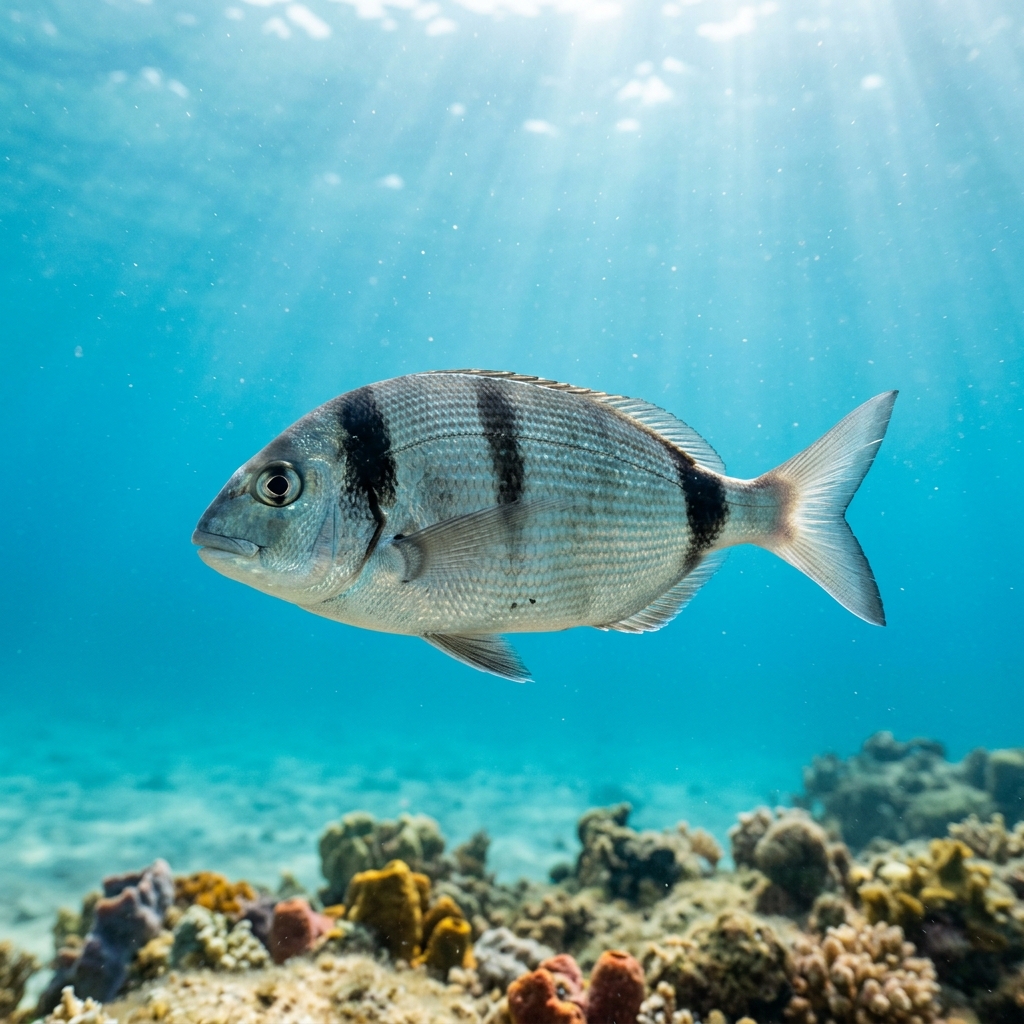
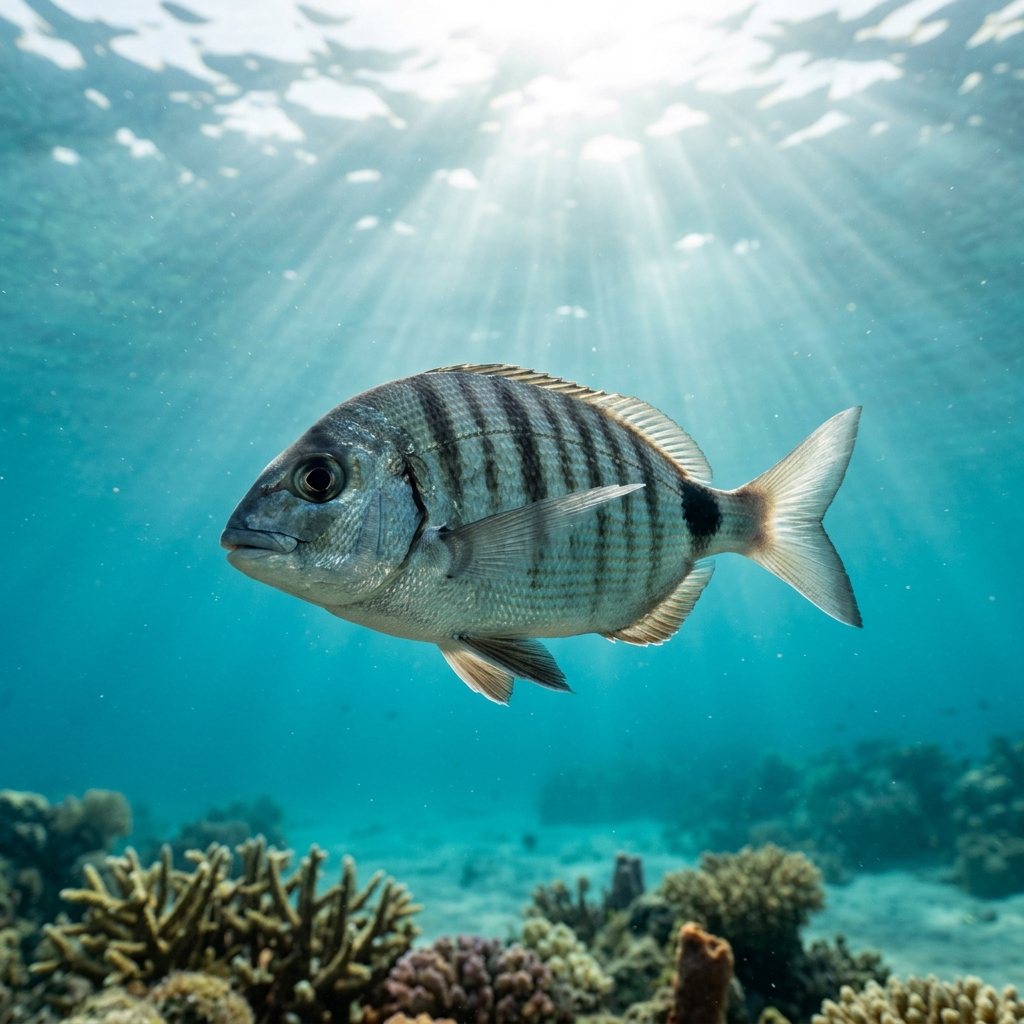
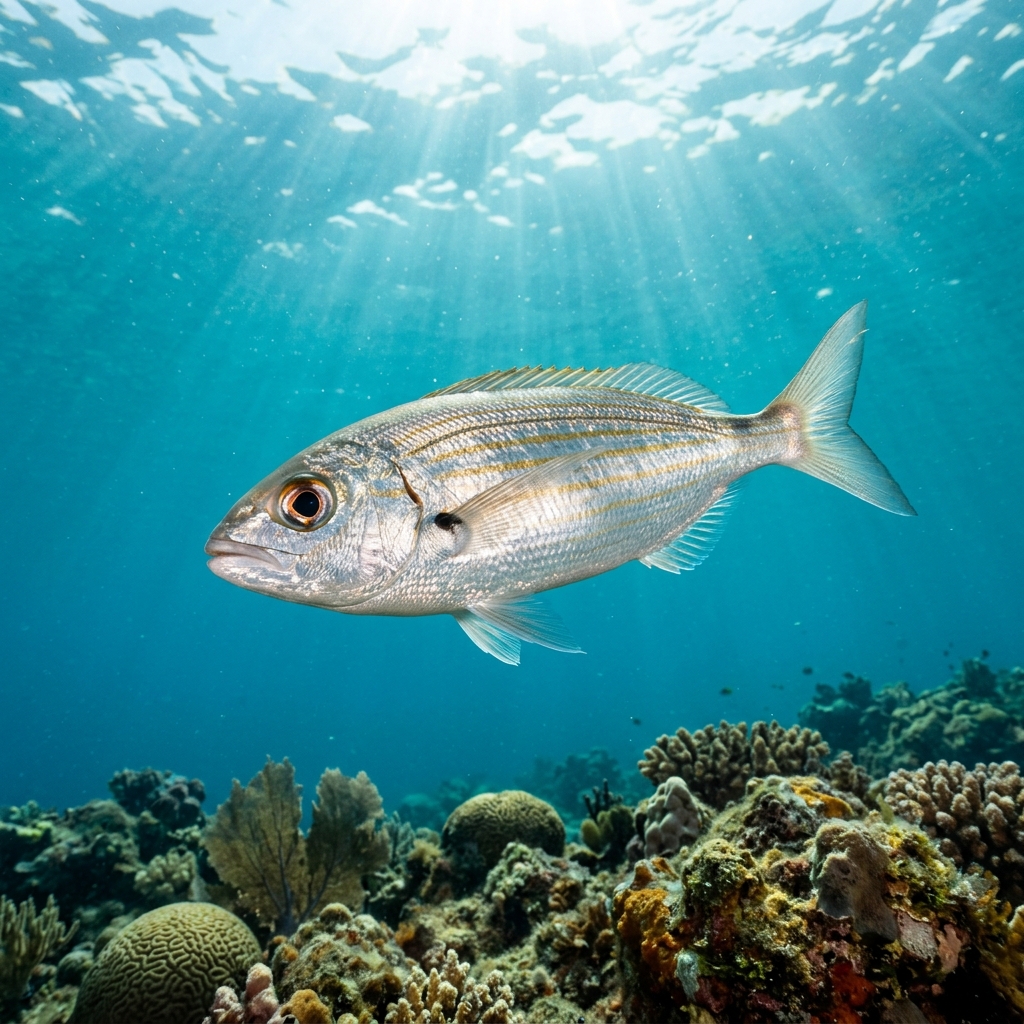
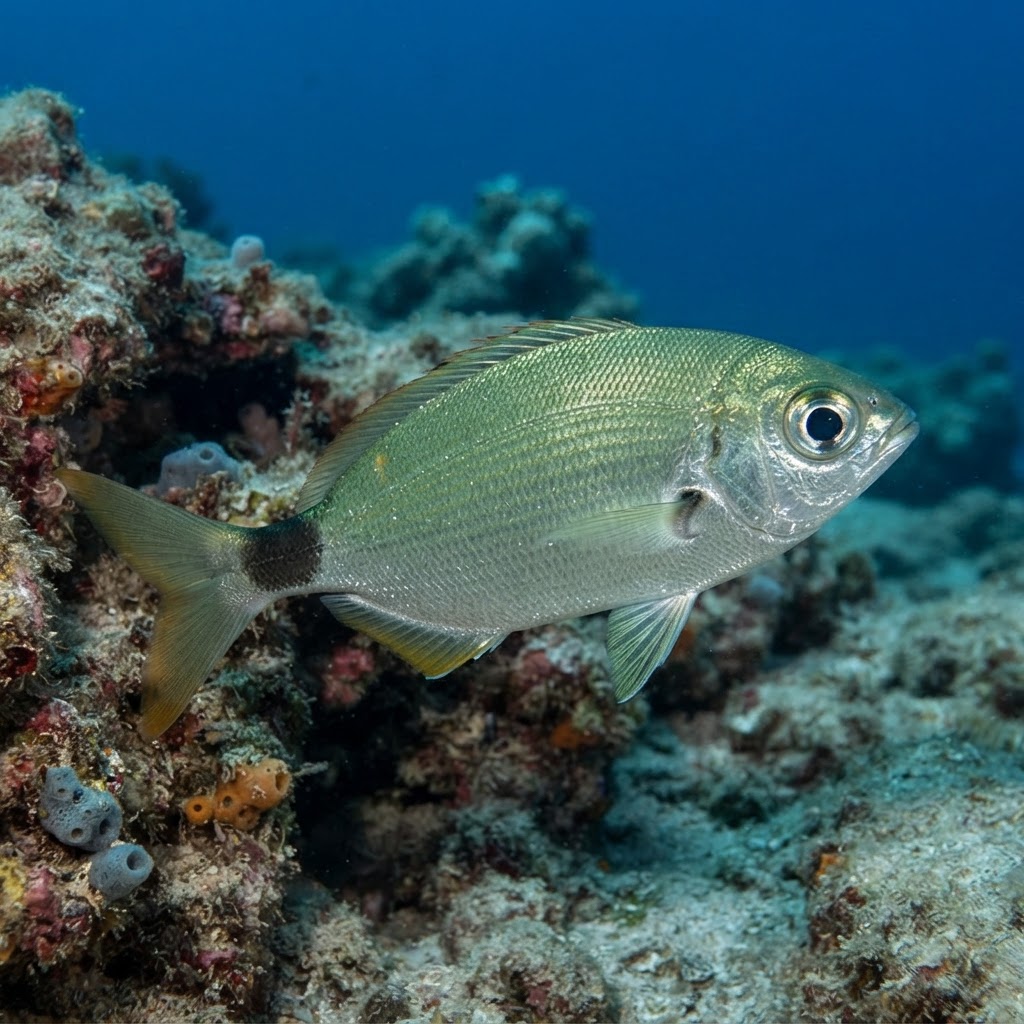
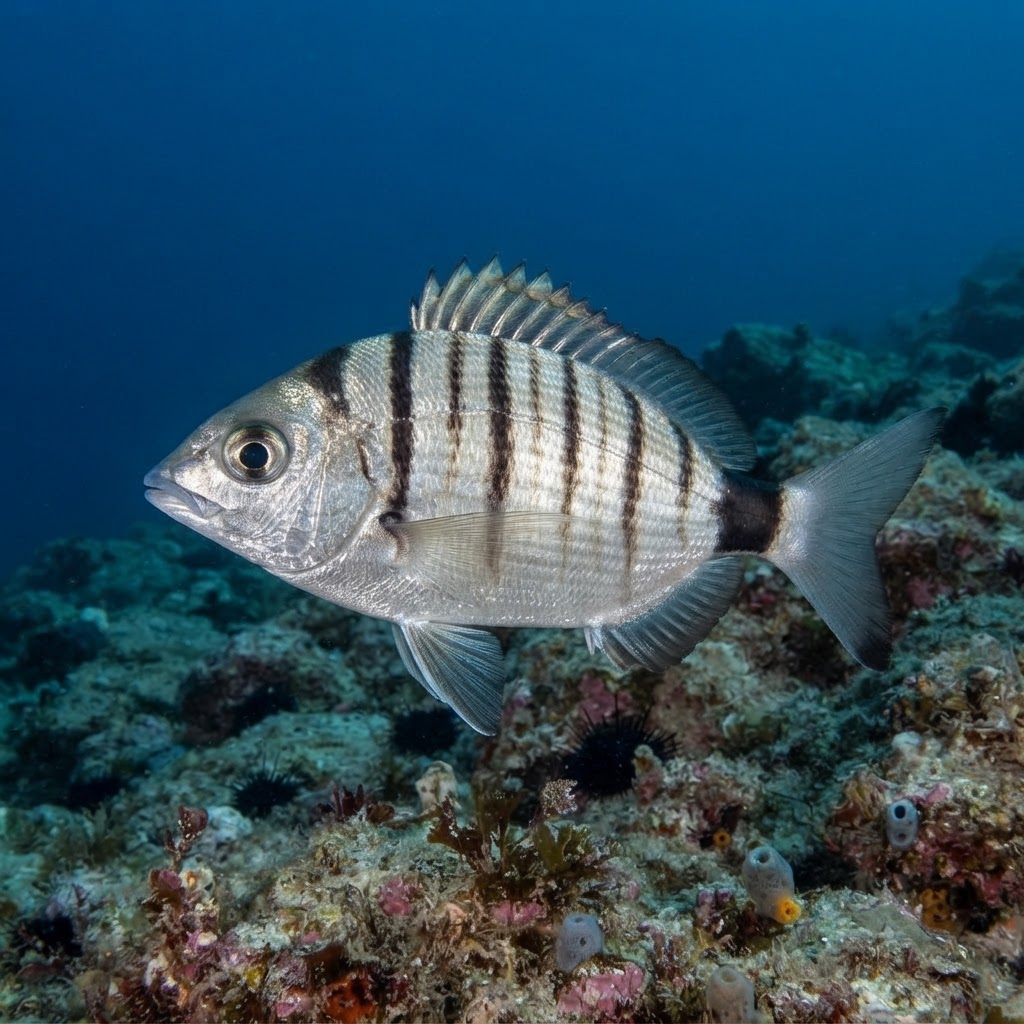
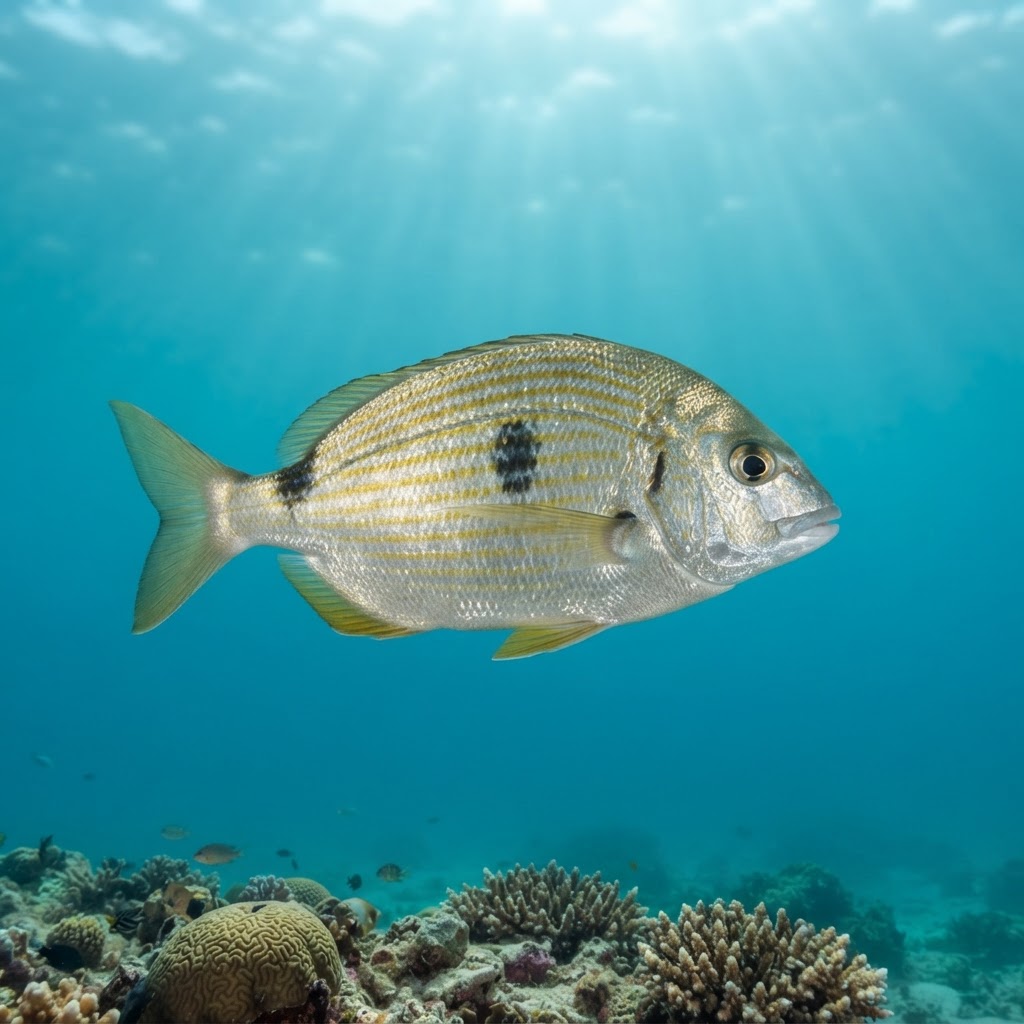
Deep, laterally compressed body about the size of a dinner plate, silvery overall with a faint yellowish or olive sheen and a row of dusky vertical bars that fade with age. The blunt head and small mouth are typical of sea breams, built for picking at the reef rather than chasing prey. Look for it hovering singly or in loose small groups just above sand patches or reef edges.
Divers usually find it cruising alone or in small loose groups near sandy patches, seagrass edges, or the base of reef structure, picking at small invertebrates and algae rather than schooling tightly like other sparids. It is not particularly shy but does not approach divers either, generally keeping a steady distance and continuing to forage as you pass. Sightings skew toward shallower, calmer reef zones rather than open water or deep walls.
Juveniles are known to shelter in mangrove-fringed shallows and seagrass beds before moving onto reef habitat as adults, making mangrove edges worth checking for younger fish.
No clear seasonal pattern shows up in the sightings, and its comfort range of roughly 23 to 28C matches warm tropical and subtropical reefs year-round, so any time you are diving these regions is worth a look.
Most reliably logged in the Bay Islands of Honduras and along Florida's reefs in the United States, with further sightings around Les Anses-d'Arlet in Martinique, Santa Catarina in Brazil, and San Juan in Puerto Rico. Across all these sites it tends to turn up as an uncommon or rare extra rather than a headline sighting.
Mapping where Sea Bream is logged…
The strongest sightings come from the Bay Islands of Honduras and Florida in the United States, with additional records from Les Anses-d'Arlet in Martinique, Santa Catarina in Brazil, and San Juan in Puerto Rico. It shows up as an uncommon extra rather than a guaranteed sighting at most of these sites.
There is no strong seasonal signal in the sightings, and its warm-water niche of about 23 to 28C means it is present on tropical and subtropical reefs throughout the year.
Look for a deep, silvery, laterally compressed body around 23cm long with faint dusky vertical bars and a small blunt mouth suited to picking food off the reef. It is usually seen alone or in small loose groups near sand or reef edges rather than in tight schools.
Typical adults measure around 23cm, a body about the size of a dinner plate, which makes them easy to overlook against busier reef life.
No, sea bream pose no danger to divers. They keep their distance and continue foraging rather than reacting defensively to a diver nearby.
Juveniles often grow up sheltering in mangrove-fringed shallows and seagrass beds before shifting onto open reef as adults, so young fish and adults are often found in quite different habitats.
Site and sighting data is aggregated from diver logs, iNaturalist and GBIF. For taxonomy and conservation status:
Boga
2,853 sites