Sufflamen bursa
Sighted across the Maldives' Central Atolls and Hawaii, this small triggerfish favours warm reef edges from 24 to 29 C year-round.
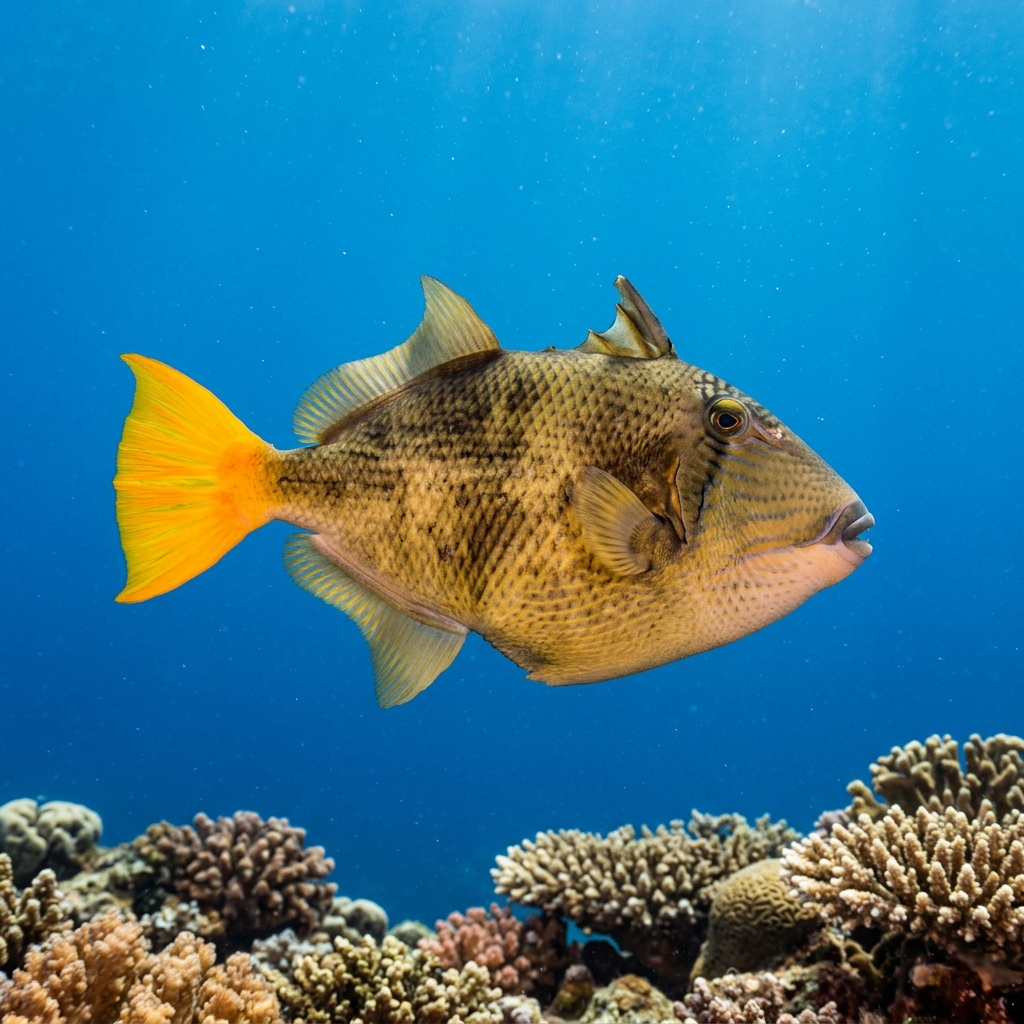
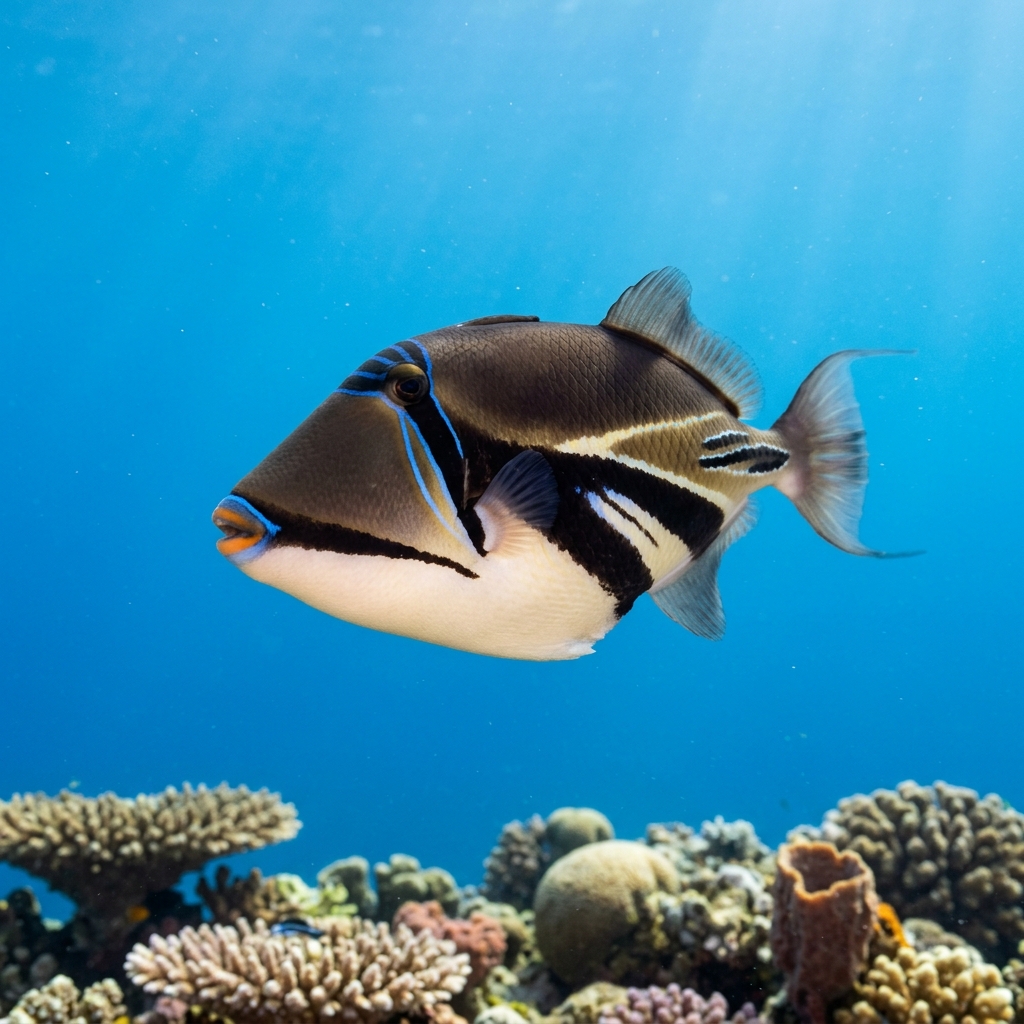
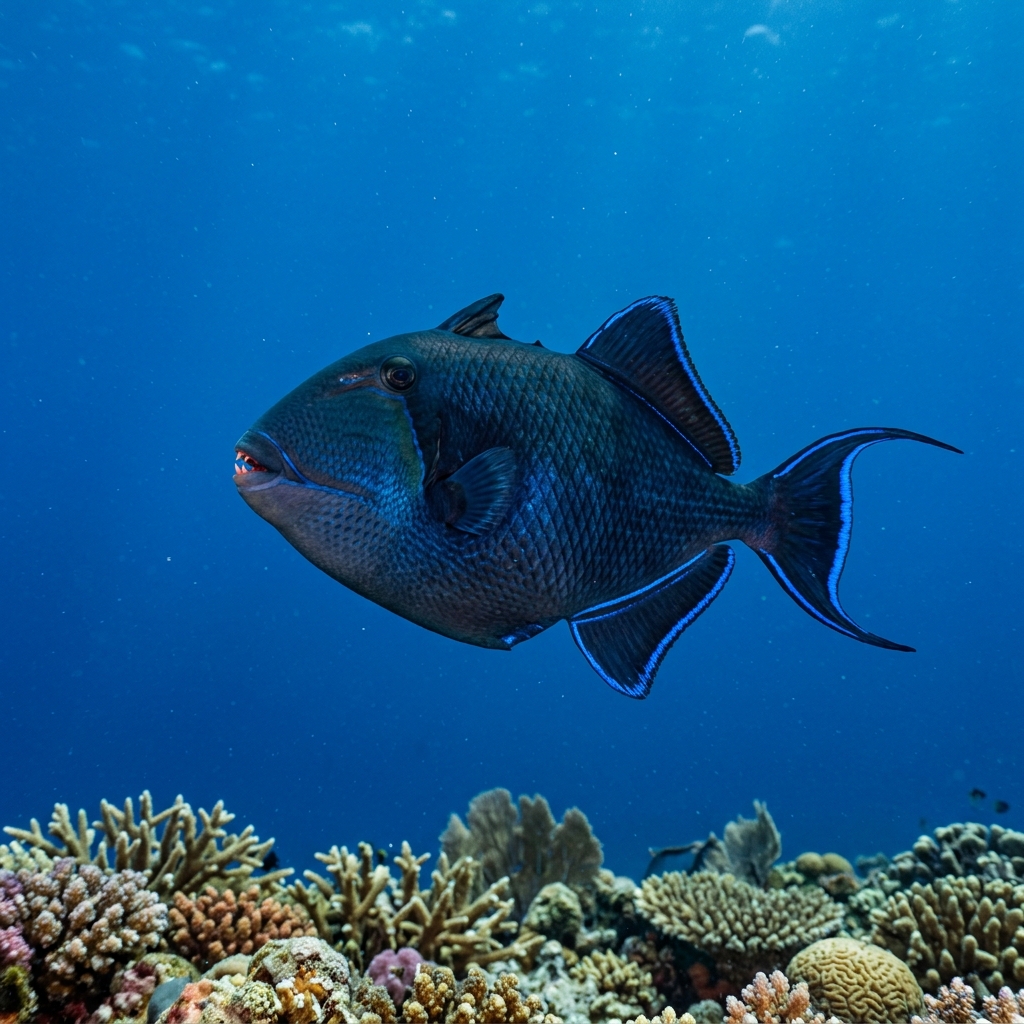
A small, deep-bodied triggerfish reaching about 17 cm, with a mottled brown to olive body and a pale band running back from the eye. The giveaway is a dark, crescent-shaped (scythe-like) blotch near the base of the tail, which is what earns it the name. It swims with the slow, deliberate paddling motion typical of triggerfish, often angled slightly nose-down as it works over the reef.
Usually spotted alone, hovering or nosing around rubble and coral edges at moderate depth as it picks at small invertebrates and algae. It tends to keep a cautious distance from divers rather than confronting them, and will often duck into a crevice if approached too fast. Most sightings come from routine reef and drop-off dives rather than any particular time of day.
Like other triggerfish, it can lock its dorsal spine upright to wedge itself into a reef crevice at night or when threatened, making it hard for predators (or a curious diver's hand) to pull it out.
No clear seasonal pattern shows up in the data, and its comfort range of roughly 24 to 29 C matches tropical reef temperatures year-round, so any month works for a sighting.
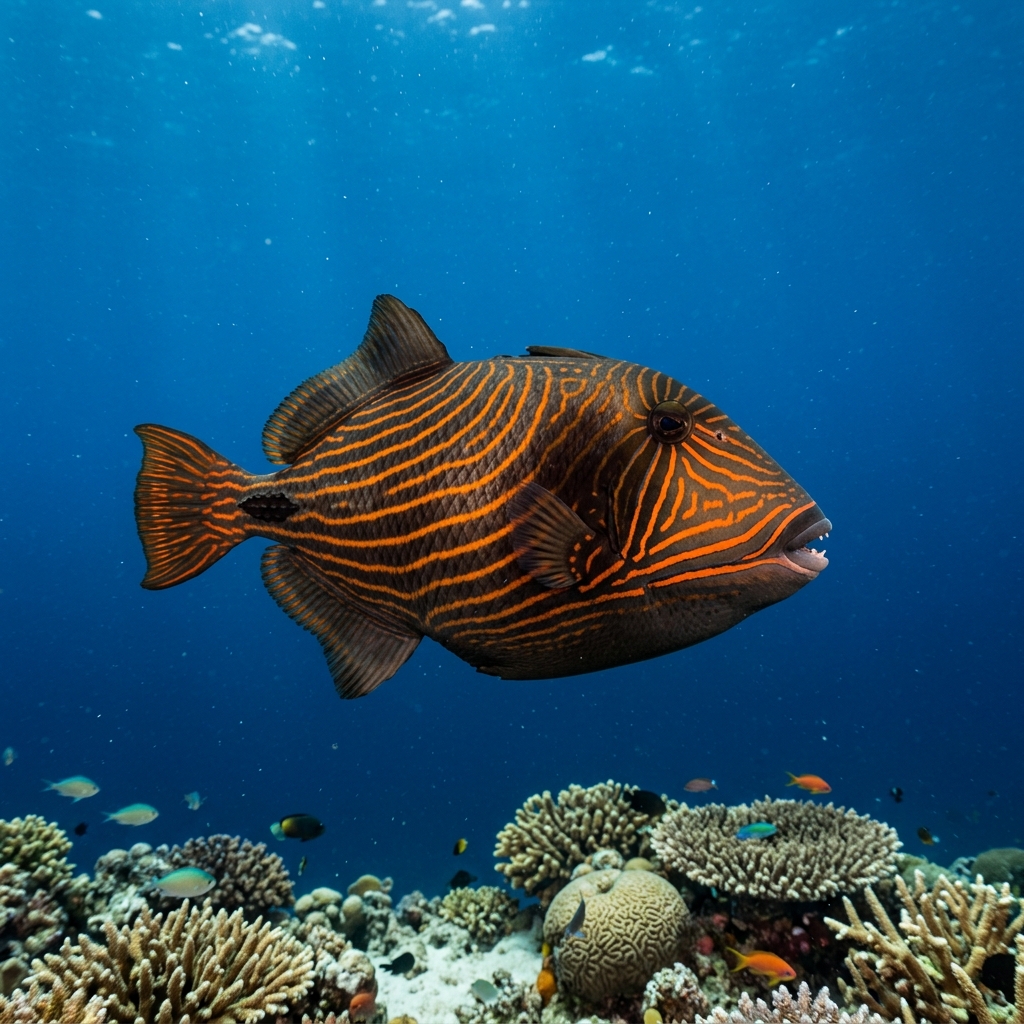
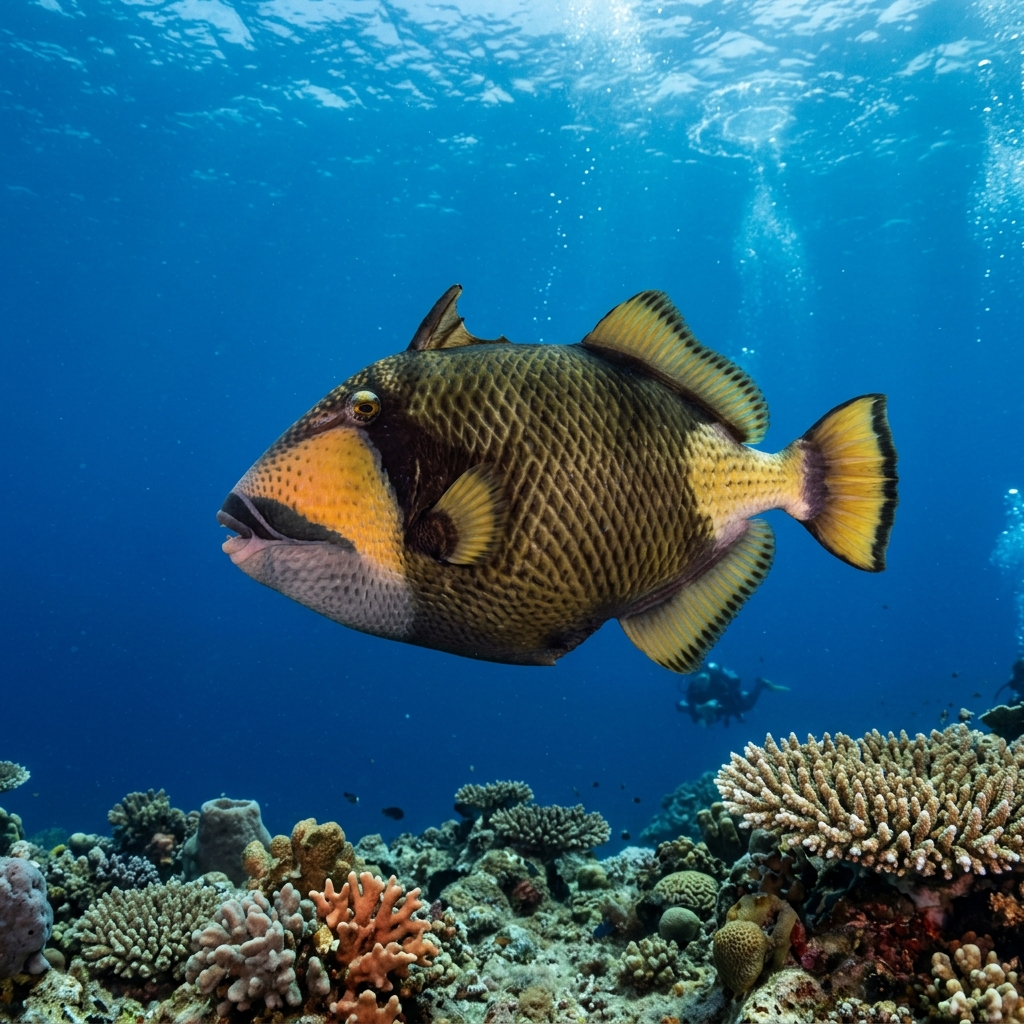
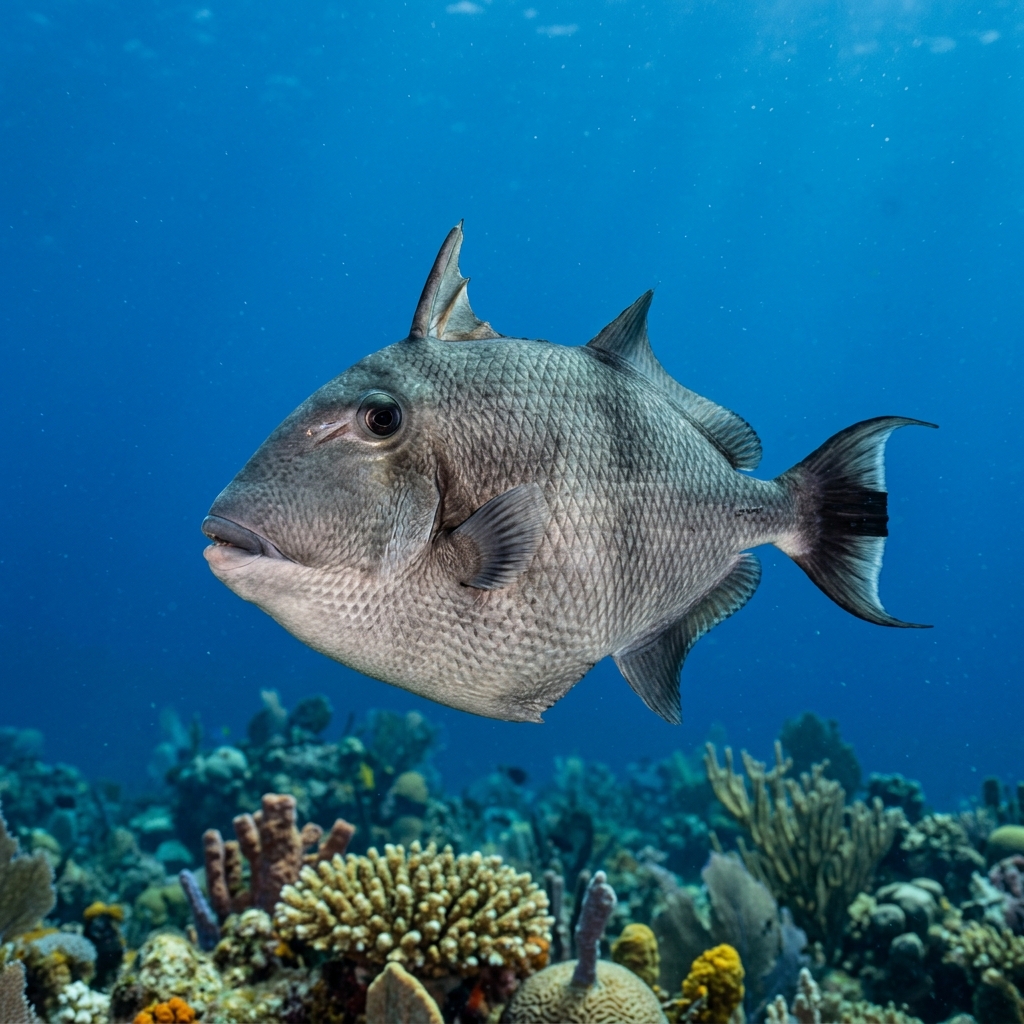
Reef neighbours a diver could mistake it for. Use the identification notes above to tell them apart.
Most reliably logged in the Maldives, especially the Central, Northern and Southern Atolls, where it turns up on a large share of reef dives. Outside the Maldives it has strong populations in the Philippines (Visayas, Luzon), Indonesia (Sulawesi), Hawaii and Queensland, Australia, making it a fixture across the wider Indo-Pacific.
Mapping where Scythe Triggerfish is logged…
The Maldives is the most consistent place to find one, particularly the Central, Northern and Southern Atolls. Good numbers also turn up in the Philippines, Indonesia's Sulawesi region, Hawaii and Queensland, Australia.
There is no strong seasonal signal in sighting data, and it stays within a warm 24 to 29 C range typical of tropical reefs year-round, so divers report it in any month.
Look for a small, deep-bodied triggerfish around 17 cm with a mottled brown body, a pale eye stripe, and a dark crescent mark near the tail base. Its slow paddling swim and habit of hovering close to the reef help confirm the ID.
They typically reach about 17 cm in length, making them one of the smaller triggerfish divers encounter on Indo-Pacific reefs.
No, they are not considered dangerous to divers. They tend to retreat from divers rather than approach, unlike some larger, territorial triggerfish species.
Site and sighting data is aggregated from diver logs, iNaturalist and GBIF. For taxonomy and conservation status:
Lagoon Triggerfish
2,435 sites