Azurina atrilobata
Small blue-grey damselfish with a forked tail, most reliably logged along Baja California and Guanacaste, Costa Rica year-round.
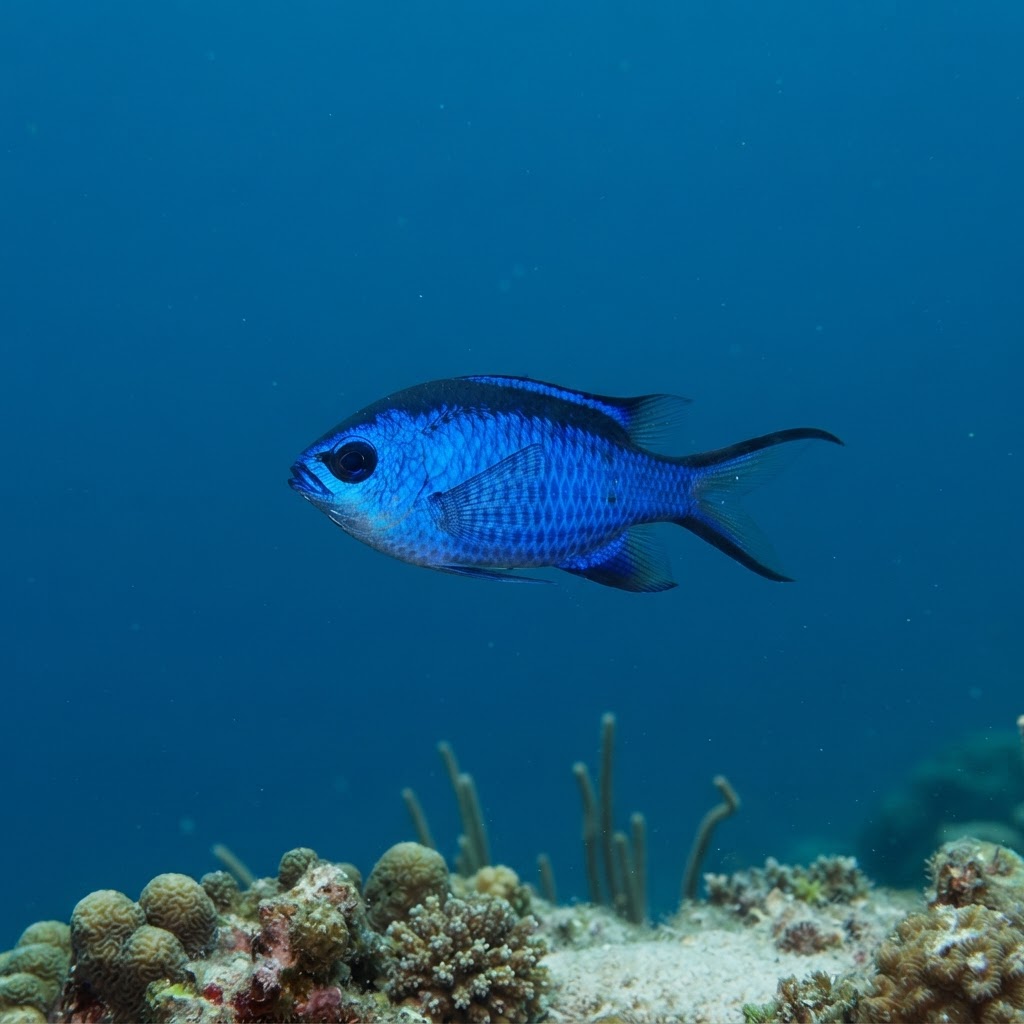
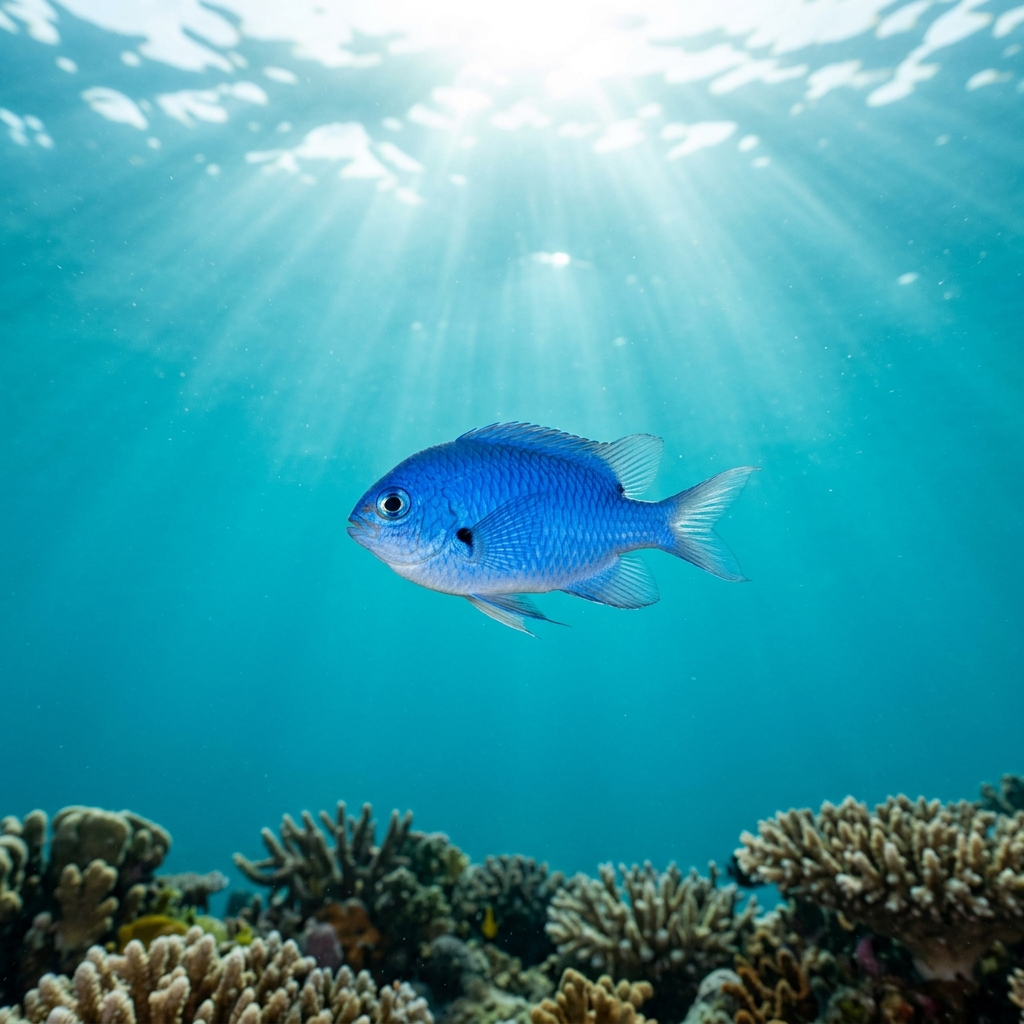
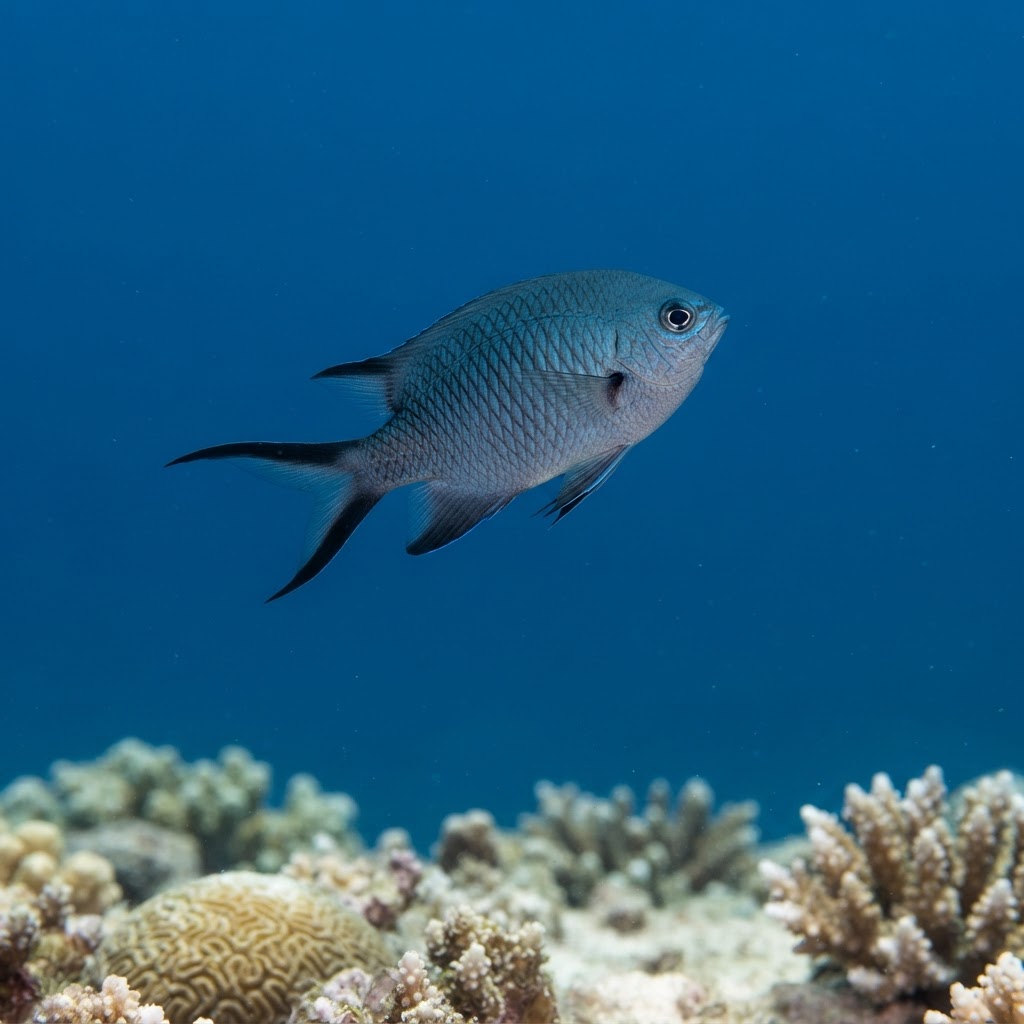
A slim, 9 cm damselfish with a grey to blue-grey body that fades paler toward the belly, topped off by a deeply forked tail that gives it its scissor-like name. Look for the dark smudge at the base of the pectoral fin and the way the tail lobes flick apart as it swims, a shape that sets it apart from the blunter tails of most reef damselfish. It tends to hold a mid-water position over rocky or reef structure rather than hugging the bottom.
Divers usually find small groups holding a loose formation in mid-water above rocky reef or drop-offs, picking at drifting plankton as it passes rather than feeding off the substrate. It is not a fish that reacts much to divers, generally continuing to feed and hold station at depth rather than darting for cover. Most logs place it anywhere from shallow reef down to well past recreational depths, so it can show up on both easy reef dives and deeper drop-offs.
Its habit of feeding on plankton well off the bottom, rather than grazing algae like many reef damselfish, is what puts it in loose schools hanging in open water above the reef instead of tucked into crevices.
Sightings show no detectable seasonal pattern, and with a comfortable range of roughly 21 to 28.5 C it stays active on these Eastern Pacific reefs and rocky slopes year-round. Divers can reasonably expect a shot at it on any trip to its core range rather than needing to time a particular month.
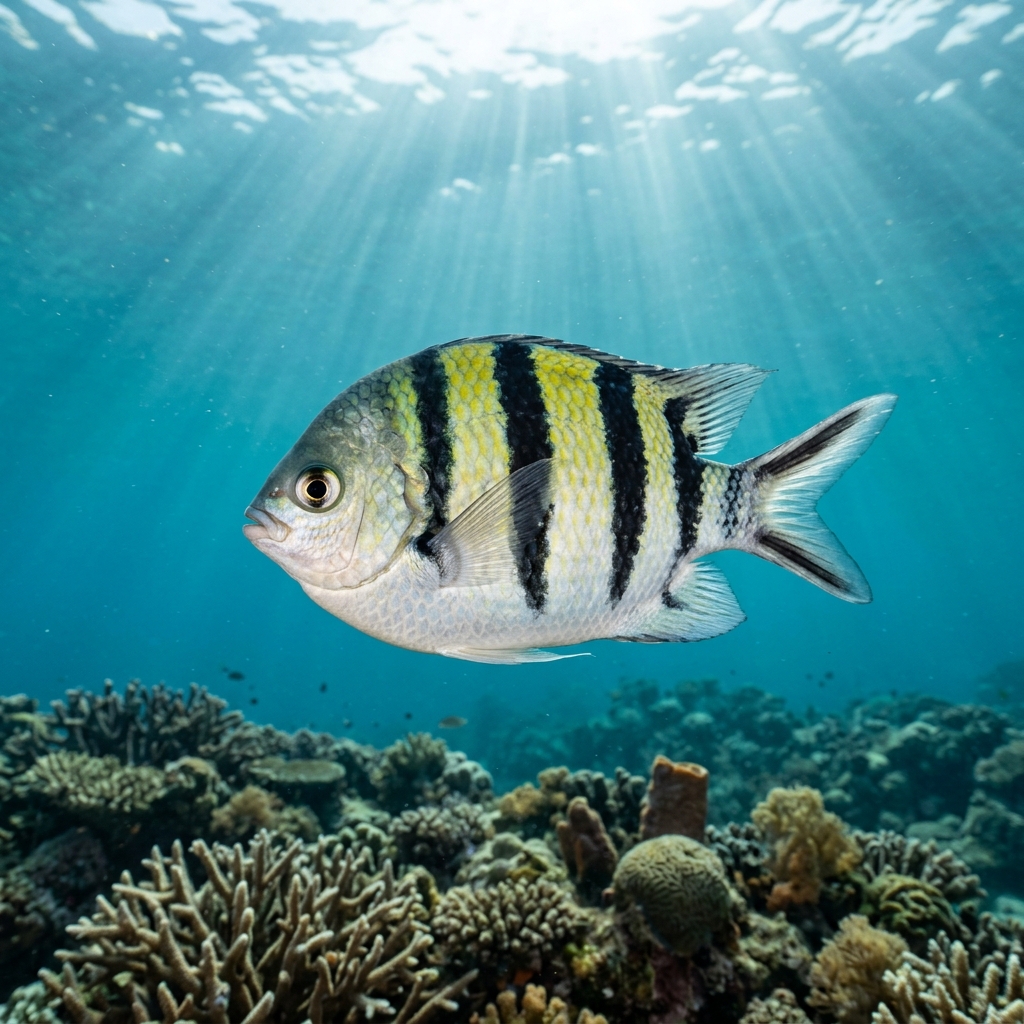
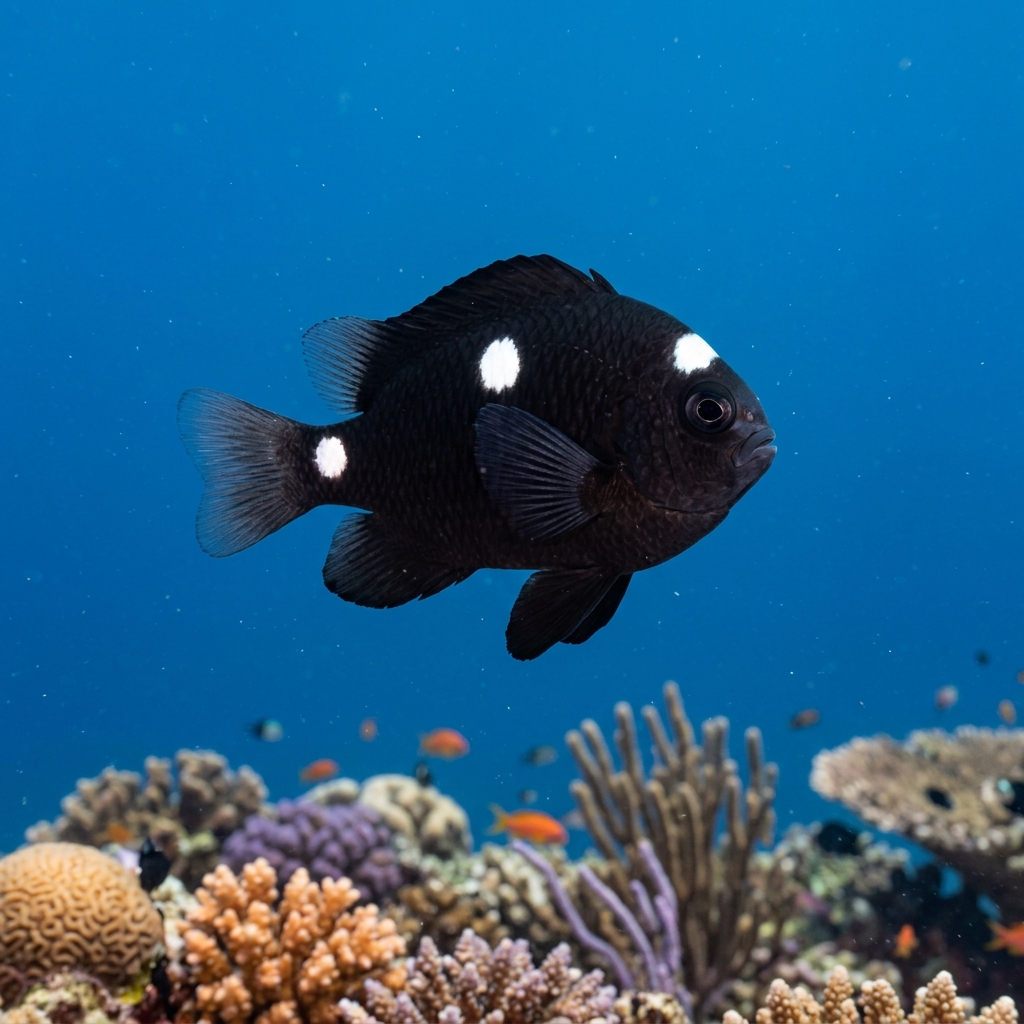
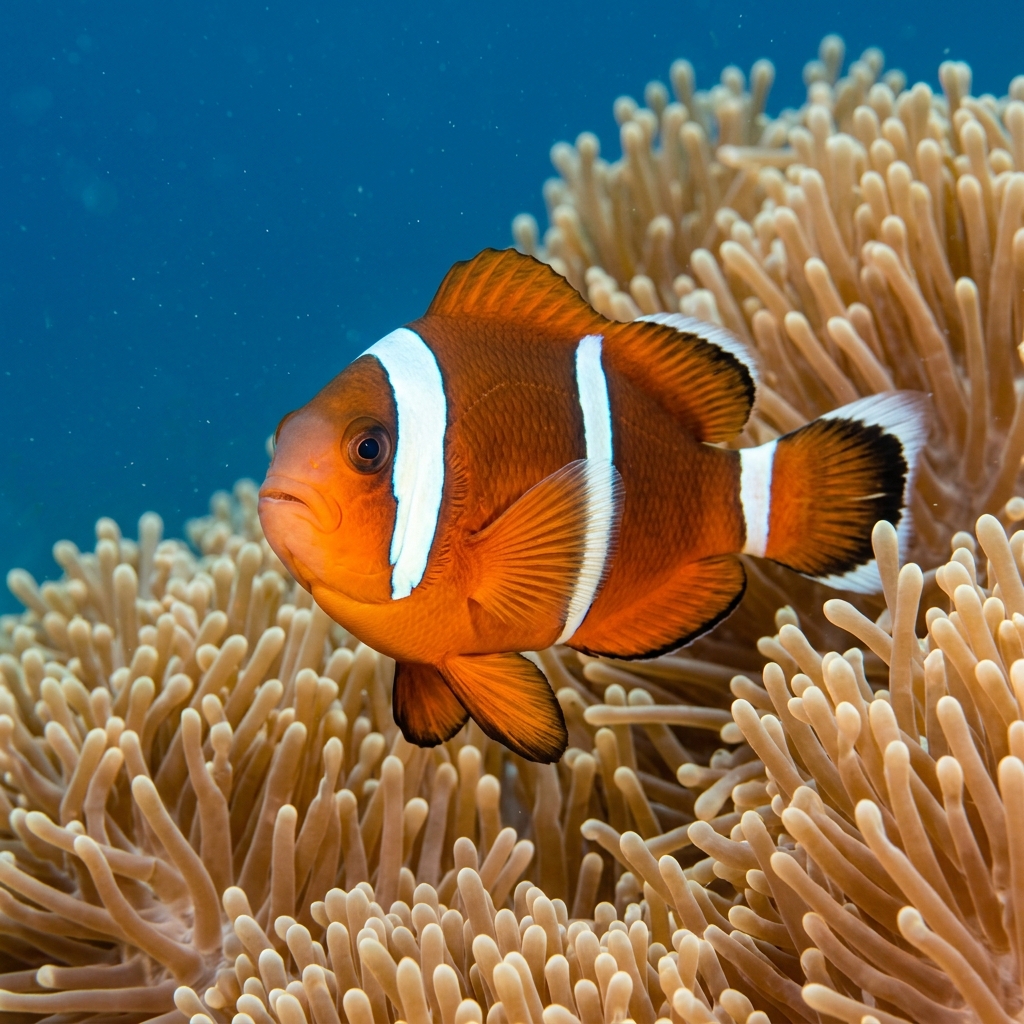
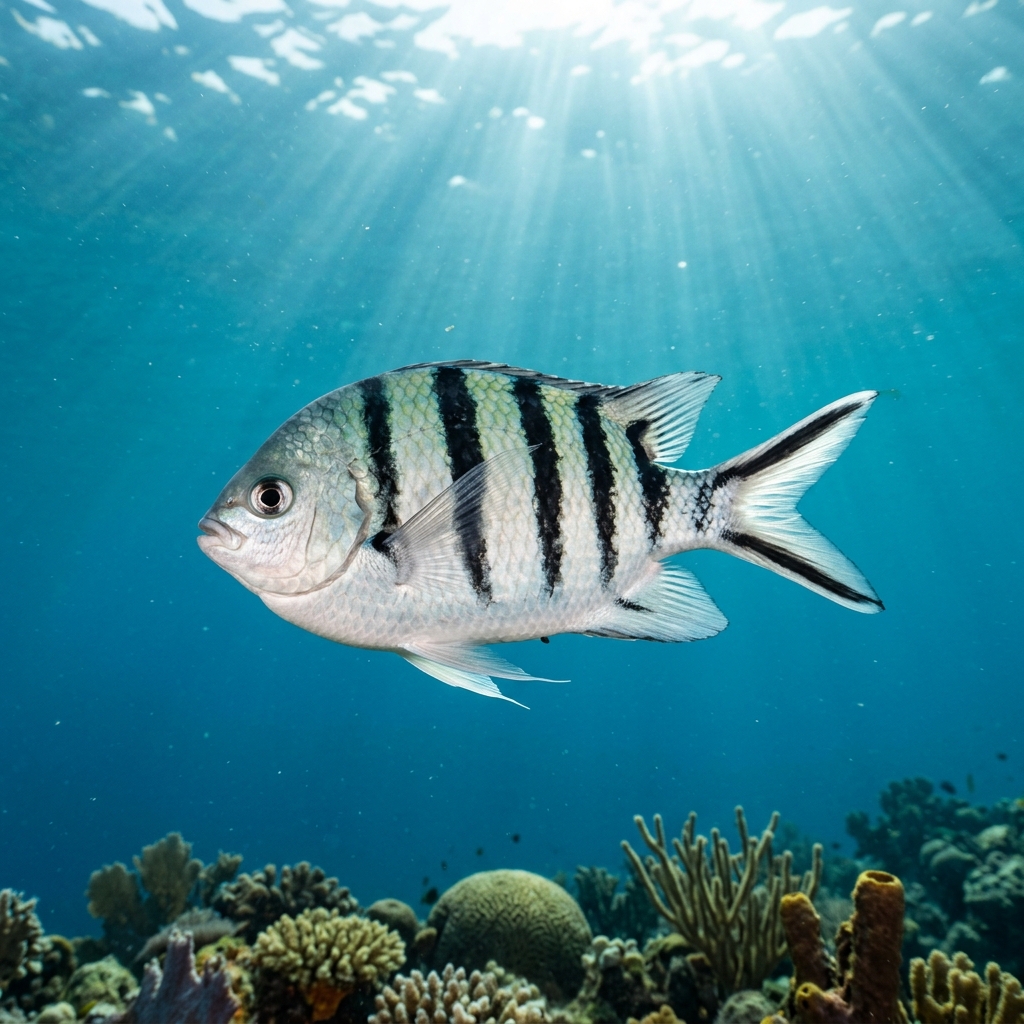
Reef neighbours a diver could mistake it for. Use the identification notes above to tell them apart.
This is a Pacific-side species, most commonly logged along Baja California and the Pacific Coast of Mexico, with a strong presence around Guanacaste and the South Pacific coast of Costa Rica. It also turns up reliably around Panama's Pacific coast, the Galápagos Islands in Ecuador, and as far south as Pucusana in Peru.
Mapping where Scissortail Damselfish is logged…
It is most reliably seen along Baja California and the Pacific Coast of Mexico, and it is also a common find in Guanacaste and southern Costa Rica, Pacific Panama, the Galápagos Islands, and even down to Pucusana in Peru.
There is no strong seasonal pattern in sightings, and its comfortable temperature range of about 21 to 28.5 C means it is present on Eastern Pacific reefs throughout the year.
Look for a small grey-blue damselfish around 9 cm with a deeply forked tail that opens like a pair of scissors, plus a dark mark near the base of the pectoral fin. It usually hovers in loose groups over rocky reef rather than sitting on the bottom.
They stay small, topping out at around 9 cm, which is typical for damselfish on Eastern Pacific reefs.
No. They are not considered dangerous to divers and simply carry on feeding or holding position when divers approach.
Unlike many damselfish that graze algae on the reef, this species feeds on plankton drifting in open water, which is why it is often seen hovering in loose groups above the reef rather than picking at the substrate.
Site and sighting data is aggregated from diver logs, iNaturalist and GBIF. For taxonomy and conservation status:
Dascyllus
3,697 sites