Pseudolabrus miles
Scarlet wrasse turn up on North Island reefs at 11 to 17C, spotted year-round on dives across New Zealand.
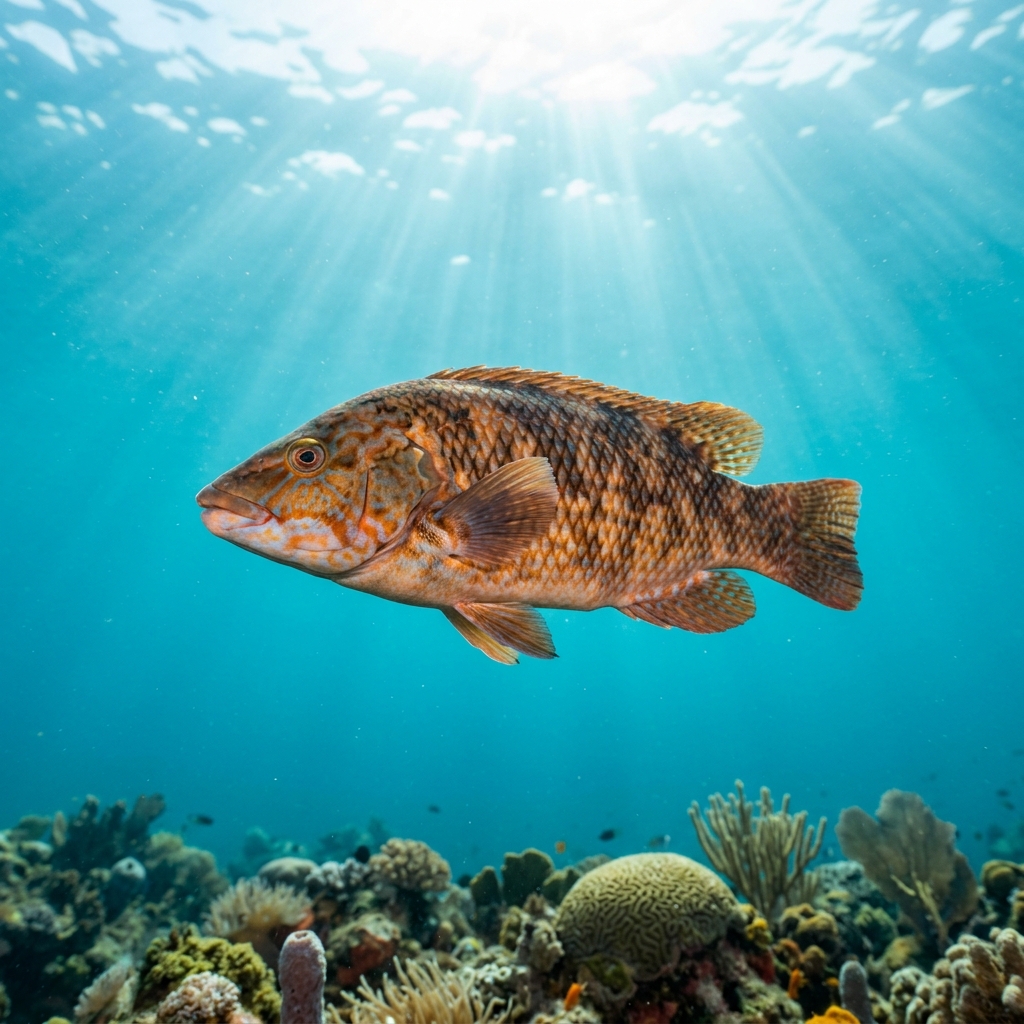
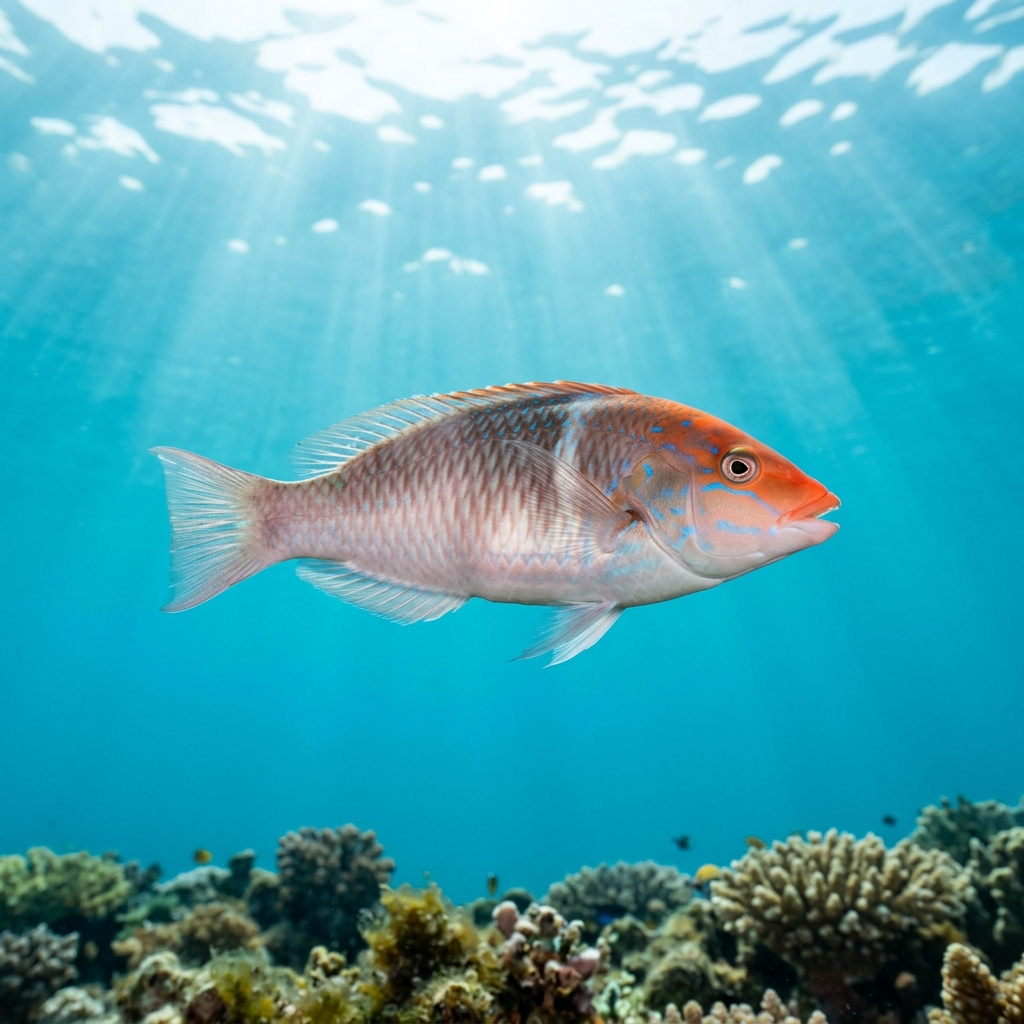
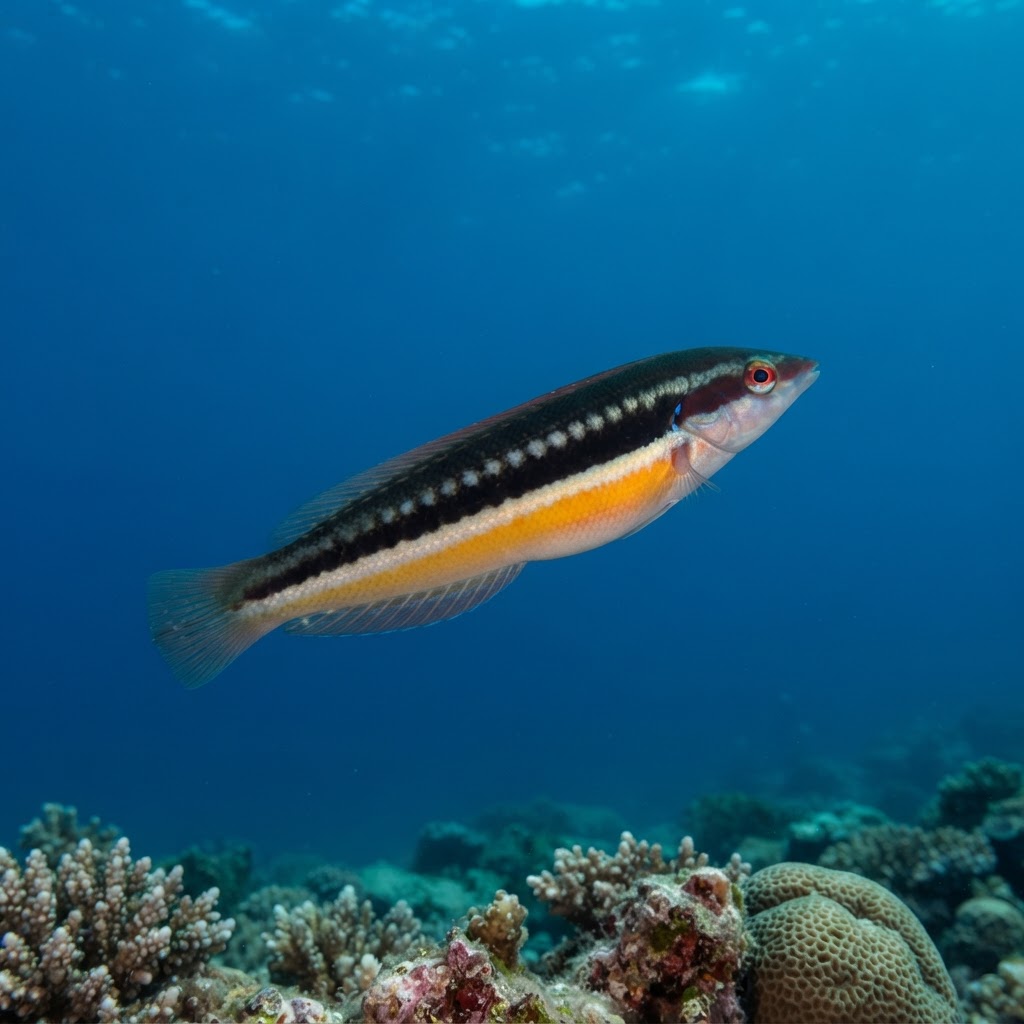
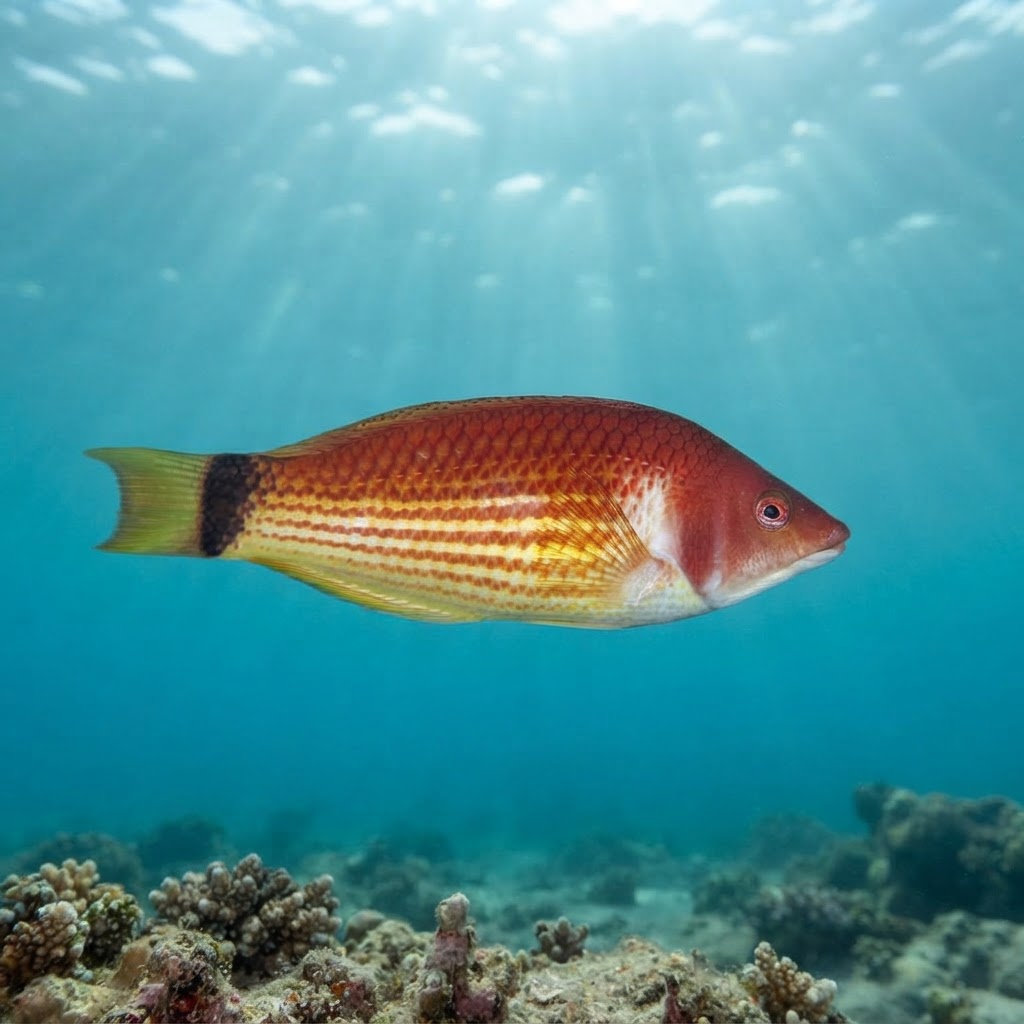
A slender, torpedo-shaped wrasse around 19 cm long, usually seen in shades of reddish-orange to scarlet with mottled pale patches along the flanks. It swims with the characteristic wrasse flutter, using its pectoral fins for short bursts rather than a full-body sweep. There is no single bold stripe or eye-spot to key on, so overall colour and size against the rocky reef backdrop are the main giveaways in New Zealand waters.
Expect a fish going about its business low over rock and reef structure, picking at crevices rather than schooling in open water. It is not especially bold or shy, most divers log it as an uncommon but steady presence rather than something that approaches or flees. Look for it on the same temperate rocky reefs where kelp and encrusting invertebrates dominate the scenery.
Like many labrid wrasses, scarlet wrasse are thought to change colour and social role as they grow, a pattern common across the family where individuals can shift between colour phases over their lifetime.
Sightings show no clear seasonal pattern, and with a comfortable range of about 11 to 17C it is logged across the year rather than in one particular window. Plan around New Zealand's general dive conditions rather than chasing a season for this species specifically.
This one is a New Zealand speciality, most commonly logged on North Island sites, with a smaller but reliable presence on South Island reefs. Divers see it far more often around the North Island, where reef and rocky-shore dives dominate the sighting log.
Mapping where Scarlet Wrasse is logged…
Scarlet wrasse are a New Zealand fish, most reliably seen on North Island reef dives, with a smaller number of sightings from the South Island.
There is no strong season in the sighting data, so they are logged across the year in water ranging from roughly 11 to 17C. Any time you are diving North Island or South Island reef sites gives you a reasonable chance.
Look for a slim, roughly 19 cm wrasse in reddish-orange tones with mottled pale patches, moving low over rocky reef using quick pectoral-fin strokes. There is no single diagnostic stripe, so size, colour and the temperate rocky habitat together confirm the ID.
They typically reach around 19 cm, a modest, easy-to-overlook size compared with larger reef wrasses.
No, they pose no danger to divers and simply go about feeding on the reef when approached.
They are logged as uncommon at most New Zealand sites where divers record them, occasionally common and occasionally rare depending on the site, so seeing one is plausible but not guaranteed on any given dive.
Site and sighting data is aggregated from diver logs, iNaturalist and GBIF. For taxonomy and conservation status:
Bird Wrasse
3,632 sites