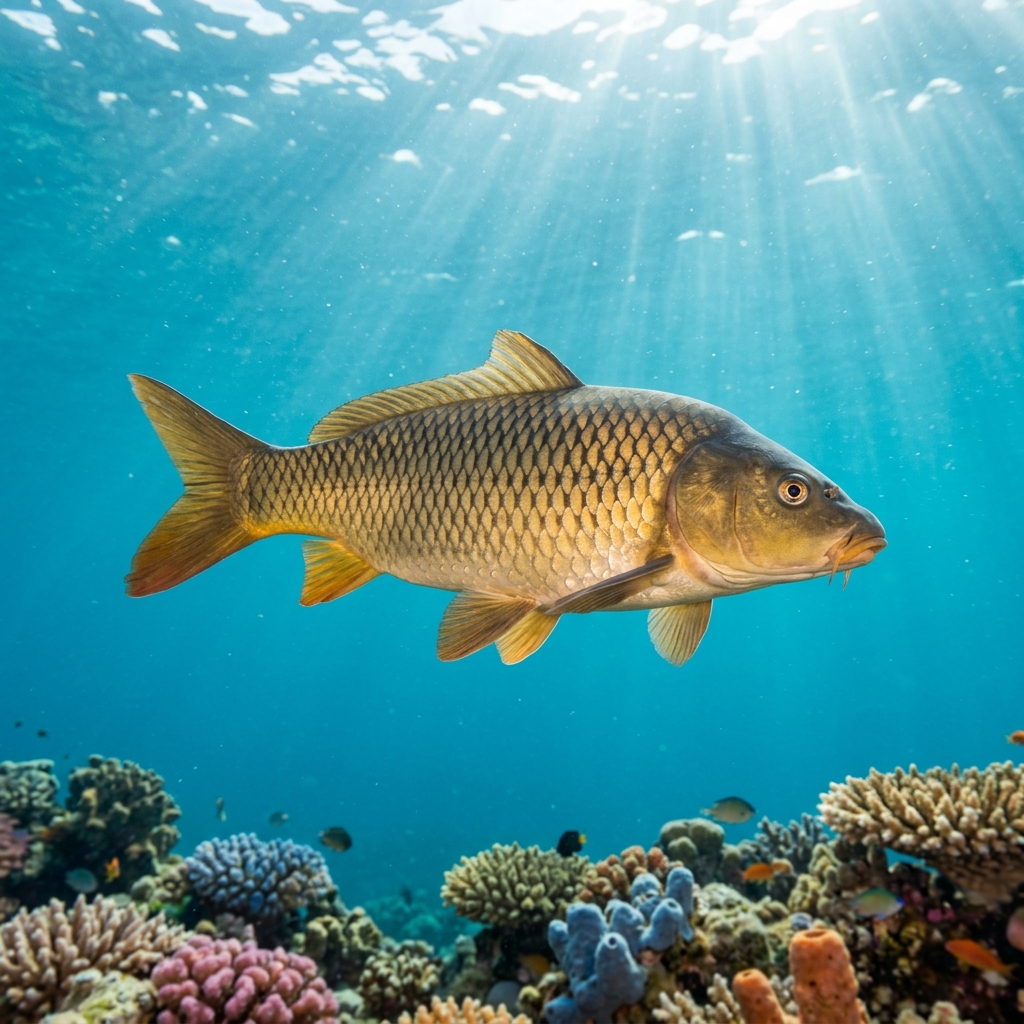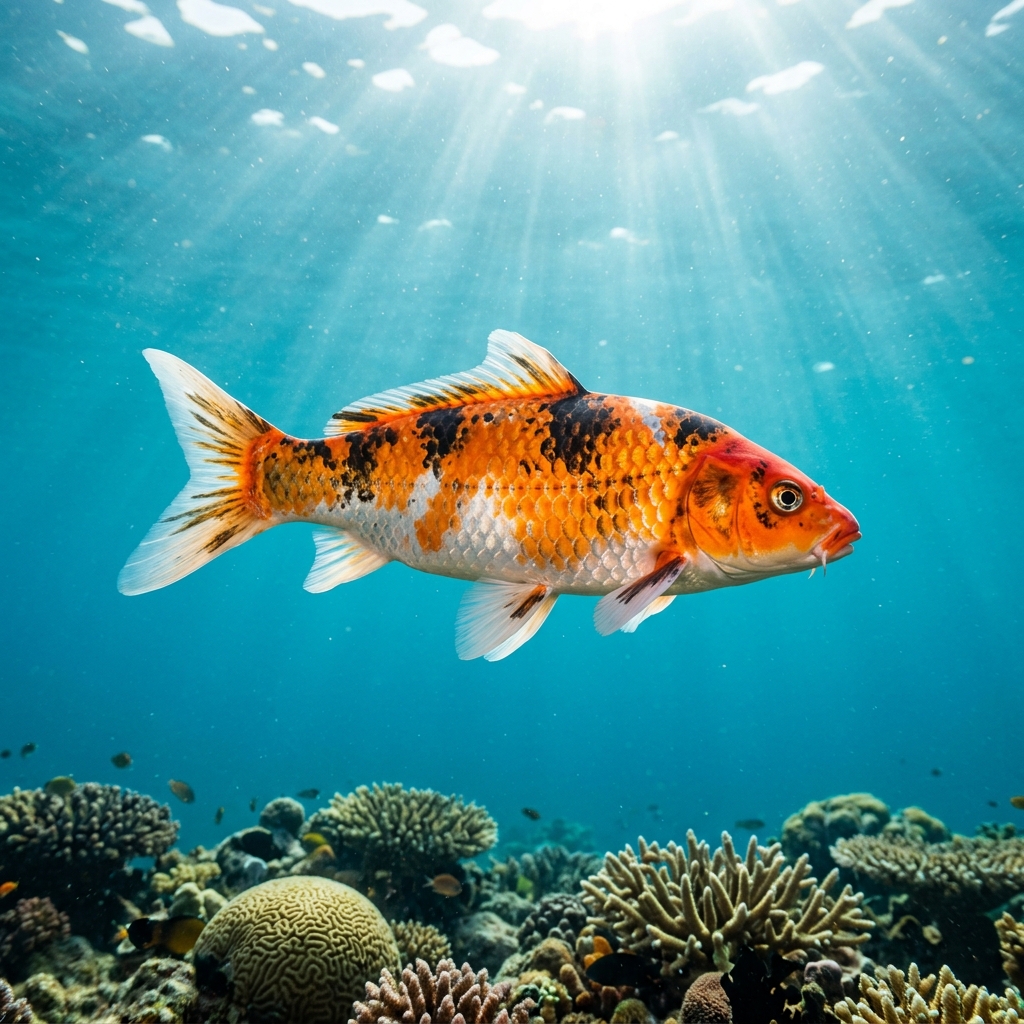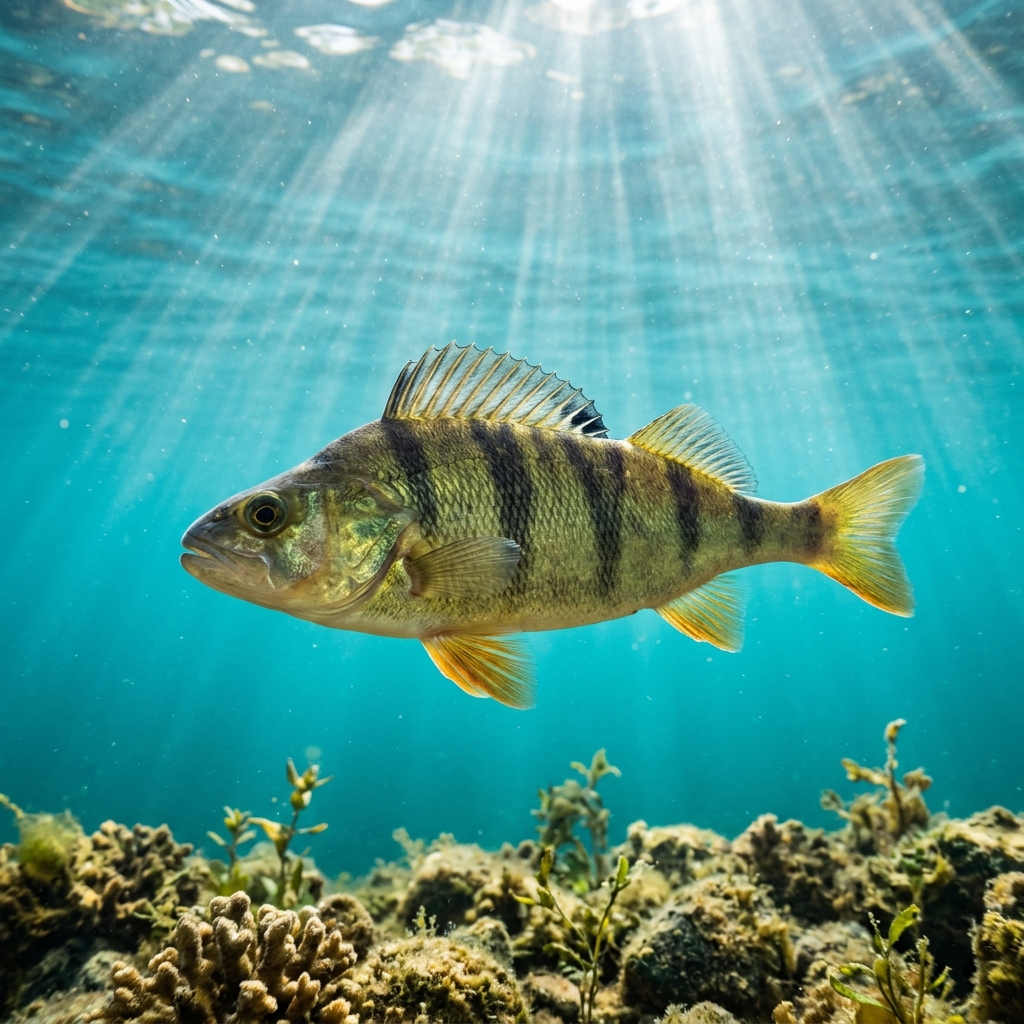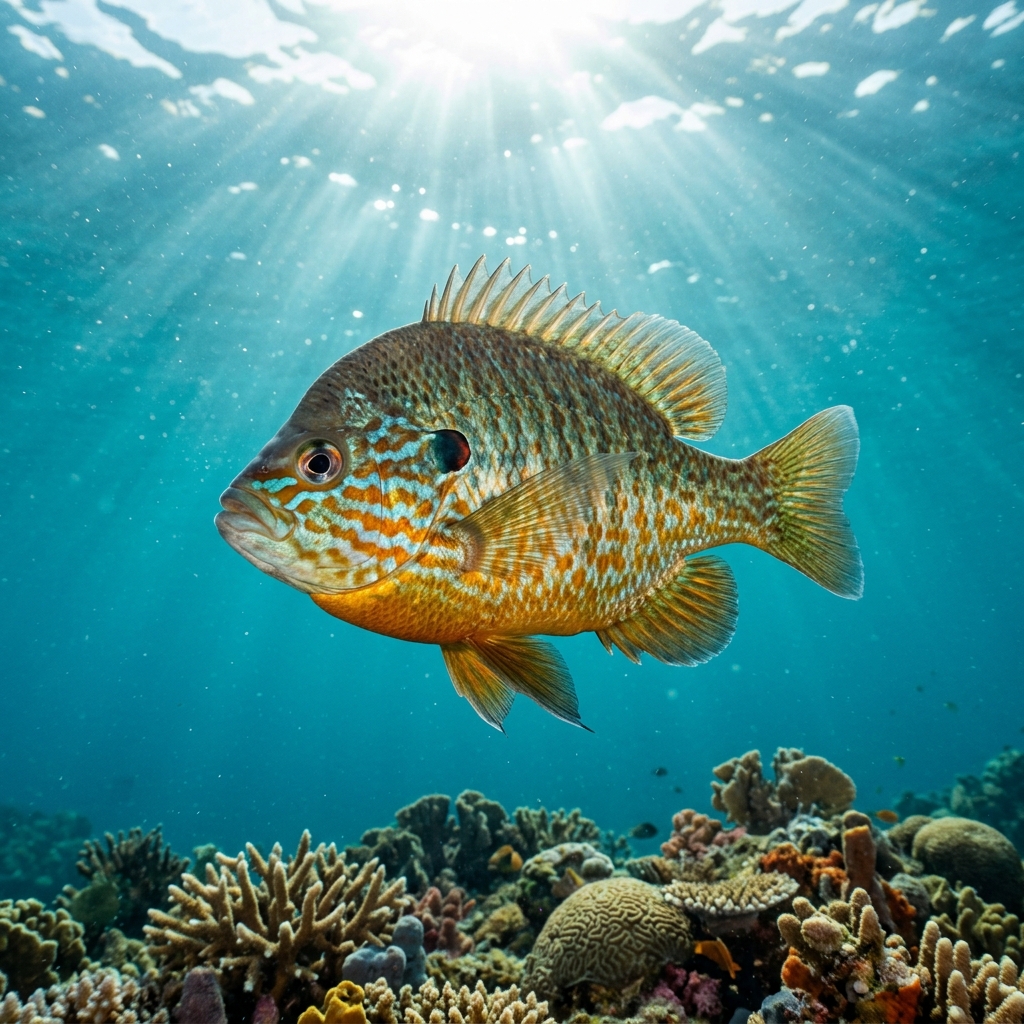
Scardinius erythrophthalmus
Spot rudd in the lakes of Carinthia, the French Alps, and Central Germany. A freshwater fish comfortable from 5 to 25 °C, logged year-round by divers.
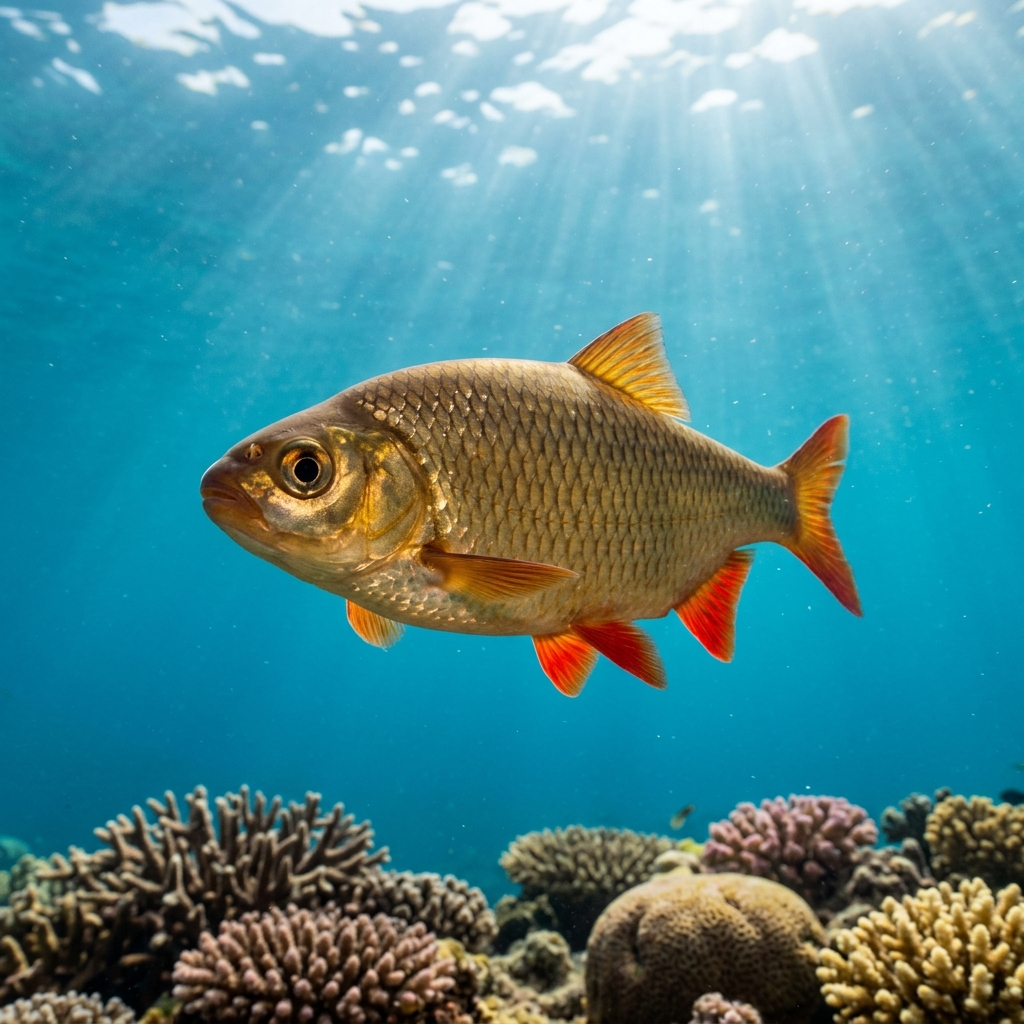
A compact, deep-bodied freshwater fish with golden to olive-green flanks and a silvery belly, the rudd's most reliable field mark underwater is its vivid reddish-orange fins, especially the pelvic and anal fins, which contrast sharply against its pale underside. The mouth tilts noticeably upward, a useful cue at close range. Adults typically reach 20 to 35 cm in the water, though larger individuals are not unusual in well-fed lake populations.
Rudd tend to hang in the mid-water or near the surface among aquatic vegetation, often in loose shoals that hold position rather than bolt. They are not especially skittish, and a slow, measured approach will usually let you observe them at arm's length before they drift off. In vegetated shallows you may catch them feeding at the surface, tilting upward to take items from the water's surface film.
The upturned mouth is not just a curiosity; rudd are one of the few cyprinids that regularly feed at the surface rather than from the bottom, which is why you so often spot them angled toward the surface film rather than rooting in the substrate.
There is not enough monthly sighting data to point to a peak season, so rudd can be treated as a year-round target. Their wide temperature tolerance, from just under 5 °C to 25 °C, means they remain active across most of the freshwater diving calendar.
Rudd are most frequently logged in the lake districts of Carinthia, Austria, which accounts for the largest share of recorded sites, followed by Vienna and Lower Austria. Strong sightings also come from Central Germany, the French Alps, and the Great Lakes region of Canada, making this a species best sought in clear, vegetated European and North American freshwater lakes.
Mapping where Rudd is logged…
Rudd are most reliably encountered in the lake districts of Carinthia and the Vienna and Lower Austria region. Central Germany, the French Alps, and the Great Lakes area of Canada are also productive. They favour clear, vegetated freshwater lakes and slow rivers.
No clear seasonal peak has emerged from diver sightings, so rudd are treated as a year-round species. Their broad temperature range, from just below 5 °C to 25 °C, means they stay active in temperate freshwater systems throughout the year.
Look for a silvery, deep-bodied fish with distinctly reddish-orange fins and a slightly upturned mouth. The vivid fin colour is the quickest way to pick rudd out from other silvery freshwater species. They are typically found near surface vegetation rather than close to the bottom.
In most European lake populations, rudd reach around 20 to 35 cm in length. The data block for this species does not include a confirmed typical size from diver observations, but 25 to 30 cm is a reasonable expectation for a healthy adult.
No. Rudd pose no threat to divers whatsoever. They are a small, non-aggressive freshwater fish that will simply move away if approached too quickly.
Unlike most members of their family, rudd feed primarily at or near the surface rather than from the lakebed. Their upturned mouth is adapted for picking food from the surface film, so you will often see them tilted upward near aquatic plants, a distinctive posture that sets them apart from bottom-feeding relatives.
Site and sighting data is aggregated from diver logs, iNaturalist and GBIF. For taxonomy and conservation status:
Sun Perch
2,182 sites