Artedius harringtoni
Look for scalyhead sculpin perched on rocky reefs in British Columbia, 7-13C water, spottable year-round if you know where to look.
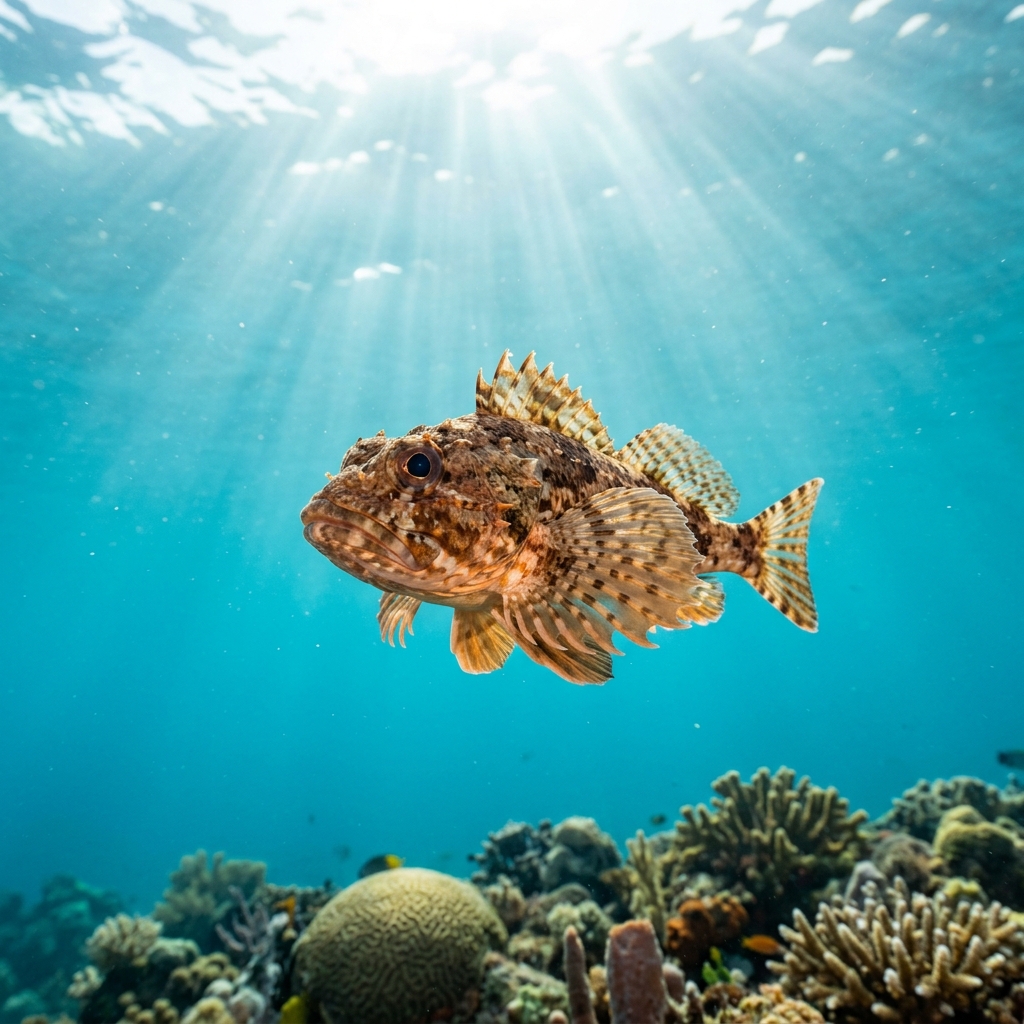
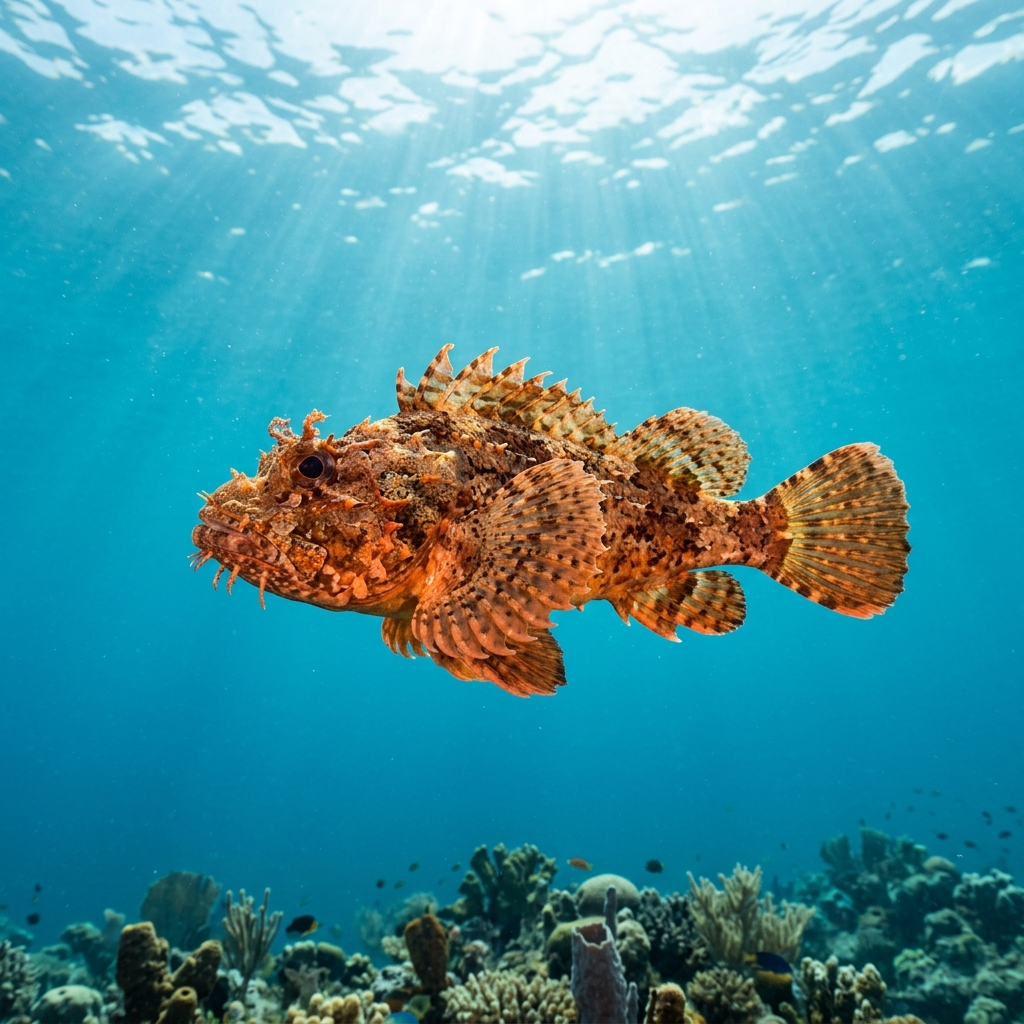
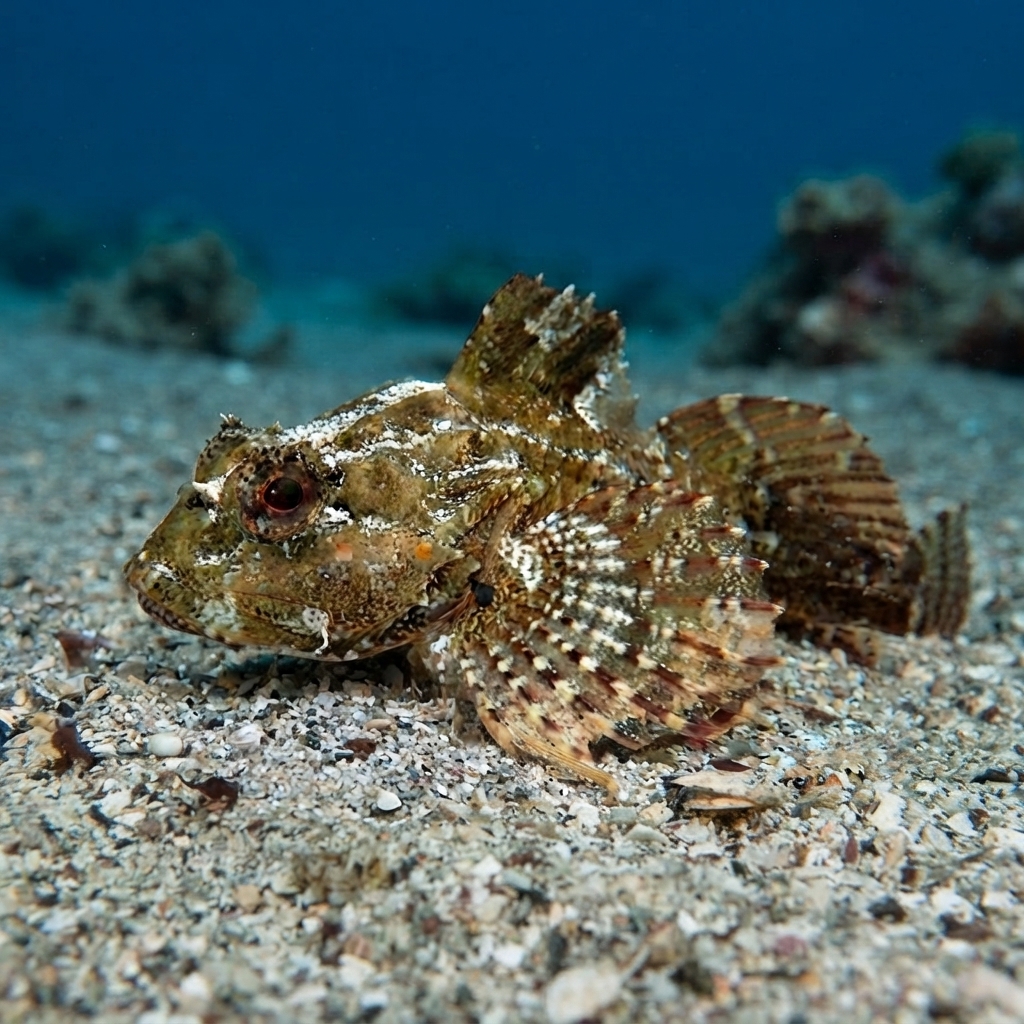
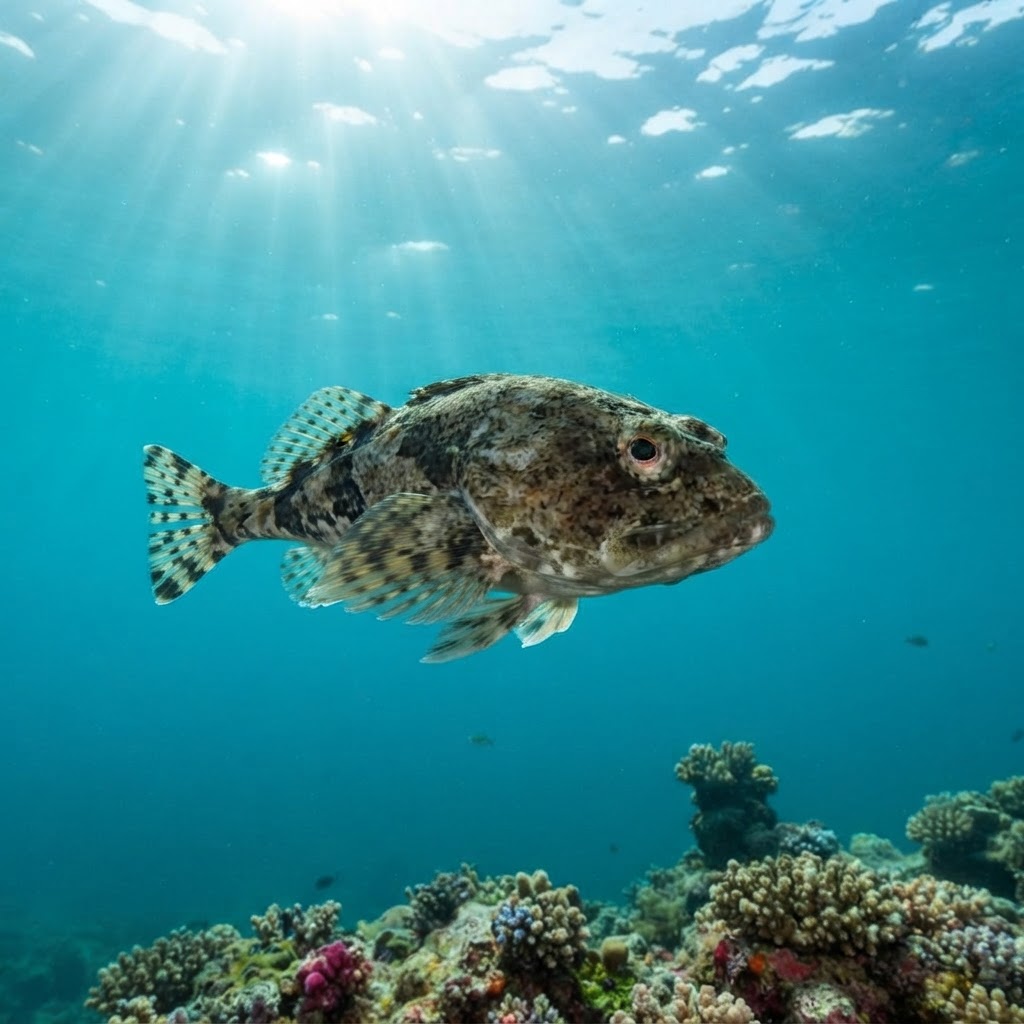
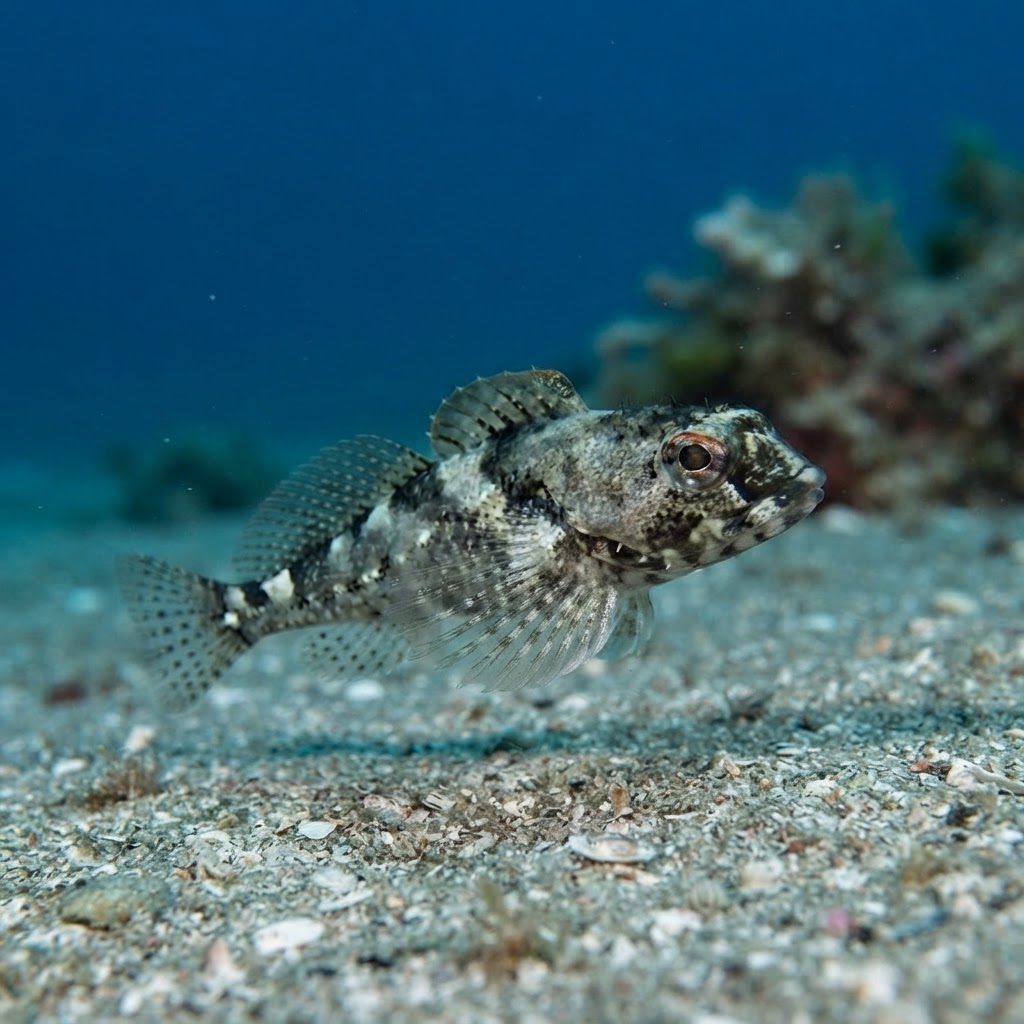
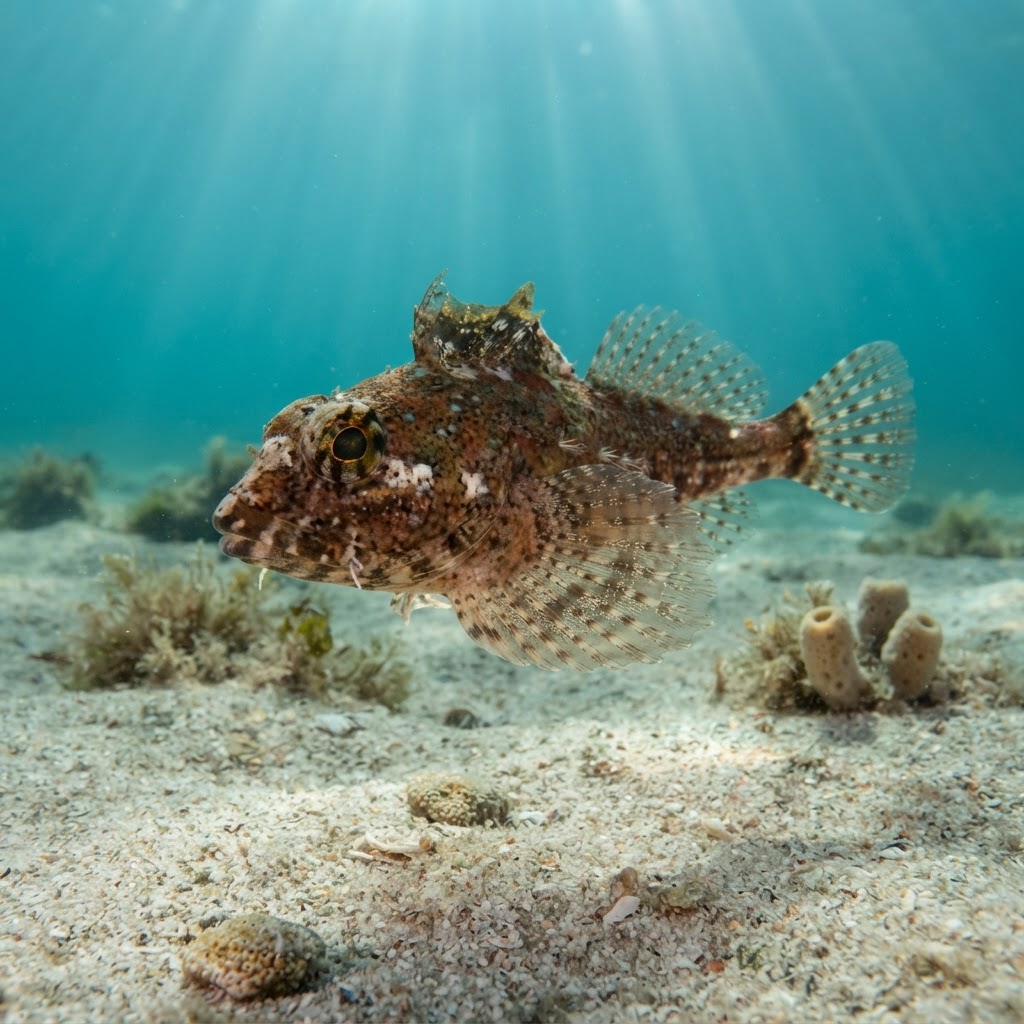
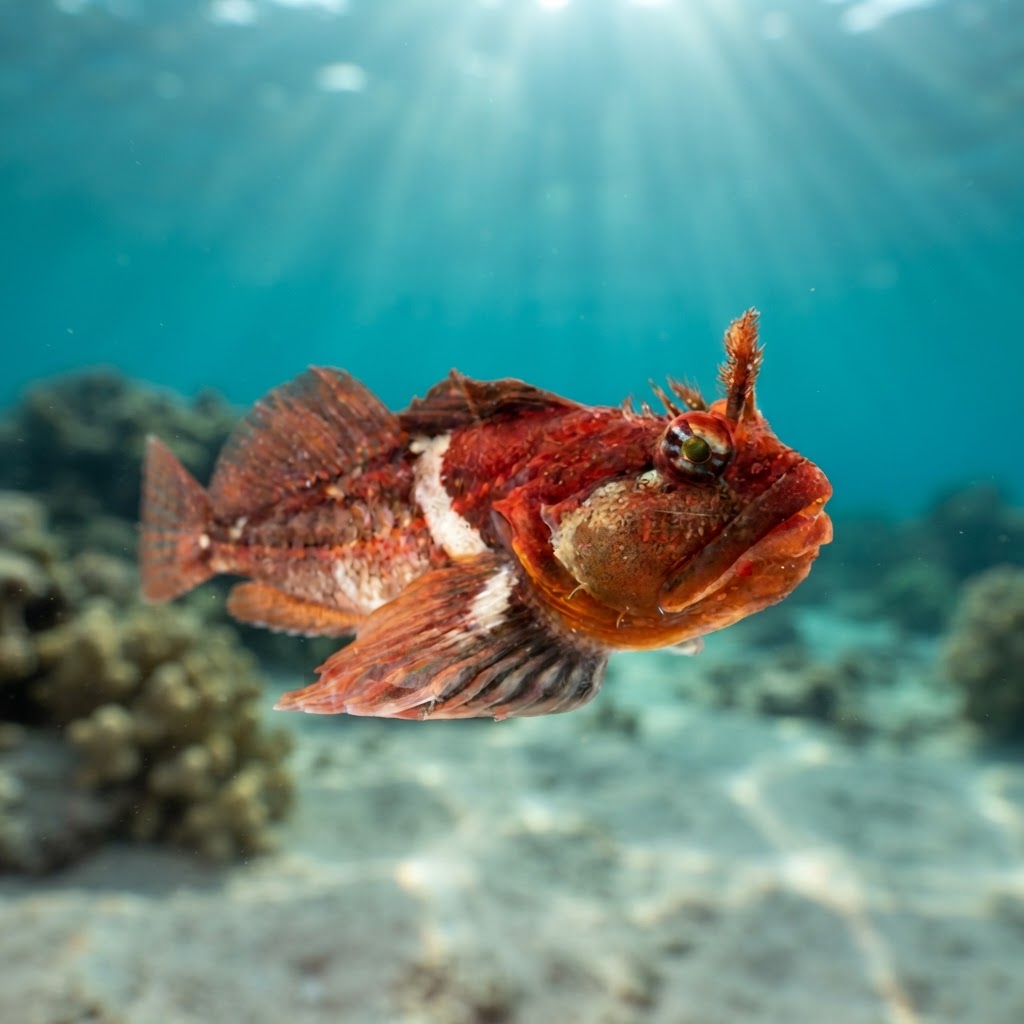
A stubby, big-headed little fish barely 7 cm long, usually seen perched motionless on rock or encrusted substrate rather than swimming in open water. Colour ranges through reds, browns and oranges in a mottled pattern that breaks up its outline against rocky reef. The giveaway is the fleshy, branched cirrus (a small skin flap, glossed once) above each eye, giving the head a slightly spiky, tufted look that separates it from smoother-headed sculpins nearby.
Expect to find it sitting still on rock, cobble or encrusted reef rather than cruising about, relying on its mottled colouring to disappear against the substrate. It tends to hold its ground as divers approach, more likely to freeze than flee, which makes it a manageable subject for a patient macro shot once you've picked out its shape from the background. Most logs describe it as an uncommon to rare find, so treat any sighting as a bit of a scavenger hunt rather than a guaranteed tick.
Those branched cirri above the eyes aren't just decoration, they help break up the fish's outline against rocky, algae-covered substrate, which is likely why so many divers report having to look twice to spot one that was sitting still the whole time.
Sightings show no detected seasonal pattern, and with a temperature niche of roughly 7 to 13C matching the cold water this region holds year-round, there's no strong reason to time a trip around a particular month. Go whenever you're diving BC or the Pacific Northwest and keep your eyes on the rock.
This is very much a Pacific Northwest fish: the overwhelming majority of logged sightings come from British Columbia, Canada, with a smaller but reliable showing across the Pacific Northwest coast of the United States. Divers doing cold-water sites around Vancouver Island and the wider BC coast stand the best chance of finding one tucked against a wall or ledge.
Mapping where Scalyhead Sculpin is logged…
British Columbia, Canada is by far the strongest area for sightings, with additional records from Pacific Northwest sites in the United States. Look on rocky reef and cobble substrate rather than open water.
There's no clear seasonal pattern in the data, so it's considered a year-round sighting wherever the water stays in its comfortable 7 to 13C range, which describes the Pacific Northwest coast most of the year.
Look for a stubby fish around 7 cm long sitting motionless on rock, mottled red-brown, with small branched skin flaps above the eyes. It relies on camouflage rather than movement, so scan slowly rather than looking for something swimming.
They're a small species, typically reaching about 7 cm in length, so they're easy to miss against a busy rocky background.
No, they pose no threat to divers. They simply sit on the substrate and are best appreciated with a careful, non-disruptive approach for photos.
Their most distinctive feature is the branched, fleshy cirrus above each eye, which helps disguise their outline against encrusted rock. It's a classic demersal (bottom-dwelling) camouflage trick rather than a showy display feature.
Site and sighting data is aggregated from diver logs, iNaturalist and GBIF. For taxonomy and conservation status:
Shorthorn Sculpin
228 sites