Xanthichthys ringens
Blue-grey triggerfish with a yellow-ringed eye, most reliably logged on Yucatán Peninsula reefs in warm 20-27.6 C water year-round.
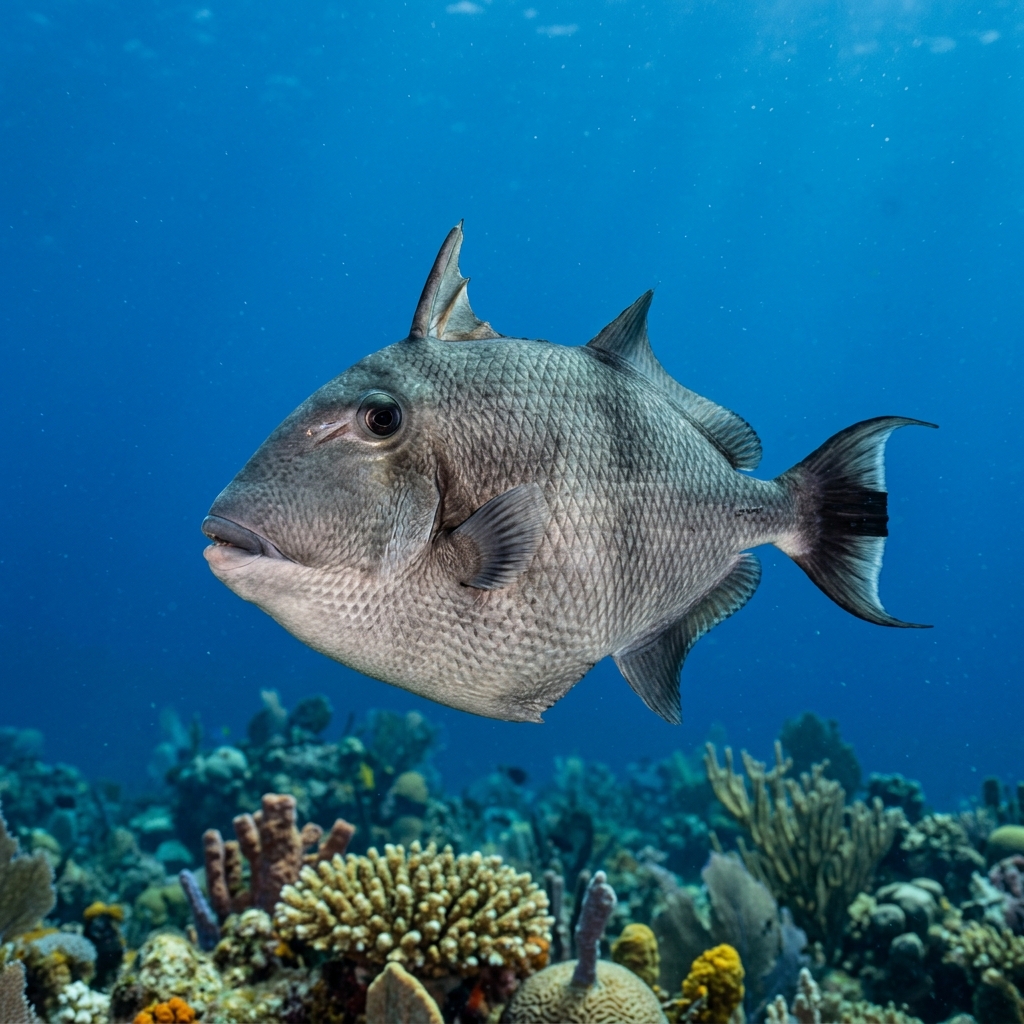
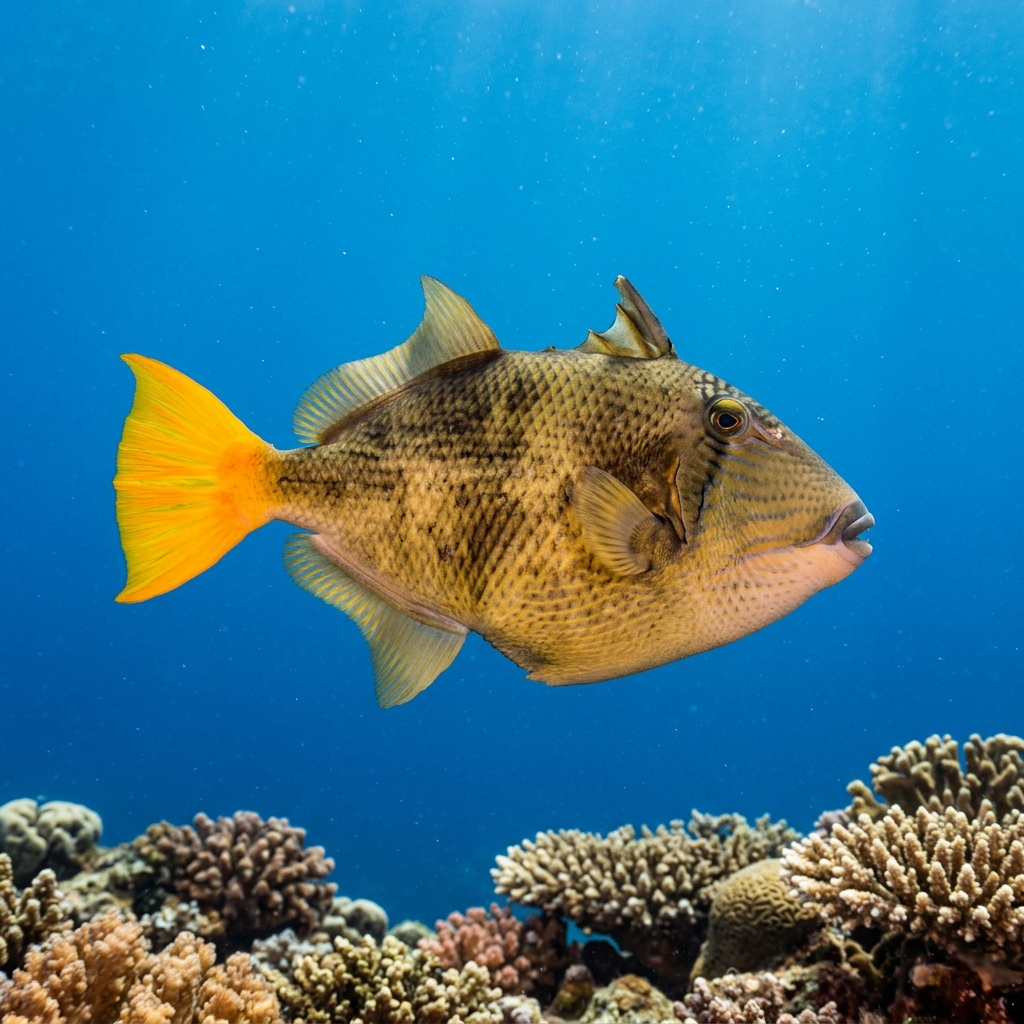
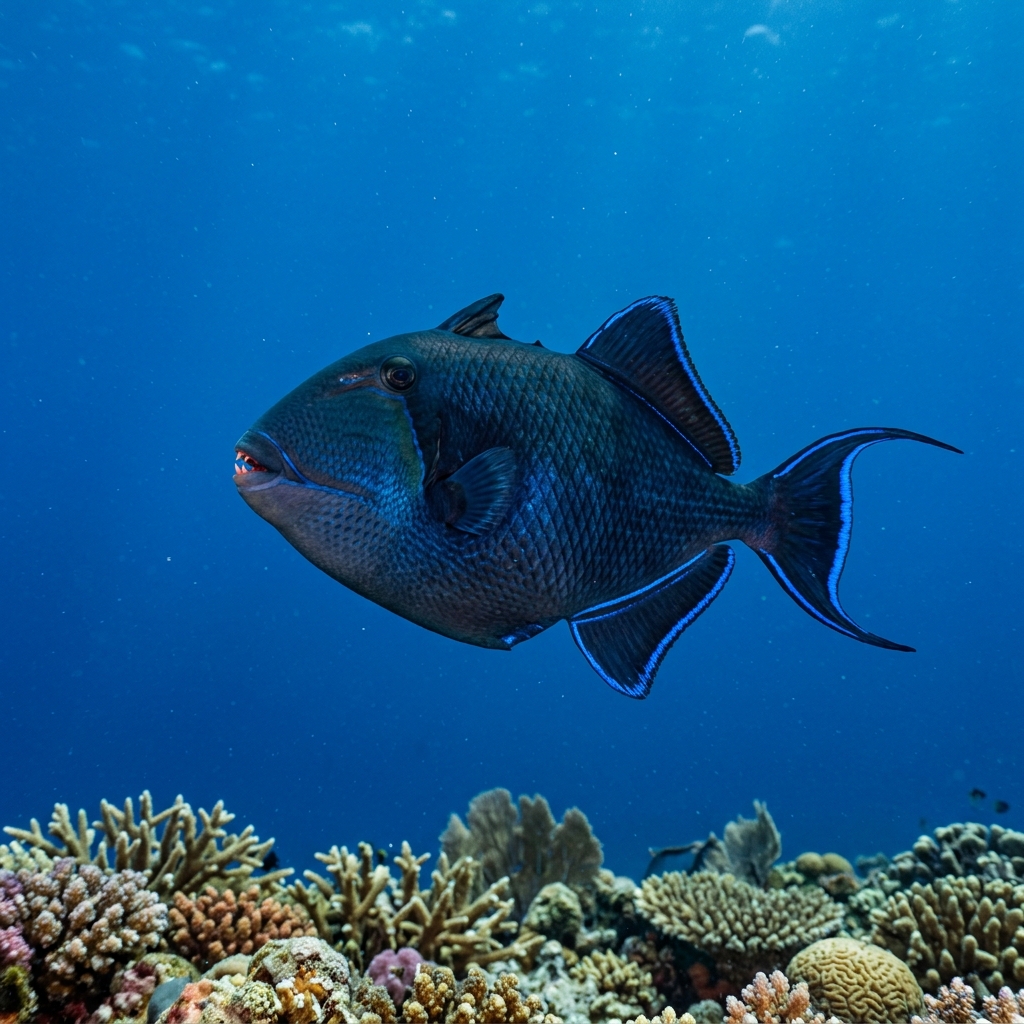
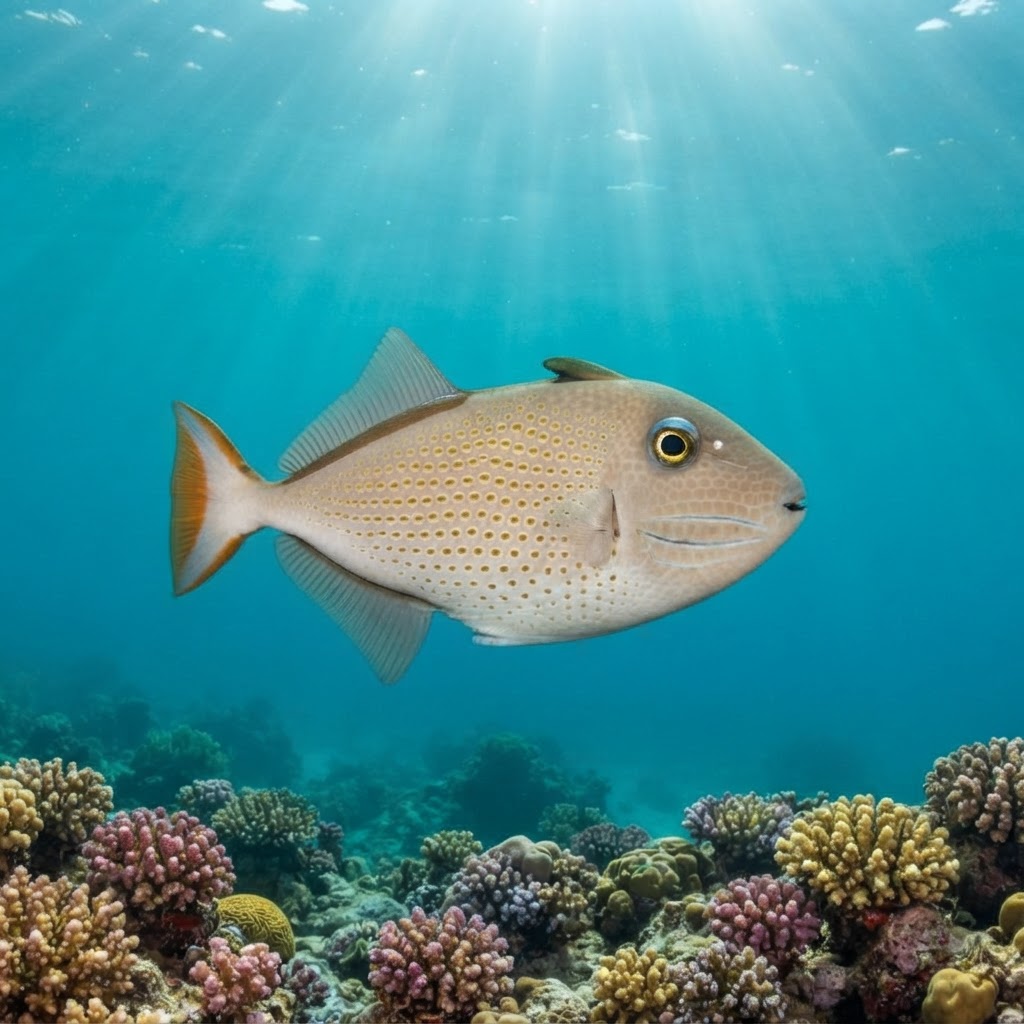
Small, deep-bodied triggerfish around 18 cm, grey to blue-grey overall with rows of pale bluish spots along the flanks. The giveaway is the eye: a bright yellow ring circles it, standing out clearly even in low light. Look also for the pale, almost white crescent on the tail and the small mouth typical of the family.
Usually seen hovering alone or loosely spaced over reef structure rather than schooling, often holding station in the current with slow pectoral-fin strokes. It tends to keep a cautious distance from divers, drifting off rather than darting for cover like some of its relatives. Most sightings come from mid to outer reef terrain rather than shallow lagoon flats.
Like other triggerfish it can lock its dorsal spine upright to wedge itself into a crevice when threatened, which is where the family name comes from and a handy thing to look for if one ducks into a hole as you approach.
No clear seasonal pattern shows up in the sightings, and the 20 to 27.6 C range it tolerates covers Caribbean reef temperatures across the year, so divers log it in any month.
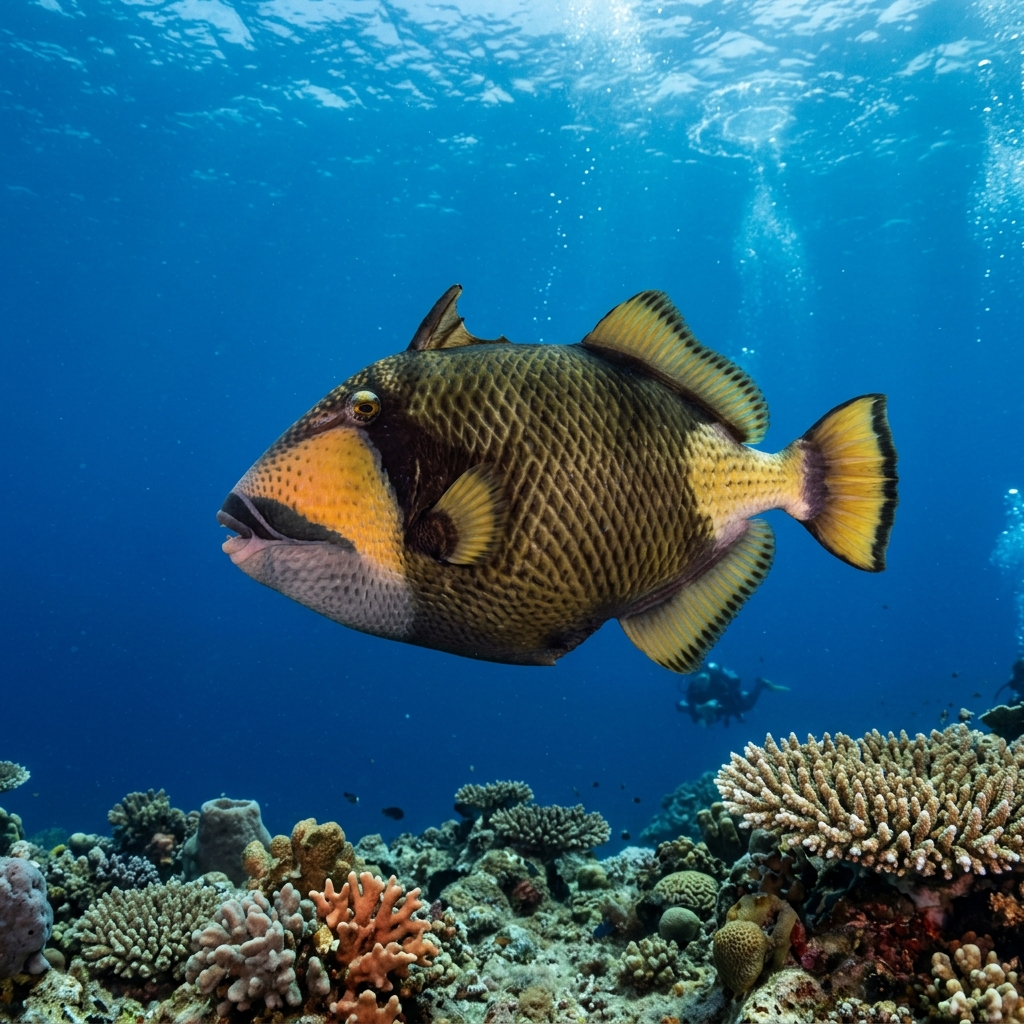
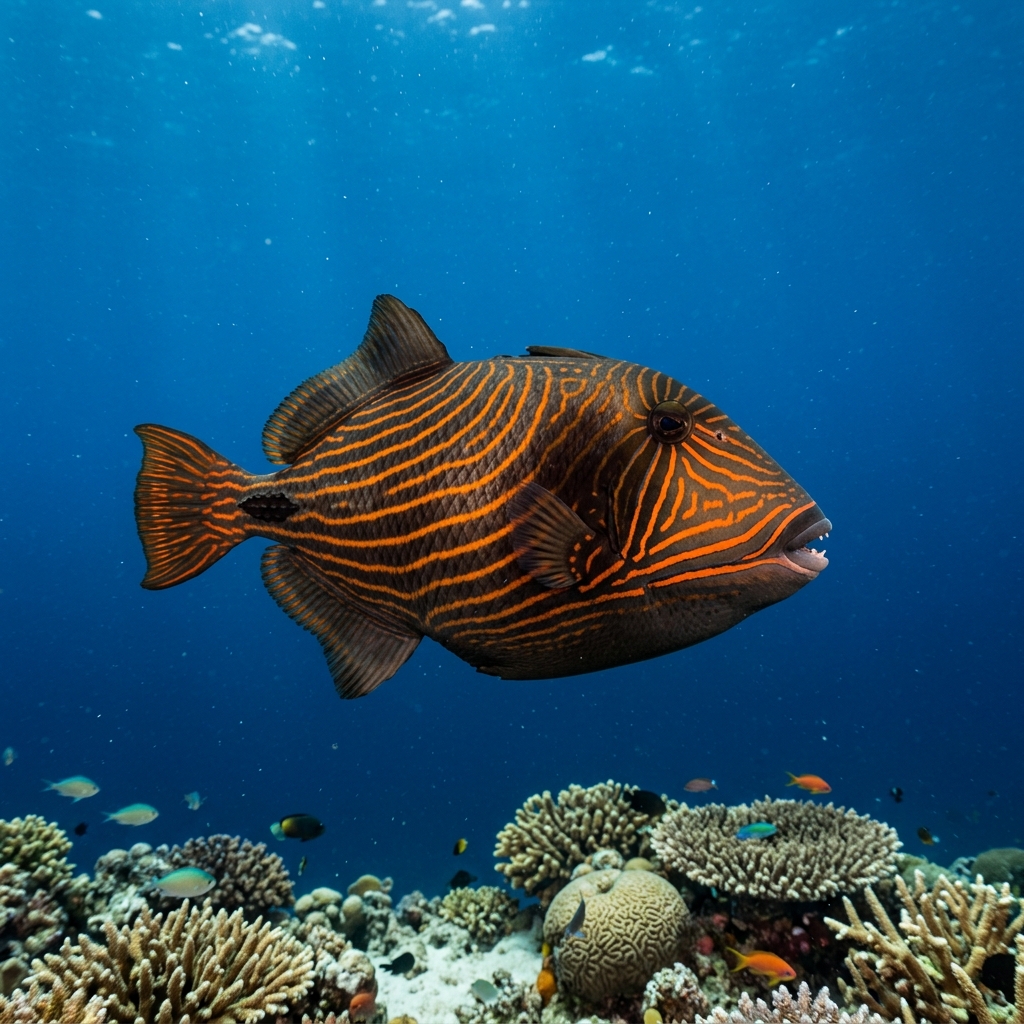
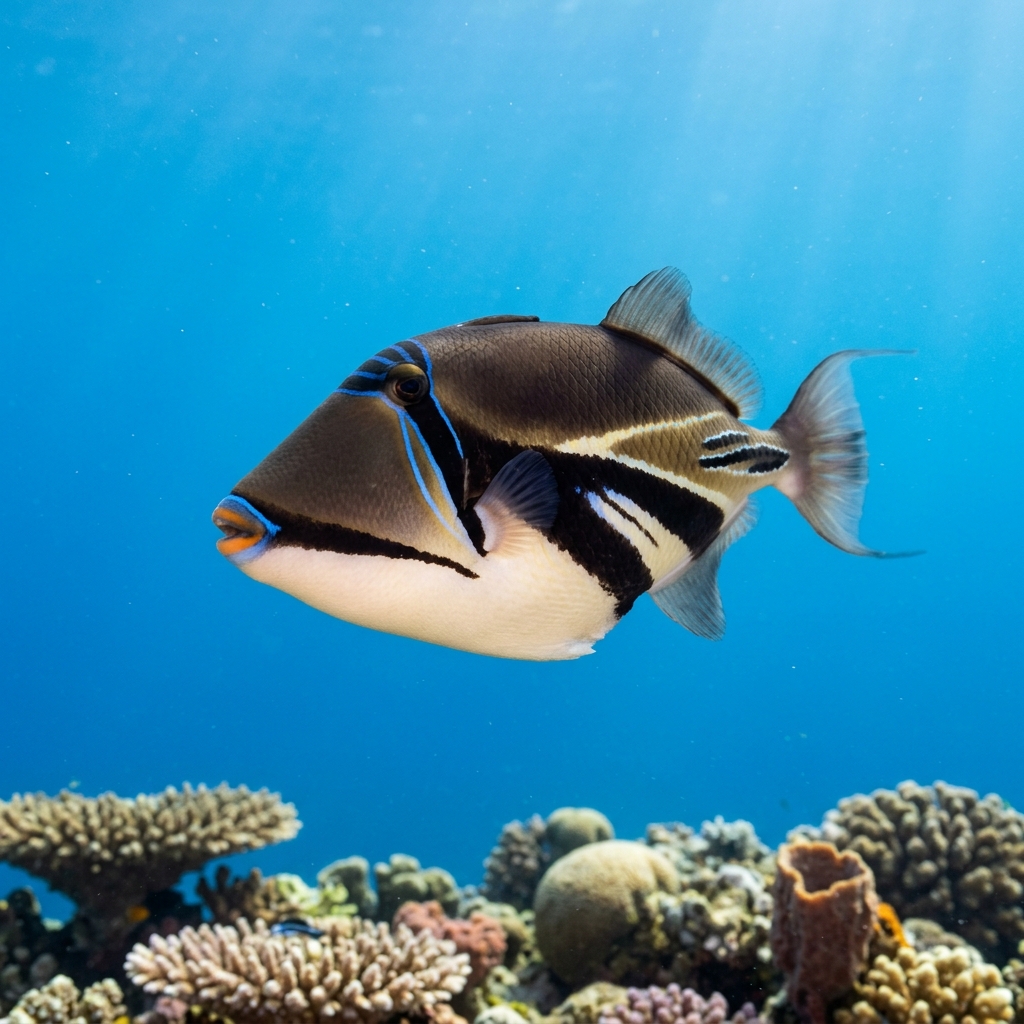
Reef neighbours a diver could mistake it for. Use the identification notes above to tell them apart.
This is a Yucatán Peninsula fish first and foremost, with Mexico accounting for the vast majority of logged sightings and a reliable presence at sites there. Smaller but consistent sightings come from Long Island in the Bahamas, with an occasional appearance at Les Anses-d'Arlet in Martinique.
Mapping where Sargassum Triggerfish is logged…
The strongest sightings come from Mexico's Yucatán Peninsula, where it turns up regularly on reef sites. It is also logged, less frequently, around Long Island in the Bahamas and at Les Anses-d'Arlet in Martinique.
There is no strong season in the sighting data, and it tolerates a wide 20 to 27.6 C range, so it is seen on Caribbean reefs throughout the year rather than during a specific window.
Look for a small, deep-bodied fish around 18 cm with a grey-blue body, scattered pale spots and a distinctive bright yellow ring around the eye. A pale crescent-shaped tail is another useful clue.
They stay small for a triggerfish, typically reaching around 18 cm, making them one of the more compact members of the family divers encounter on Caribbean reefs.
No, they are not considered dangerous to divers. They tend to keep their distance rather than approach, and there are no notable reports of aggression toward people underwater.
Site and sighting data is aggregated from diver logs, iNaturalist and GBIF. For taxonomy and conservation status:
Lagoon Triggerfish
2,435 sites