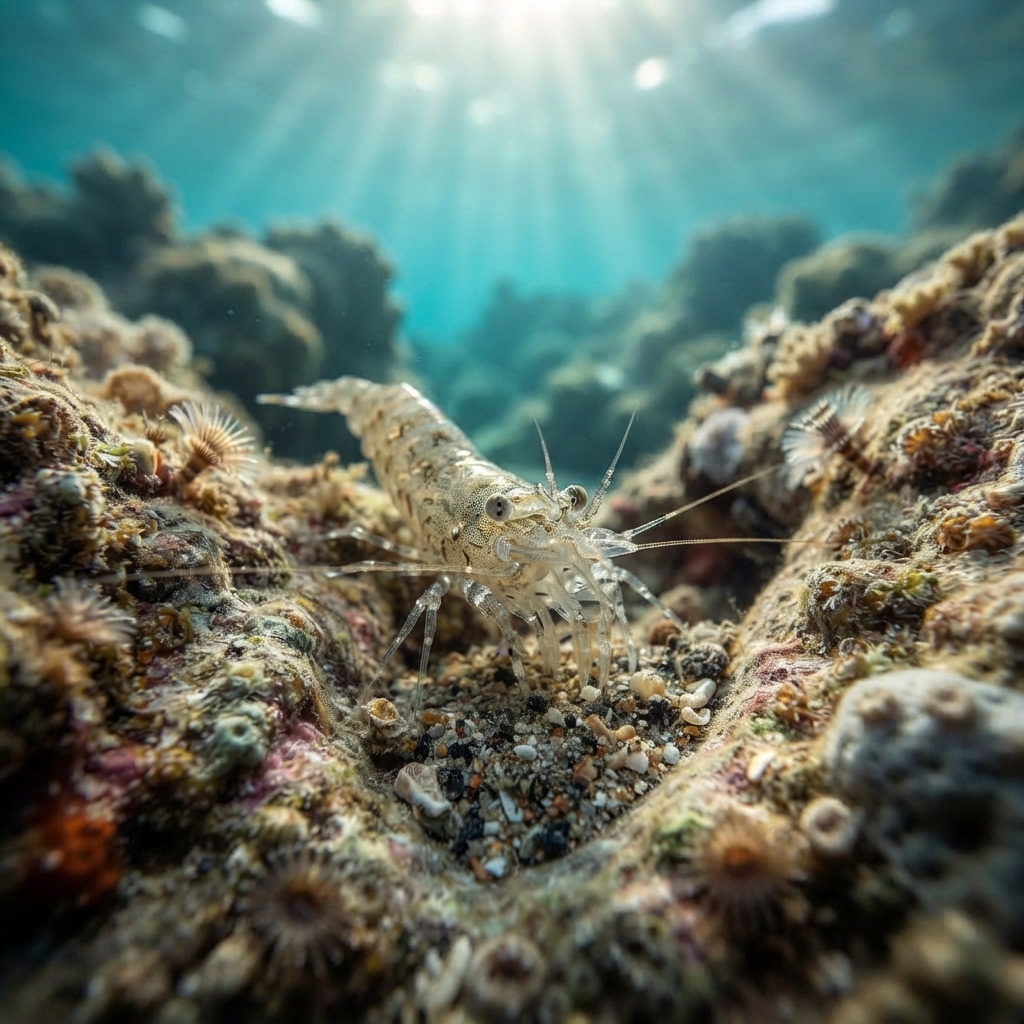
Crangon septemspinosa
Translucent, sand-coloured, and easy to miss: sand shrimp turn up on cold-water dives from Nova Scotia to the Northeast US, usually in low numbers.
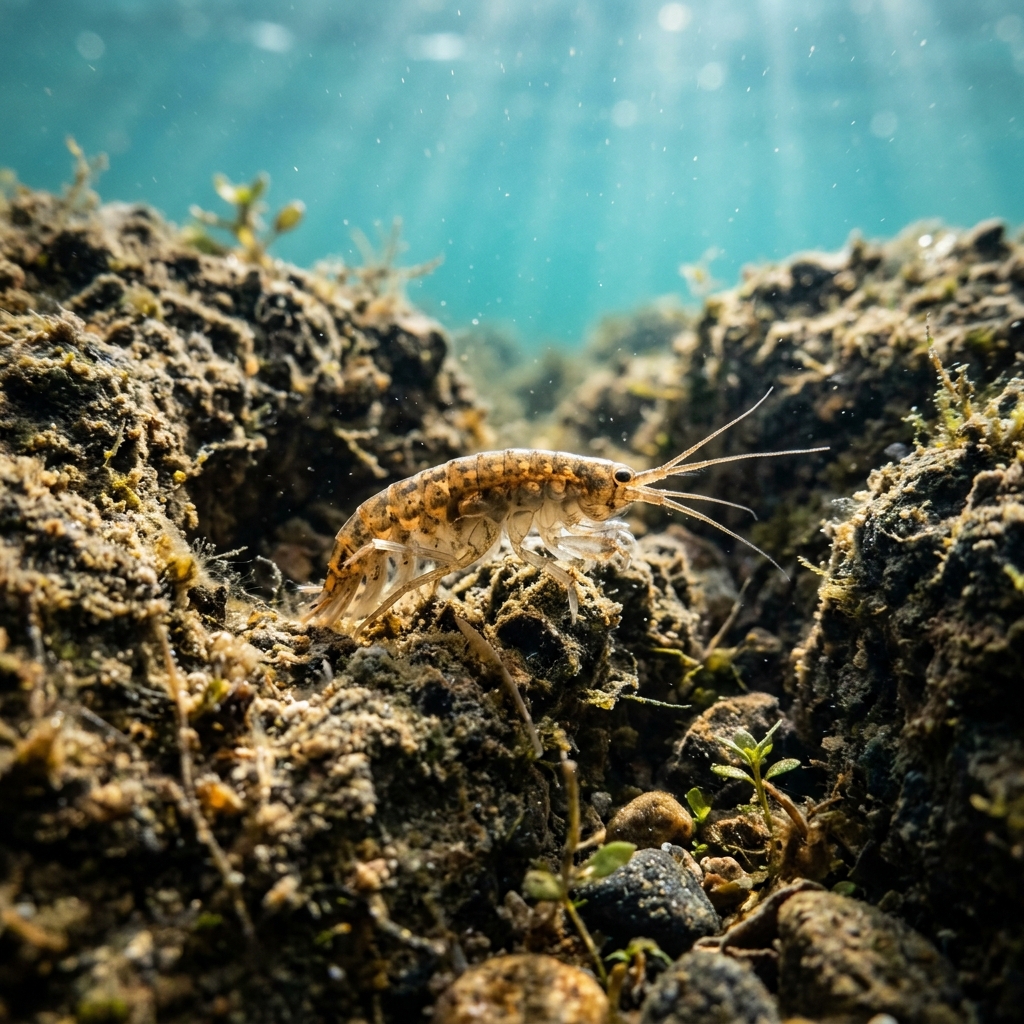
A small, translucent shrimp mottled with brown and grey speckling that lets it disappear against sand almost instantly. The body is slender and slightly humpbacked, with a short spiny rostrum (the pointed plate between the eyes) and no bold colour markings to key on. Most of what gives it away underwater is movement: a quick sideways dart when disturbed, followed by a settle-and-vanish trick as it buries into the substrate.
Usually seen sitting still or half-buried on sand and mud bottoms, relying on its mottled colouring rather than fleeing when a diver approaches. When it does move, it's a quick backward flick of the tail to reposition a few centimetres away before settling again. Most sightings happen on slow bottom-scanning sections of a dive rather than mid-water.
Like other Crangon shrimp, it can shift its body colour and patterning to better match the sediment it's sitting on, which is a big part of why it's logged as uncommon to rare even at sites where it's actually present in numbers.
Sightings sit year-round with no clear seasonal spike in the data, matching a species comfortable in the cold end of the temperature scale, roughly 6 to 12 C. Divers logging cold-water Atlantic sites in any month have a reasonable shot at spotting one.
Most reliably found in Canada and the United States, with the strongest logs from Nova Scotia and New Brunswick and from the Northeast United States. It's a cold-water sand and mud dweller rather than a reef species, so look for it on sandy bottoms and eelgrass edges at Atlantic Canada and New England sites rather than tropical dives.
Mapping where Sand Shrimp is logged…
Best logged in Canada and the United States, particularly Nova Scotia, New Brunswick, and the Northeast US coast. Look on sandy or muddy bottoms rather than rocky reef.
Sightings are spread year-round with no strong seasonal pattern in the data, consistent with a cold-water species tolerant of roughly 6 to 12 C.
Look for a small, translucent, mottled brown shrimp lying still on sand or mud. It has no bold colour pattern, so a slow scan of the bottom and a quick tail-flick when disturbed are the main giveaways.
No. Sand shrimp pose no risk to divers and will typically stay still or dart a short distance away if approached.
They can adjust their body colouring to blend with the sediment beneath them, which makes them far easier to swim past than to actually spot, even at sites where they're present.
Site and sighting data is aggregated from diver logs, iNaturalist and GBIF. For taxonomy and conservation status:
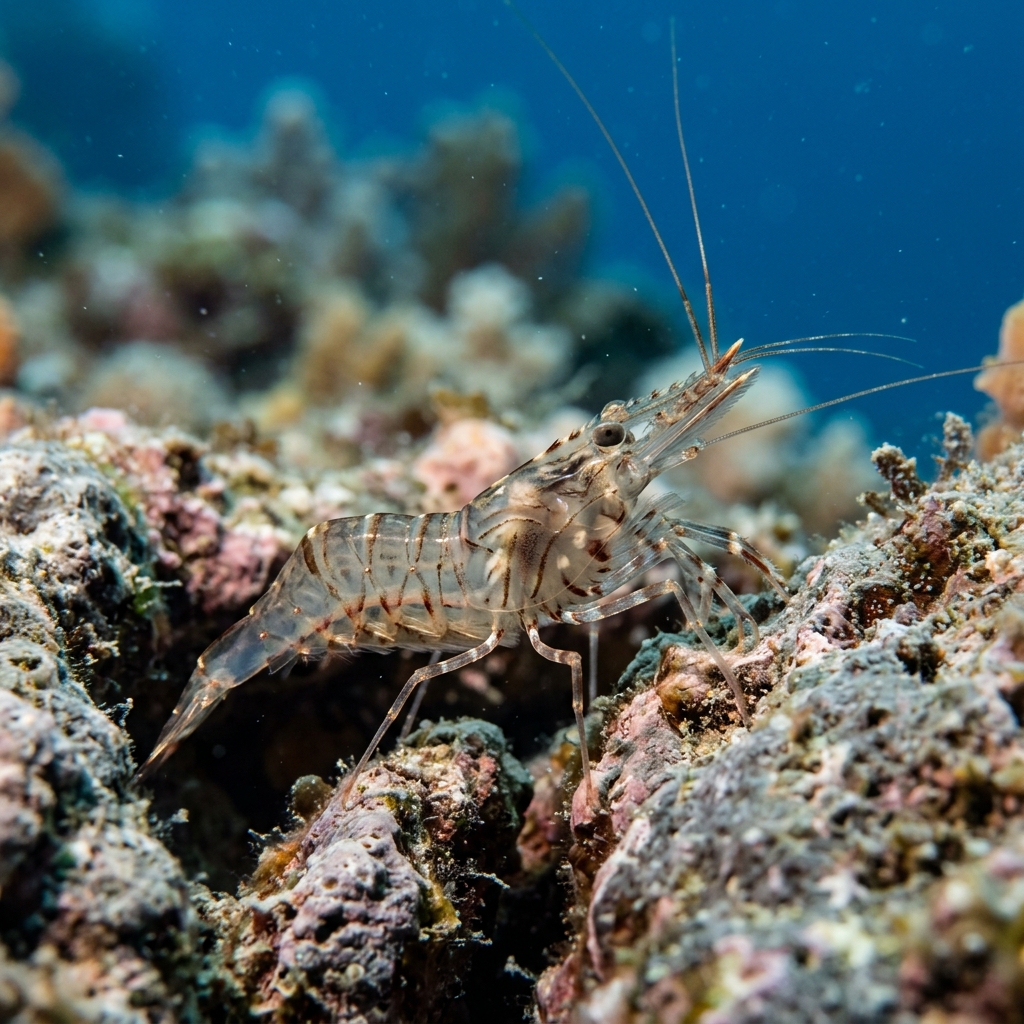
Rockpool Prawn
2,179 sites