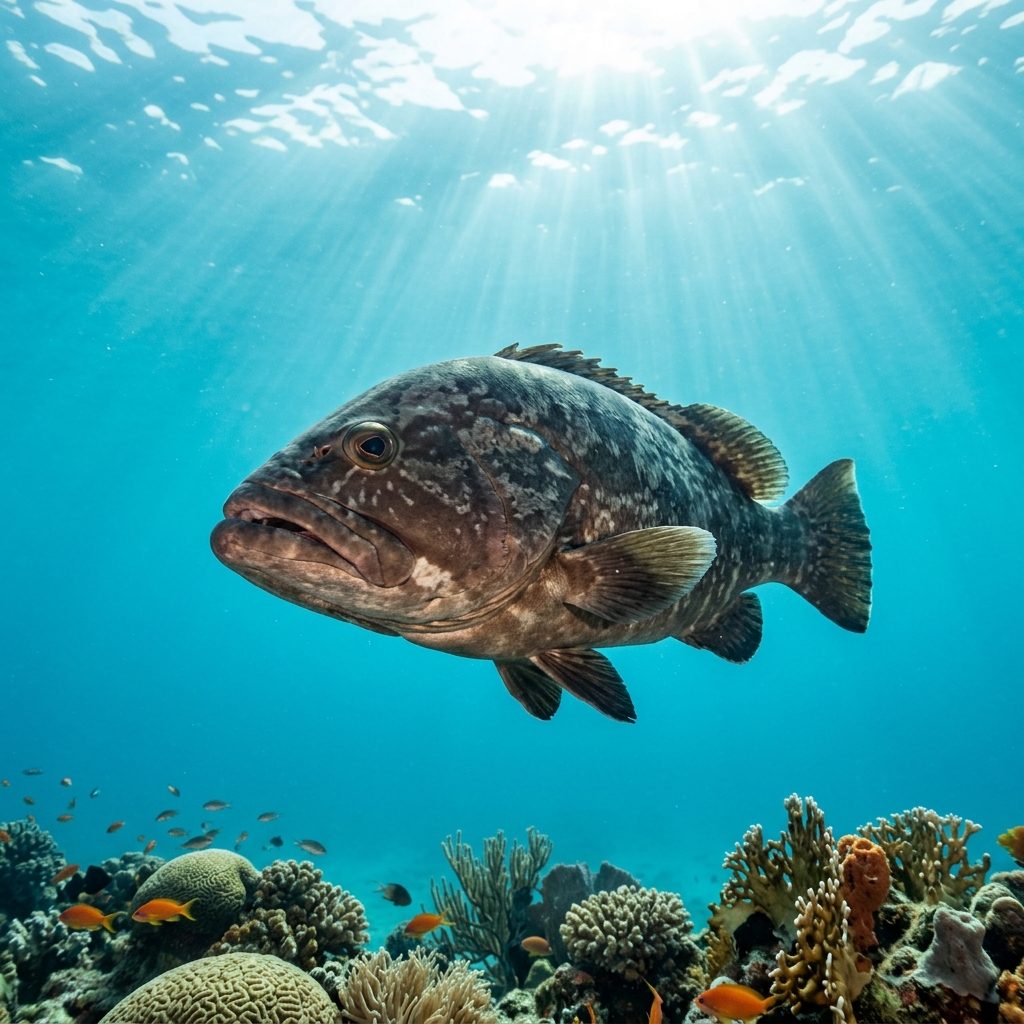
Diplectrum formosum
Sand Perch are most commonly logged in Florida and Brazil, active in waters from 22-28 °C. Learn where to spot them and how to tell them apart underwater.
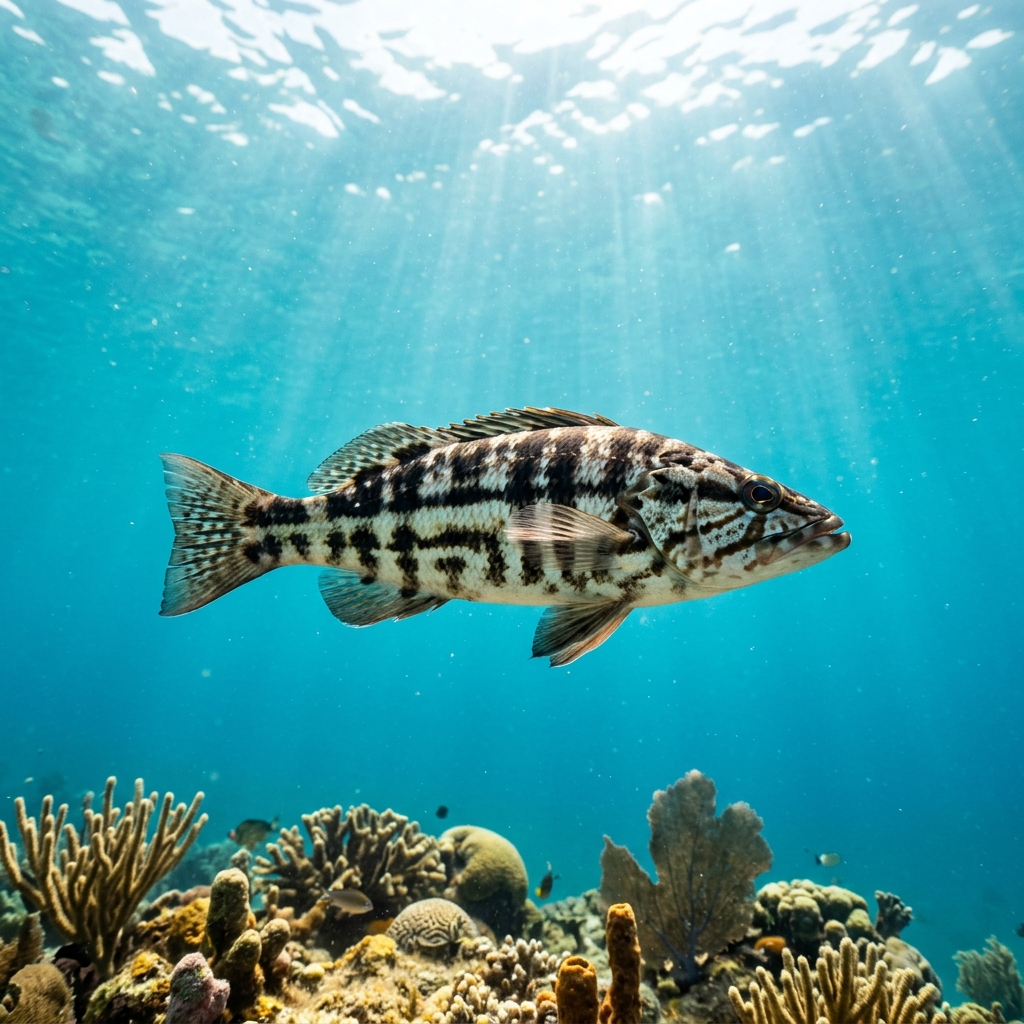
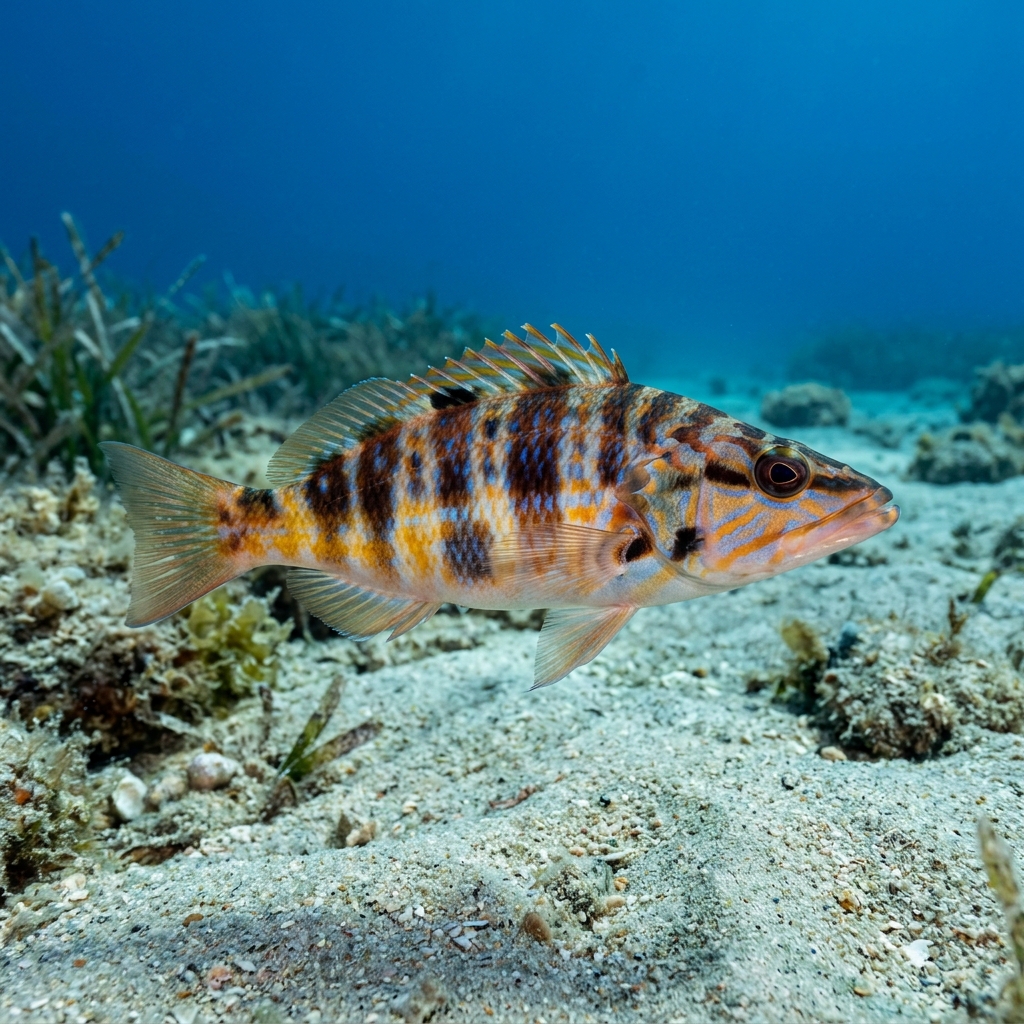
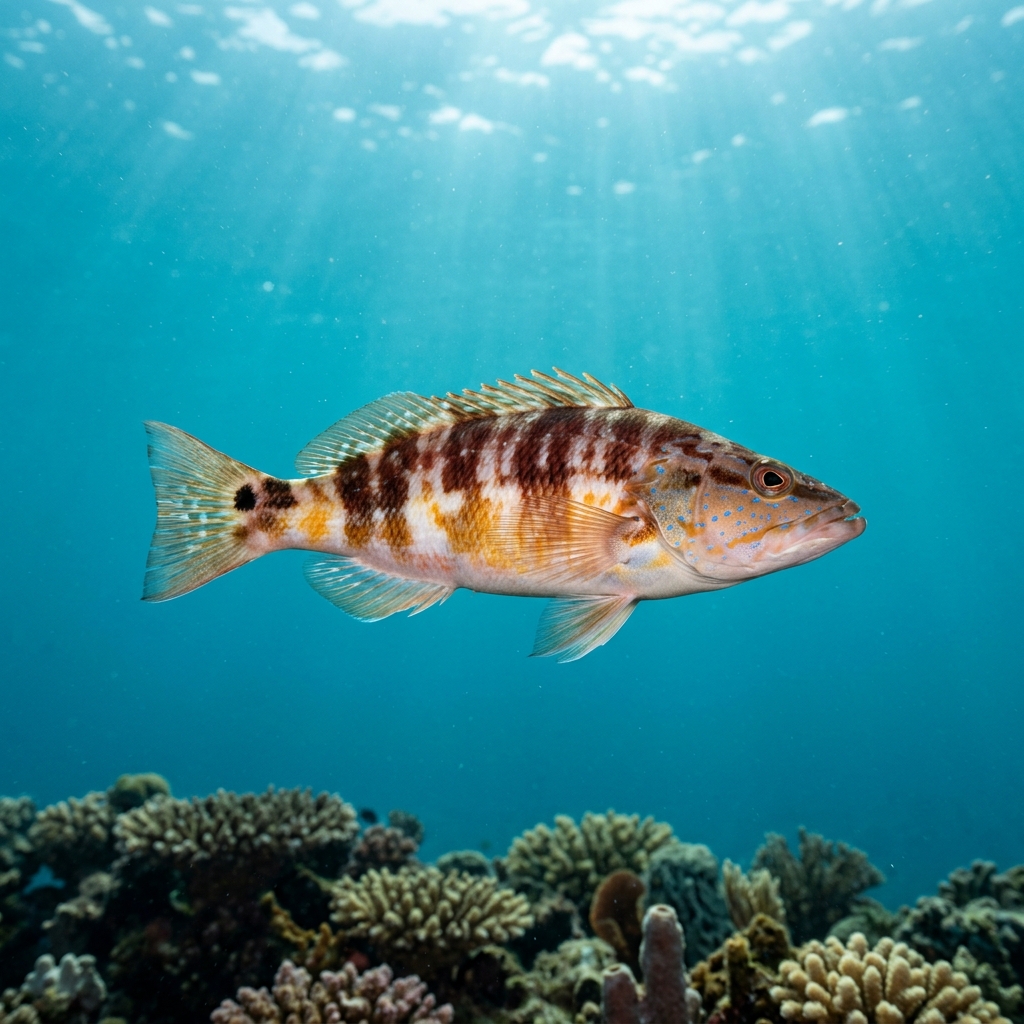
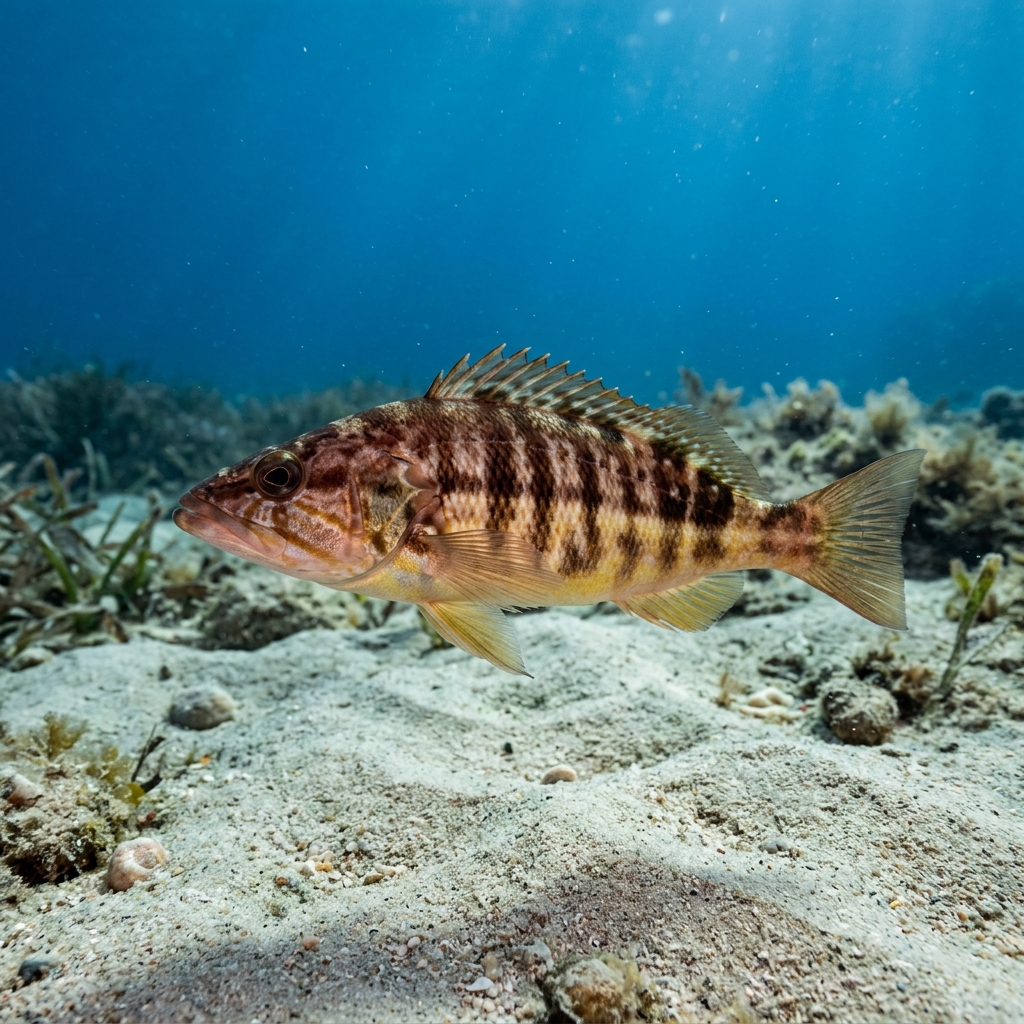
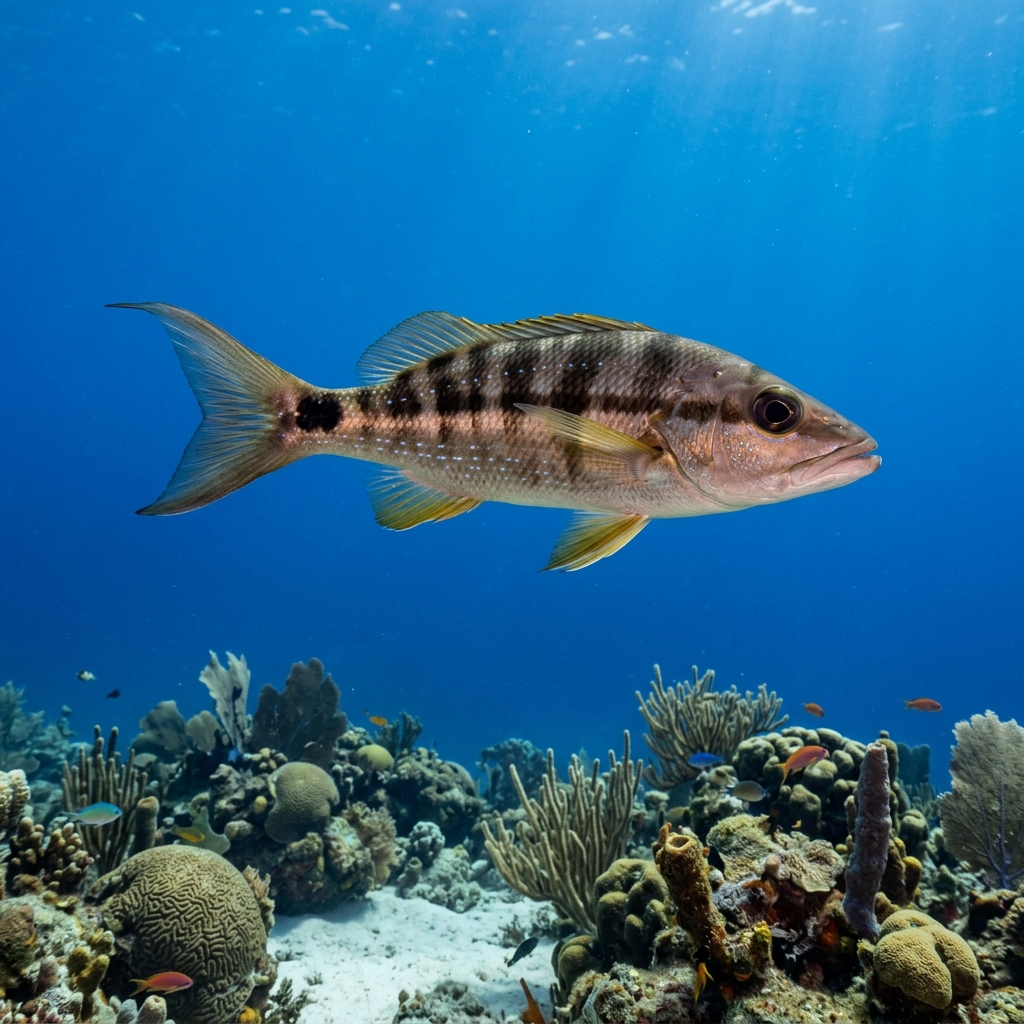
A slim, elongated serranid (sea bass family) roughly 20 cm long, the sand perch is immediately recognisable by its bold brown or olive vertical bars on a pale body, paired with vivid blue and orange streaks across the cheeks. The body is noticeably compressed and tapered toward the tail, and the long, continuous dorsal fin has a distinctly spiny front portion. Look for the pointed snout and large mouth angled slightly upward, hallmarks of an ambush predator that hunts close to the substrate.
Most encounters involve a sand perch hovering motionless just above a patch of sand or low reef structure, watching for movement below. When prey, usually a small crustacean or invertebrate, appears, it darts down with quick, precise strikes before returning to its post. They show little concern about approaching divers, often holding their position or angling slightly to keep you in view rather than retreating, which makes for relaxed, close observation.
Sand perch are simultaneous hermaphrodites, meaning each individual carries both male and female reproductive tissue and can function as either sex during spawning, a reproductive strategy seen across several members of the serranid family.
No clear seasonal peak has emerged from the data, so sand perch can be treated as a year-round resident across their range. Their observed temperature niche of roughly 22-28 °C matches the typical conditions found on shallow tropical and subtropical Atlantic reefs throughout the year.
Sand perch are concentrated in the western Atlantic, with the strongest representation logged across Florida and the wider US Southeast coast. Brazil is the other major stronghold, particularly along the Rio de Janeiro and São Paulo coastline and the Northeast Coast. Cuba, Venezuela, the Bahamas, Belize, Mexico, and the Dominican Republic all feature the species across a spread of reef and sandy-bottom sites.
Mapping where Sand Perch is logged…
Sand perch are most reliably logged in Florida and the broader US Southeast, which accounts for the largest share of recorded sightings. Brazil, particularly the Rio de Janeiro, São Paulo, and Northeast Coast regions, is the other major hotspot. Cuba, Venezuela, the Bahamas, Belize, and Mexico also feature the species regularly.
No concentrated season has been detected in diver sighting data, so they are effectively a year-round target across their range. They are active during daylight hours, so daytime dives on sandy reef edges give you the best chance of encountering them at rest or foraging.
Look for a slender, 20 cm fish holding still just above the sand, with clear brown or olive vertical bars on a pale body and bright blue and orange streaks across the face. The pointed snout, upturned mouth, and spiny dorsal fin are consistent giveaways. It rarely moves far from its spot, which gives you time to study the markings.
Adults typically reach around 21 cm in length, roughly the size of your hand. They are a small, slender fish, noticeably more elongated than most reef-associated serranids of similar length.
No. Sand perch pose no threat to divers. They are non-territorial and generally indifferent to human presence, often allowing a close approach without fleeing. Simply move slowly and avoid reaching toward them.
Sand perch are simultaneous hermaphrodites, each fish carries both male and female reproductive tissue and can act as either sex during a single spawning event. This is a well-documented trait across the serranid family and plays a role in their flexible mating behaviour.
Site and sighting data is aggregated from diver logs, iNaturalist and GBIF. For taxonomy and conservation status:
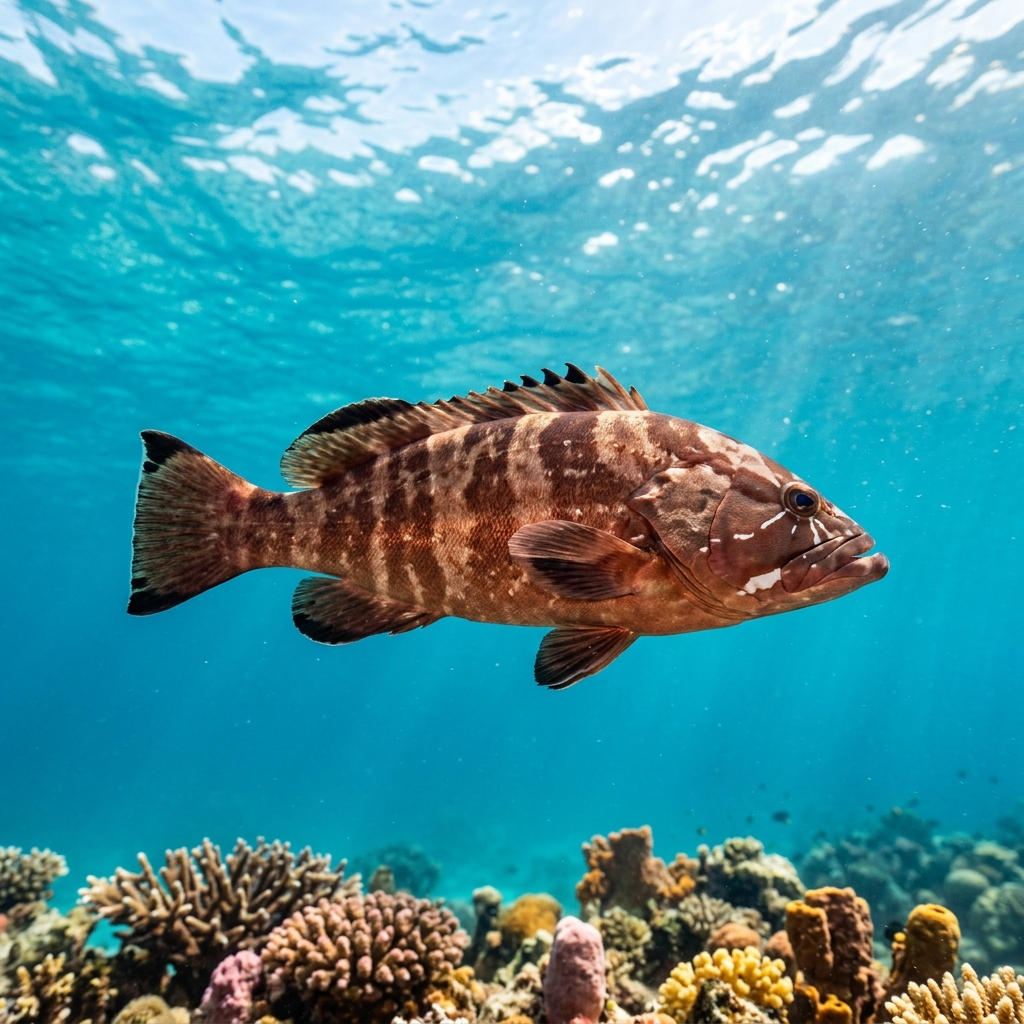
Blacktip Grouper
2,726 sites