Pomatoschistus minutus
A small, sand-coloured goby common in Zeeland's cool waters, 7-12°C, spotted year-round on silty and sandy bottoms.
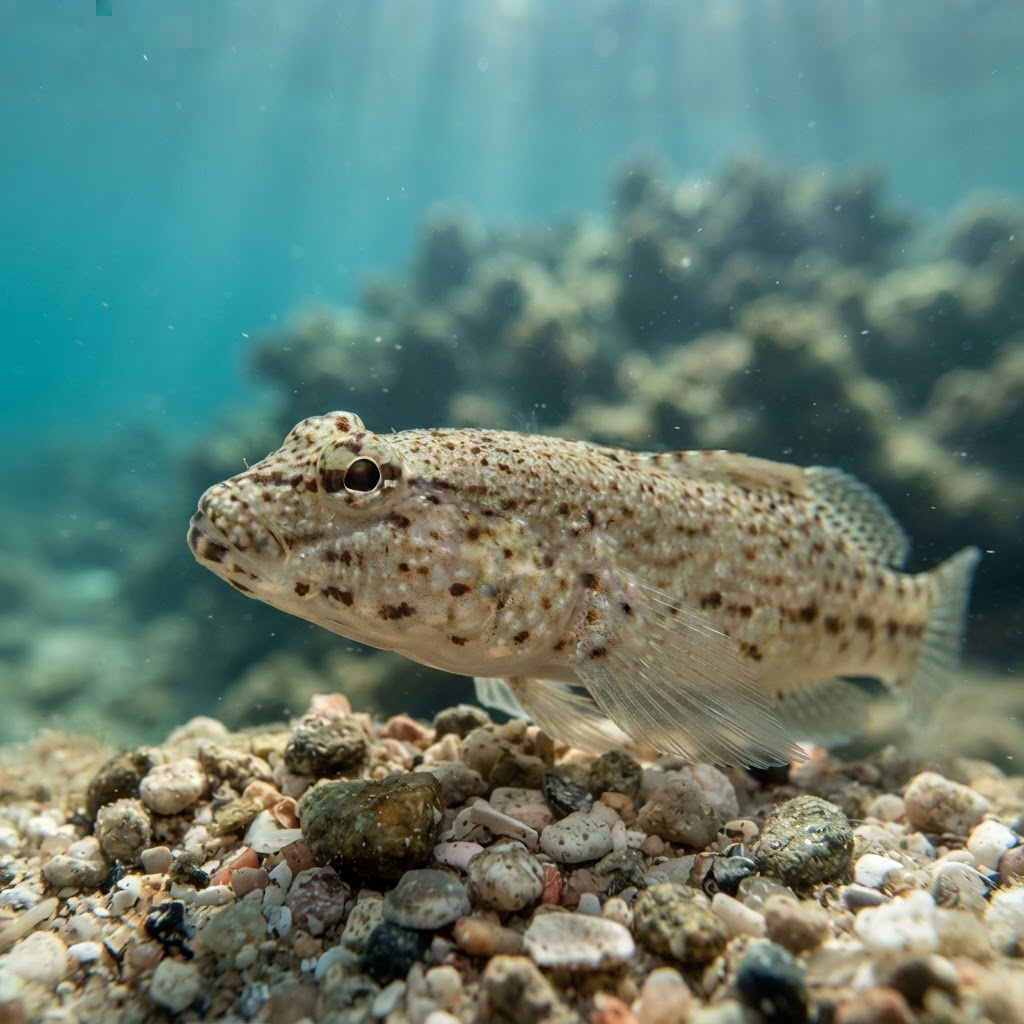
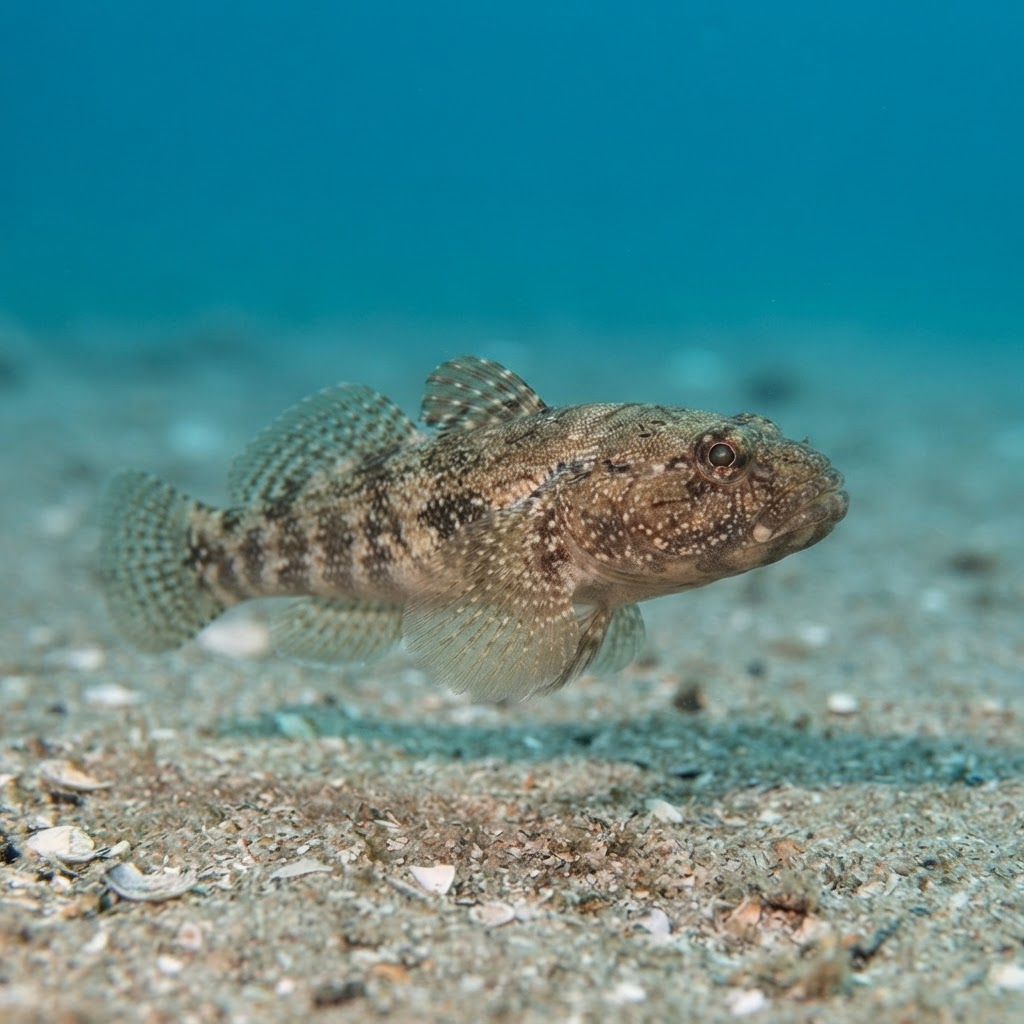
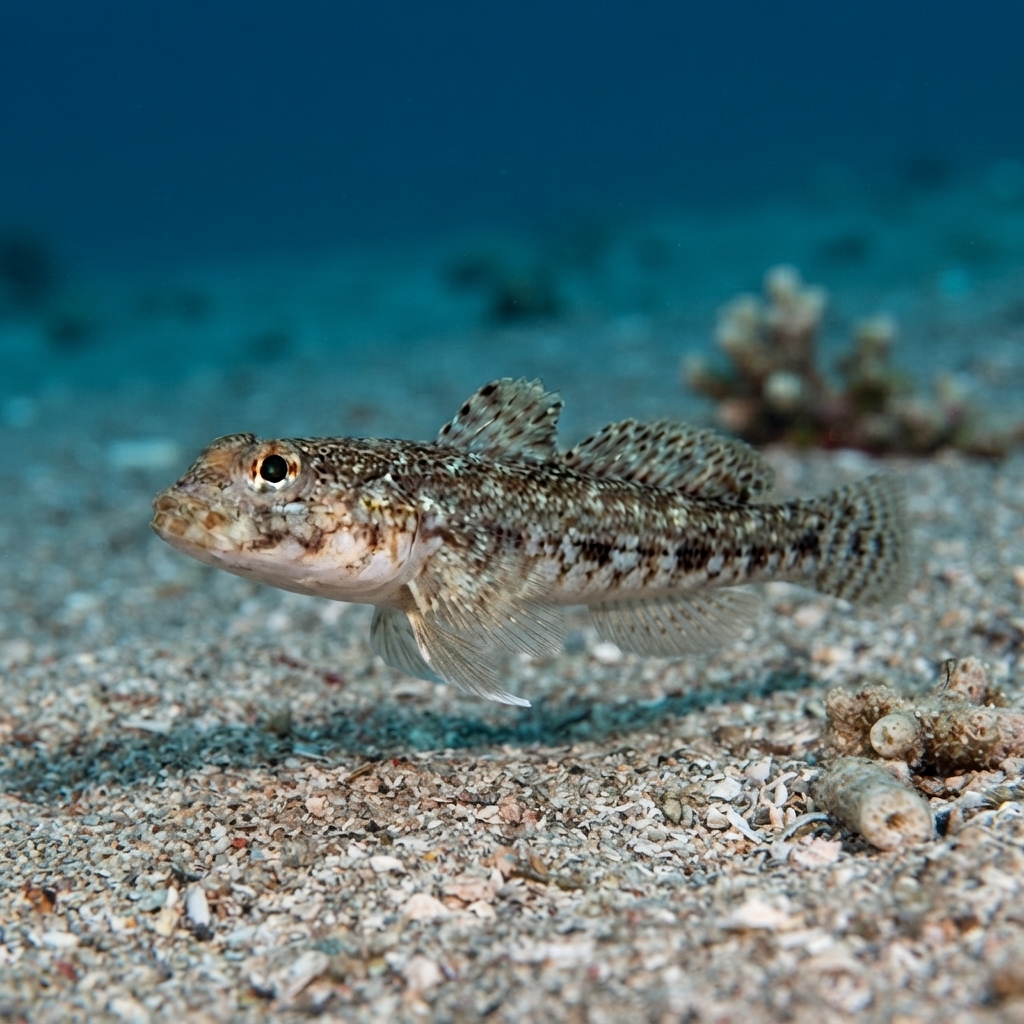
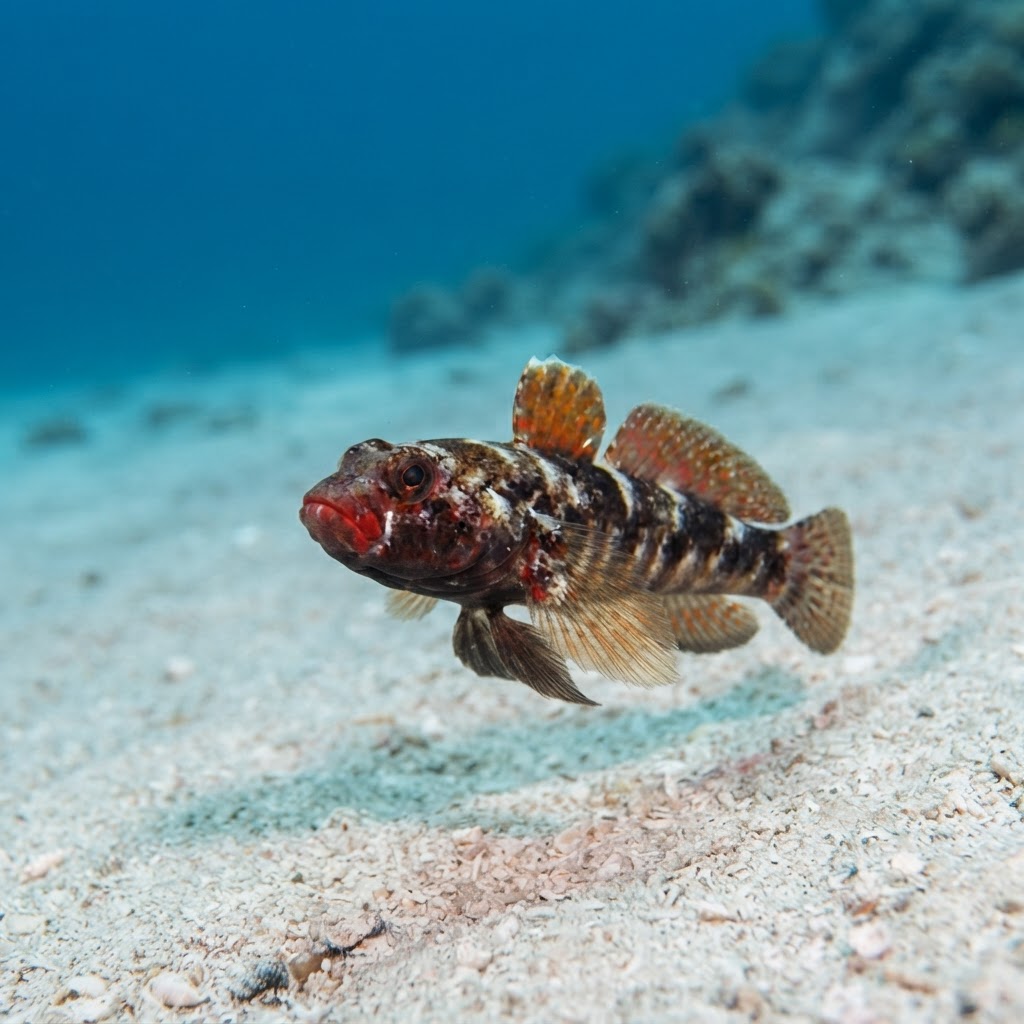
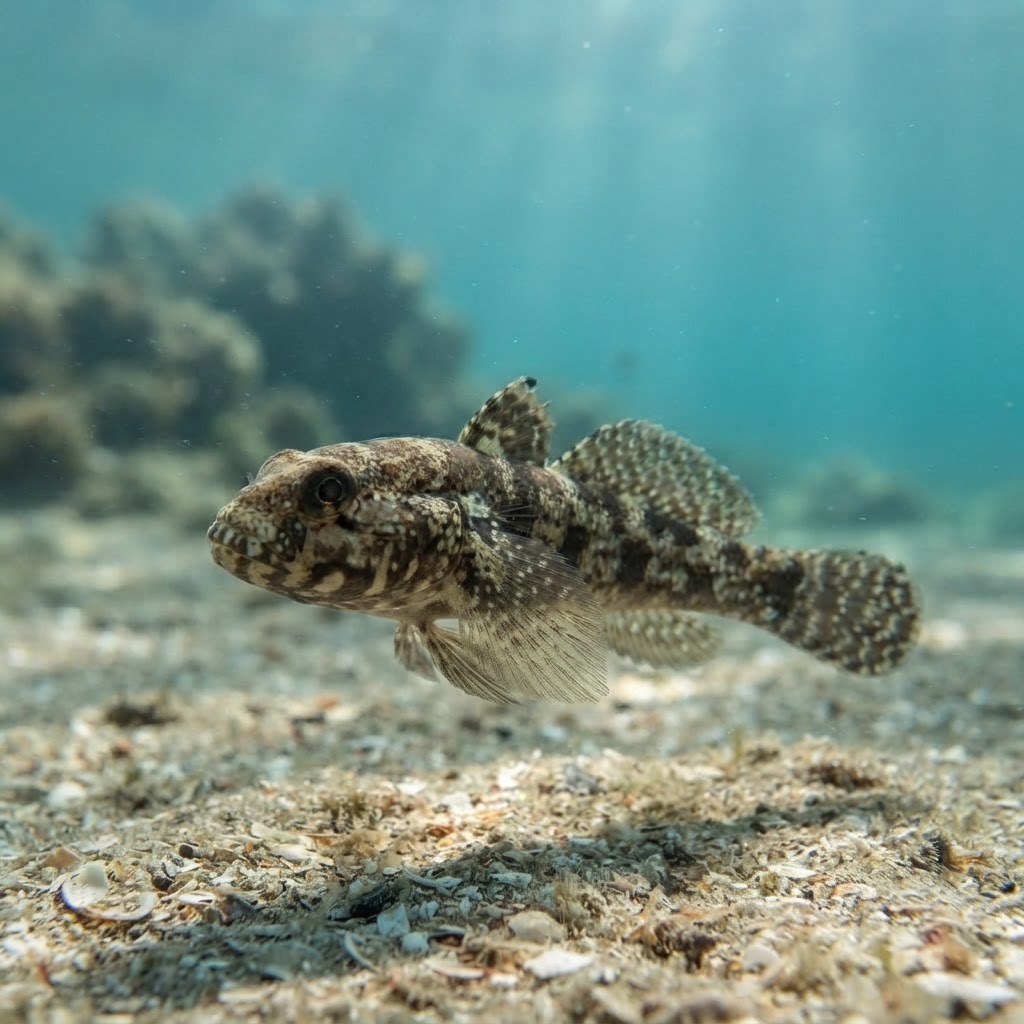
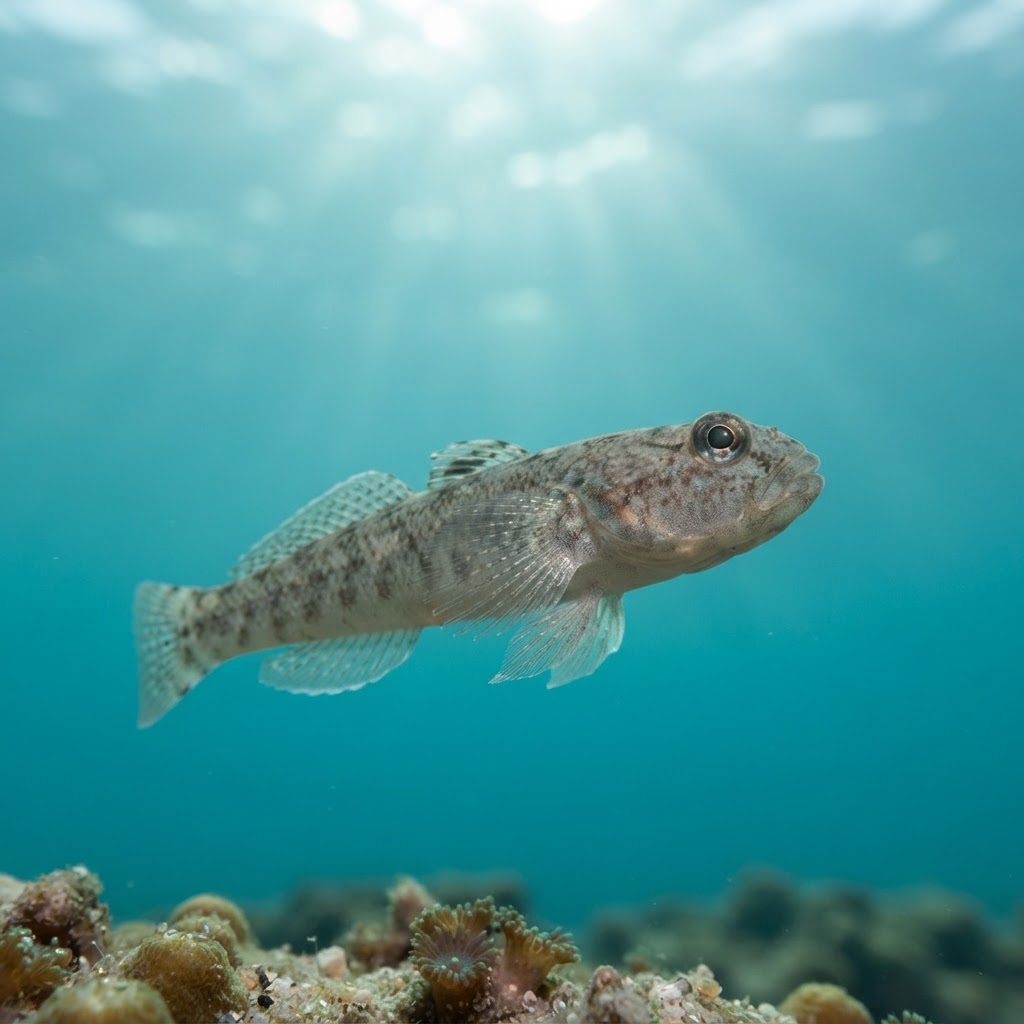
A slim, pale sandy-brown fish around 8 cm long that lies flat on the bottom rather than swimming in open water. Look for a mottled, speckled pattern that blends closely with sand and fine sediment, plus a dark blotch near the base of the tail that is often the easiest thing to pick out at a glance. It rests propped on its pelvic fins rather than hovering, which helps separate it from free-swimming small fish nearby.
Spends most of its time sitting still on sand or silt, using its camouflage rather than speed to avoid attention, so divers usually spot it by scanning the bottom closely rather than the water column. It tends to dart a short distance and resettle if disturbed rather than fleeing far, and logged sightings lean towards uncommon to rare, so it rewards divers who slow down and look at the substrate rather than the reef structure. Most reports come from flat, open bottom areas rather than rocky or vegetated ground.
Males guard the eggs alone after females lay them in a burrow or under a shell, fanning and defending the clutch until the young hatch.
Sightings are spread across the year with no clear seasonal peak in the data, and the observed water temperature range of 7 to 12.2°C suggests this is a cool-water species present through the colder months rather than a fair-weather summer visitor. Treat it as a year-round find if you are diving its core sites in the Netherlands and France.
Most reliably logged in Zeeland in the Netherlands, which accounts for the large majority of sightings, with a secondary population found across Brittany, Occitanie, and the French Riviera and Provence in France. Divers doing cool-water, low-visibility sites on sand or silt bottoms in these regions have the best odds of finding one.
Mapping where Sand Goby is logged…
The strongest population by far is in Zeeland in the Netherlands, with additional sightings across Brittany, Occitanie, and the French Riviera and Provence in France. It favours sandy or silty bottoms rather than reef structure.
There is no strong seasonal pattern in the sightings, and it turns up across a cool water temperature range of 7 to 12.2°C, so it can be found year-round at its core Dutch and French sites.
Look for a small, sandy-mottled fish around 8 cm long lying still on sand or silt rather than swimming freely. A dark blotch near the tail base and its habit of resting propped on its pelvic fins are the easiest clues.
They are small, typically reaching around 8 cm in length, which combined with their sandy camouflage makes them easy to swim straight past.
No, they pose no risk to divers. They are a small, harmless bottom-dwelling fish that simply moves off a short distance if approached too closely.
Males take sole responsibility for guarding a female's eggs in a burrow or under shell debris, fanning and protecting the clutch until hatching, a reversal of the parenting role seen in many fish.
Site and sighting data is aggregated from diver logs, iNaturalist and GBIF. For taxonomy and conservation status:
Slender Goby
806 sites