Salvelinus namaycush
Lake trout haunt cold Canadian and Great Lakes waters down to 1.7 °C. Find out where divers spot them and what to look for underwater.
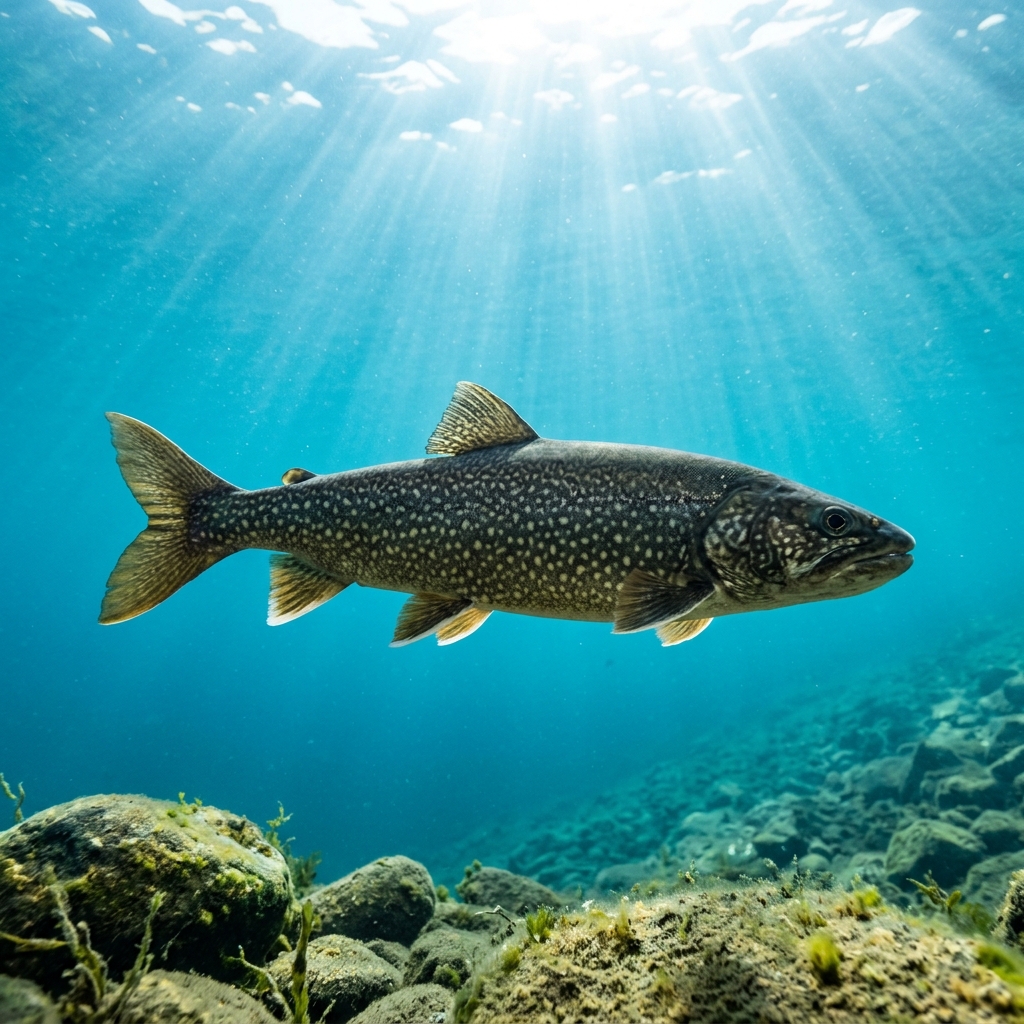
A deep-bodied, torpedo-shaped fish with a distinctive deeply forked tail, setting it apart from most other freshwater species you might meet. The body is dark grey to olive-green, covered in irregular pale cream or yellowish spots that extend onto the fins. In cold, low-visibility lake water these spots are the quickest identifier. Reach sizes that can appear surprisingly large in open freshwater, lending them a commanding presence on a chance encounter.
Lake trout are typically encountered as solitary animals moving through open water or cruising along rocky lake-bottom structure. They tend to be wary and will often hold their distance or move away when a diver approaches, so slow, unhurried movements give you the best chance of a prolonged look. Most encounters are brief and opportunistic rather than predictable.
Lake trout are one of the longest-lived freshwater fish in North America, with some individuals confirmed at over 60 years old, making any single fish you encounter potentially older than most divers in the water.
There is not enough monthly sighting data to point to a specific season, so lake trout should be treated as a year-round possibility. Their observed temperature range of 1.7 to 20.5 °C means they are active in cold water throughout the year, including winter dives where surface ice is present.
Almost all diver sightings come from the Great Lakes region, with Canada accounting for the large majority of logged sites. A smaller but consistent number of sightings come from the United States side of the Great Lakes and Northeast. If you want a realistic shot at an encounter, focus your planning on Canadian Great Lakes dive sites.
Mapping where Lake Trout is logged…
Diver sightings are concentrated in the Great Lakes region, with Canada holding the most logged sites by a wide margin. The United States side of the Great Lakes and Northeast also contributes sightings. Outside this region, encounters are essentially unrecorded in the dive logs.
No clear seasonal peak emerges from the available sighting data, so lake trout can realistically be encountered year-round. Their comfort in water as cold as 1.7 °C means they remain active even during winter dives, which is worth bearing in mind if you are planning a cold-water trip to the Great Lakes.
Look for a large, streamlined fish with a deeply forked tail and a dark grey-green body covered in pale cream or yellowish spots. The forked tail is the fastest field mark; most other large freshwater fish you might encounter in the same lakes have shallower tails. The spotting pattern extends onto the fins, which helps confirm the ID.
Lake trout are the largest char (a group within the salmon family) native to North America. Fish exceeding a metre in length and 20 kg are on record, though most divers encounter smaller individuals. Even a mid-sized specimen looks impressively large in open freshwater.
Encounters are more rare than common. Across the sites where lake trout have been recorded, the majority rate them as rare, with a smaller number of sites rating them uncommon and only a handful rating them common. Going in with low expectations and treating any sighting as a bonus is the right mindset.
Site and sighting data is aggregated from diver logs, iNaturalist and GBIF. For taxonomy and conservation status:
Sun Perch
2,182 sites