Salmo trutta
Brown trout turn up in cold Alpine lakes and rivers from Switzerland to Slovenia. Here's where divers spot them and what to look for underwater.
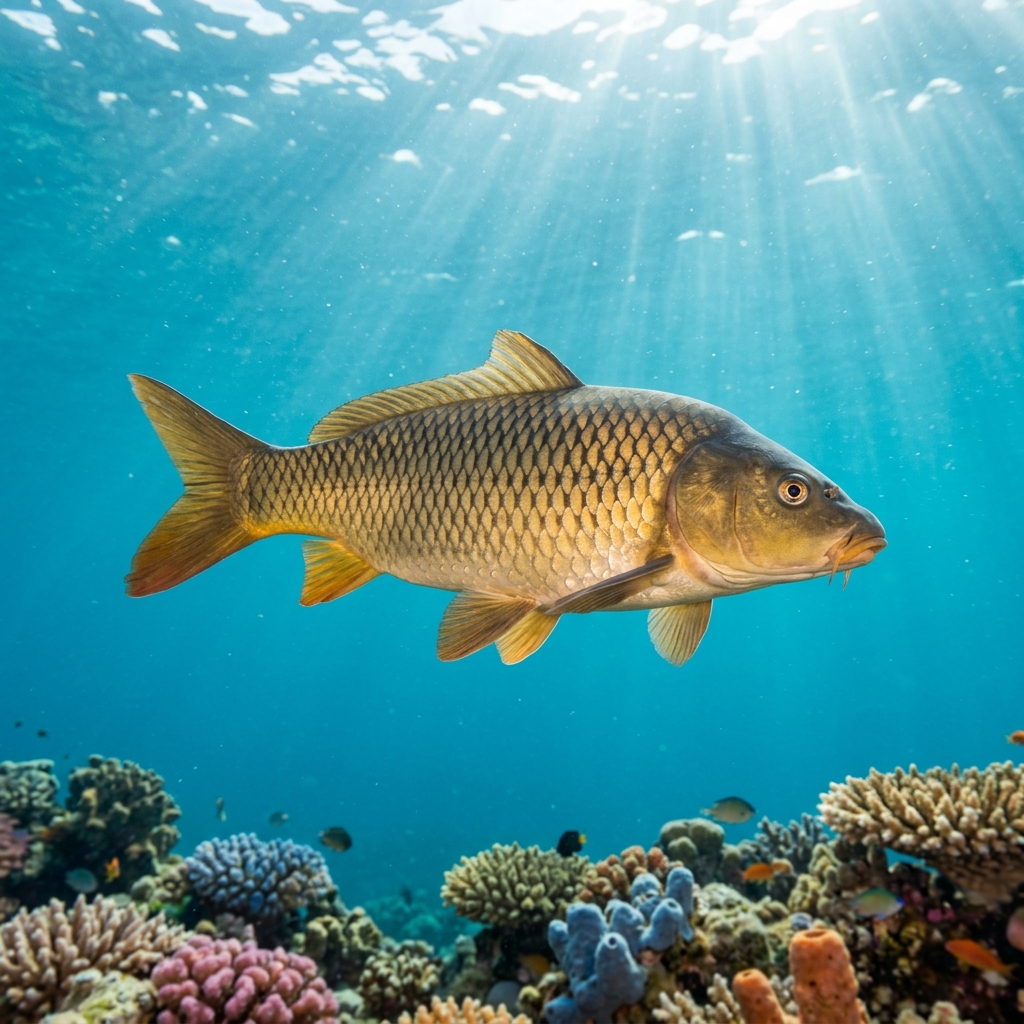
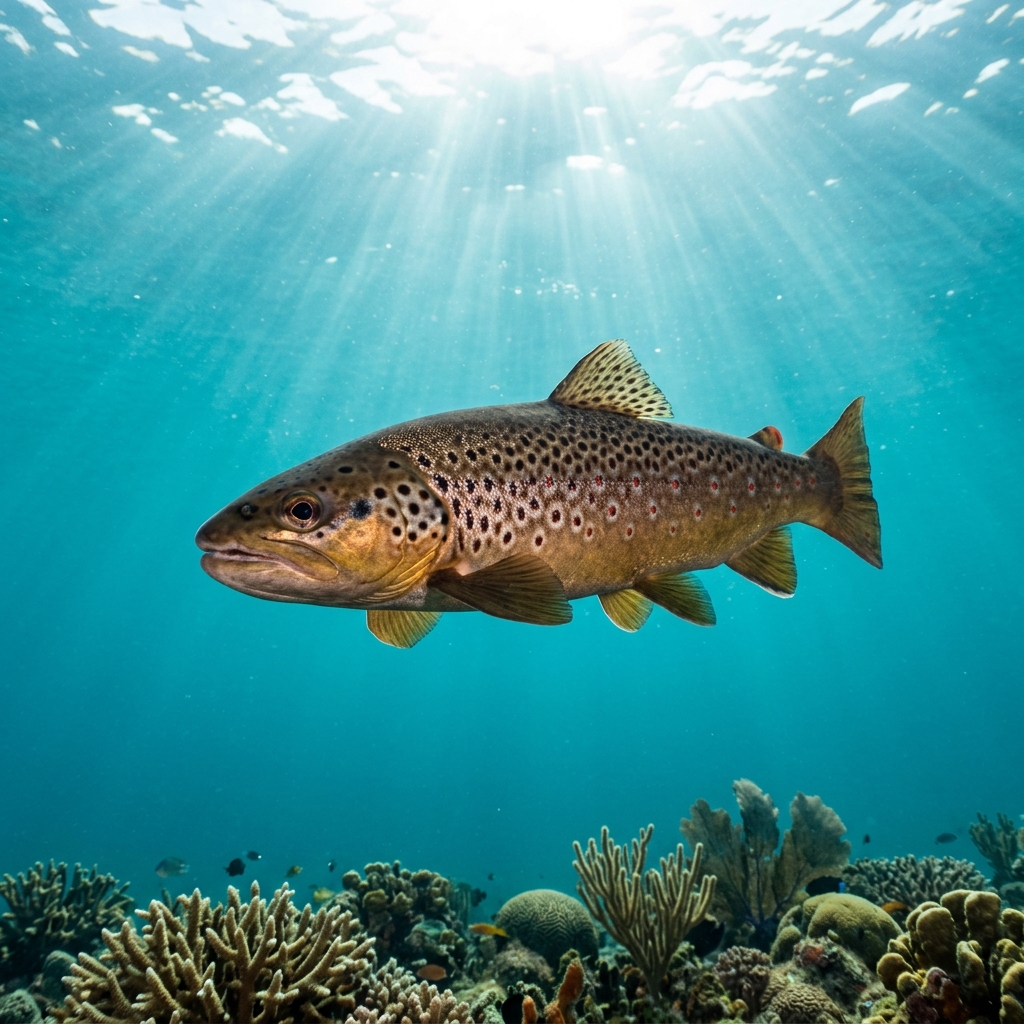
A streamlined, torpedo-shaped fish with golden to olive-brown flanks covered in distinctive black spots, many of which are ringed with pale or orange halos, the red or orange spots set against that golden body are the key mark to lock onto underwater. The belly fades to cream or pale yellow. Adults can be sizeable fish, though exact typical measurements vary widely depending on the water body. Juveniles show bold parr marks (vertical dark blotches along the lateral line) that fade as the fish matures.
When encountered, brown trout are typically moving purposefully through mid-water or holding position in current near the bottom, facing upstream. They tend to be wary of divers and will often drift away or accelerate into deeper water when approached too closely, so slow, deliberate movements improve your chances of a longer look. Sightings most often happen in clear, cold lakes and rivers with rocky or gravelly substrate where the fish use the terrain for cover.
Brown trout are anadromous in some populations, meaning certain individuals (called sea trout) migrate from freshwater rivers down to the sea to feed and grow before returning to spawn, while others spend their entire lives in landlocked lakes and rivers, and the two forms belong to the same species.
There is not enough monthly sighting data to identify a peak season, so treat encounters as a year-round possibility. Brown trout tolerate a wide thermal range, observed in water from around 3 °C to 21 °C, meaning they remain active in cold Alpine lakes across all seasons.
Brown trout are most consistently logged in the Alpine freshwater systems of Central Switzerland and the Salzkammergut lakes of Austria, which together account for the vast majority of diver sightings worldwide. Southern Germany's lakes and rivers come in as a solid third, with smaller clusters of records from the Slovenian Alpine Lakes and a handful of sites in Canada's Great Lakes and Ontario region. Outside Europe, sightings are sparse.
Mapping where Brown Trout is logged…
The strongest sighting records come from Alpine freshwater lakes in Central Switzerland and the Salzkammergut region of Austria, with further sites in Southern Germany and the Slovenian Alpine Lakes. A smaller number of diver sightings exist from Canada's Great Lakes region and a few sites in the United States, Denmark, and Ireland.
There is no clear seasonal peak in diver sighting data, so encounters are possible year-round. Brown trout are comfortable across a wide temperature range, from near-freezing to around 21 °C, so cold Alpine lakes in winter and spring are not off the table.
Look for the combination of golden-brown or olive flanks, black spots on the upper body, and, most distinctively, red or orange spots ringed with pale halos along the sides. The streamlined, muscular body shape and pale belly help narrow it down in freshwater environments where few other similarly sized fish occur.
Size varies enormously depending on habitat and food availability. River fish are often under 50 cm, while lake-dwelling individuals and sea trout can exceed 80 cm and weigh several kilograms. The data block for this species does not record a single typical dive-site size.
Yes, the majority of dive sites where brown trout have been recorded list them as rare, with most of the remainder rating them as uncommon. Slow, quiet approaches in clear Alpine lakes give you the best chance, but sightings should not be expected on any given dive.
Site and sighting data is aggregated from diver logs, iNaturalist and GBIF. For taxonomy and conservation status:
Sun Perch
2,182 sites