Nautichthys oculofasciatus
Small, striped and easy to miss: spot sailfin sculpin on cold-water dives in British Columbia and the Pacific Northwest.
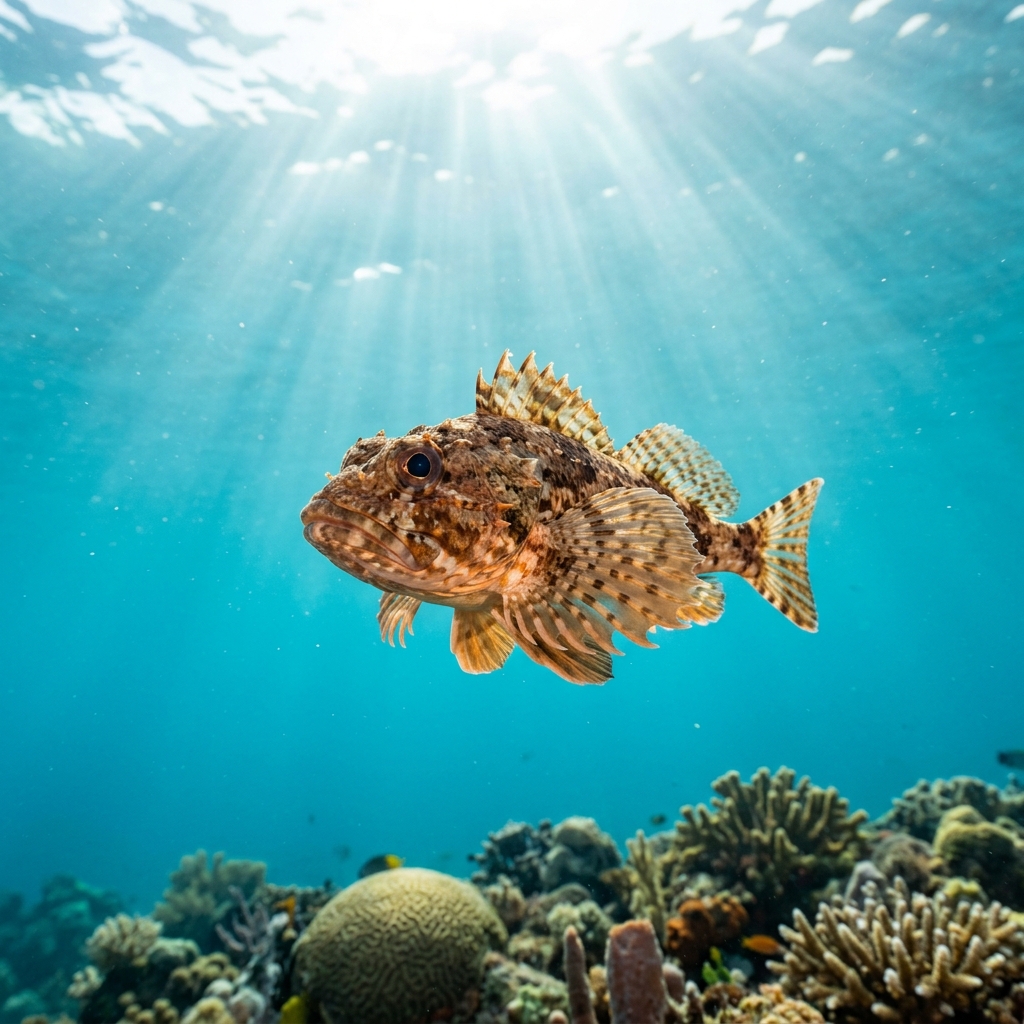
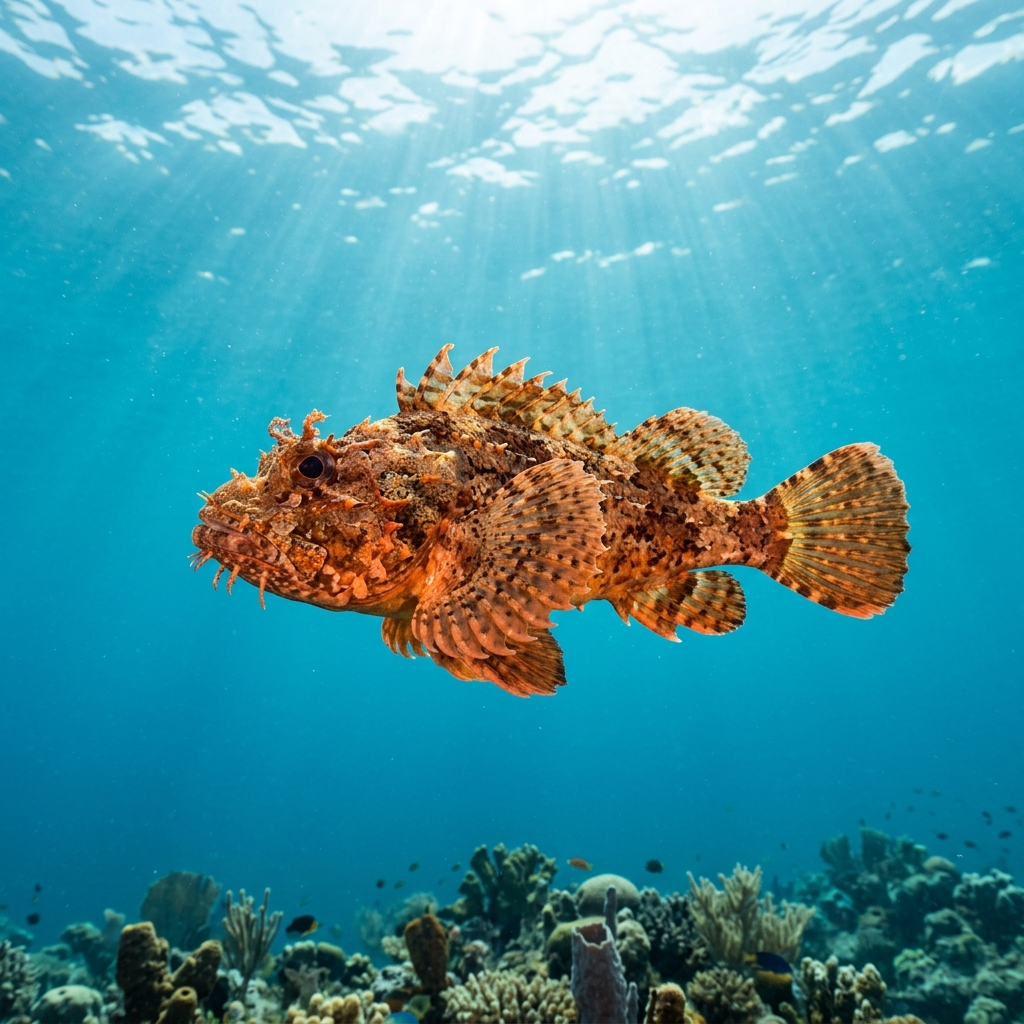
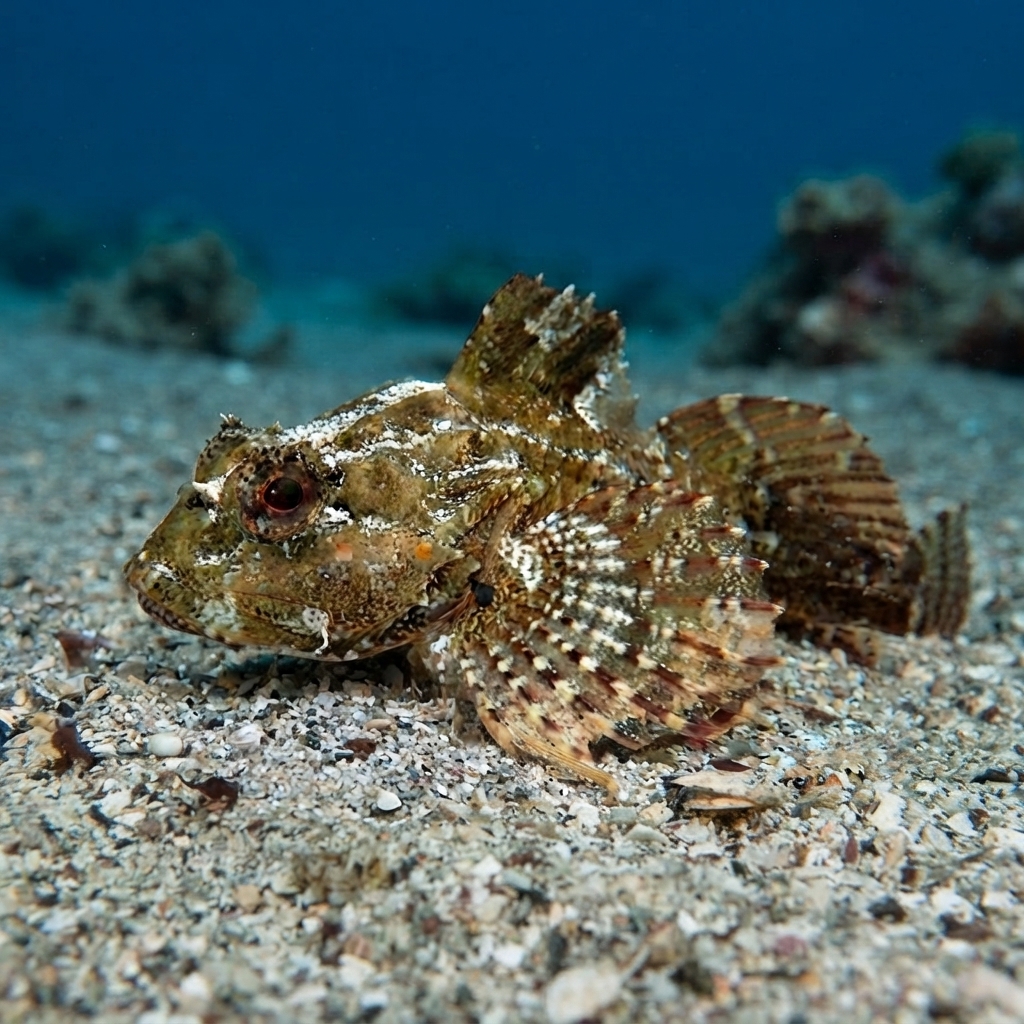
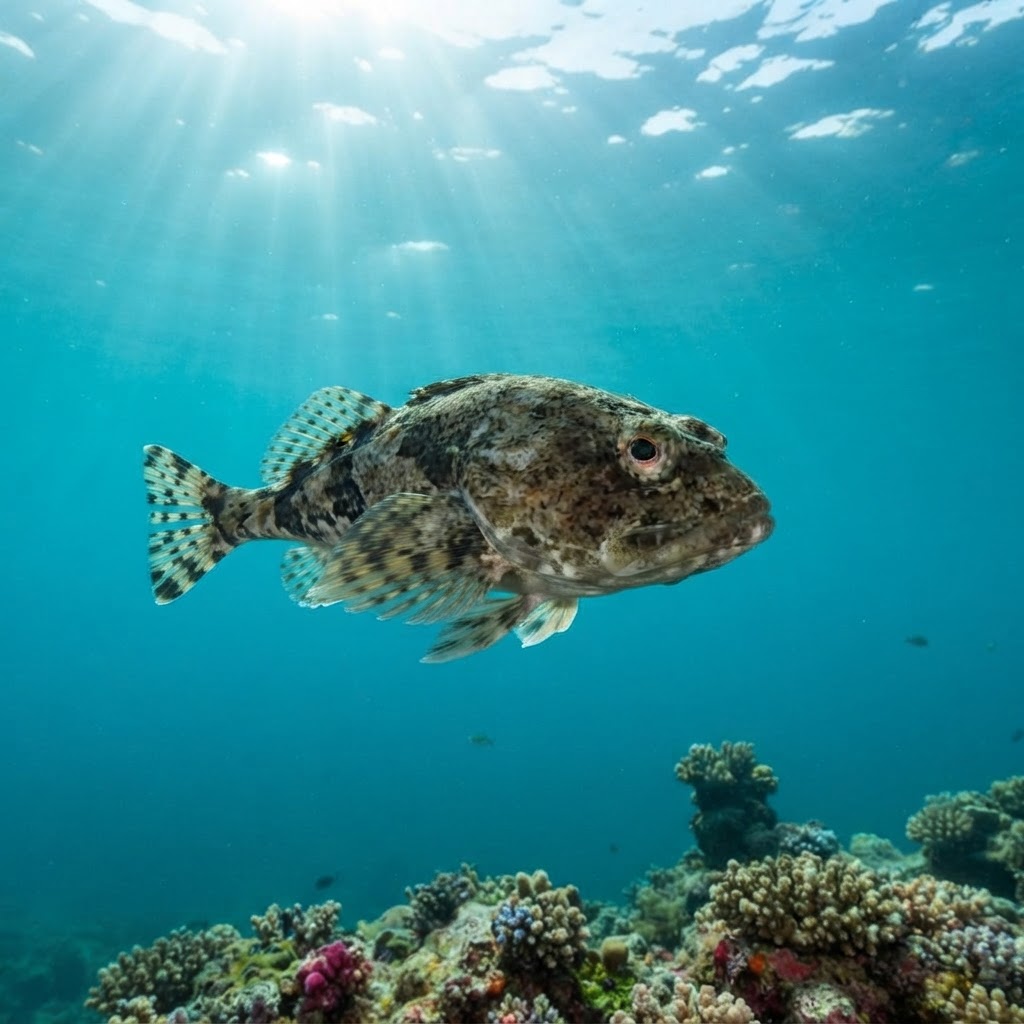
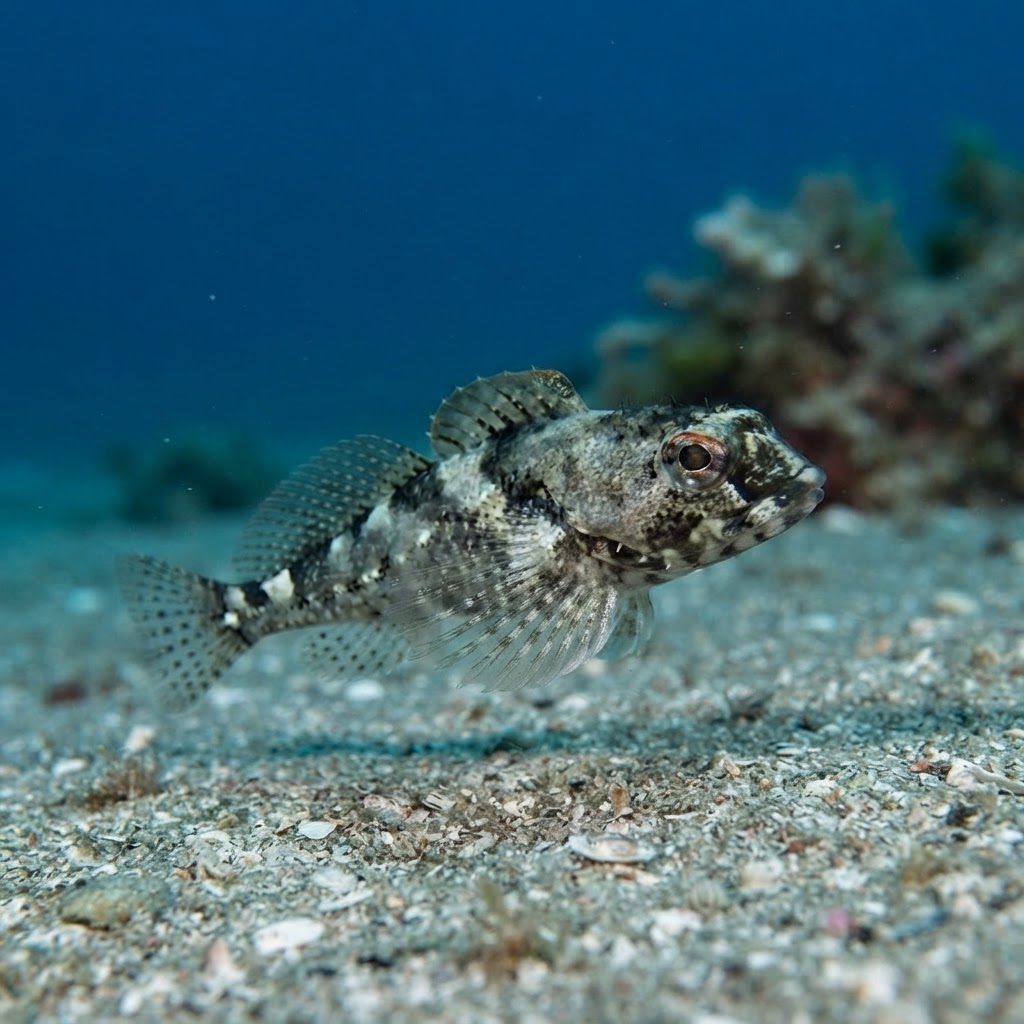
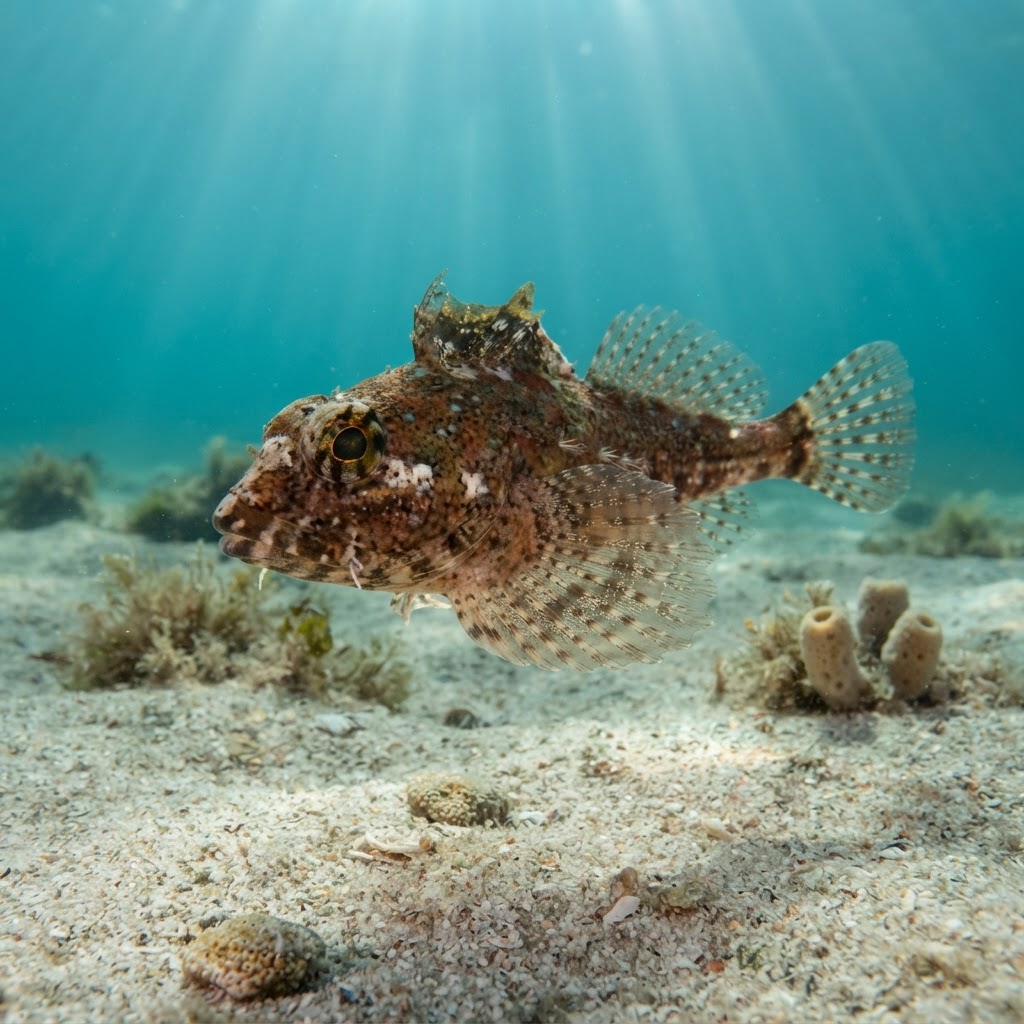
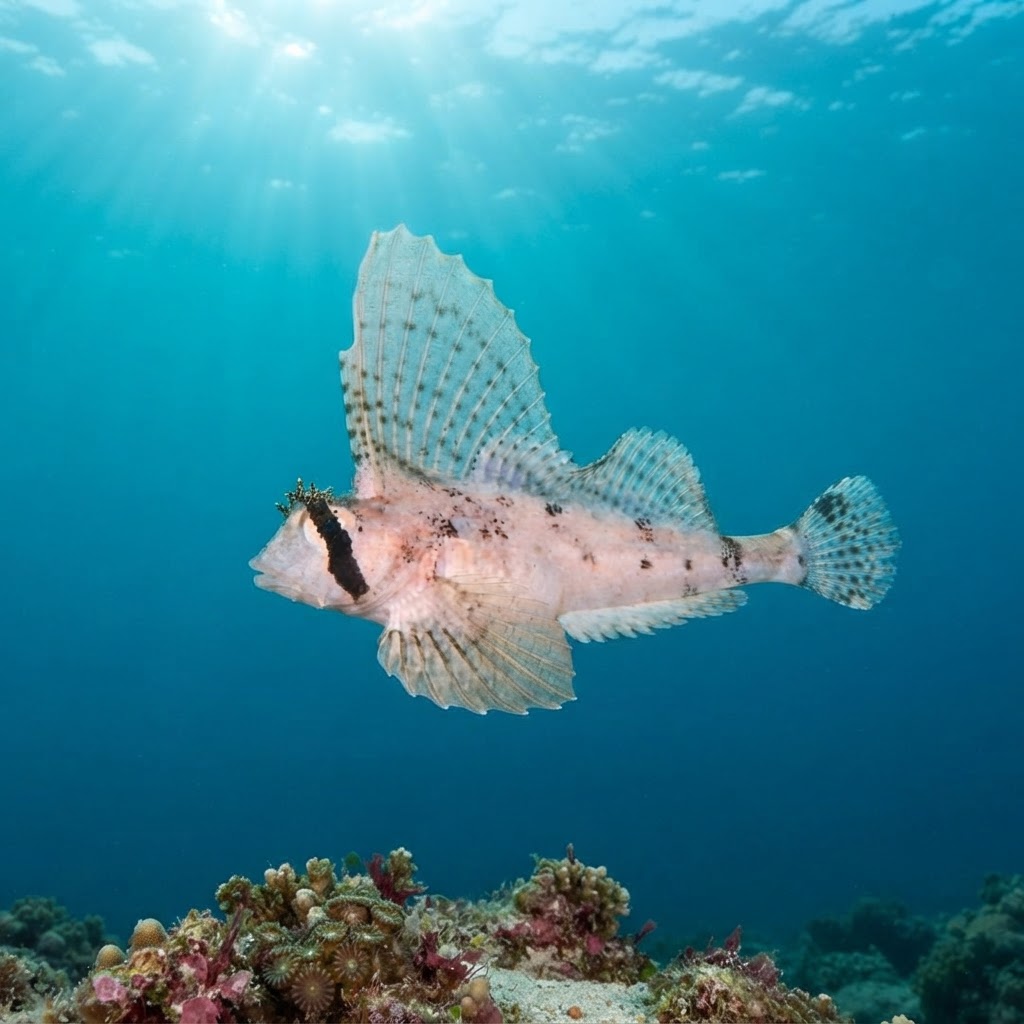
A small, mottled fish rarely more than 14 cm long, with a body pattern of dark bands running through the eye and down the flanks that breaks up its outline against rock. The standout feature is the tall, sail-like dorsal fin that it can raise and hold upright, giving the fish its name. It usually sits still on a rock ledge or wedged into a crevice rather than swimming in the open, so divers tend to spot it by its shape and fin rather than movement.
Divers most often find it motionless on a rock face, tucked under a ledge or resting on a wall, relying on its blotchy camouflage to go unnoticed. When it does raise that tall dorsal fin it is usually a threat or display response rather than a swimming posture, and it will dart a short distance to a new hiding spot if pressed rather than flee far. It is not shy of divers so much as simply hard to spot, most sightings come from slow, careful looks into cracks and under overhangs on a wall dive.
That oversized dorsal fin is thought to work as a startle display, flared suddenly to make the fish look larger and deter a predator at close range.
Sightings show no clear seasonal pattern, and with a water-temperature niche of roughly 4 to 11C it is a cold-water resident that can turn up on a dive at any time of year. Plan around good visibility and site conditions rather than a particular month.
Most reliably logged in British Columbia, Canada, which accounts for the bulk of recorded sightings, with the Pacific Northwest coast of the United States as the other strong region. Look for it on rocky reef walls and under ledges at sites across these two areas rather than on tropical reef dives.
Mapping where Sailfin Sculpin is logged…
British Columbia, Canada is the strongest region for sightings, with the Pacific Northwest coast of the United States also producing regular logs. Look on rocky reef walls and under ledges rather than open sand or tropical reef.
There is no detected seasonal pattern, so sightings happen year-round. It lives in cold water between about 4 and 11C, which suits Pacific Northwest diving conditions through most of the year.
Look for a small mottled fish under 15 cm with dark bands crossing the eye and body, usually resting still on rock. Its raised, sail-shaped dorsal fin is the clearest single feature to key on.
They typically reach around 14 cm, making them one of the smaller reef-associated fish divers log in cold Pacific waters.
Its tall dorsal fin can be flared upright as a startle display, likely to make the fish appear larger when threatened. Most of the time it stays folded down while the fish sits camouflaged against rock.
No, they pose no threat to divers and are not venomous or aggressive. They rely on staying hidden rather than confrontation.
Site and sighting data is aggregated from diver logs, iNaturalist and GBIF. For taxonomy and conservation status:
Shorthorn Sculpin
228 sites