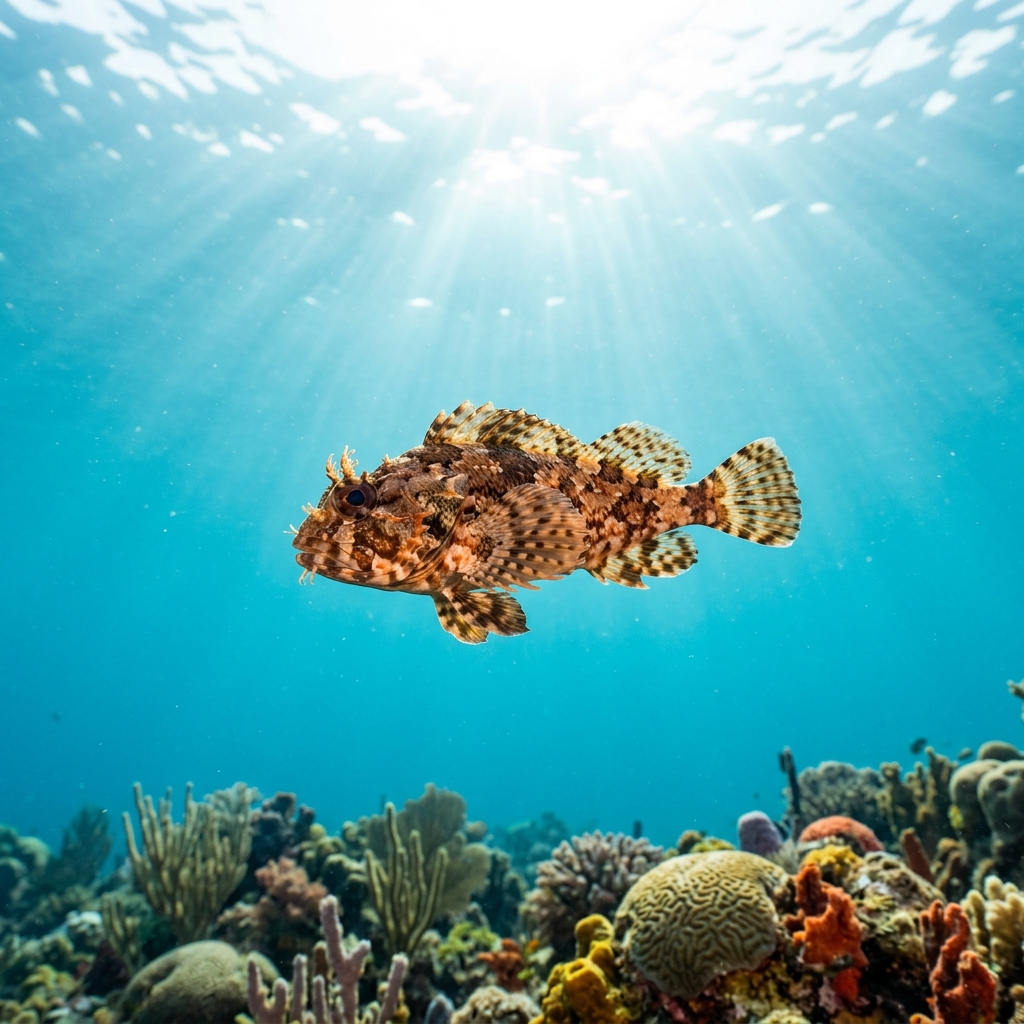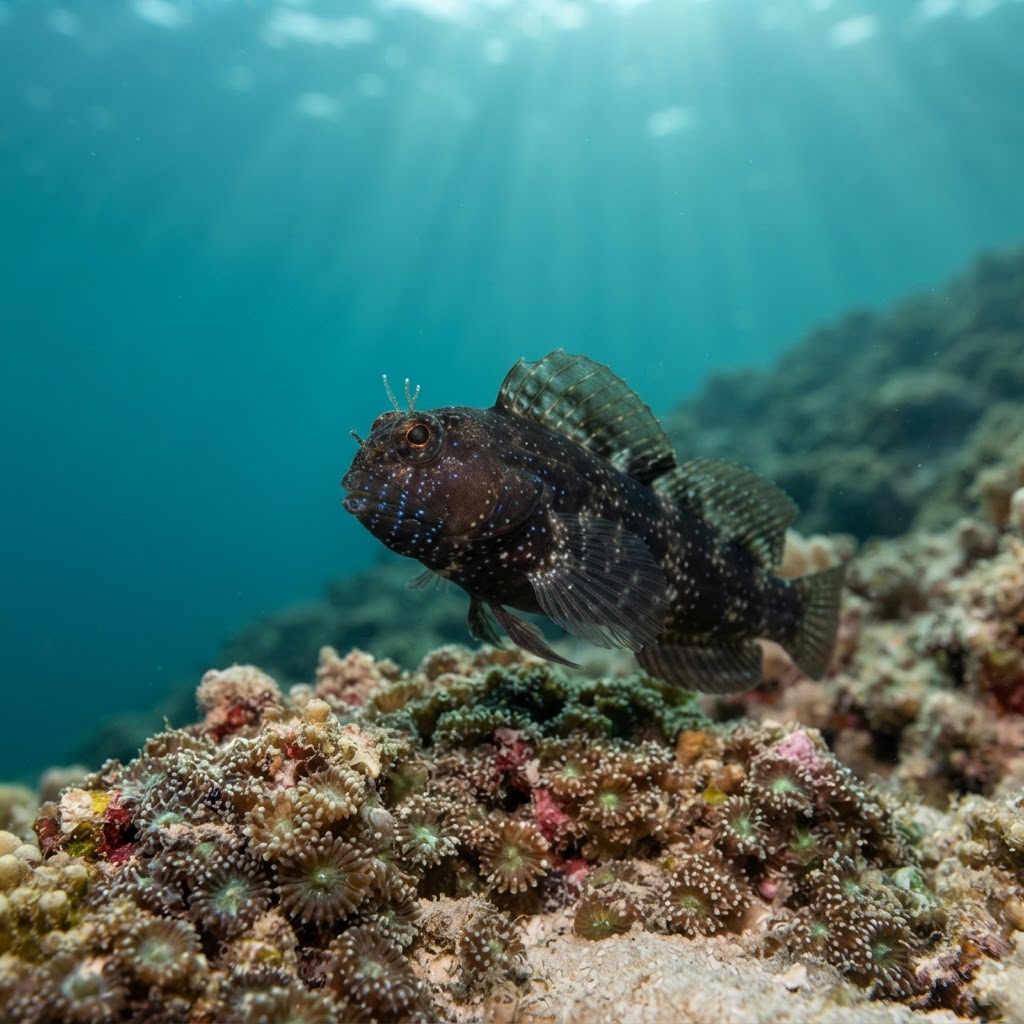
Emblemaria pandionis
A 4cm blenny that peers out of tube worm holes in Grand Cayman and Bonaire, most fun to find on a slow, close-focus dive.
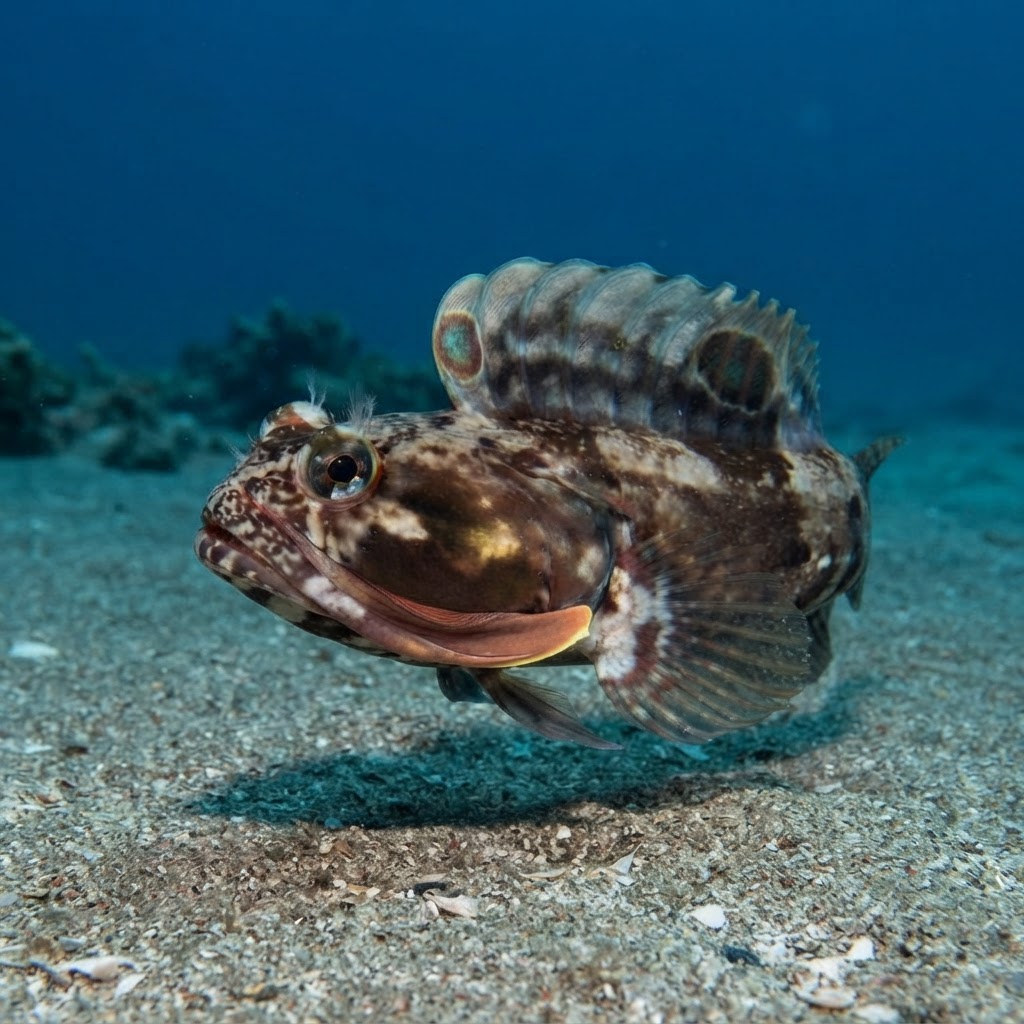
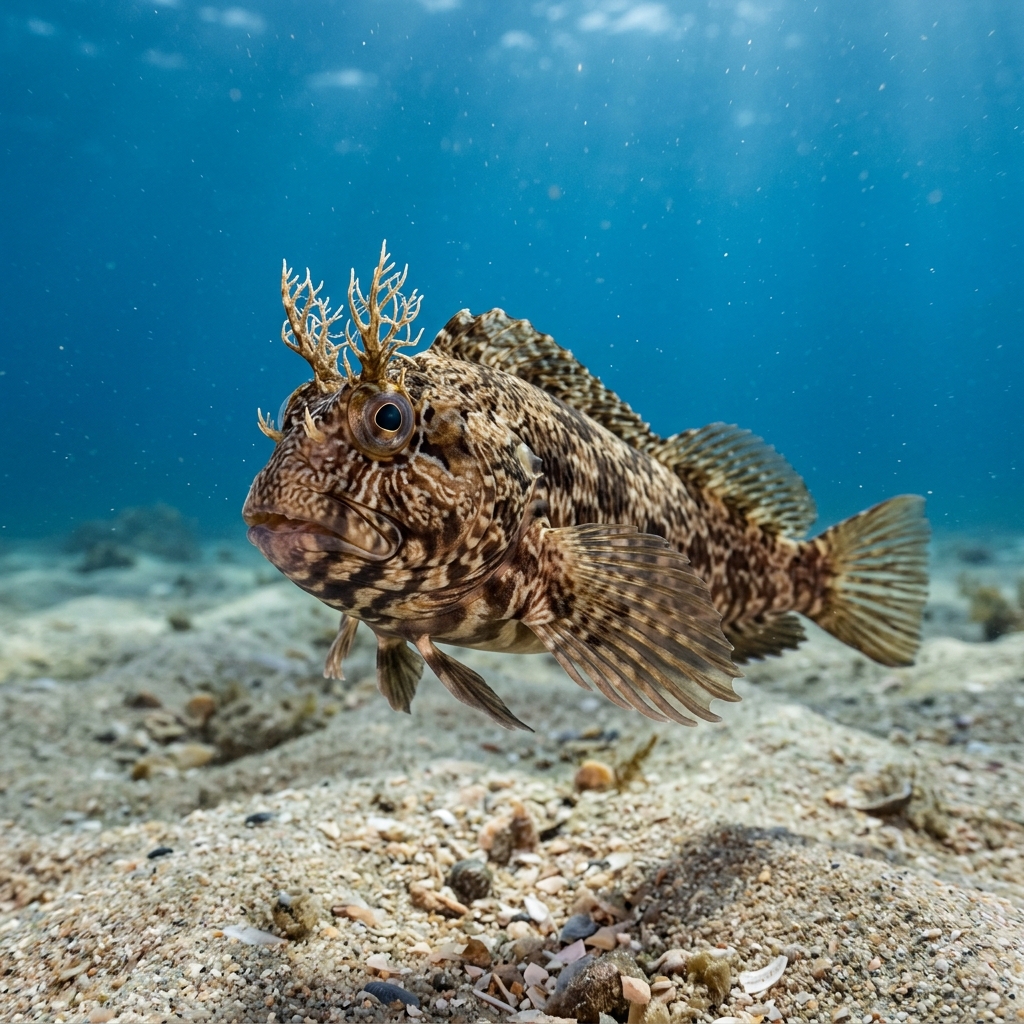
At just 4cm, this blenny spends most of its time with only its head and a tall, sail-like dorsal fin showing above a small burrow or worm hole. Look for a slender, eel-like body in mottled brown and grey tones and a large blunt head with prominent eyes perched high on top. Males flare that oversized dorsal fin upward in quick, jerky displays, which is usually the movement that catches a diver's eye first.
Divers usually find this blenny motionless in its burrow, watching the reef with just its head and dorsal fin exposed, then popping back down the instant a hand or camera gets too close. Males periodically raise and lower that sail-fin in short bursts, a display aimed at rivals or passing females rather than at divers. It sticks to shallow, sheltered reef structure and rubble where old worm tubes or holes give it a bolt-hole, so slow, close looking pays off far more than fin-kicking past.
It doesn't dig its own home: this blenny moves into empty tube-worm burrows and small reef cavities, which is why you'll almost always see it framed by a neat round hole rather than out in the open.
No clear seasonal pattern shows up in sighting data, and its preferred water temperature of roughly 25.5 to 28.2C holds across the Caribbean year-round, so any month is a reasonable bet.
Reef neighbours a diver could mistake it for. Use the identification notes above to tell them apart.
Most commonly logged in the Cayman Islands, especially around Grand Cayman and Cayman Brac, with strong numbers also reported from Bonaire's Leeward Coast and Saint Croix in the US Virgin Islands. It also turns up reliably in Honduras' Bay Islands and around Sint Eustatius and Saba, making it a fixture of Caribbean reef diving generally rather than one specific hotspot.
Mapping where Sailfin Blenny is logged…
Grand Cayman and Cayman Brac in the Cayman Islands are the most reliable spots, alongside Bonaire's Leeward Coast, Saint Croix in the US Virgin Islands, and Honduras' Bay Islands. It's a widespread Caribbean reef species rather than a single-site specialty.
There's no strong season in the sighting data, and Caribbean reef temperatures stay within its comfort range of roughly 25.5 to 28.2C all year, so it can be found on any dive trip regardless of month.
Look for a tiny, 4cm head poking out of a small hole in the reef, with a tall dorsal fin the male raises and lowers in quick pulses. The body is mottled brown and grey and rarely fully visible, since most of it stays hidden in the burrow.
They max out around 4cm, making them one of the smaller reef fish a diver is likely to actively search for rather than just notice in passing.
It never builds its own shelter, instead taking over abandoned tube-worm burrows and small holes in the reef, which is why you'll almost always spot it framed by a neat round opening.
No, they pose no threat to divers. They're too small and shy to do anything but retreat into their burrow when approached.
Site and sighting data is aggregated from diver logs, iNaturalist and GBIF. For taxonomy and conservation status:
Rusty Blenny
2,605 sites