Bodianus bilunulatus
Uncommon but reliable on KwaZulu-Natal reefs at 24-29C, year-round, no clear season detected.
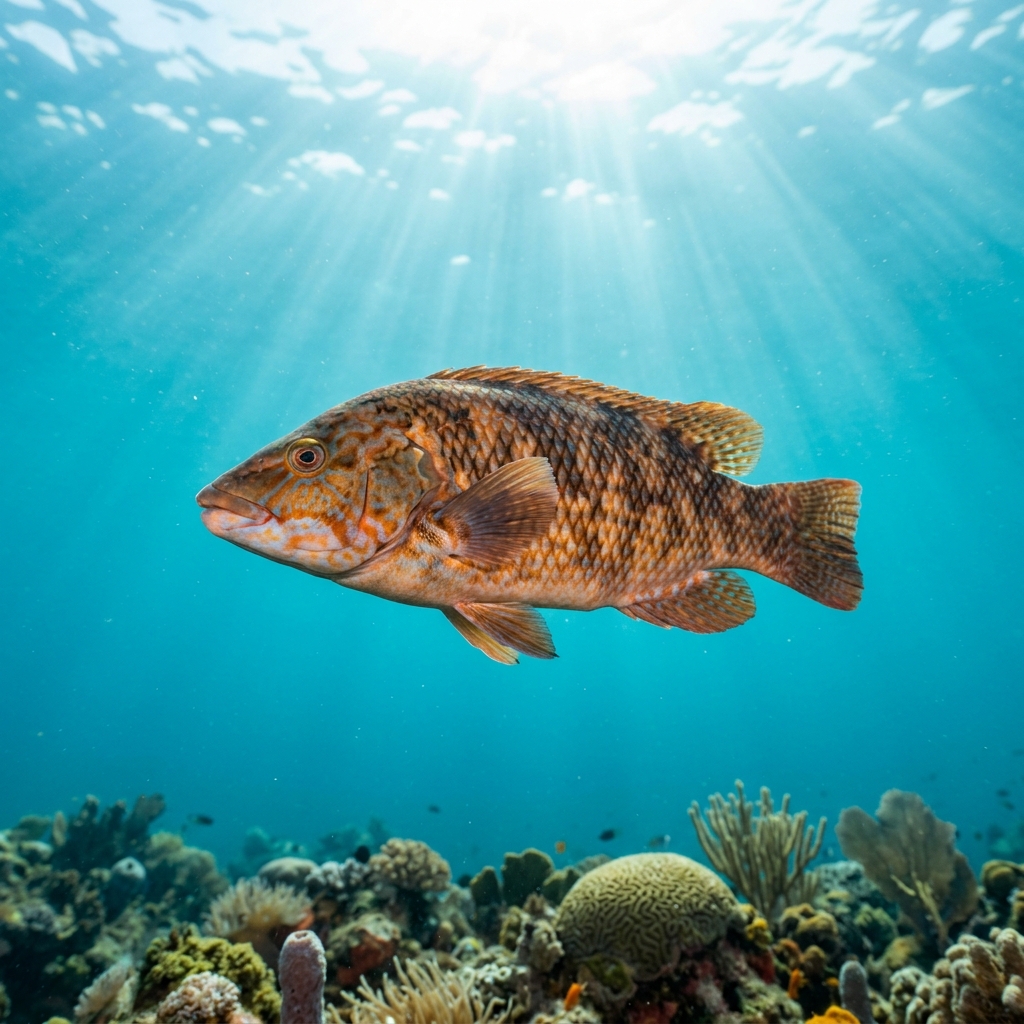
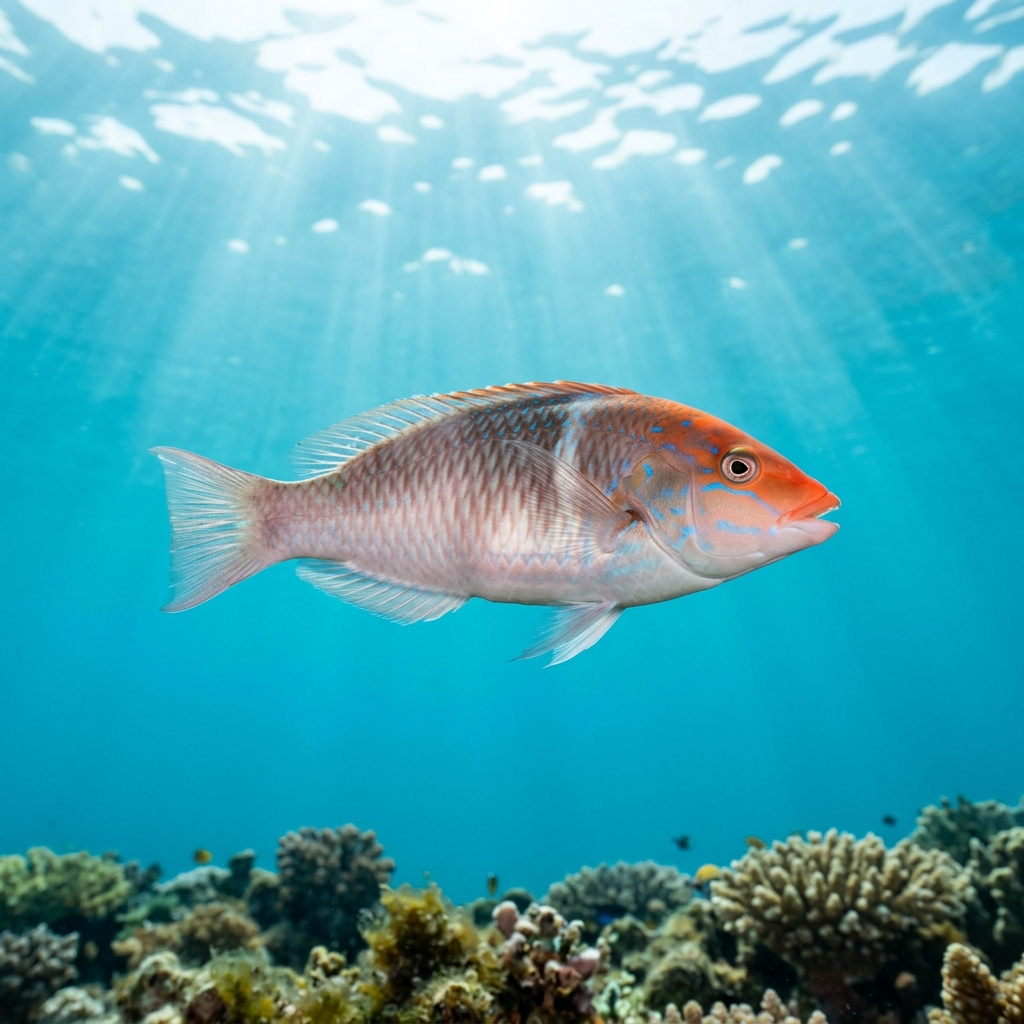
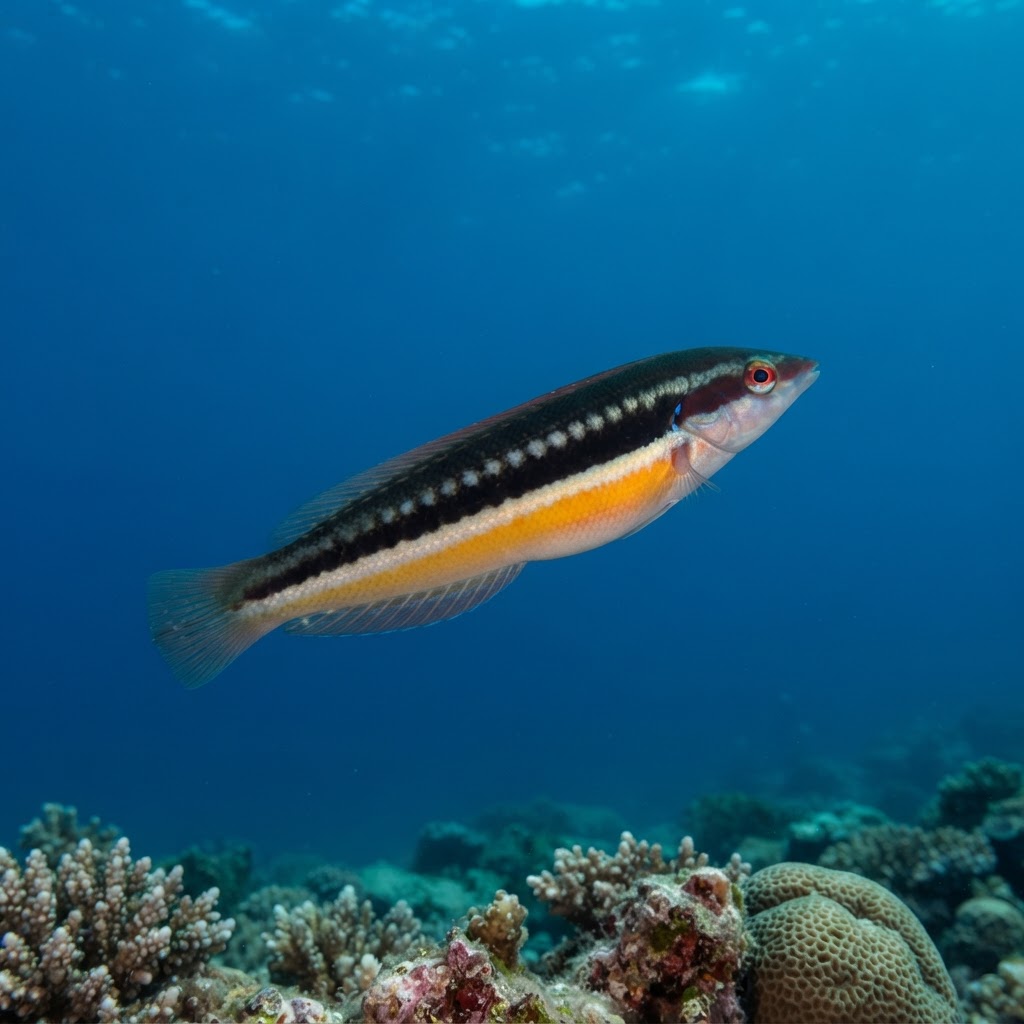
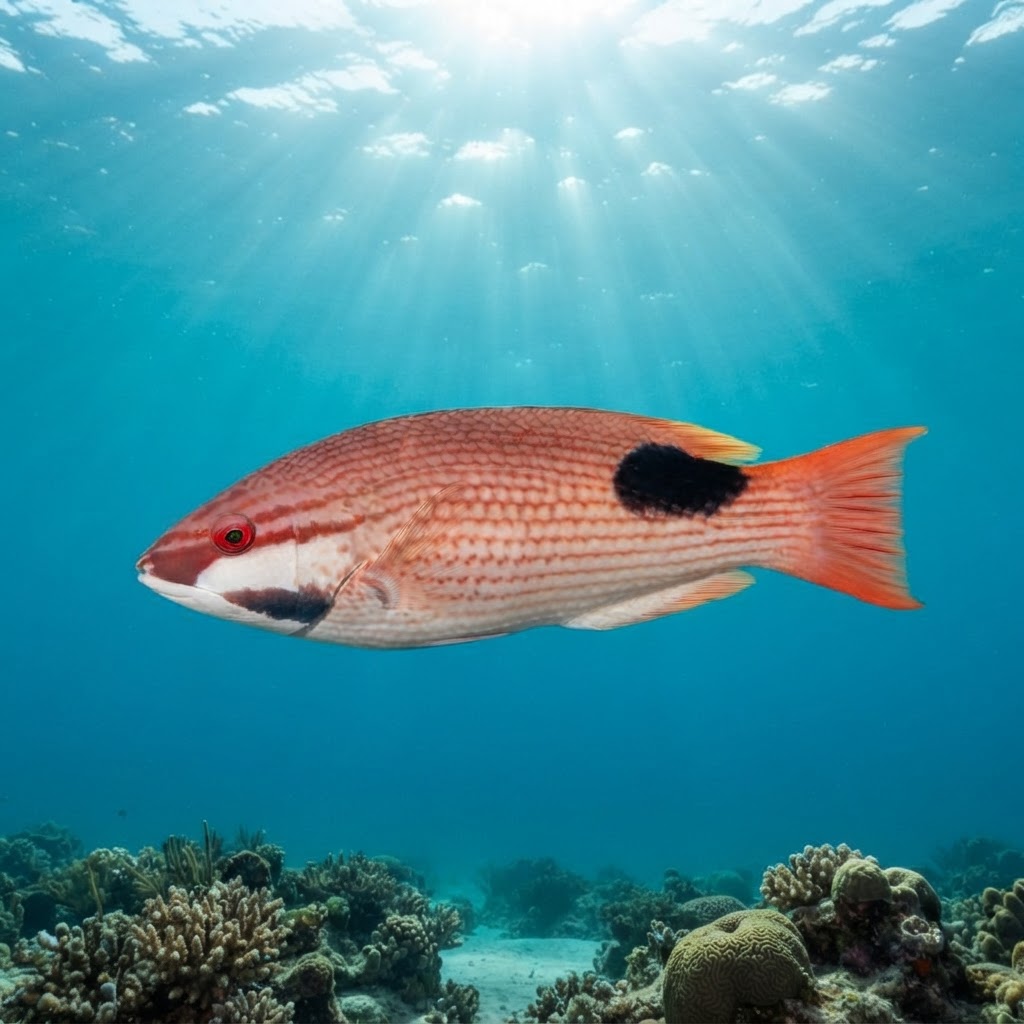
Grows to around 38cm, with a chunky, elongated wrasse body and a pointed, almost pig-like snout it uses to poke into rubble and sand. Look for the reddish-brown body broken up by a pale, saddle-shaped patch across the back near the tail, which is the easiest field mark. Adults often show darker mottling toward the head, giving the whole fish a two-toned look front to back.
Expect to find it working the reef at its own pace, nosing into crevices and rubble patches for small invertebrates rather than cruising open water. It is logged as uncommon even at the sites where divers find it, so sightings feel like a real find rather than a guarantee, and individuals tend to hold their ground or ease off slowly rather than bolt when approached.
Like many hogfish in the genus Bodianus, it is a bottom-hunting wrasse that relies on that pig-snout profile to root prey out of sand and rubble rather than chasing anything in open water.
There is no detected seasonal pattern, and with water in its comfort zone of 23.6 to 28.8C year-round in KwaZulu-Natal, sightings are possible on any dive rather than tied to a particular month.
Every logged sighting for this species comes from South Africa, specifically the reefs of KwaZulu-Natal, making it the region to target if you want a real shot at one. It shows up across a spread of sites there rather than clustering at one famous spot, so any well-dived KwaZulu-Natal reef is worth keeping an eye on.
Mapping where Saddleback Hogfish is logged…
KwaZulu-Natal in South Africa is the only region with confirmed sightings, spread across a good number of its reef dive sites rather than one hotspot.
No clear season shows up in the data, and water temperatures in KwaZulu-Natal sit in its 24 to 29C comfort range year-round, so it can turn up on any dive.
Look for a reddish-brown wrasse around 38cm with a pointed snout and a pale saddle-shaped patch crossing its back near the tail. It usually keeps low, nosing around rubble and sand rather than swimming in open water.
They reach around 38cm in length, a solid mid-sized wrasse rather than a giant, similar in scale to many other Bodianus hogfish.
No, they pose no danger to divers and simply go about foraging in the reef, often easing away rather than reacting defensively if approached.
Its pig-like snout is built for rooting through sand and rubble to dig out hidden invertebrates, a foraging style shared across the Bodianus hogfish genus.
Site and sighting data is aggregated from diver logs, iNaturalist and GBIF. For taxonomy and conservation status:
Bird Wrasse
3,632 sites