Pholis ornata
An eel-like little fish tucked into cold-water eelgrass beds off British Columbia and the Pacific Northwest, best spotted in 9 to 12 C water.
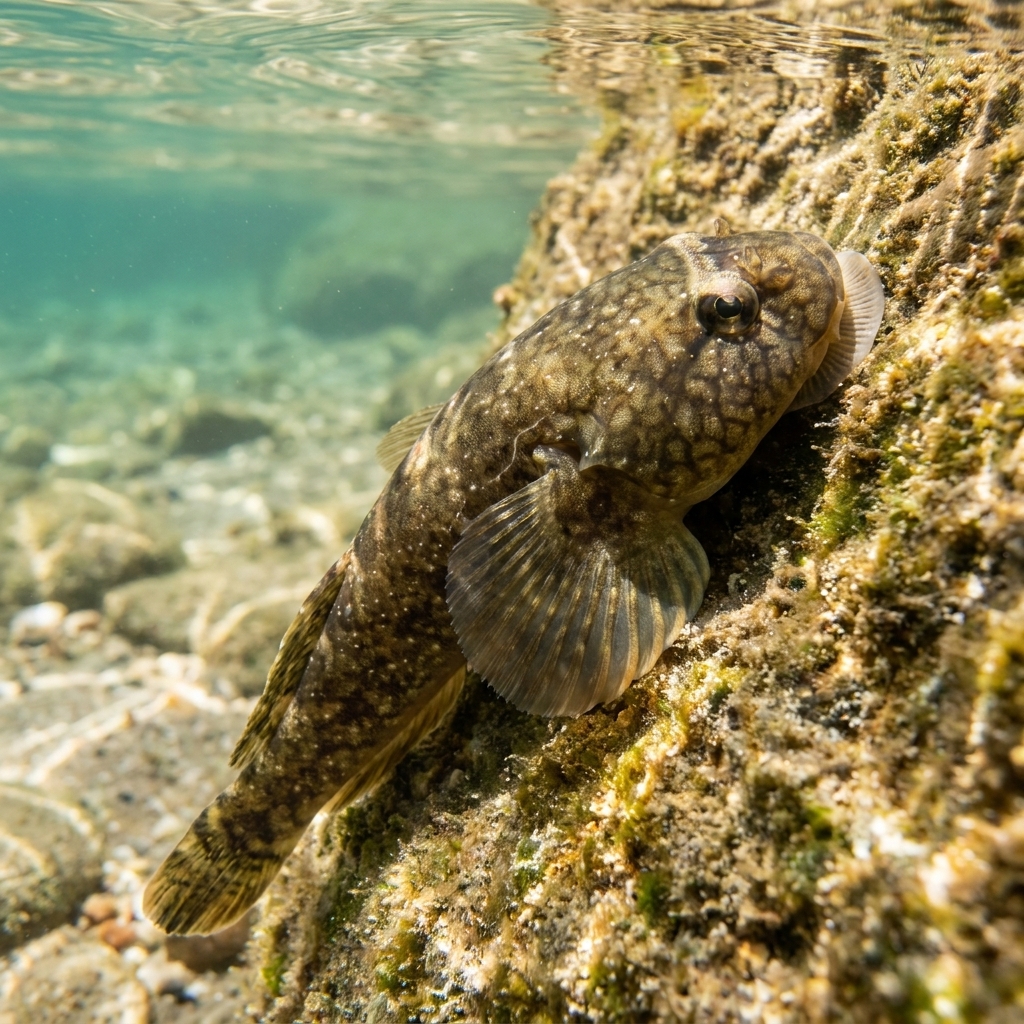
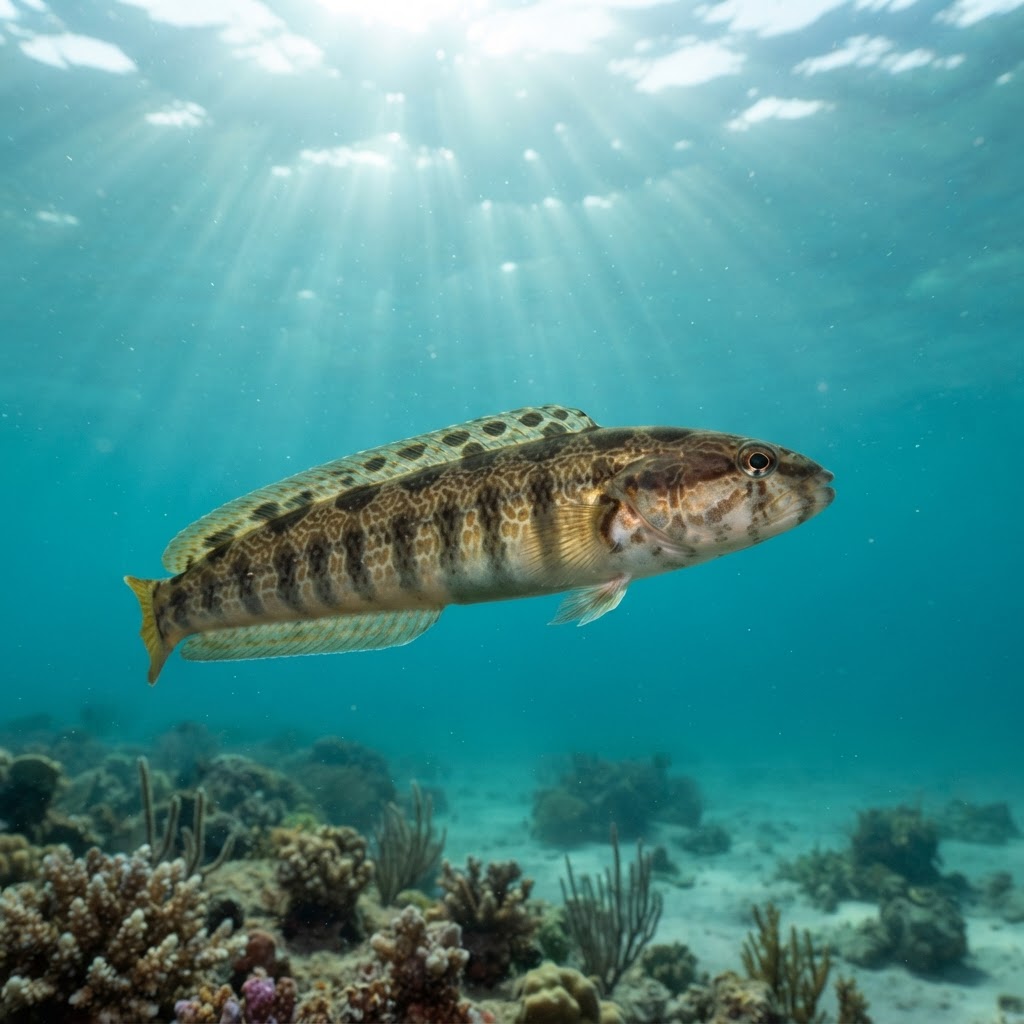
An eel-like, laterally compressed body around 21 cm long, usually mottled olive-brown to reddish-brown to blend into eelgrass and rocky rubble. A row of pale-ringed dark spots runs along the upper side of the body, near the base of the long dorsal fin, which is the main feature to check against similar-looking blennies and gunnels. Look for it lying still against the substrate rather than swimming freely in open water.
Divers mostly find it lying motionless among eelgrass blades or tucked into rocky crevices and cobble, relying on its mottled colouring to disappear against the bottom rather than swimming off. It is usually logged as a rare or uncommon find on a dive, meaning you need to slow down and scan low structure rather than the open water column. Approach quietly and it will often hold its position long enough for a good look.
Like other gunnels, it can survive out of water for stretches by staying damp under rocks or weed at low tide, an adaptation shared with its intertidal relatives.
Sightings are spread through the year with no clear seasonal peak in the data, which fits its cold-water niche of roughly 9 to 12.5 C, conditions that hold steady across most of the year in the Pacific Northwest and British Columbia.
Logged mostly along the Pacific Northwest coast of the United States, with British Columbia in Canada the other reliable spot. It shows up as a scattered, low-density find rather than a headline species at any single site.
Mapping where Saddleback Gunnel is logged…
Most sightings come from the Pacific Northwest coast of the United States, with British Columbia, Canada the other consistent region. It is a scattered, low-density find rather than something guaranteed on any single dive.
There is no strong seasonal pattern in the sighting data, so it is effectively a year-round find. Its comfort range of about 9 to 12.5 C matches conditions typical of the Pacific Northwest and British Columbia through most of the year.
Look for a slender, eel-like body about 21 cm long, mottled brown to blend with eelgrass and rubble, with a row of pale-ringed dark spots along the upper side near the dorsal fin. It usually lies still against the bottom rather than swimming in open water.
They grow to around 21 cm, a modest size that combined with their camouflage makes them easy to miss unless you are checking eelgrass and rocky crevices closely.
No, they pose no threat to divers. They are small, shy fish that rely on hiding rather than any defensive behaviour toward people.
Like related gunnel species, they can tolerate brief periods out of water by sheltering under damp rocks or seaweed, an adaptation more typical of intertidal life than open reef fish.
Site and sighting data is aggregated from diver logs, iNaturalist and GBIF. For taxonomy and conservation status:
Soldierfish
3,612 sites