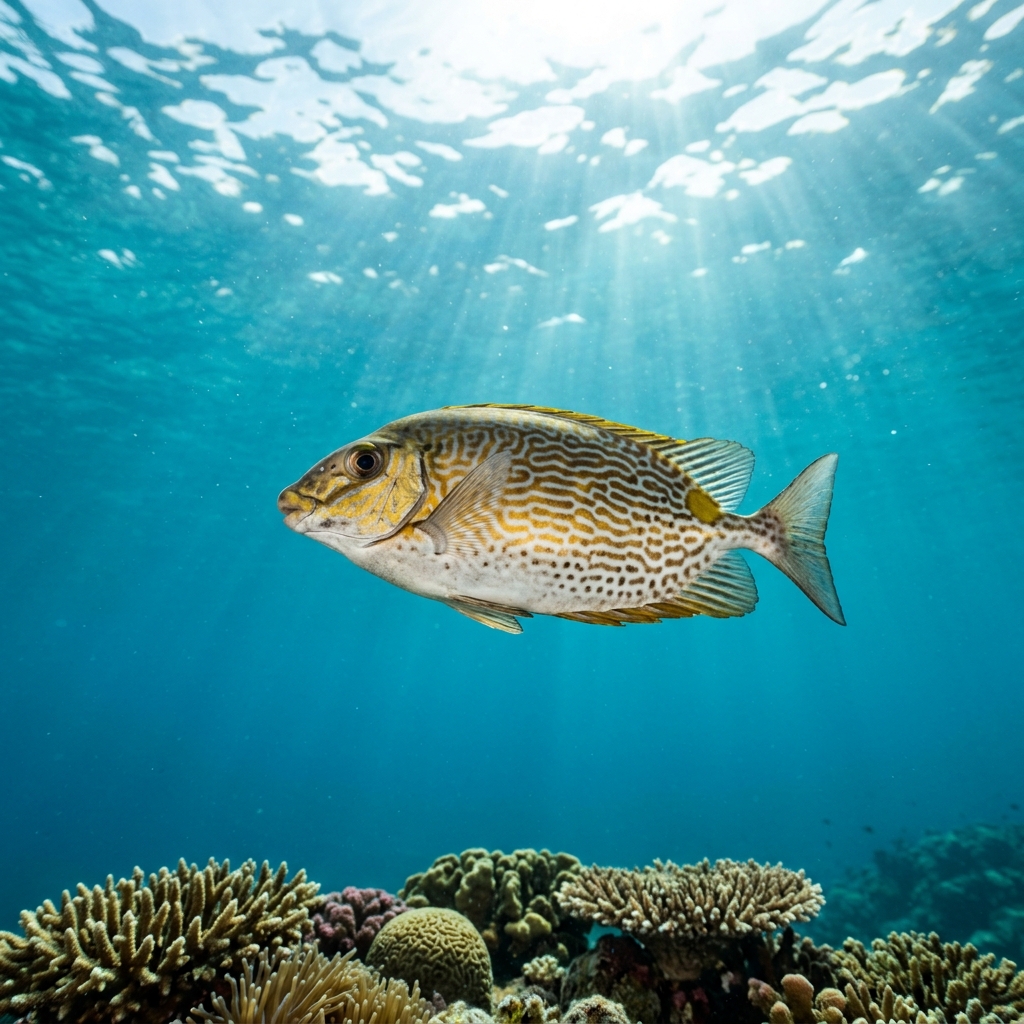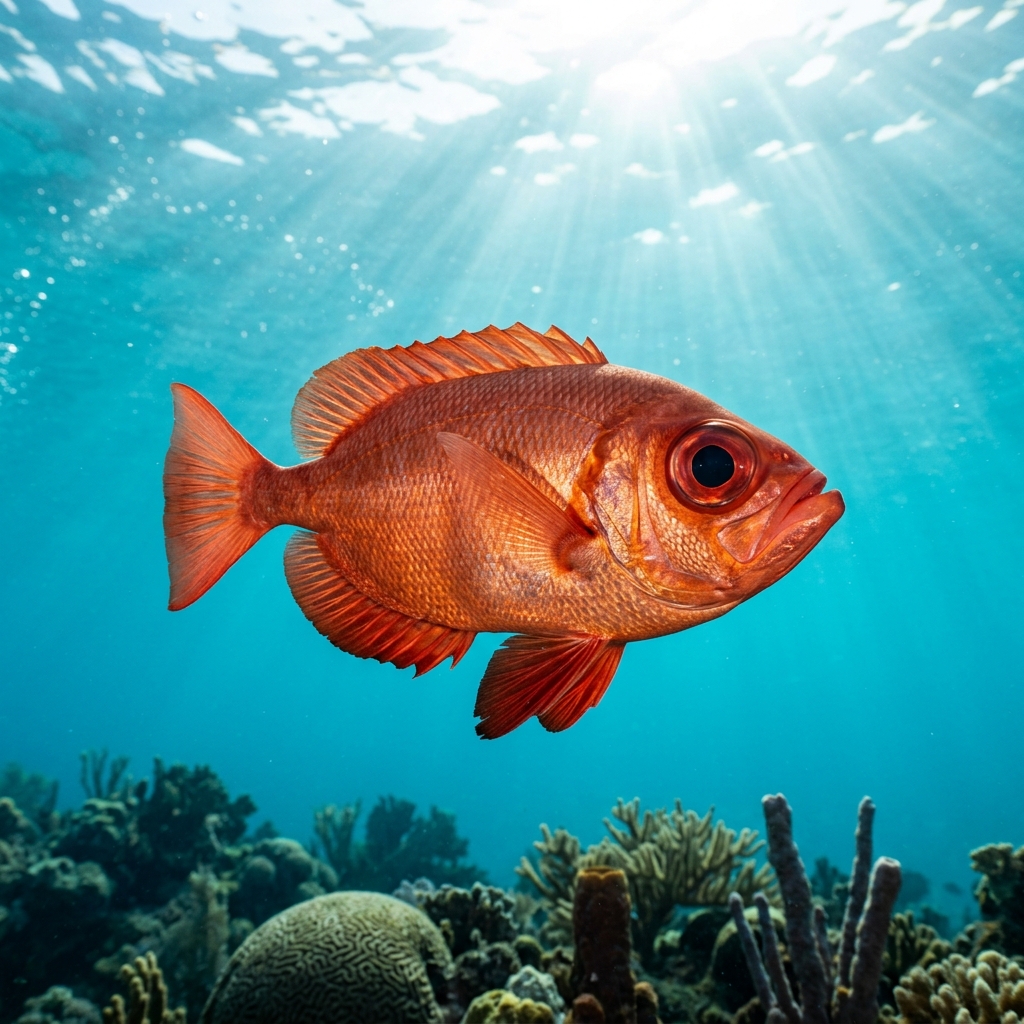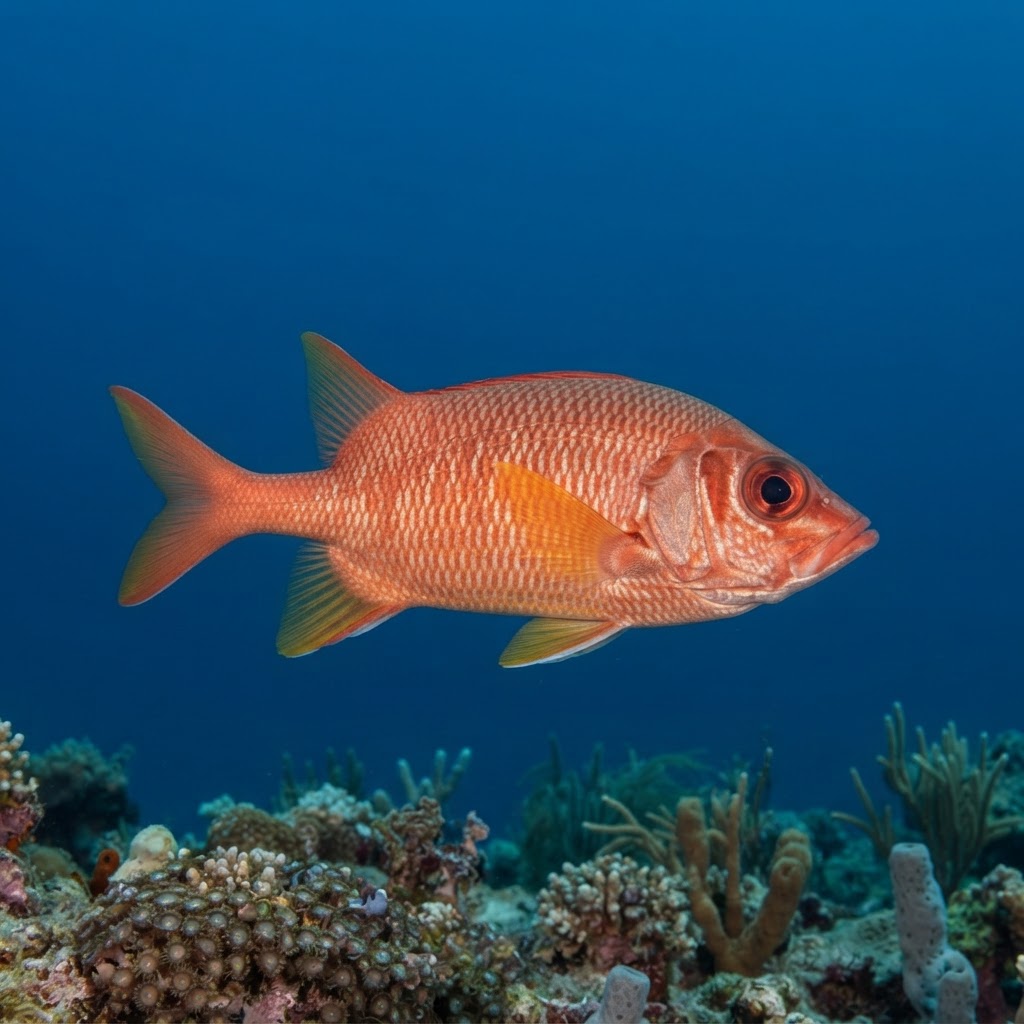
Sargocentron spiniferum
Big red-and-white eyed reef fish common in the Maldives and Seychelles, comfortable in 24-29C water year-round on tropical reefs.
Safety warning
The spine near the gill cover is sharp enough to cause a painful puncture wound if you grab or corner the fish, so admire it from a distance and don't reach into the crevices it hides in.
If you're stung
Venomous cheek spineGeneral first-aid guidance, not a substitute for professional medical care. In an emergency, call your local emergency number.
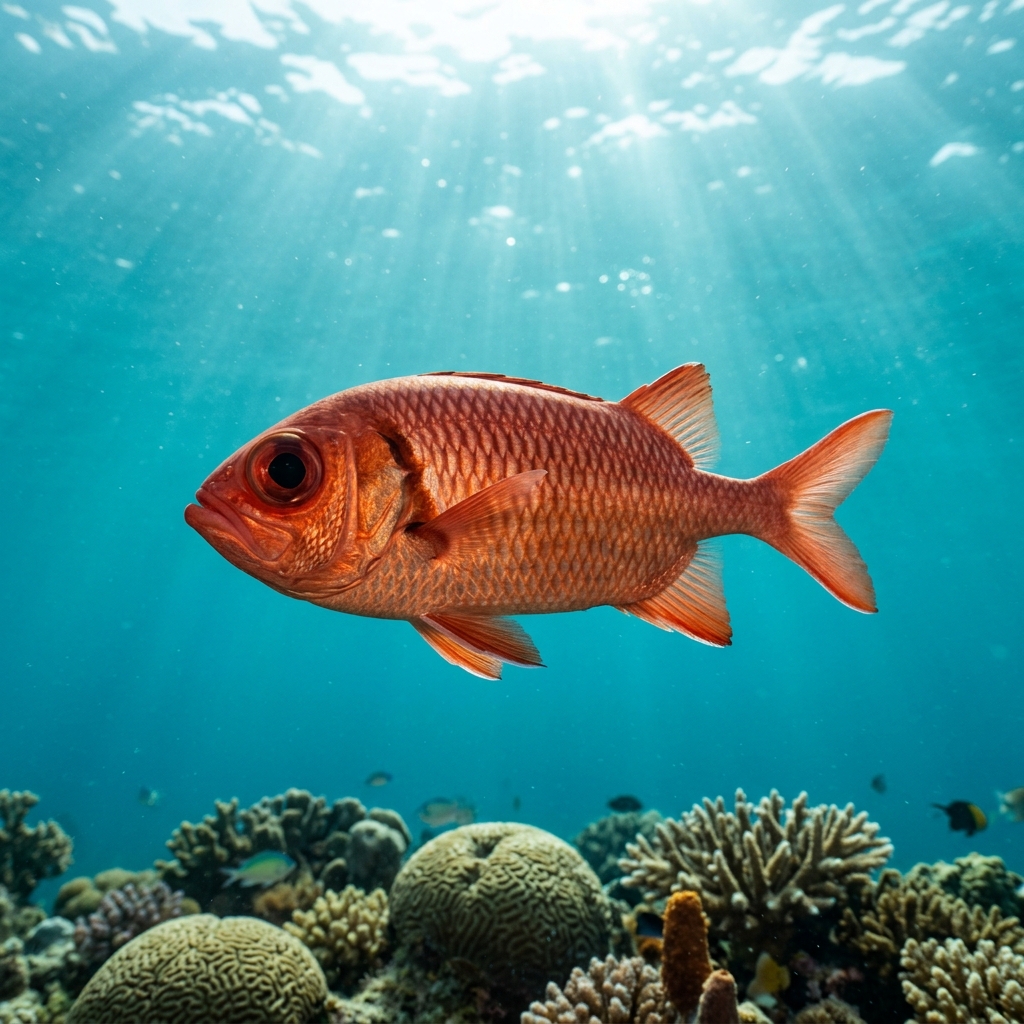
Chunky, spiny-finned fish to about 35cm with alternating red and silvery-white horizontal stripes running nose to tail. Look for the oversized, reflective eyes built for low light and a sharp white-tipped spine near the gill cover, the feature that gives this species its name. It sits head-out from ledges and crevices rather than swimming openly over open reef.
Expect to find it tucked under overhangs, in cave mouths or wedged into reef crevices during the day, often with just its head and those big eyes visible. It is a nocturnal hunter that becomes more active and visible on night dives, when it moves out to feed over the reef. By day divers who approach slowly and peer into shaded holes get the best look before it retreats deeper in.
Those large eyes are a real low-light adaptation, tuned for hunting small crustaceans and fish after dark when most reef fish have gone quiet.
No clear seasonal pattern shows up in sightings, and its comfort range of 24.4 to 29C matches tropical reef temperatures year-round, so any month works at these destinations.
Most reliably logged in the Maldives, especially the Central Atolls, and in the Seychelles' Inner Islands, with strong numbers also in Palau's Rock Islands and Koror & Malakal. It also turns up regularly in the Egyptian Red Sea, French Polynesia's Tuamotu Islands, Hawaii, Queensland and Fiji, making it a fixture on tropical reefs across the Indo-Pacific.
Mapping where Sabre Squirrelfish is logged…
The Maldives and Seychelles have the strongest logged numbers, with Palau, the Egyptian Red Sea, French Polynesia, Hawaii, Queensland and Fiji also reliable spots.
There's no strong seasonal signal in sightings, and its 24 to 29C comfort range matches tropical reefs year-round, so it can be seen on any month's dive trip.
They aren't aggressive, but the sharp spine near the gill cover can cause a painful wound if handled or cornered. Give it space and don't reach into the crevice it's sheltering in.
Look for a stocky red-and-white striped fish around 35cm, large reflective eyes, and a habit of hiding head-out under ledges rather than swimming in the open.
They typically reach around 35cm in length, making them one of the larger squirrelfish species divers encounter on Indo-Pacific reefs.
Its oversized eyes are a nocturnal adaptation that let it hunt small crustaceans and fish in low light, which is why it hides by day and becomes active on night dives.
Site and sighting data is aggregated from diver logs, iNaturalist and GBIF. For taxonomy and conservation status:
Soldierfish
3,612 sites