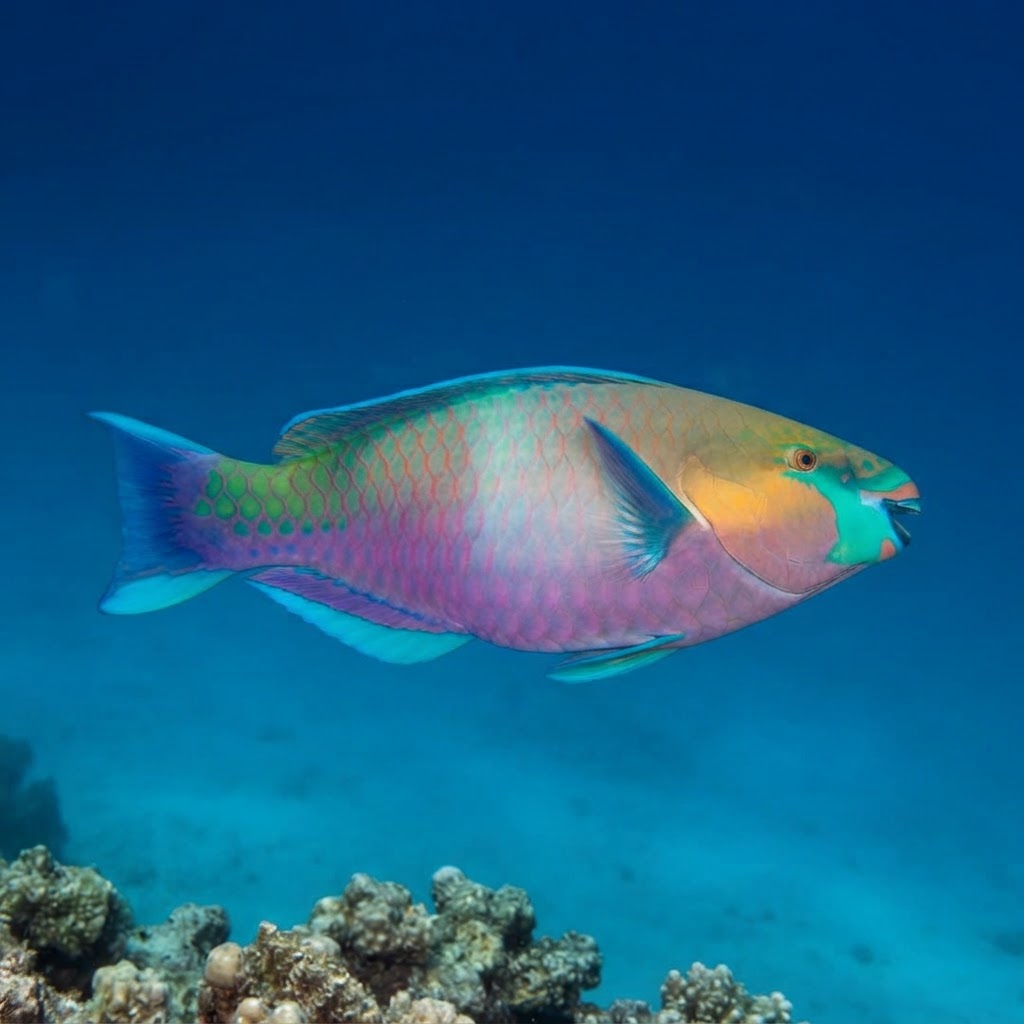
Scarus ferrugineus
A reef regular across South Sinai and Marsa Alam, comfortable year-round in 25-29C water. Here's how to spot one on your next Red Sea dive.
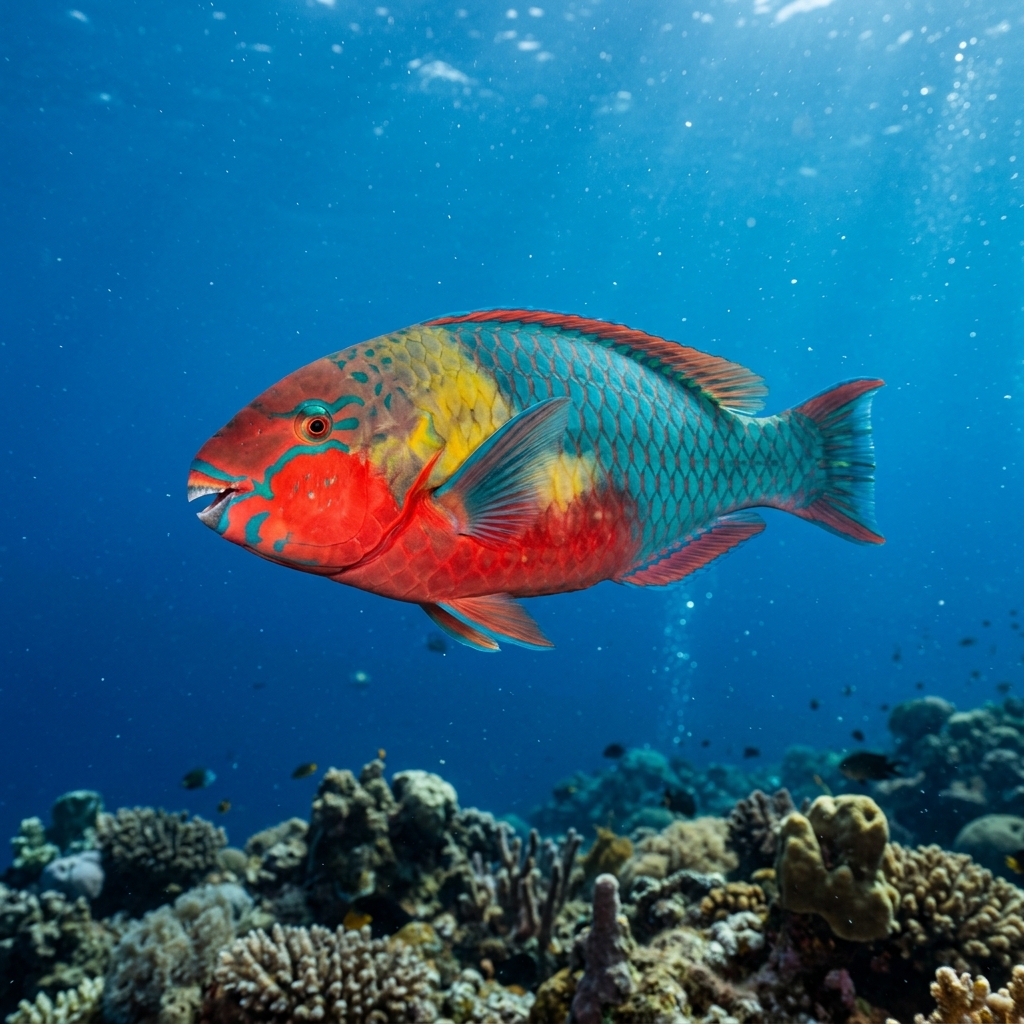
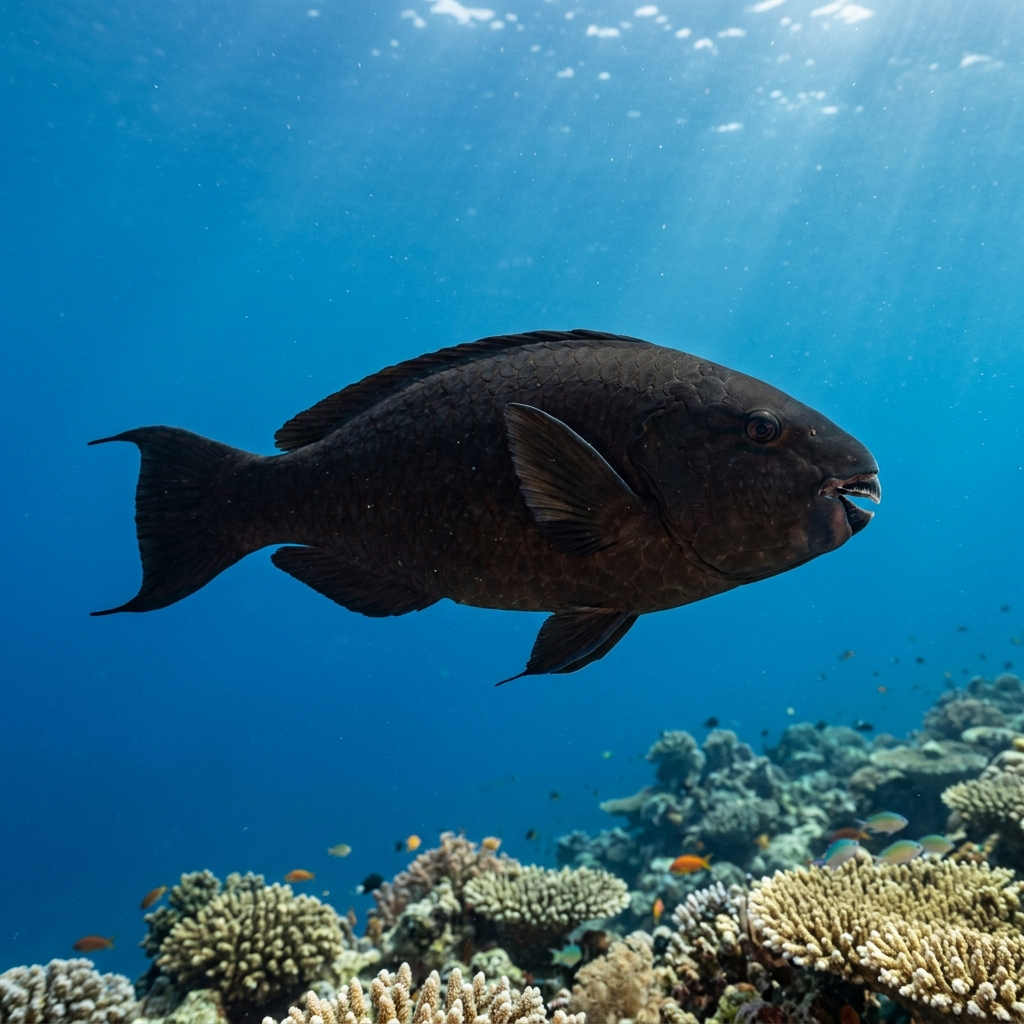
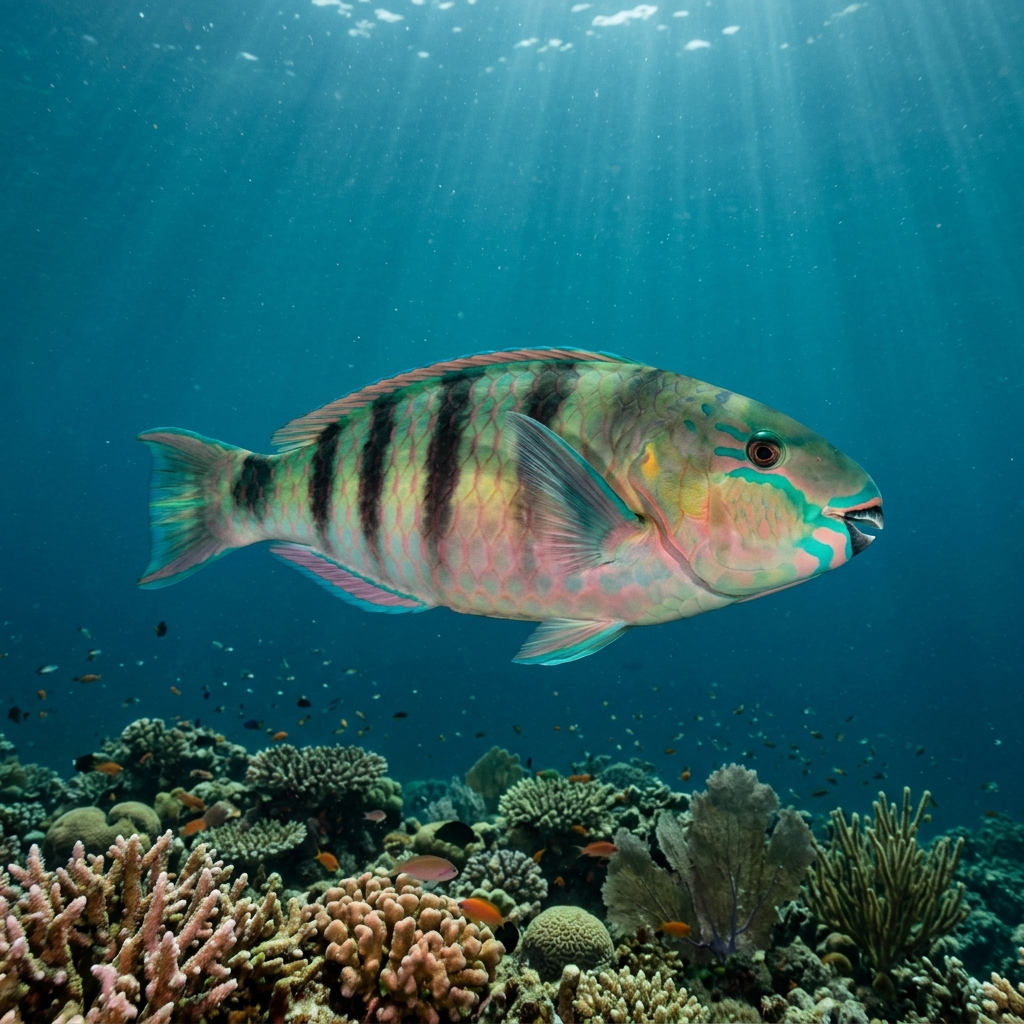
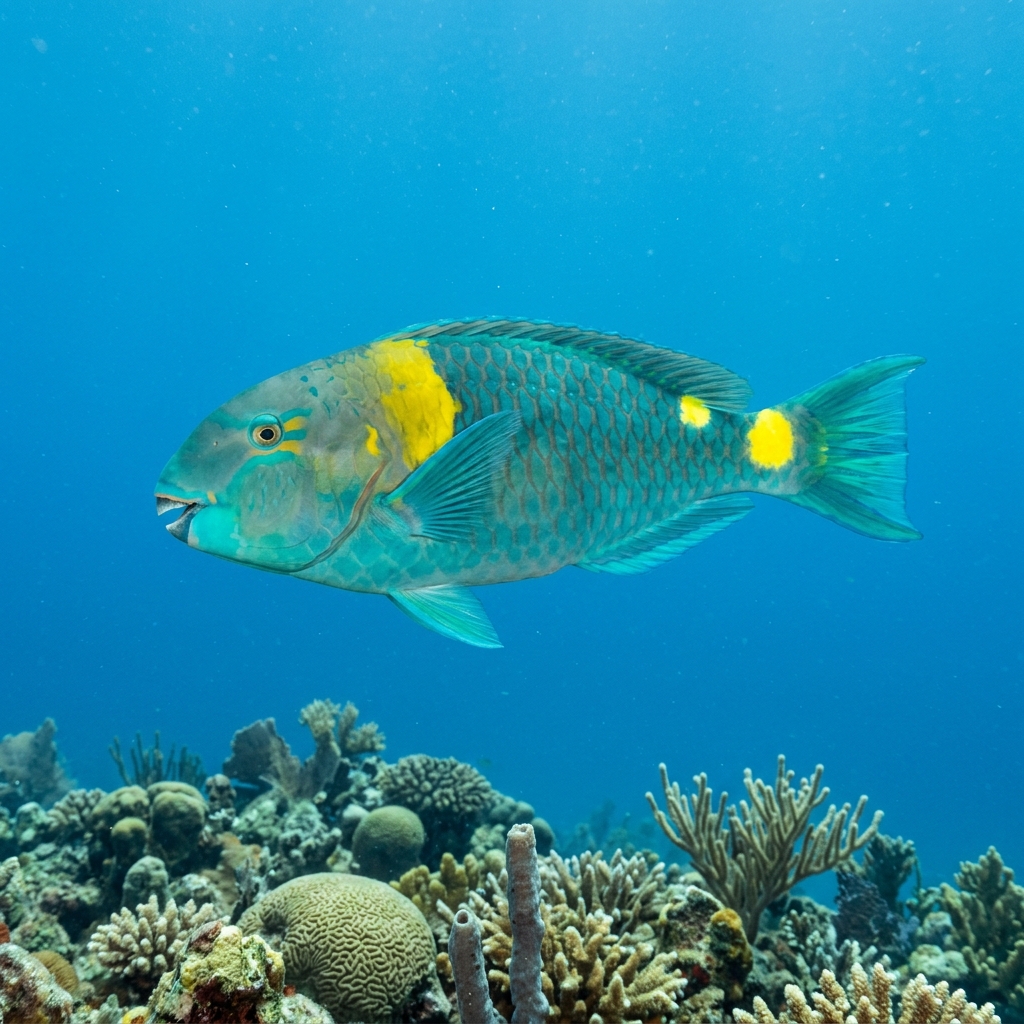
A mid-sized parrotfish at around 28cm, with a chunky, rounded body and the fused, beak-like teeth typical of the group. Adults show a rusty brown to olive body with faint blue-green streaks around the face and fins, while the overall tone reads dull and earthy rather than the neon blues and greens of many reef parrotfish. Look for it grazing head-down against the reef with slow, deliberate bites, its pectoral fins doing most of the paddling as it moves.
Expect to find it working the reef flat or slope during the day, cropping algae off rock and dead coral in short, unhurried bites. It tends to stick fairly close to cover and doesn't spook easily, so slow, steady divers often get a good look before it drifts back into the reef structure. Most sightings are of single fish or loose, small groups grazing rather than large schools.
Like other parrotfish, its fused beak-like teeth let it scrape algae straight off hard coral and rock, and the sand-like waste from that grazing is a small but steady contributor to reef sediment.
No clear seasonal pattern shows up in the data, and with a comfortable range of 24.7 to 29.1C it's present on these reefs year-round. Plan around your destination's general dive season rather than chasing a window for this fish specifically.
This is very much a Red Sea species, most commonly logged in Egypt, especially South Sinai and Marsa Alam & the Deep South, with the Red Sea Riviera close behind. Beyond Egypt, it's a reliable sighting along the Red Sea Coast of Saudi Arabia, in Jordan's Aqaba region, at Eilat in Israel, and around Oman's Daymaniyat Islands.
Mapping where Rusty Parrotfish is logged…
It's a Red Sea specialty, most often seen in Egypt's South Sinai and Marsa Alam regions, and also turns up reliably in Jordan's Aqaba, Israel's Eilat, Saudi Arabia's Red Sea coast, and Oman's Daymaniyat Islands.
There's no strong seasonal pattern in sightings, and it tolerates a wide temperature range of roughly 25 to 29C, so it's around on Red Sea reefs throughout the year.
Look for a stocky, rust-brown to olive parrotfish around 28cm long with subtle blue-green facial markings, seen grazing slowly against the reef with a fused beak-like mouth rather than distinct teeth.
They typically reach around 28cm, making them a mid-sized member of the parrotfish family rather than one of the larger reef species.
No, they pose no danger to divers. They're herbivorous grazers that spend their time cropping algae and will simply move off if you approach too closely.
They graze algae off rock and dead coral using a fused, beak-like set of teeth, taking small deliberate bites as they move across the reef.
Site and sighting data is aggregated from diver logs, iNaturalist and GBIF. For taxonomy and conservation status:
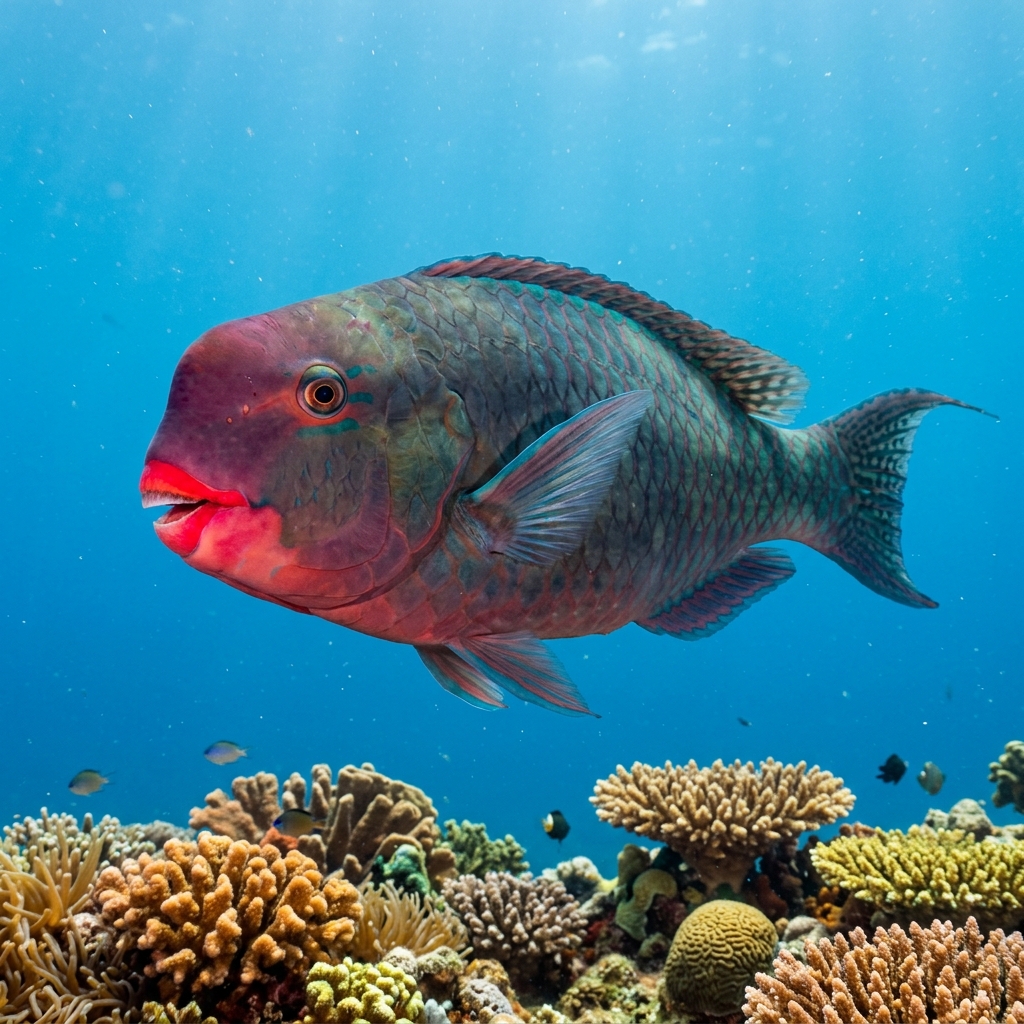
Redlip Parrotfish
2,789 sites